Commercial Fire Pump Reliability Testing for Australia
Quick Answer (45–55 words)
Fire pump performance stays healthy when pressure, flow, power use, vibration, and pump curves match the design intent over time. Longevity depends on alignment, seal health, cleanliness, and steady inspection. For Australian facilities, Kord Fire Protection can support commercial fire pump reliability testing so issues get fixed before they become a costly surprise.
Facilities that want a stronger overall support path can also explore commercial and residential fire alarm installation through Kord Fire Protection, especially when site reliability planning extends beyond the pump room and into the broader fire protection system.
How commercial fire pump reliability testing reveals early trouble
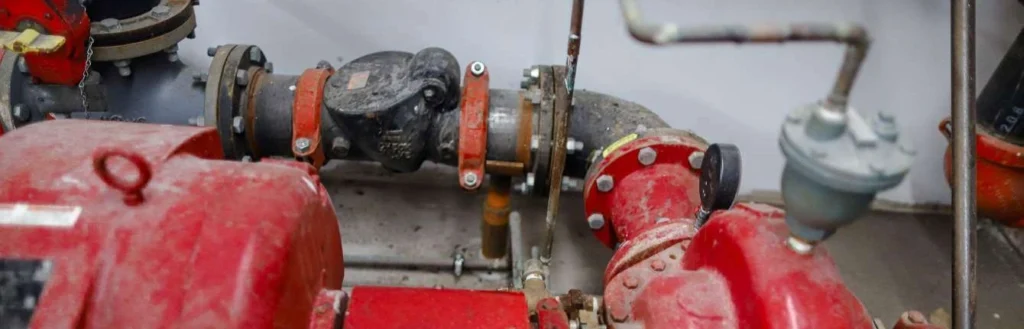
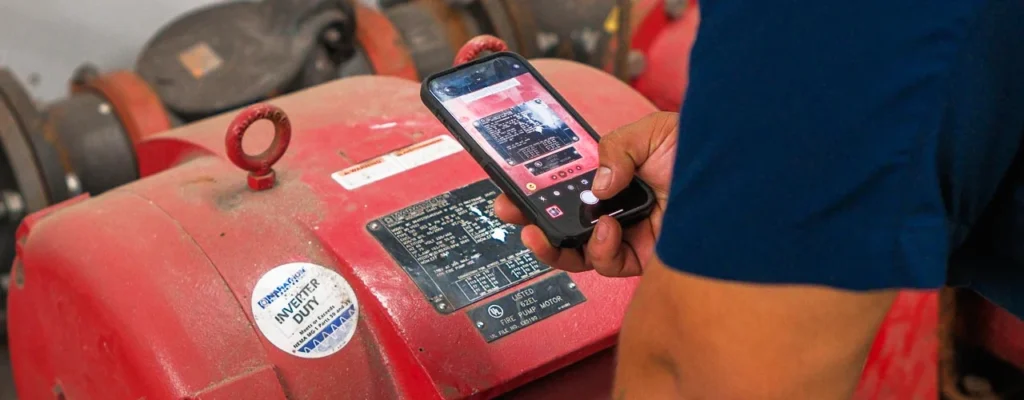
Fire pumps do not usually fail loudly. More often, they drift. First the pressure creeps, then the flow no longer hits the expected curve, and later you hear the pump doing a sound that feels personal, like it is judging the maintenance budget. That is why commercial fire pump reliability testing matters. The point is simple: a proper reliability test checks how the pump actually performs under controlled conditions, not how the nameplate promises it will.
In practice, this testing ties together real-world variables like suction pressure, valve positions, water supply behaviour, and control response. It also checks whether the pump stays stable during the run, rather than only looking fine at idle or during a short check. As a result, the facility team gets proof that the system can deliver fire flows when it must, especially across industrial sites, retail centres, and mixed commercial assets across Australia.
That practical approach fits neatly with Kord Fire Protection’s work on commercial fire pump vibration analysis for early wear, because pressure and flow numbers tell part of the story while vibration trends often explain why those numbers are starting to misbehave. And once those results exist, the facility can plan maintenance like a grown-up plan, not like a “we will deal with it after the call-out” plan.
Key indicators of performance a facility should track
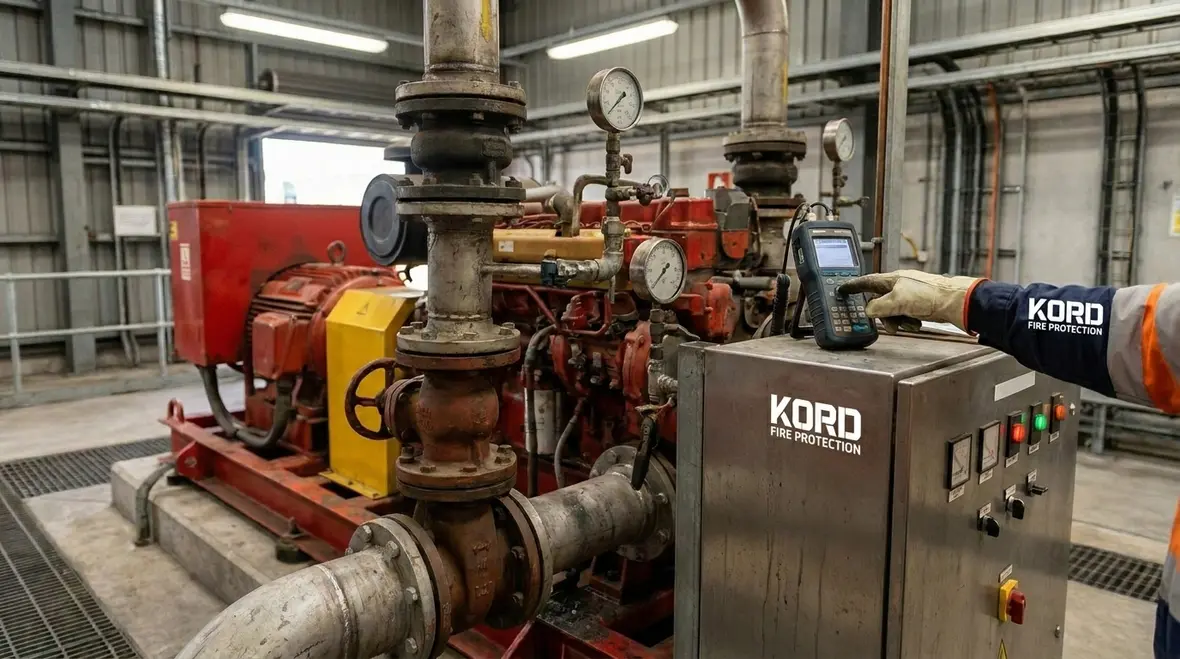
When someone says a fire pump is “working,” they often mean it starts. However, performance is more than starting. The clearest indicators show whether the pump delivers the required pressure and flow with safe stability. Facilities that track these items reduce firefighting risk and reduce downtime.
Pressure and flow match the curve
The pump should deliver pressure and flow that align with the design curve and site requirements. If the measured points drift, it can indicate wear, impeller damage, or suction issues. Over time, even small changes can matter because fire scenarios demand predictable output.
Control response behaves correctly
Automatic starts, pressure controller signals, and changeover logic should act as designed. Delays or hunting pressure control can lead to unstable discharge pressure. In the real world, unstable pressure forces sprinkler and hose performance to depend on luck. Luck is not a compliance strategy.
Power consumption stays within expected limits
Motors and drives should draw current within a safe band. Higher current can indicate binding, misalignment, or hydraulic issues. Lower current can suggest partial operation or loss of load. Either way, the electrical data tells a story. Teams reviewing this side of pump performance may also find value in Kord Fire Protection’s article on fire pump power supply reliability for commercial buildings, which pairs well with mechanical reliability checks.
Vibration and temperature trends
Rising vibration or bearing temperatures often signal mechanical problems like looseness, misalignment, or cavitation. Monitoring trends matters more than one-off readings because pumps can hide problems until they do not.
What causes early wear and how it shows up
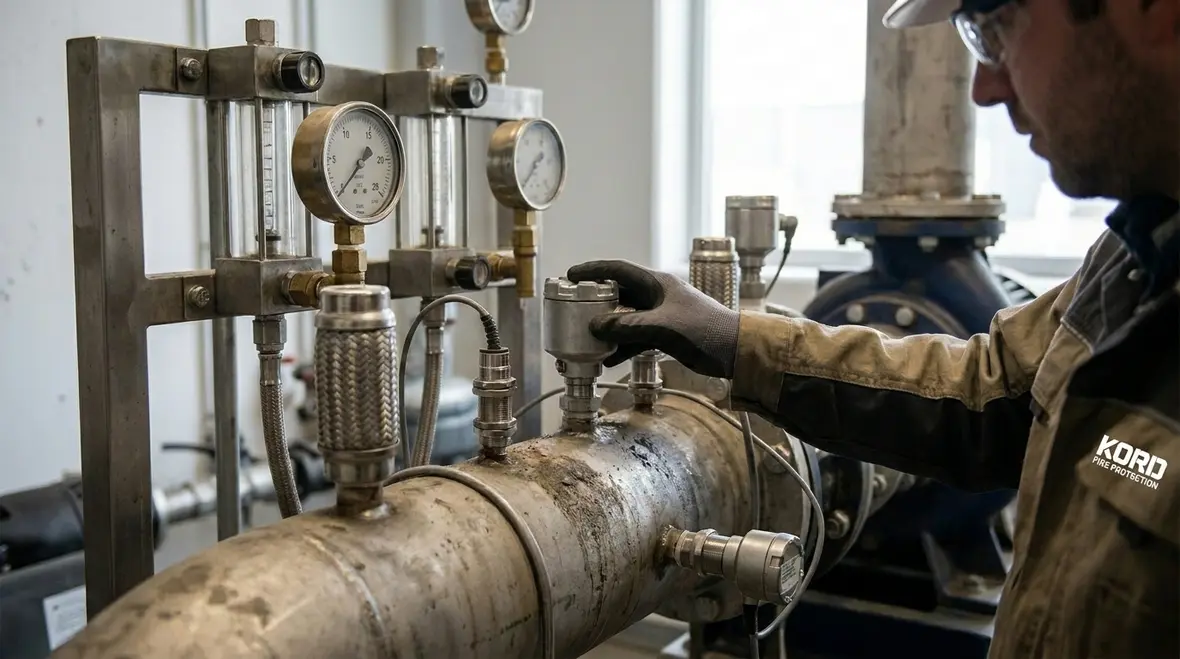
Fire pumps live in a tough neighbourhood. They sit ready, they tolerate long idle periods, and then they must perform at full demand. Over time, several wear drivers show up again and again in Australian facilities.
Impeller and wear ring degradation
Minerals, debris, and micro-corrosion can erode the impeller and wear rings. Eventually, the pump moves less water and pressure drops at the same controller setting. That is why reliability testing often catches performance drift before major mechanical work becomes unavoidable.
Cavitation from poor suction conditions
If suction pressure stays too low or if suction piping allows air or restriction, cavitation can form. You may hear a rough growl, see noisy operation, or notice efficiency loss. Cavitation shortens component life fast, and it does not care that the pump is “brand new-ish.”
Seal and bearing stress from misalignment
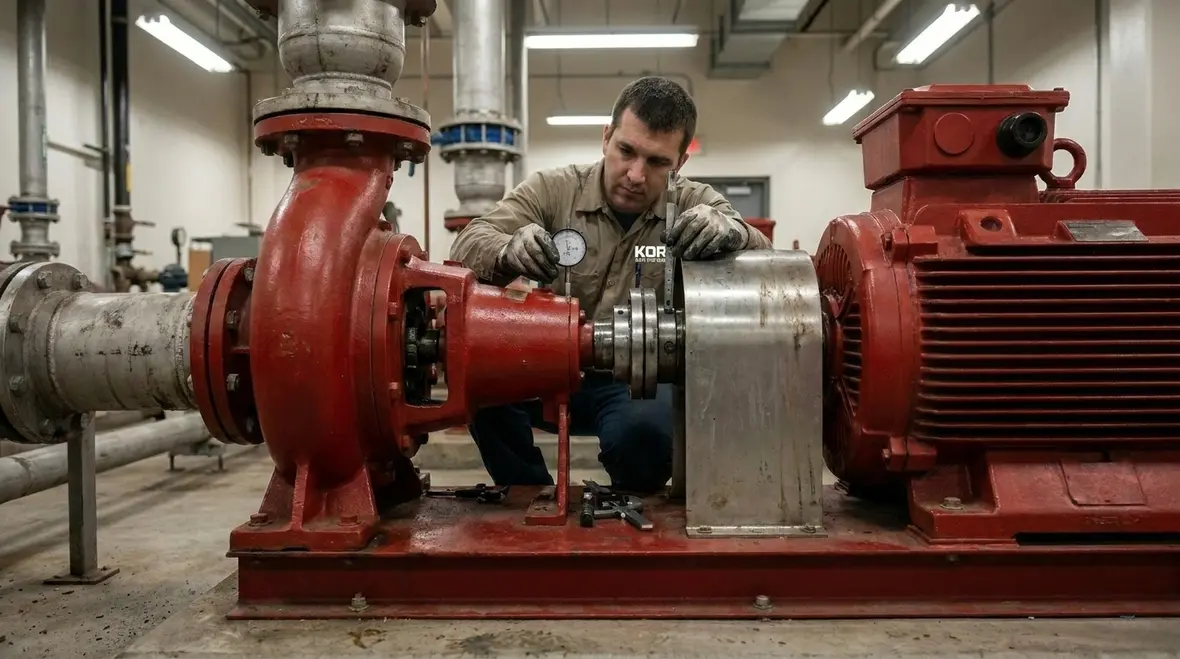
Misalignment can stress couplings, seals, and bearings. Symptoms can appear as heat, leaks, or rising vibration. Once misalignment becomes persistent, it often creates a chain reaction across multiple components.
Valve and strainers that slowly forget their job
Partially closed valves, blocked strainers, or sticky check valves can reduce flow. The pump may still start, but it works harder to push water through restrictions. That increased load leads to higher wear and higher risk during an actual emergency.
For sites where repeated vibration readings are already hinting at trouble, the discussion in commercial fire pump vibration analysis for early wear can help teams connect those mechanical clues to the broader reliability picture before damage gets more expensive.
Signs a pump needs attention before it becomes a failure
Facilities can spot many issues through routine checks and test history. The goal is to catch the problem while repair is straightforward. Below are practical warning signs that often show up before the pump crosses the line into failure.
- Performance drift during tests
If repeated commercial fire pump reliability testing shows changes in pressure, flow, or stability, the facility should treat it as a priority. Consistent drift points to mechanical or hydraulic changes. - Frequent alarms or controller faults
Even when the pump succeeds, repeated nuisance faults signal a control, sensor, or wiring issue that could become critical under fire demand. - Unusual discharge pressure behaviour
Overshoot, undershoot, or “hunting” pressure indicates controller tuning issues, sensor problems, or valve behaviour problems. - Leakage around seals or packing
Leaks are not cosmetic. Seal leakage affects bearing protection and can damage surrounding components. It also shows that the seal system has entered a stressed state. - Motor current deviations
Higher current with stable pressure can suggest mechanical drag. Lower current with stable start signals can hint at incomplete load conditions. - Repeated call-outs for the same symptom
If the same fault returns after maintenance, root cause remains unresolved. At that stage, deeper investigation and verification testing becomes essential.
And if this sounds like the fire pump is “acting up,” consider it a team member who keeps sending polite notes. The issue is the notes turn into full meetings if nobody responds.
Longevity practices that protect components and reduce downtime
Long life comes from consistent care, not heroic last-minute fixes. Facilities that focus on the right longevity practices protect seals, bearings, impellers, motors, and controls. They also protect the schedule, which every site manager loves almost as much as they love having fewer emergencies.
Maintain clean suction conditions
Clear strainers, clean suction screens, and controlled water quality protect impellers and prevent cavitation risk. This keeps hydraulic performance stable and reduces the need for major component replacements.
Confirm alignment and coupling condition
Alignment checks protect bearings and seals. Coupling wear often appears gradually, and once it accelerates, it can lead to vibration and heat. The facility should align during planned maintenance and verify after major works.
Use test results to guide maintenance intervals
Instead of using a calendar only, use evidence from commercial fire pump reliability testing to set targeted intervals. If the pump holds performance, maintenance can stay focused. If it trends down, the facility should bring forward work.
Track electrical health
Insulation condition, starters, and contactors matter. Electrical issues can cause starts to slow down or controls to misread conditions. As a result, fire pump reliability depends on both hydraulic and electrical integrity. Facilities that want to tighten this side of the maintenance plan can also review why electric fire pump controllers fail for a useful companion read on recurring control-related faults.
Keep controls and sensors calibrated
Pressure transducers, flow sensing, and controller settings influence how the pump behaves under demand. Even good pumps can look unreliable if sensors drift. That same reliability mindset also applies to related life-safety power planning, which is why Kord Fire Protection’s fire alarm battery backup systems power reliability tips makes a sensible contextual read for teams trying to remove weak links across the entire protection chain.
Why Kord Fire Protection becomes a vital partner
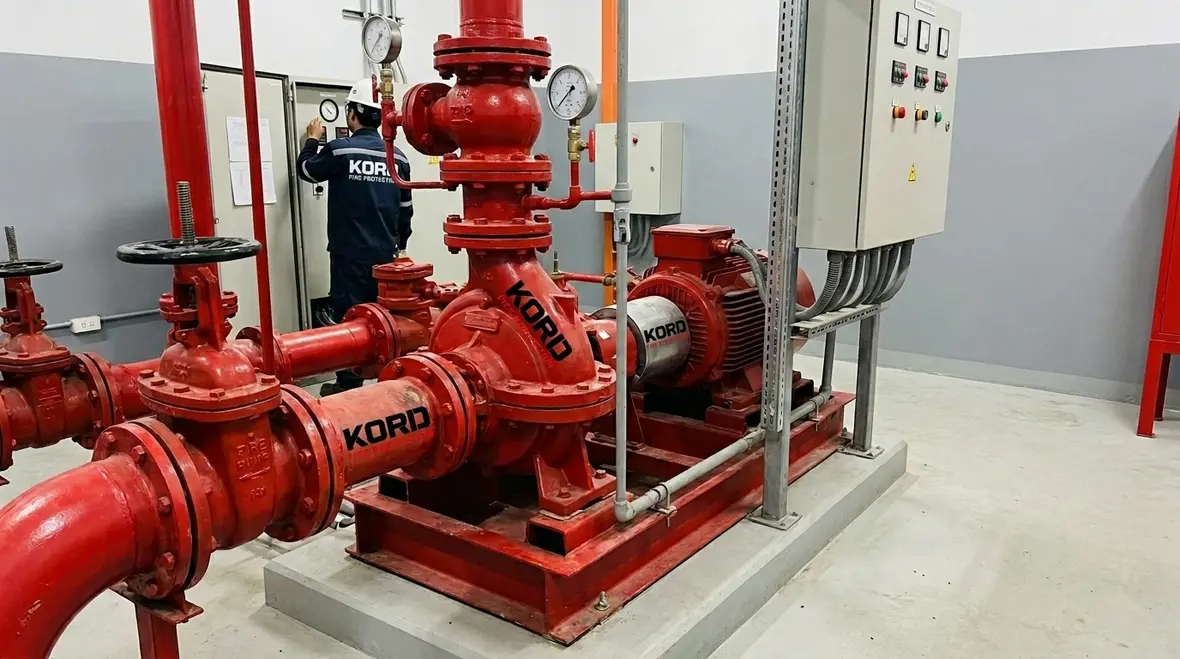
Fire pumps are safety-critical assets, and reliability work requires more than a checklist. That is where Kord Fire Protection becomes a vital partner for facilities across Australia. Kord Fire Protection supports a service approach built around verification, documentation, and practical risk reduction. Rather than guessing, teams can connect observed conditions to tested outcomes.
For example, when a facility plans commercial fire pump reliability testing, Kord Fire Protection helps ensure the process reflects the system design and operating intent. Then, if any performance indicators show drift, the service team can recommend targeted maintenance actions, not random parts replacement. Consequently, the facility avoids the classic trap of “fixing” the wrong thing while the real issue quietly grows.
| Indicator | What it can mean |
|---|---|
| Pressure and flow mismatch | Wear, hydraulic restriction, suction issues, or control response problems |
| Vibration or heat rising | Alignment, bearing condition, cavitation, or suction restrictions |
| Motor current deviations | Mechanical drag, electrical faults, or load and hydraulic changes |
| Controller instability | Sensor drift, tuning issues, valve behaviour, or wiring faults |
Yes, fire pumps can feel like stubborn machines. But with the right testing and a steady partnership, they become predictable. And predictability is the whole point when lives and assets depend on timely operation.
FAQ about fire pump performance and reliability
Final word: protect people, comply confidently, and plan smarter
Fire pumps earn their keep through measurable performance, stable output, and component health that lasts. By tracking key indicators and acting on what commercial fire pump reliability testing shows, facilities reduce emergency risk and avoid costly last-minute shutdowns.
For industrial, retail, and commercial sites across Australia, Kord Fire Protection can help verify performance, document findings, and guide repairs with less guesswork. Reach out to start a reliability plan that holds steady when it matters most.

Join Our Newsletter!
Get the latest fire safety tips delivered straight to your inbox From our Newsletter.