Industrial Fire Suppression System Design with Kord
Quick Answer: Industrial facilities need more than a one size fits all sprinkler plan. Custom suppression systems match the hazards, layout, and operations of each site, from cooking oils to chemical handling. With Kord Fire Protection as a vital partner, facilities get safer coverage, smoother approvals, and fewer “surprise” downtime events.
For industrial sites, a well planned industrial fire suppression system design starts long before the first pipe gets installed. It begins with how the facility actually works, what fuels the risk, and how quickly heat and smoke spread when things go wrong. In other words, it is not guesswork. It is engineering that factors in process hazards, equipment placement, and water supply limits. And yes, like any good plan, it can feel boring at first. Then it saves the day when the unexpected happens, which is the whole point.
When a project also needs coordinated detection and notification support, facilities can naturally pair suppression planning with fire alarm services so the response chain is faster, clearer, and easier to manage across one protection strategy. For sites focused more broadly on suppression options, Kord also offers fire suppression systems for commercial and industrial properties that fit neatly into early planning conversations.
Why custom suppression matters for industrial operations
Industrial facilities rarely share the same risk profile. One area might store flammable liquids, while another runs high heat processes, and a third holds electrical gear that cannot tolerate heavy water or messy cleanup. Therefore, custom suppression strategies help teams control the right threat at the right time, without causing extra damage.
In addition, custom work supports the facility’s real workflow. For example, a distribution warehouse needs design choices that maintain access and do not block operations. Meanwhile, a retail or commercial site inside a larger industrial campus might need a system that supports both compliance and fast recovery. That way, safety plans do not turn into business plans written by chaos.
Protection that follows the way the building actually works
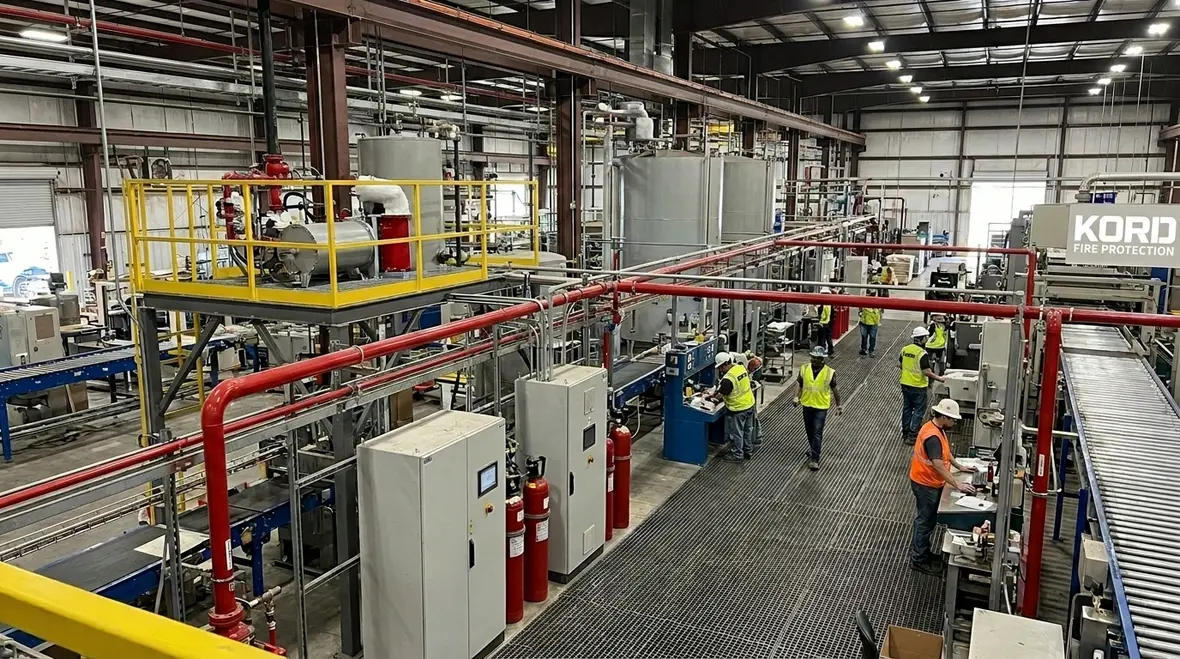
This is where cookie cutter layouts fall apart. Industrial operations change by shift, by product line, and sometimes by whatever the forklift traffic has decided to do that week. A custom suppression design can account for storage density, machinery heat, airflow, and access routes so the protection stays practical instead of becoming a beautiful drawing nobody can live with. Kord Fire Protection helps bring that real world lens into the planning phase, which is usually a lot cheaper than discovering a design flaw after construction starts.
How site hazard mapping shapes the system
Good industrial fire suppression system design depends on hazard mapping that goes beyond basic room labels. Kord Fire Protection and facility teams typically review ignition sources, fuel load, ventilation patterns, and the way materials behave when heated. Then they translate that into coverage decisions that match the actual hazard level.
Next, the design accounts for protection priorities. For example, protecting an electrical control area may require careful zoning and suppression choices that reduce water impact. Similarly, a process line that generates fast flame spread may need a different approach than a storage area where fire grows slower. As a result, the system targets what matters most, not what looks neat on paper.
Hazard mapping is where smart decisions begin
A serious design team studies more than floor plans. They look at where heat accumulates, where dust or vapor can travel, how operators move through the space, and what equipment cannot afford a long shutdown. That process is less glamorous than the final install photos, but it is exactly what keeps a suppression system from reacting too late, discharging in the wrong area, or missing the risk entirely. Boring? Maybe. Important? Extremely.
Choosing the right suppression method by risk type
Different hazards call for different tools. And while every facility wants the simplest solution, the safest solution usually takes a more thoughtful route. The system designer may select from several suppression technologies, depending on the fuel, environment, and operational constraints.
Common risk based choices include
- Water based systems for many general hazards where application rates and coverage can match fire load
- Foam systems for flammable liquid scenarios where foam forms an effective barrier
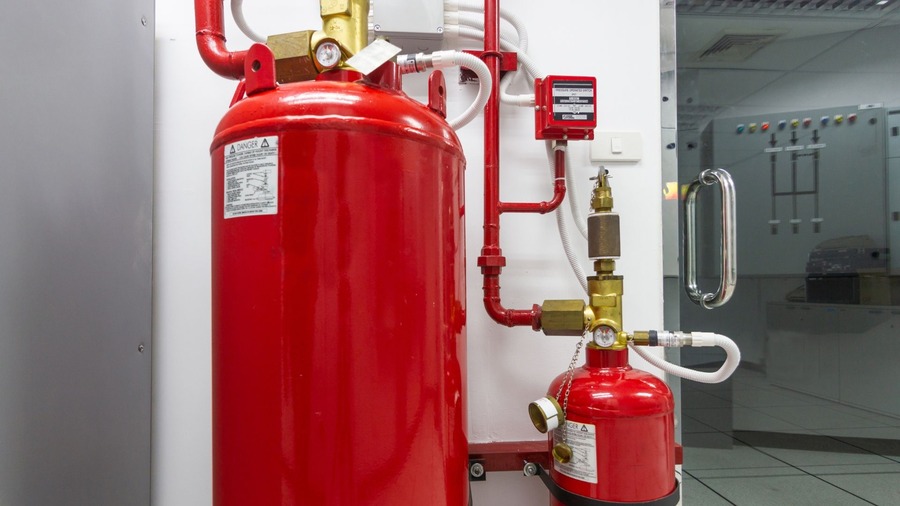
- Clean agent or inert approaches when sensitive equipment needs protection with minimal residue
- Specialty detection and actuation where early warning changes how suppression performs
Then the design team links the method to installation realities. Pipe routes, ceiling heights, obstructions, and future fit outs all affect performance. Therefore, the system needs a design that stays reliable after real life changes, not just on installation day. Because, frankly, nothing stays still. Not forklifts, not conveyors, and definitely not production schedules.
Matching the method to the messiness of real life
The best suppression method is not always the one with the shortest sales brochure. It is the one that fits the hazard, protects the equipment, and still makes sense six months after an expansion or layout change. Some facilities may lean on water based protection, while others benefit from foam strategies in areas with liquid fuel risk. Still others need a cleaner discharge approach around sensitive gear. The point is not to force every fire into one answer. The point is to design the right answer before the fire asks the question.
Designing for coverage, actuation, and performance
Once hazard mapping and technology choices happen, the next step focuses on coverage and performance. This is where engineers decide how the suppression releases, how quickly it activates, and how it distributes under expected conditions. If the system releases too late or too unevenly, it can turn a manageable incident into a major event.
At the same time, design must consider water supply and system capacity. A system is only as good as its ability to deliver the right flow and pressure. So the design team may evaluate tanks, pumps, pressure readings, and local utility performance. Then they build in the right margins so the facility does not rely on “it will probably be fine” math.
Finally, the design should include zoning and selective control. Instead of flooding the whole site, the system can limit discharge to the area that needs it. This helps reduce collateral damage and speeds up recovery. Transitioning from emergency response back to operations becomes less of a stressful restart and more of a planned step.
Integration with detection, alarms, and emergency response
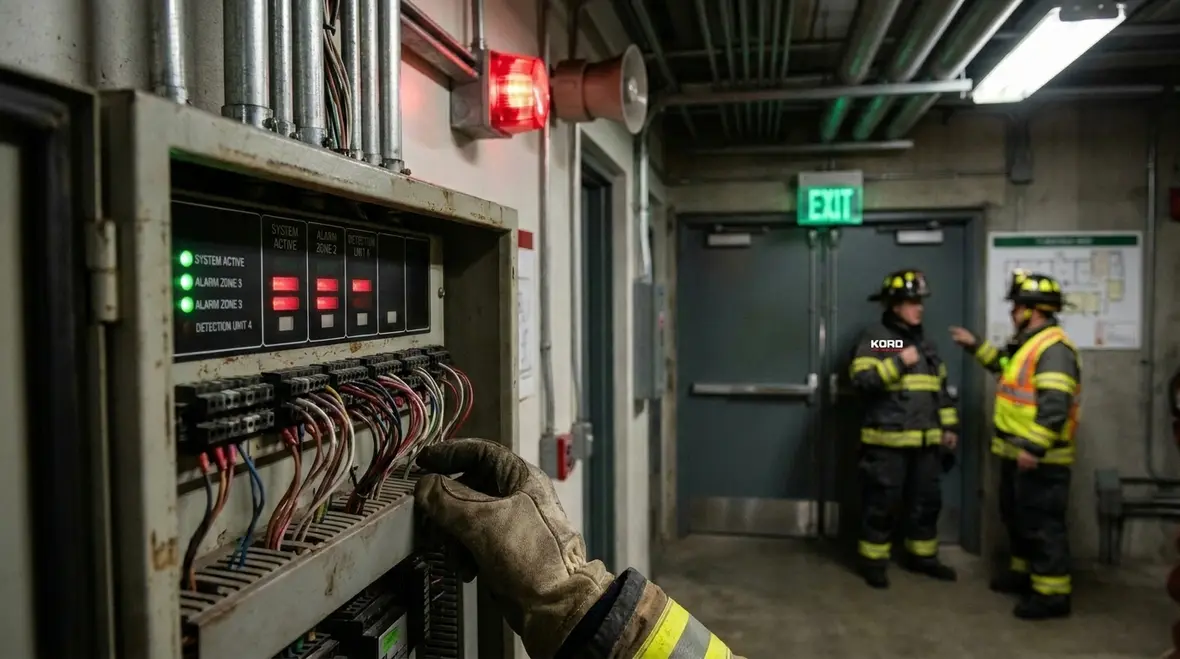
A suppression system works best when it coordinates with detection and alarms. Detection placement affects how fast the system sees a developing fire, and alarm zoning affects how fast people reach the correct actions. Therefore, the design often connects detectors, control panels, manual call points, and audible and visual warnings into one coordinated plan.
In addition, Kord Fire Protection supports facilities by aligning the suppression design with the practical emergency response approach on site. That means reviewing access routes for responders, confirming signage and control locations, and planning maintenance access so inspections do not become a monthly scavenger hunt. After all, if someone cannot reach the system components safely, the system cannot do its job.
A coordinated system is easier to trust under pressure
Integration matters because people do not respond well to confusion during an emergency. If detection, alarms, controls, and suppression all speak the same language, response gets faster and safer. If they do not, then everyone wastes precious time figuring out what is happening while the fire enjoys a completely unearned head start. That is why coordinated planning is not a luxury item. It is part of the design doing its actual job.
Regulatory compliance and smoother approvals
Industrial and commercial facilities operate within fire safety requirements that can feel complex. However, a strong design process reduces avoidable friction during review and approvals. Kord Fire Protection can function as a vital partner by bringing structured documentation and experience to each project stage.
As part of that support, the team typically helps clarify what the facility needs, what the design covers, and how the system will be maintained. Then they align the documentation to the hazard profile, the protection approach, and the operational needs of the building. That reduces back and forth, and it helps decision makers feel confident before the first sprinkler head gets installed.
To keep the process clear, some teams use a simple dual column planning approach for responsibilities and deliverables.
| Design Workstream | What Kord Fire Protection Helps Deliver |
|---|---|
| Hazard evaluation and scope definition | Site focused review and practical system planning |
| Suppression method and coverage strategy | Risk matched design input and system logic |
| System performance planning | Capacity and delivery considerations to support reliability |
| Documentation for approvals and handover | Clear project records and guidance for next steps |
Maintenance planning that protects uptime, not just safety
Even a well installed custom system needs ongoing checks and care. Yet maintenance does not have to disrupt operations. A good plan schedules testing, inspections, and servicing at realistic times, with clear access and minimal production downtime.
Moreover, maintenance planning should address the full lifecycle. That includes managing documentation, tracking compliance, keeping spare parts available, and ensuring the system performs as designed. Kord Fire Protection can support facilities by setting expectations early and aligning service with site rhythms, so maintenance stops being a dreaded event and becomes a predictable routine.
And here is a small joke that holds truth. If inspections are treated like chores, the system will behave like it is doing your taxes. If inspections are treated like protection, the system usually behaves like a dependable coworker. One of those options gets everyone home safe.
Long term performance is part of the original design
Maintenance planning belongs in the early conversation because service access, shutoff locations, component labeling, and documentation habits all affect how easy the system is to inspect later. A system that is technically compliant but miserable to maintain is still a problem waiting for a calendar reminder. Smart planning makes the future less annoying, which is one of the most underrated forms of safety.
FAQ
Conclusion and CTA
Custom suppression is the difference between “covered” and truly protected. When Kord Fire Protection becomes a vital partner, industrial sites gain risk matched industrial fire suppression system design, coordinated detection, and practical documentation that supports approvals and long term performance.
If a facility is planning upgrades, expansions, or a new build, it should reach out to Kord Fire Protection now and get a clear plan before the next shutdown schedule gets complicated. A better system starts with better planning, and that is exactly where the right partner earns their keep.

Join Our Newsletter!
Get the latest fire safety tips delivered straight to your inbox From our Newsletter.