Fire Alarm Battery Backup Systems Power Reliability Tips
In fire life safety, milliseconds matter, yet the power system behind the alarm often gets overlooked until something goes wrong. Our fire alarm battery backup systems keep panels alive when utility power drops, but reliability depends on more than installing a box with batteries and hoping for the best. Kord Fire Protection technicians often explain that battery backup power is like a seatbelt, you do not think about it until you need it. And unlike a surprise pop quiz from a movie character, the alarm system cannot “wing it” when the lights go out. This article breaks down how teams optimize power reliability for critical fire alarm backup systems, with practical steps that reduce risk and improve uptime.
How Kord Fire Protection technicians evaluate backup power reliability
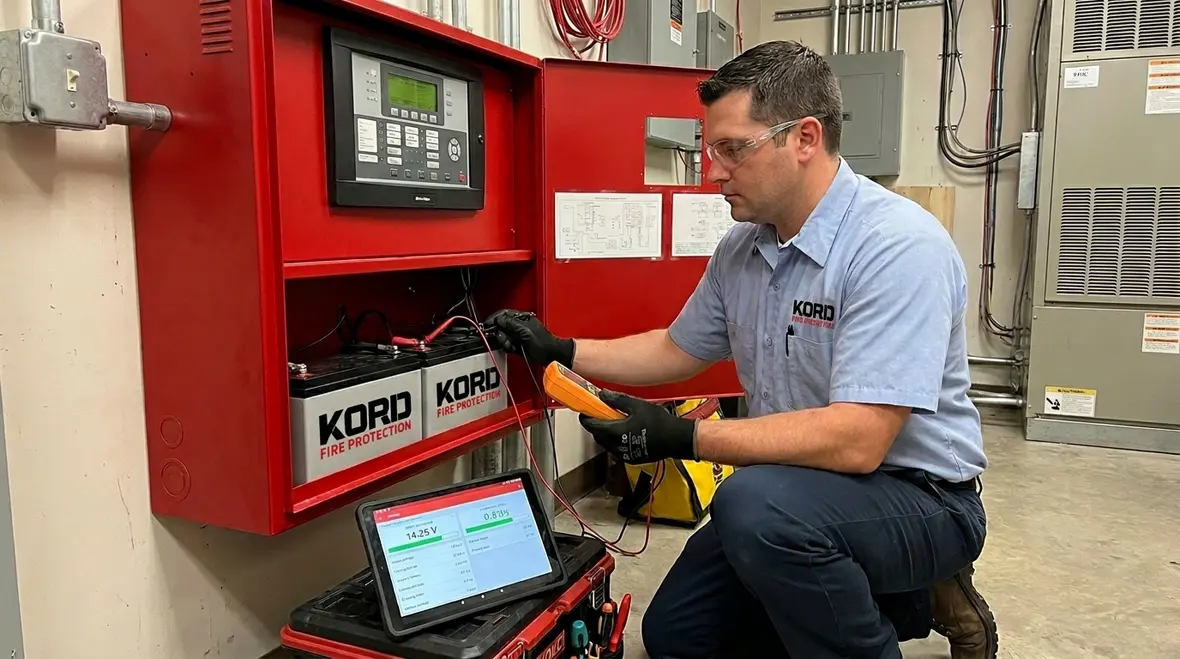
Kord Fire Protection technicians start with a simple idea: the system must deliver the right power at the right time, under real conditions. First, they verify the fire alarm panel load, because batteries fail faster when the demand is higher than expected. Next, they check the battery type and capacity against the required standby and alarm duration. Then, they review charging behavior, including float and any temperature compensation settings. After that, they look at wiring losses, connection quality, and any factors that quietly drain energy, like age, heat, and corrosion.
In other words, they treat the backup system like a customer with a tight schedule. If you underbook the battery, you pay the price later, usually at the least fun moment. And as anyone who has tried to reset a router during a storm knows, “later” is not a time you want to discover weak links.
Battery sizing that avoids underpowered surprises
Proper sizing forms the backbone of dependable fire alarm backup. To size correctly, installers and inspectors account for standby loads, alarm loads, and any connected devices such as initiating devices, NAC circuits, relays, and trouble indicators. Then they apply the manufacturer’s guidance and local requirements for required standby time and alarm duration.
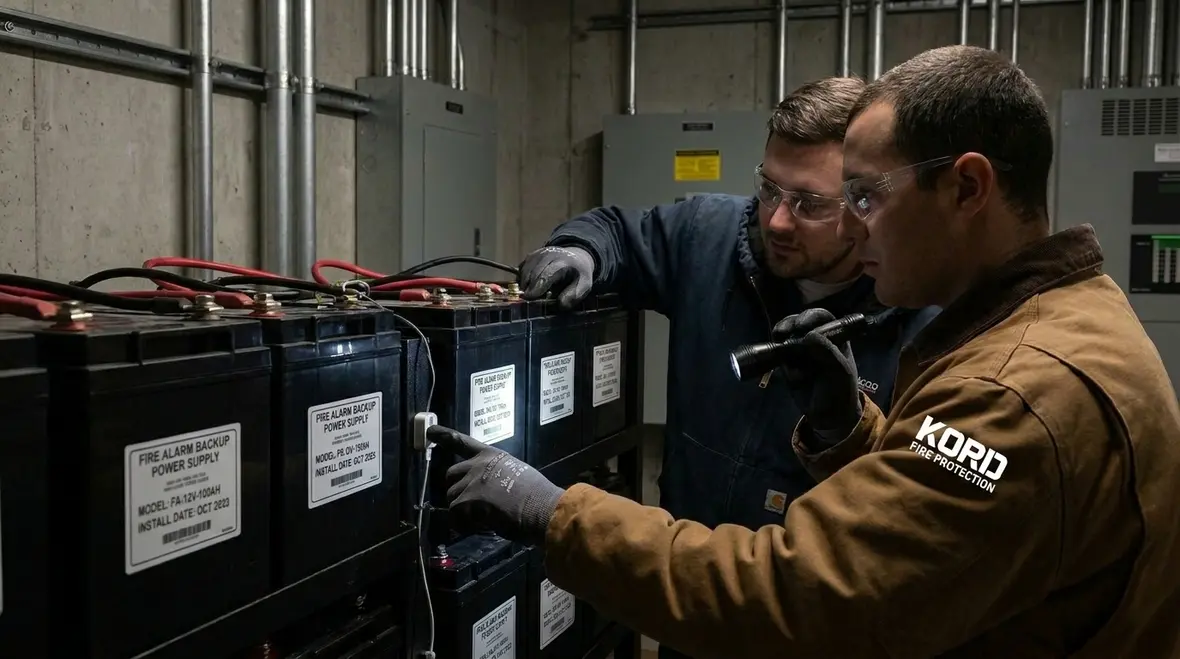
Even small misunderstandings can cause big issues. For example, a system that appears to meet requirements on paper may still fall short if the real load is higher due to field changes. Therefore, Kord Fire Protection technicians recommend load verification after any additions, such as new pull stations, notification appliances, or monitored modules. Additionally, they check battery shelf life and installation date, since older stock can lose capacity before it even starts doing its job.
Charging, float current, and temperature control
After sizing, charging settings decide whether batteries stay healthy or slowly fade away. Batteries should charge to the correct voltage profile and at the correct rate, so they can reach full capacity without chronic stress. Kord Fire Protection technicians emphasize that temperature strongly affects battery performance. When the environment runs hot, batteries age faster, and charge control must compensate. When temperatures are cold, charging can become less effective if the system does not properly adjust.
Therefore, they verify that temperature sensors are installed when required and that the panel’s charging behavior matches the battery manufacturer’s specs. They also inspect for drift over time, since aging electronics can shift voltages. In many facilities, the battery compartment might sit near HVAC equipment or in a confined space with poor airflow. So, technicians also check ventilation and keep the setup within the design envelope.
Wiring, connections, and voltage drop discipline

Backup systems can look good at the battery and still fail at the load. That is why Kord Fire Protection technicians focus on wiring quality and voltage drop. When cables run long distances, have loose terminations, or include damaged insulation, the panel may see a lower voltage than expected. Additionally, corrosion at terminals can create intermittent resistance, which can trigger trouble conditions or reduce output during alarms.
To reduce these risks, technicians inspect torque on terminals where appropriate, ensure correct cable types, and confirm that conductors meet installation standards. They also check for grounding practices that do not introduce noise or stray currents. As the saying goes, the devil is in the details, and in this case the details tend to show up at the terminal strip, not in the brochure.
Monitoring, testing, and maintenance that actually finds problems
Reliability requires more than routine “pass or fail” battery checks. Kord Fire Protection technicians recommend a maintenance plan that validates performance trends, not just snapshots. They often begin by reviewing historical test data, including battery test results, trouble events, and previous replacement dates. Then they schedule tests at intervals that match battery chemistry and system criticality.
When technicians perform periodic testing, they aim to stress the system in a way that reveals weakness early. For example, they may check battery capacity and verify that the system holds voltage during simulated load conditions. They also verify that the alarm circuits behave correctly when on backup power, because some failures appear only when the panel runs without utility.
Furthermore, they confirm that the fire alarm battery backup systems remain correctly configured after any changes, including software updates or device replacements. This prevents the classic scenario where everything looks fine until an engineer adds a new device and no one updates the load assumptions. That story is popular, but it is not a good business strategy.
Common failure patterns and how to prevent them
Many backup power issues repeat across sites, and technicians learn to spot them early. One pattern involves batteries that “test fine” until a longer alarm demand occurs, which points to sizing or load mismatch. Another pattern includes chronic low charge or overcharge, often linked to charging settings, sensor mismatch, or aging equipment. Heat-related aging also appears often, especially in closets where the batteries share space with transformers or where airflow is limited.
Then there is the connection problem, where loose terminals or corrosion create intermittent resistance. This can lead to trouble events that staff dismiss as annoying ghosts, until the ghosts show up during an actual alarm. To prevent these patterns, Kord Fire Protection technicians document baseline readings, verify charging behavior, and enforce inspection standards on wiring and terminations. They also track replacement schedules based on actual performance, not just the calendar date.
Built for real sites: managing power reliability during changes
Facilities evolve. Over time, new floors get added, notification appliances get updated, and panels sometimes get relocated. Each change can alter load demand and electrical paths. That is why Kord Fire Protection technicians push for a controlled approach to change management for fire alarm battery backup systems.
Before any work begins, teams confirm current device counts and circuit loads. Next, they evaluate whether the existing backup system still meets standby and alarm duration requirements. Then, they verify wiring routing and connection points so the modified system keeps expected voltage at the panel and at the appliances. Finally, they retest after completion, because the system should not only be compliant on day one, it should perform after the dust settles.
This approach keeps power reliability stable even when construction crews treat the system like a background prop. Safety systems deserve better than that.
FAQ
Conclusion
Power reliability is not luck, and it is not a one time install. Kord Fire Protection technicians optimize fire alarm battery backup systems by verifying loads, confirming charging behavior, inspecting wiring discipline, and testing performance over time.
When facilities plan for heat, aging, and future changes, the system stays ready when it matters most. If the site is due for review or a compliance refresh, contact Kord Fire Protection technicians today and build a backup power plan that does not gamble with safety.

Join Our Newsletter!
Get the latest fire safety tips delivered straight to your inbox From our Newsletter.