Fire Pump Power Supply Reliability for Commercial Buildings
When a fire pump starts, there is no time for guesswork. That is why fire pump power supply reliability becomes the foundation of every dependable system, especially in commercial buildings where life safety and downtime costs both hit hard. While many people focus on the pump itself, the real hero often lives in the power path: the wiring, breakers, transfer gear, monitoring, and the controls that keep everything steady. From the first notification to the last alarm reset, Kord Fire Protection technicians walk clients through what actually matters, and they explain it in plain language, not “engineering theater.” After all, a fire pump cannot “think about it later,” and neither should the building team.
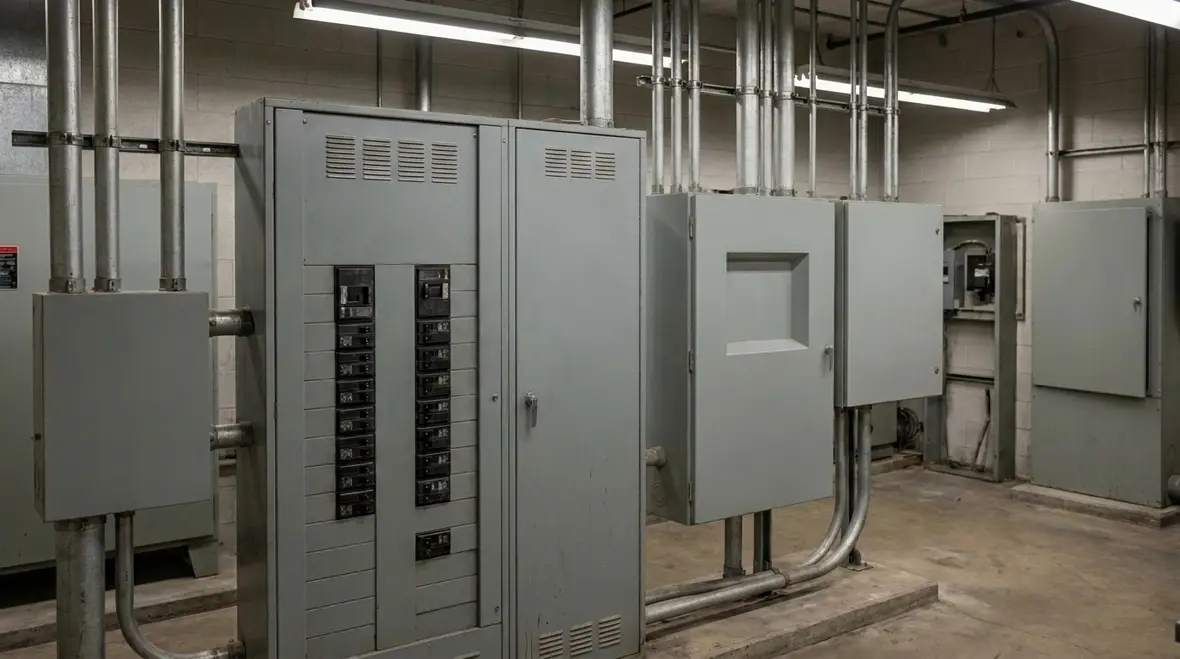
Why commercial fire pumps need steady electrical backup
Commercial fire pumps depend on stable voltage and frequency. If power dips, drops, or shifts at the wrong moment, the system can fail to start, fail to transfer, or run at conditions that do not meet its design intent. As a result, the goal is uninterrupted power that performs under real stress, not just under calm test days. Kord Fire Protection technicians typically point out that even small issues can grow into big ones, like a loose connection that heats up over months, or a transformer that quietly loses capacity. And yes, electrical problems love to hide until the one day you really do not want them to show up, like a pop-up ad that only appears during the final minutes of an important meeting.
That is exactly why the electrical side of the system deserves the same level of attention as the mechanical side. A powerful pump is only useful if the power source stays available and the controller receives what it needs without hesitation. In many buildings, reliability depends on a chain of components that all have to cooperate under stress. If one link in that chain is weak, the whole response can wobble at the worst possible time.
What steady backup really means
Reliable backup power is not just the presence of a generator or alternate source. It means the source starts as expected, delivers proper voltage, feeds the controller through the right equipment, and stays stable long enough to support full fire pump operation. In other words, “backup” only counts if the pump can actually use it when the pressure is on.
Mapping the power path from utility to pump controller
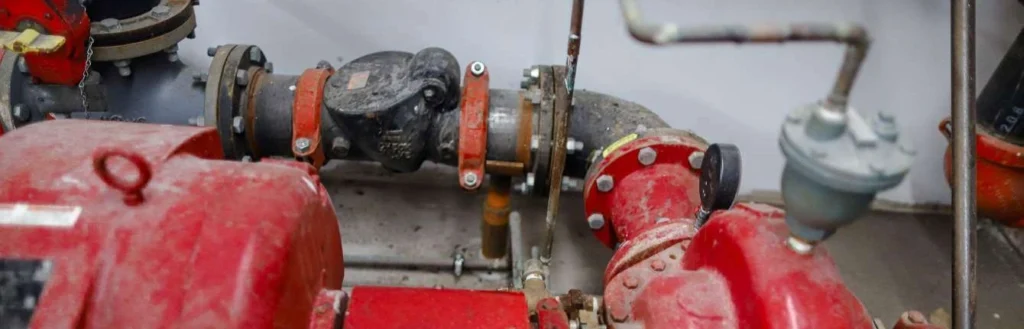
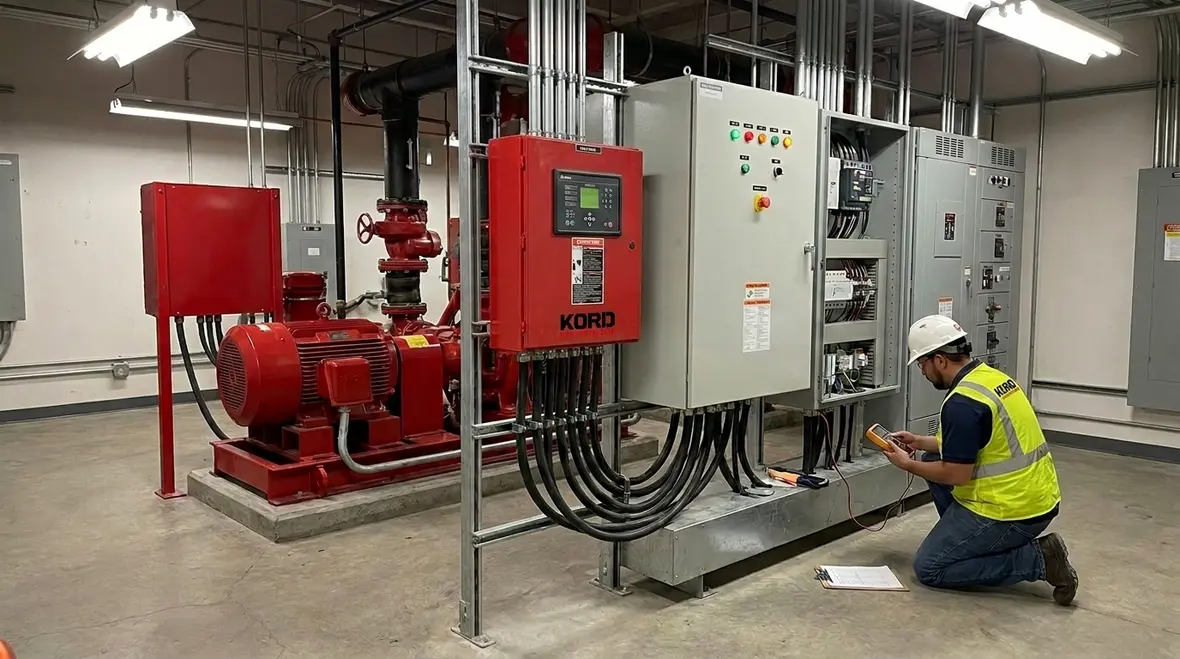
To protect operation, teams first trace the full electrical route. This includes utility service, switchgear, feeder conductors, motor starters, controller inputs, and any listed transfer equipment that changes the source. Then, they confirm how the pump controller reacts when conditions change. For example, the controller must receive the right signal at the right time, and it must lock in a safe operating state while keeping pump start logic correct. Kord Fire Protection technicians often recommend creating a “single line” view that operators can understand quickly, because when someone needs answers during an alarm, they do not want a scavenger hunt through labeled cabinets.
Next, the team verifies that each component matches its load profile and motor starting needs. Fire pump motors often draw significant current at start, so protective devices must coordinate properly. Therefore, reliability improves when the system is engineered as a set, rather than as a pile of parts that each “seems fine.”
This is also where documentation becomes a lifesaver instead of a dusty afterthought. A well organized power path review shows exactly where the primary source begins, where backup power enters, how switching occurs, and what controls are tied into the process. That clarity helps facility teams troubleshoot faster, test more confidently, and communicate with contractors without turning every service call into an archaeological dig.
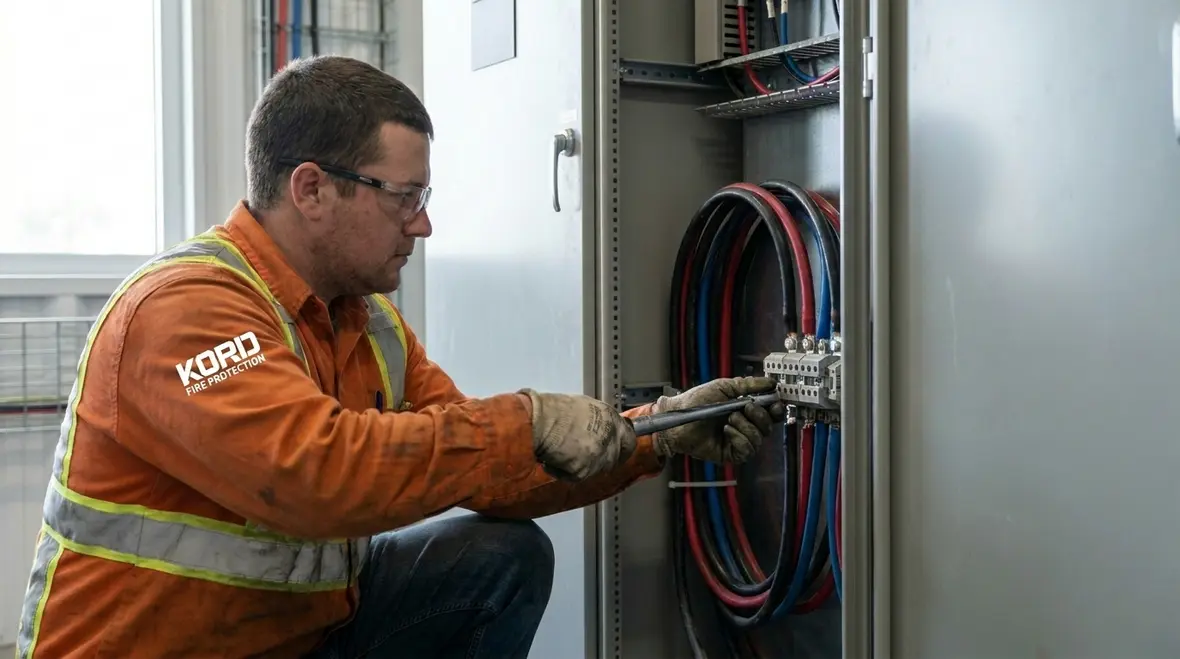
Why operators need a readable system map
A simplified system map gives operators a quick way to understand what feeds the pump and what has to happen during a transfer. It also reduces confusion during alarms, outages, and inspections. For teams looking for more detail on the electrical side, Kord Fire Protection also covers this topic in its article on essential fire pump electrical requirements and design, which pairs nicely with a reliability review.
Common failure points that quietly threaten uptime
Even well built facilities can run into problems that threaten fire pump power supply reliability. These failures often show up as intermittent trouble, nuisance alarms, or degraded performance during testing. The most frequent culprits include:
- Undersized or aging feeders that cause voltage drop during motor start
- Breaker or contactor wear that delays switching
- Corroded terminations and loose lugs that raise resistance and heat
- Misconfigured transfer switches that do not match the system’s required logic
- Control wiring faults that interrupt start permissives or monitoring
- Generator set issues like fuel supply limits, battery weakness, or poor maintenance
Furthermore, utilities can bring their own drama. Voltage sag, frequency variation, or short interruptions can challenge the transfer and control strategy. Transition planning matters, so the system switches without creating gaps where the controller loses critical inputs. Kord Fire Protection technicians typically stress that the best time to address these issues is before anyone hears the word “failure.” Because after that, the meeting agenda changes from “planning” to “explaining.”
Small reliability problems also have a bad habit of looking harmless during normal operations. A loose lug may not appear dramatic during a quick glance, but under load it can produce heat, resistance, and inconsistent performance. The same goes for worn switching components that still move, just not with the speed and certainty a fire pump system expects. Quiet trouble is still trouble.
How transfer switching supports uninterrupted operation
Transfer switching is where reliability lives or dies. A transfer system must move the pump power source fast enough and correctly enough to keep the pump controller in an operating-ready state. In many commercial applications, buildings use utility plus generator or another emergency source. The transfer mechanism, including its sensing and timing logic, must align with the fire pump’s requirements.
To improve performance, teams verify the full sequence: the emergency source must start within expected times, voltage must stabilize, and the switch must transfer without causing an unsafe state. Then, technicians confirm monitoring signals that indicate “available,” “connected,” and “ready.” If the monitoring lies, operators may think the pump is protected while the electrical path is actually compromised.
Also, a well planned system should reduce the chance of unwanted retransfer. In other words, once the emergency path is active, it should not bounce back and forth due to minor fluctuations. Kord Fire Protection technicians often explain that transfer switching is not just about moving power, it is about keeping the pump control logic calm and consistent when the world is not.
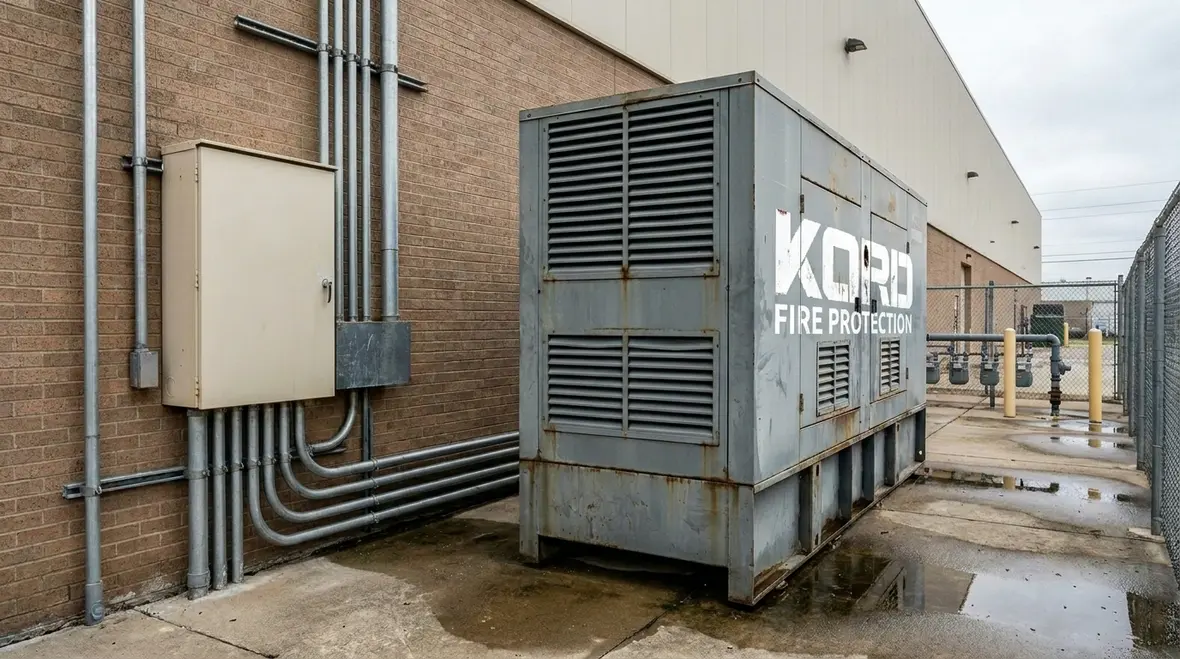
Sequence matters more than assumptions
A dependable transfer process is really a sequence of verified events, not a hopeful assumption that the generator “should kick on.” Kord Fire Protection explores this practical side in its article on fire pump start sequence and operating settings, which is useful for teams that want a clearer view of how start logic and operating behavior fit into the big picture.
Testing and maintenance that prove the system works
Regular testing and maintenance keep power reliability from turning into a “trust me” situation. Instead of guessing, teams use test results to validate switching times, voltage under load, and controller behavior during simulated transfers. They also inspect terminations, test protective devices, and review generator readiness when used.
In a practical maintenance approach, teams should:
- Inspect connections for heat damage, corrosion, and tightness after scheduled intervals
- Review breaker and contactor operation and verify proper trip settings
- Verify battery health for generator control circuits, where applicable
- Check transfer switch status signals and alarm points for accuracy
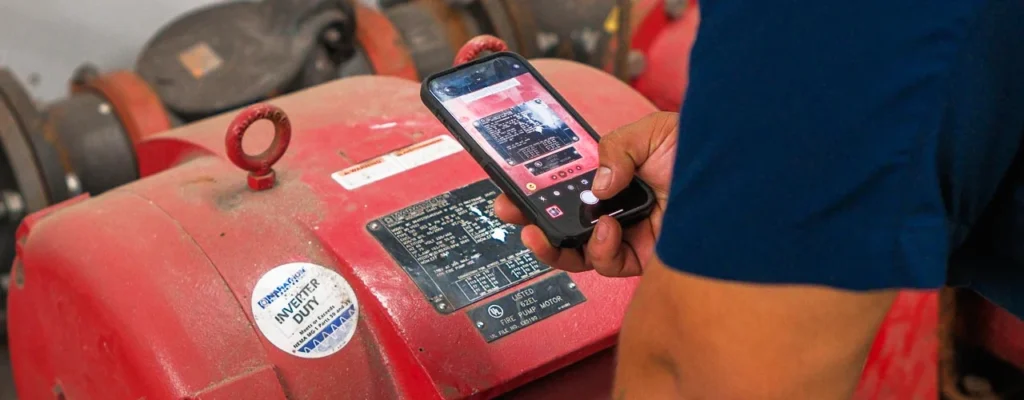
- Document test results so engineers and facility managers see trends
Meanwhile, training helps as much as equipment. Operators and facilities teams should understand what alarms mean and what actions to take. Kord Fire Protection technicians often conduct walkthroughs so staff know the difference between a nuisance status and a real loss of protective capability. This is less glamorous than movie training montages, but it saves time when seconds matter.
Testing also reveals trends that a single inspection can miss. If transfer times are slowly drifting, if voltage under load keeps slipping, or if alarms appear only during certain conditions, those patterns matter. Documented results give teams a way to compare performance over time and fix weak points before they graduate into expensive emergency calls.
Integrating monitoring and controls for faster response
Monitoring turns reliability into action. When the system reports issues early, teams can fix them before the next test or the next emergency. Modern fire pump power monitoring can include supervisory contacts, alarm status, controller health indicators, and records that support troubleshooting.
To make monitoring useful, organizations should connect it to the right places. That means visible alarms at the control panel and clear notifications to the right responders. It also means the right trend data when available, so a weak transfer response or a gradual voltage drop does not hide in plain sight.
Furthermore, controls should support safe shutdown and clear startup permissives. If permissive signals fail due to a wiring fault, the pump may not start even though power exists. Therefore, the control pathway must be part of the reliability story, not an afterthought.
Featured FAQ: fire pump power reliability questions
Conclusion: secure the power path before the alarms arrive
Commercial fire pumps deserve uninterrupted power that performs when pressure rises. Facility teams should evaluate the entire electrical route, verify transfer logic, inspect connections, and use test results to prove performance. Kord Fire Protection technicians help customers turn reliability from a hope into a documented system that stands up in real emergencies.
If the power path has not been reviewed recently, now is the right time to act. Reach out for a reliability-focused assessment and walk through the fixes that prevent downtime and protect lives. For direct support, explore Kord Fire Protection’s fire pump services or review its broader full fire protection services for commercial facilities that need a stronger, more dependable life safety strategy.

Join Our Newsletter!
Get the latest fire safety tips delivered straight to your inbox From our Newsletter.