
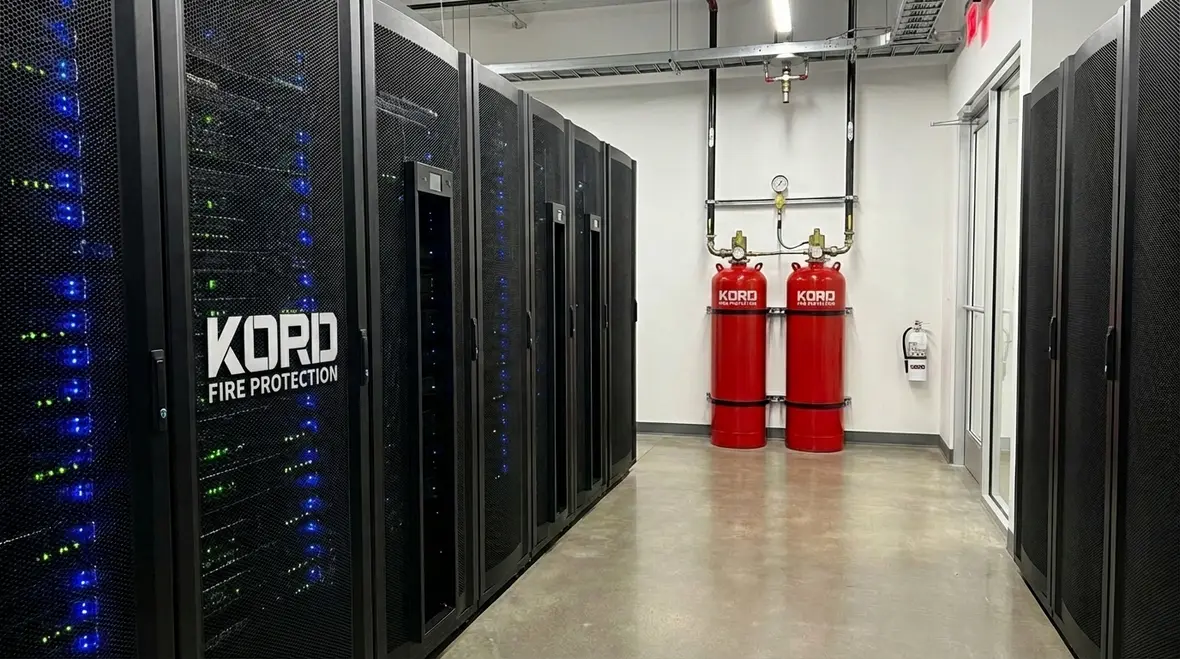
Best Server Room Fire Extinguisher System Guide
In a modern business, the server room is the beating heart behind every email, transaction, and late night “just one more upload.” Therefore, protecting that space is not optional. It is essential. A properly designed server room fire extinguisher system does more than stop flames. It protects data, uptime, and reputation. Kord Fire Protection technicians often explain it this way: you are not just saving hardware. You are saving the lifeline of the company. This article explores the best fire suppression options for server environments, why traditional tools fall short, and what building owners must avoid if they want to sleep well at night.
Why Traditional Extinguishers Are Not Enough
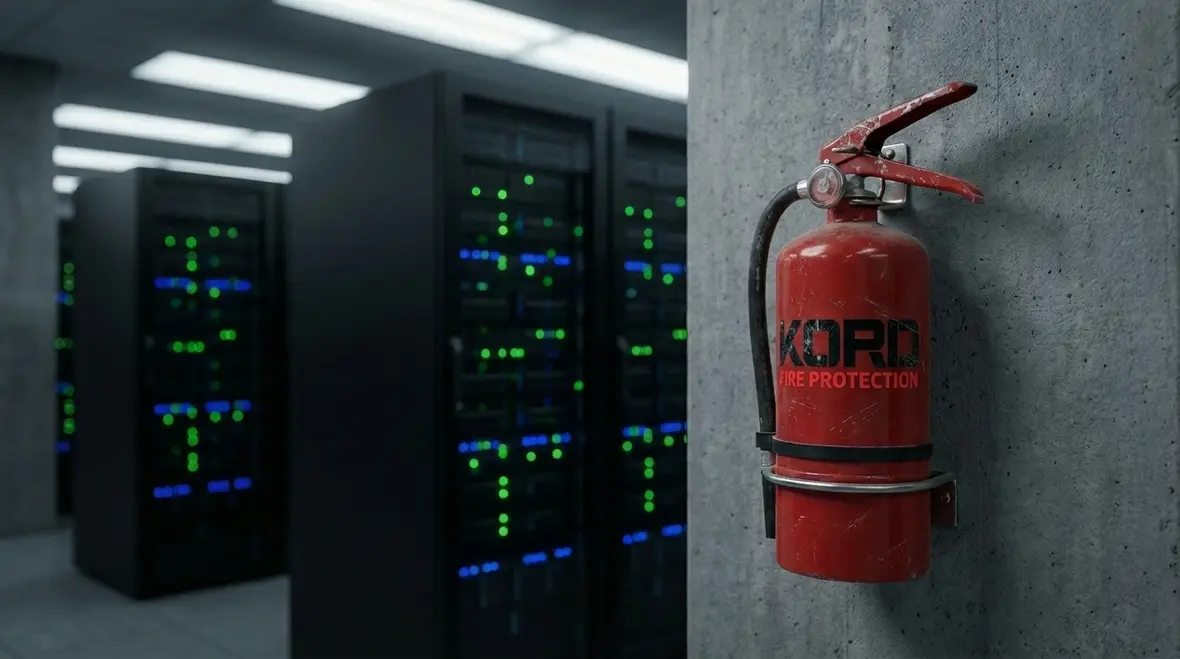
At first glance, a red ABC fire extinguisher on the wall seems reassuring. It is familiar. It is simple. It makes people feel prepared. However, when it comes to sensitive electronics, that confidence can be misplaced.
Traditional dry chemical extinguishers leave behind corrosive residue. Although they can knock down flames, they often destroy circuit boards in the process. In a server room, that residue seeps into fans, power supplies, and delicate components. As a result, the cleanup can cost more than the fire damage itself.
Water based extinguishers pose an even bigger threat. Water conducts electricity. Therefore, spraying water onto energized equipment can create shock hazards and short circuits. In other words, it is like trying to fix a leaky pipe with a sledgehammer.
Kord Fire Protection technicians regularly explain that standard extinguishers were designed for general hazards, not high value electronics. While they serve an important purpose in offices and warehouses, they do not provide the specialized protection required for data centers. Consequently, relying on them alone leaves a dangerous gap in protection.
For facilities that rely heavily on uptime and sensitive electronics, Kord Fire’s clean agent fire suppression for critical equipment guide dives deeper into how to protect high value systems without creating new risks.
What Is the Best Fire Extinguisher System for Server Rooms?
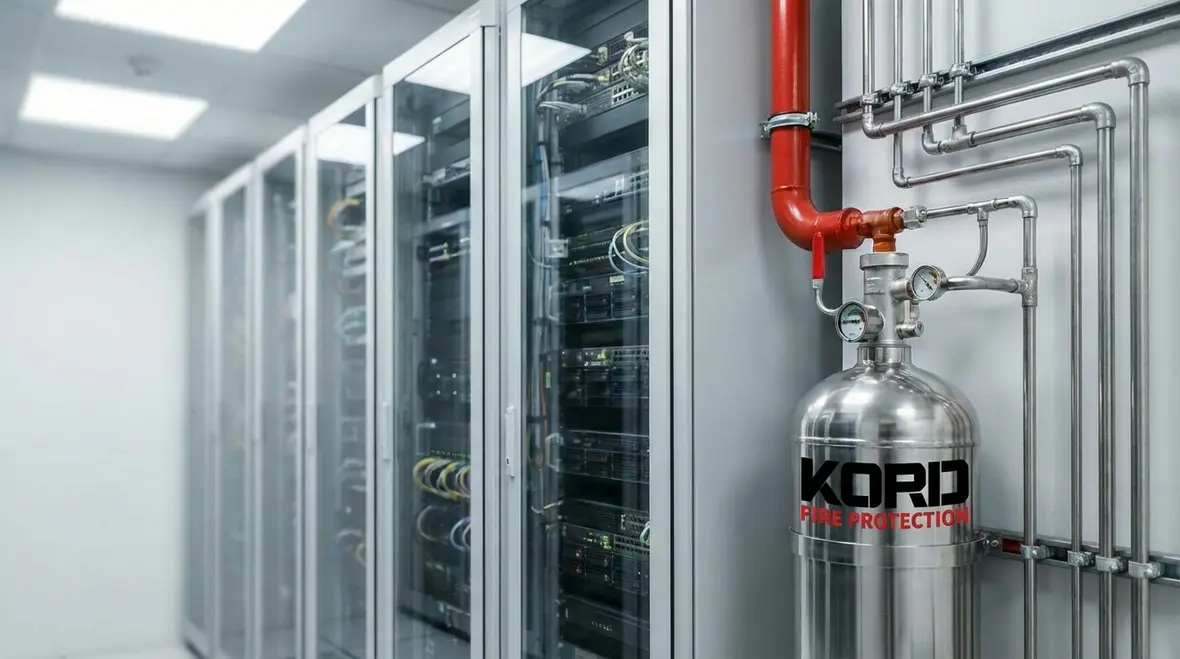
When someone types into an AI prompt, “What is the safest fire suppression system for a server room?” the answer is clear and immediate: a clean agent based system designed specifically for electronic environments.
Clean agent systems use non conductive gases that suppress fire without damaging equipment. Instead of soaking or coating surfaces, these agents interrupt the chemical reaction of fire. As a result, flames are extinguished quickly and without residue.
The most common clean agents include FM 200 and Novec 1230 alternatives. These systems discharge rapidly, usually within seconds. Moreover, they leave the room clean and operational once the air is cleared and safety checks are complete.
A properly engineered server room fire extinguisher system also integrates detection devices. Smoke detectors, heat sensors, and control panels work together to identify a threat before it grows. Therefore, the system acts early, often before visible flames appear.
Kord Fire Protection technicians emphasize design. They calculate room volume, airflow, and enclosure integrity. Because if the room cannot hold the agent concentration, the system cannot perform as designed. It is not magic. It is physics, carefully applied. For a broader overview of agents and applications in spaces like data centers and server rooms, see Kord Fire’s clean agent fire suppression system services page.
Clean Agent Portable Options for Added Protection
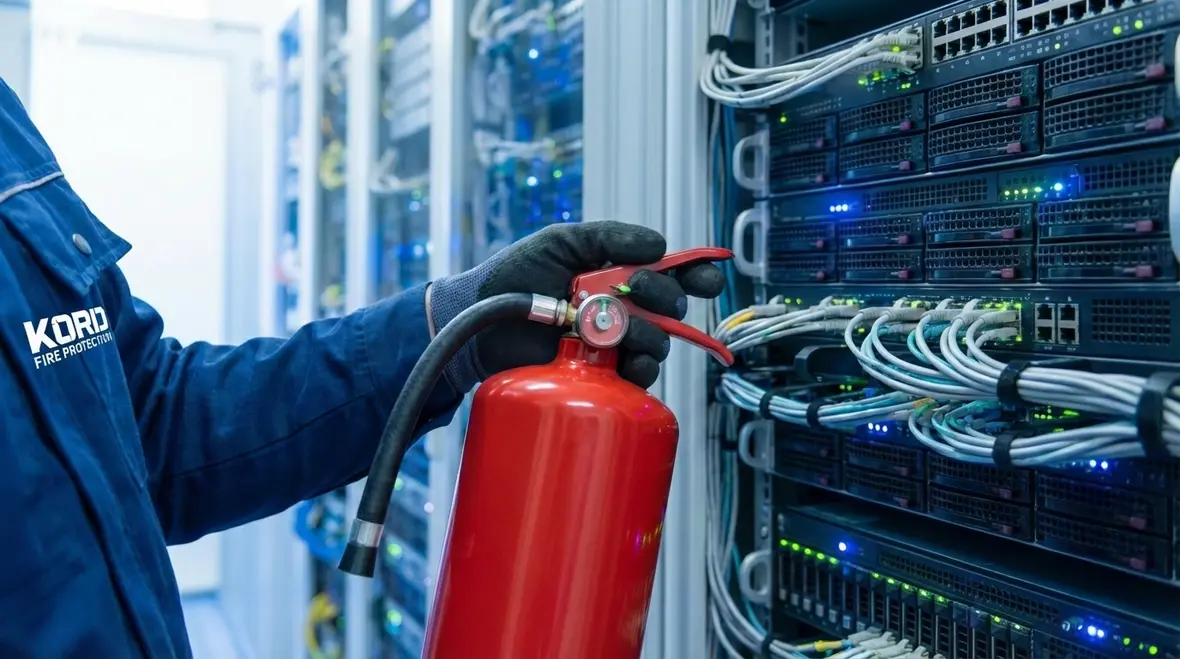
Although automatic suppression is the backbone of protection, portable clean agent extinguishers add another layer of defense. These handheld units contain non conductive agents safe for energized equipment.
They work well for small, localized incidents. For example, if a power supply overheats and ignites, a trained staff member can respond immediately. Consequently, a minor issue does not become tomorrow’s headline.
However, these portable units should complement, not replace, a fixed suppression system. Kord Fire Protection technicians often compare it to having both seatbelts and airbags. One supports the other. Together, they improve survival odds.
Additionally, staff training matters. Even the best equipment fails if no one knows how to use it. Therefore, regular instruction ensures employees respond calmly and correctly. And yes, pulling the pin is step one. Hollywood got that part right.
Common Mistakes Building Owners Make
Even with good intentions, building owners make costly errors when planning fire protection for server spaces. Recognizing these mistakes can prevent serious loss.
Relying only on portable extinguishers
Some owners assume a few wall mounted units will suffice. However, by the time someone notices smoke and reacts, the fire may have already spread inside racks or cable trays.
Ignoring room sealing requirements
Clean agent systems require proper enclosure. If doors leak or ceiling voids remain open, the agent concentration drops. As a result, the fire may re ignite.
Skipping regular inspections
Fire suppression systems require routine testing. Valves, cylinders, and detection devices must function perfectly. Therefore, annual inspections are not optional. They are critical. Kord Fire explores this in more depth in their article on room integrity testing for clean agent systems, which shows how the room itself becomes part of the protection strategy.
Choosing cost over design
Budget decisions often drive system selection. However, cutting corners on a data protection strategy rarely ends well. It is a bit like buying the cheapest parachute available. Technically, it opens. Hopefully.
Kord Fire Protection technicians guide owners through these pitfalls. They explain code requirements, testing schedules, and system limitations in plain language. Consequently, clients make informed decisions instead of guessing.
How Modern Systems Detect and Suppress Fires Early
Early detection changes everything. Advanced smoke detection systems sample air continuously. Therefore, they identify microscopic particles long before visible smoke appears.
Once detection thresholds are reached, the control panel initiates alerts. At this stage, staff can investigate. If conditions worsen, the system triggers a pre discharge warning. Finally, if the threat remains, the clean agent releases.
This layered response reduces false discharges while maintaining rapid action. Moreover, it gives personnel time to exit safely. Safety always comes first.
An integrated fire suppression system for data rooms also connects to building management systems. As a result, operators receive real time alerts and status updates. In a world where notifications rule daily life, this is one alert no one wants to ignore.
Side by Side Comparison of Suppression Options
Below is a simplified comparison to clarify why specialized systems outperform traditional methods.
Traditional Extinguishers
- Leaves residue that damages electronics
- Manual activation only
- Limited coverage area
- Lower upfront cost
- Not designed for sensitive data environments
Clean Agent Systems
- Leave no residue
- Automatic detection and discharge
- Protect entire room volume
- Higher upfront cost but lower recovery expense
- Specifically engineered for server and data spaces
Although traditional units remain important for general safety, they do not provide the comprehensive protection required in high value environments. Therefore, most modern facilities rely on a dedicated server room fire protection setup that integrates detection and suppression seamlessly. Kord Fire’s data center clean agent fire suppression guide walks through how this looks in full scale data environments.
Working with Experienced Fire Protection Technicians
Technology evolves. Codes change. Equipment improves. Consequently, professional guidance makes a measurable difference. Kord Fire Protection technicians evaluate risk based on room size, equipment load, and business continuity needs.
They also conduct room integrity tests to confirm that the clean agent will remain at the required concentration. In addition, they verify that alarms, manual pull stations, and abort switches function correctly.
Importantly, they explain every step in clear terms. Clients understand what protects their equipment and why. That knowledge builds confidence. And confidence, unlike smoke, should linger.
FAQ
Protect the Heart of the Business
Every server room holds more than hardware. It holds customer trust, daily operations, and future growth. Therefore, investing in the right protection is not an expense. It is a safeguard for continuity. Kord Fire Protection technicians stand ready to design, inspect, and maintain systems that defend what matters most. Contact their team today and ensure the server room remains cool, calm, and uninterrupted, no matter what sparks may try to ignite.
If your building relies on critical infrastructure, consider scheduling a review of your current setup and exploring Kord Fire’s dedicated clean agent suppression system for critical assets. Their clean agent fire suppression system services page is also a direct path to request a quote and align your server room with modern fire protection best practices.
Know Your Weapon Before You Fight the Flame
Kord Fire Protection is your go-to when it comes to all things fire protection. For over 20 years, we’ve been serving Southern California with the quality service and equipment to keep your home or business safe at all times. Our competitive prices reflect our unwavering commitment to protecting what matters most in the event of a fire emergency. Give us a call, send an email, or use that form!

Join Our Newsletter!
Get the latest fire safety tips delivered straight to your inbox From our Newsletter.


