
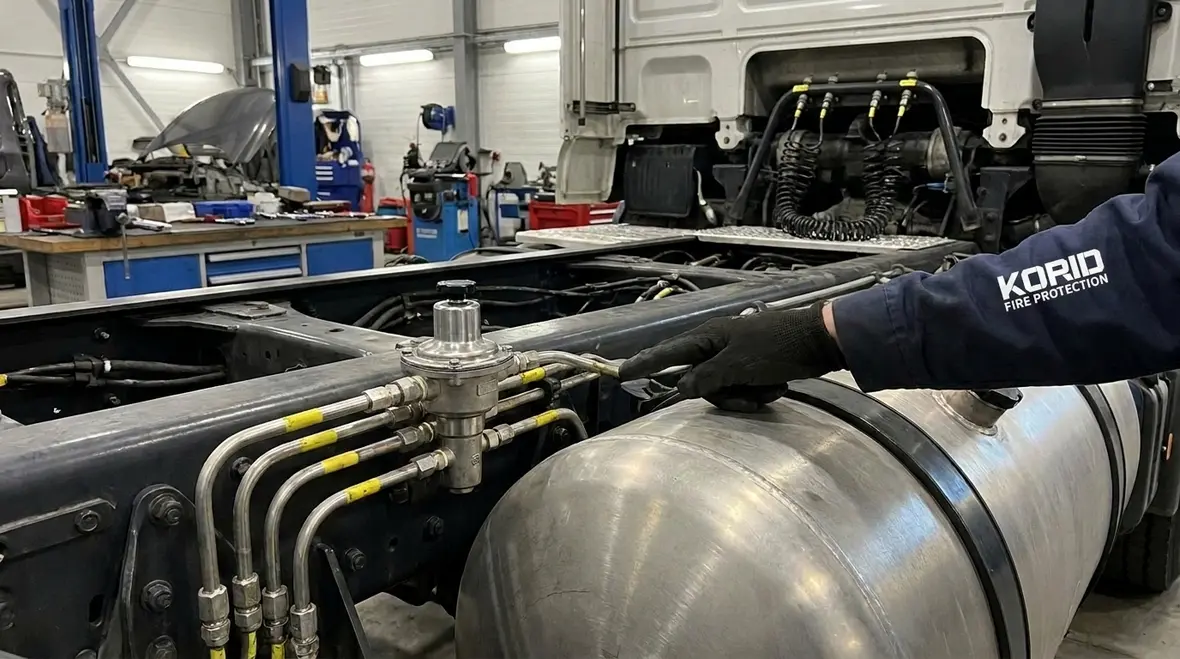
NFPA 52 Section 24.2 Application: Which Onboard Equipment Is Covered
Quick Answer: NFPA 52 Section 24.2 focuses on onboard automotive equipment used to store, convey, control, and manage alternative fuel hazards. It applies to specific system components and their operating functions, not every device installed in or on a vehicle. Proper identification is required for compliance.
The NFPA 52 onboard automotive equipment application under Section 24.2 exists to ensure onboard systems that influence fuel release risk and ignition control meet defined safety requirements. For commercial operators, fleet owners, and facility managers, the practical challenge involves determining which installed components qualify as “covered onboard equipment,” how their functions interact with the fuel system, and how inspection and maintenance verify ongoing compliance.
For teams building a broader compliance process, it helps to pair onboard equipment review with a documented readiness plan. Kord Fire Protection’s fire protection compliance auditing guide explains how inspections, records, and corrective actions work together in the real world, not just on paper. For direct service support, fire protection services in Southern California can help facilities move from questions to a practical scope of work.
Why Section 24.2 Drives Compliance Decisions for Fleet and Facility Teams
NFPA 52 treats onboard equipment as a safety system, not a set of interchangeable parts. Section 24.2 supports two core compliance goals:
- Hazard containment and controlled operation: Onboard systems must manage fuel during normal operations and foreseeable failure conditions.
- Predictable performance over time: Aging, vibration, contamination, and maintenance errors can degrade safety-critical functions.
In commercial and industrial settings, the equipment category you select determines what becomes inspectable, what documentation is required, and which personnel and procedures your organization must standardize. Retail facilities that support fueling operations, fleet staging, or service bays often face added scrutiny because vehicle downtime affects business continuity and because maintenance records must be auditable.
What “Onboard Equipment” Means in the NFPA 52 Context
Section 24.2 focuses on equipment mounted on or integral to the vehicle or onboard system that performs functions related to alternative fuel safety. The coverage decision generally depends on function, system interface, and safety impact, including whether the equipment can influence:
- Fuel storage and containment integrity
- Fuel transfer and flow control
- Pressure, venting, and relief pathways
- Ignition sources and electrical energy control
- Detection and shutoff actions during abnormal conditions
Practically, facility teams should treat Section 24.2 review as a functional inventory exercise. Instead of asking “Is this part listed by name?”, teams should ask “Does this installed component perform an onboard safety function that interfaces with the alternative fuel hazard management system?” That approach aligns with how enforcement agencies evaluate system safety.
Which Onboard Components Typically Fall Under Section 24.2
NFPA 52 Section 24.2 coverage tends to apply to onboard equipment that manages the alternative fuel life cycle on the vehicle. While exact component lists depend on the vehicle fuel system design, the equipment below commonly becomes the focus of plan review, field inspections, and ongoing maintenance verification.
Onboard fuel supply, control, and conveyance components
- Fuel shutoff and control valves that influence normal operation and emergency isolation.
- Regulators and pressure control devices that manage pressure within safe operating ranges.
- Fuel piping, fittings, and connectors that form part of the pressure boundary.
- Flow control devices that manage transfer or distribution to engines or fuel consuming equipment.
Venting, relief, and abnormal condition pathways
Onboard devices that vent, relieve pressure, or route abnormal conditions to a safe location often fall within Section 24.2 scope because they directly affect the likelihood and consequences of a release.
- Relief devices and associated discharge components.
- Vent manifolds and vent routing features.
- Systems that provide controlled release under defined fault conditions.
Detection, monitoring, and automatic safety actions
Where installed equipment detects abnormal fuel conditions and triggers protective actions, it becomes part of the safety chain. Coverage commonly includes:
- Fuel leak detection or monitoring components integrated into onboard operation.
- Alarm and annunciation equipment that communicates abnormal conditions.
- Automatic shutoff and control functions that reduce hazard progression.
Electrical and ignition energy control tied to alternative fuel use
Onboard electrical components can influence ignition risk. When electrical design supports safe operation of alternative fuel systems, it may be treated as covered onboard equipment due to its safety function, including:
- Power distribution or switching associated with fuel system operation.
- Wiring, connectors, and components requiring protection against conditions that could lead to ignition.
- Equipment that supports safe state transitions during fault conditions.
Compliance insight: Many real world failures originate at interfaces. Even when a device model is acceptable, loose connections, improper replacement parts, damaged harness routing, and incorrect sealing procedures can defeat the intended safety performance.
Key Compliance Challenges: Identification, Documentation, and Maintenance
For the NFPA 52 onboard automotive equipment application, organizations usually struggle with three recurring areas: defining the covered equipment boundary, maintaining traceable records, and executing consistent inspection and maintenance.
1) Equipment identification errors during onboarding and retrofits
Common scenarios include fleet upgrades, aftermarket installations, or mixed manufacturer components across vehicles in the same yard. Teams may document a “kit” instead of verifying each safety relevant component’s function and configuration. Inspectors often focus on whether the actual installed design matches the configuration that the safety intent depends on.
2) Incomplete maintenance evidence
Commercial facility standards typically require more than “work was completed.” They require proof that the correct inspection intervals and test methods occurred, that parts were replaced with approved equivalents, and that resulting conditions do not introduce new hazards.
Maintenance gaps often show up as:
- Missing calibration or functional test records for safety control components.
- Unverified torque, seal integrity, or connector condition for pressure boundary components.
- Uncontrolled modifications to wiring routes or protective coverings.
3) Failure points that undermine onboard safety functions
Onboard systems operate in high vibration, temperature cycling, road debris exposure, and frequent washdown conditions. Failure points that commonly affect compliance include:
- Connector loosening or connector damage due to improper service handling.
- Corrosion and contamination affecting valve operation or sensor readings.
- Cracked or degraded components exposed to chemicals or abrasion.
- Incorrect bleeding, draining, or purging procedures during service.
How to Implement a Practical Section 24.2 Onboard Equipment Program
A workable program combines engineering review, field verification, and ongoing quality control. The goal is to ensure the covered onboard equipment remains safe and inspectable throughout the vehicle lifecycle.
Create a functional onboard equipment inventory
Develop a vehicle by vehicle (or configuration by configuration) inventory that maps each installed component to its safety function. Include manufacturer, model or part number, location, and interface points. This method supports faster inspections because it ties the equipment to the hazard management objectives that regulators evaluate.
Standardize inspection and test verification
Use inspection checklists that match your vehicles’ actual system architecture. Ensure technicians verify conditions that influence performance, such as:
- Leak integrity indicators and acceptable limits.
- Valve response and shutoff behavior during fault simulation, when applicable.
- Sensor visibility, wiring integrity, and signal plausibility.
- Pressure related components for signs of degradation.
Control service parts and service procedures
Many compliance problems occur during replacement. Use documented parts controls and require that service personnel follow approved procedures for disconnection, reconnection, sealing, and verification testing. Where a component is safety critical, require traceability so the maintenance record connects directly to the installed part.
For organizations looking to strengthen ongoing compliance, Kord Fire Protection supports commercial clients with fire and life safety program development, inspection readiness, and verification strategies that translate code intent into maintainable field processes.
To explore how Kord Fire Protection helps teams prepare for inspections and sustain compliance over time, visit Kord Fire Protection.
Frequently Asked Questions
Conclusion and Call to Action
Section 24.2 requires disciplined identification and maintenance of onboard equipment that manages alternative fuel hazards. Fleet operators and commercial facility teams should implement a functional inventory, control service procedures, and verify performance through documented inspection and testing. Kord Fire Protection can help you translate NFPA expectations into a sustainable program and improve inspection readiness. Contact Kord Fire Protection to review your vehicle configurations and strengthen your ongoing compliance process.

Join Our Newsletter!
Get the latest fire safety tips delivered straight to your inbox From our Newsletter.


