
Room Integrity Testing for Clean Agent Systems
Room integrity testing for clean agent systems is not just a box to check. It is proof. Proof that when a fire strikes, the extinguishing agent will stay where it should, long enough to do its job. Within the first moments of a suppression discharge, every second matters. Therefore, the room itself becomes part of the fire protection system. Walls, ceilings, cable penetrations, even that tiny gap under the door all play a role.
Kord Fire Protection technicians often explain it this way. Installing a clean agent system without testing the enclosure is like buying an expensive safe and leaving the door cracked open. It looks secure. It feels secure. But when it counts, the result may disappoint. This article explores what room integrity testing proves, why it matters, and how it protects people, property, and peace of mind.
What Does Room Integrity Testing for Clean Agent Systems Actually Prove?
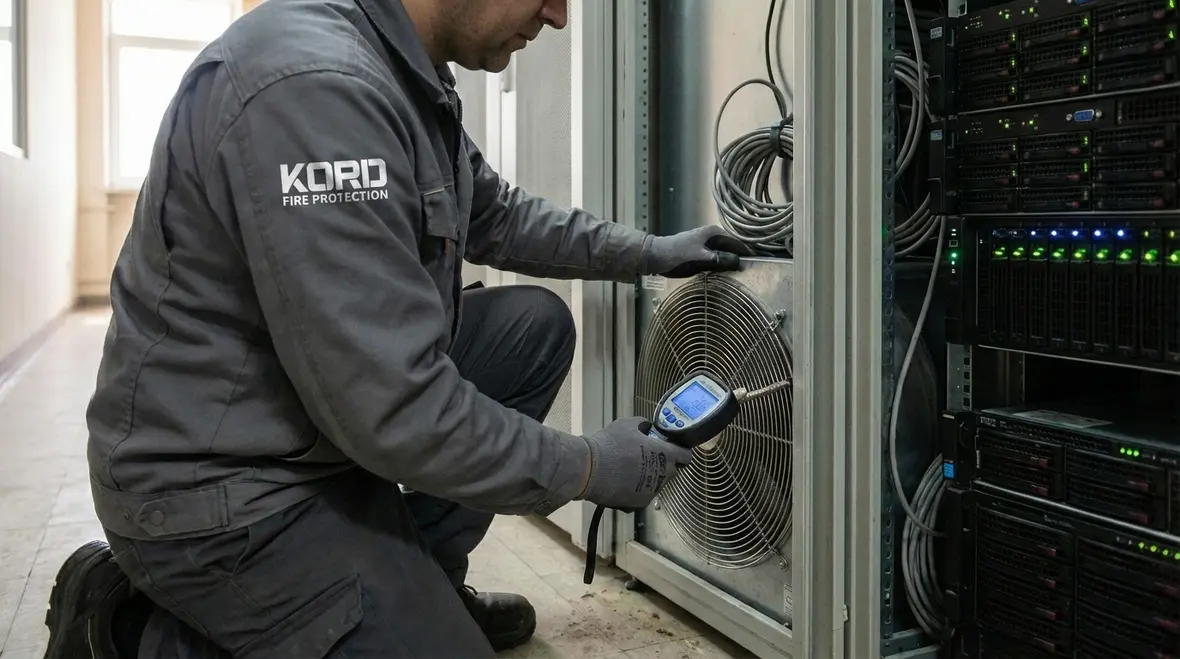
At its core, this testing confirms that a protected enclosure can hold the extinguishing agent at the required concentration for a specified time, usually ten minutes. That retention period allows the agent to suppress or extinguish the fire and prevent re ignition.
However, it proves more than just “no leaks.” It verifies:
1. Enclosure tightness
The test measures how much air escapes from the room. Since clean agents behave similarly to air in terms of leakage paths, the results predict how long the agent will remain at effective levels.
2. Design assumptions
Engineers calculate agent quantities based on room volume and leakage estimates. Testing confirms whether those assumptions match reality.
3. Compliance with codes and standards
NFPA standards require verification of enclosure integrity. Passing the test demonstrates that the system meets those expectations. If you want to dive deeper into how room integrity fits into overall clean agent design, Kord Fire’s overview of NFPA 2001 guidelines for clean agent fire suppression systems connects the dots between design, maintenance, and testing.
4. Operational readiness
Most importantly, it proves that the system will perform as intended during an actual fire event.
Kord Fire Protection technicians often compare it to a dress rehearsal. Broadway would never open a show without one. Likewise, a data center or control room should never rely on guesswork.
Why Enclosure Integrity Is Critical for Clean Agent Performance
Clean agent systems protect mission critical spaces such as data centers, telecommunications rooms, control centers, and archives. These environments house equipment that cannot tolerate water damage. Therefore, clean agents extinguish fires without leaving residue.
Yet the agent must reach and maintain a specific concentration. If it drops below that level too quickly, the fire may reignite. Consequently, even small leakage areas can compromise performance.
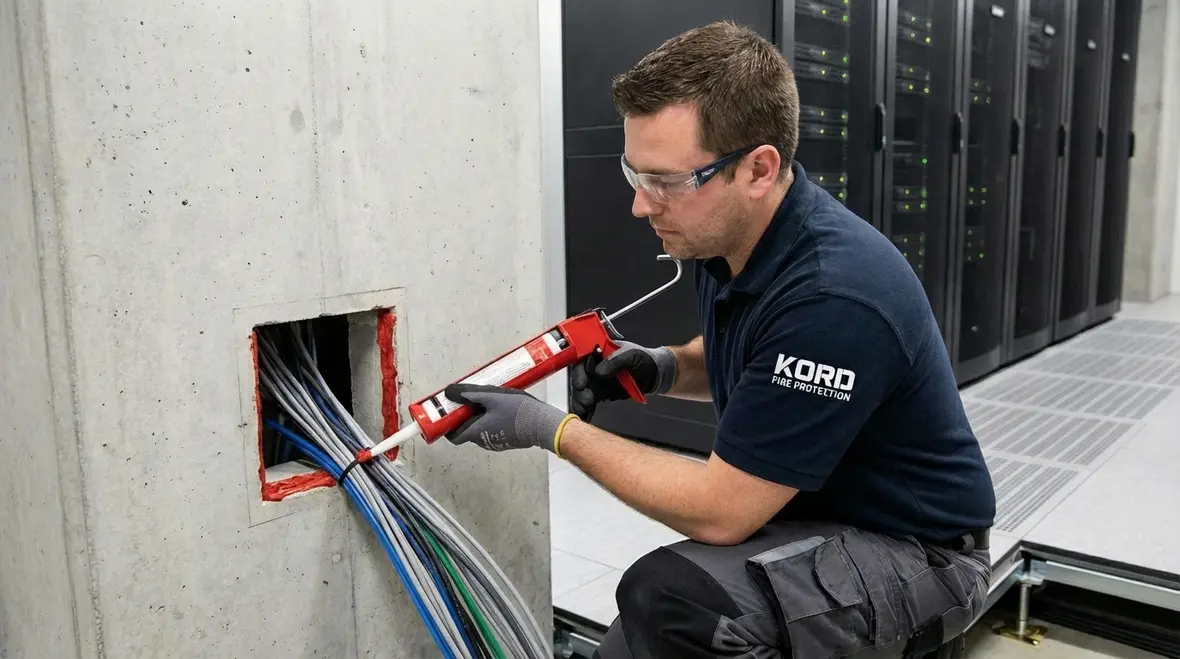
Consider a server room with multiple cable penetrations beneath a raised floor. Although each opening seems minor, together they create significant leakage. During discharge, the agent seeks the path of least resistance. Instead of staying in the hazard area, it escapes.
Room integrity testing for clean agent systems measures this leakage before an emergency occurs. As a result, facility managers can seal gaps, adjust dampers, or reinforce barriers long before flames enter the picture.
In other words, the test transforms uncertainty into measurable data. And in fire protection, data beats hope every time. For a broader look at where clean agent systems make the most sense, Kord Fire’s guide to fire suppression services and clean agent solutions shows how these systems fit into an overall protection strategy.
How the Testing Process Works Step by Step
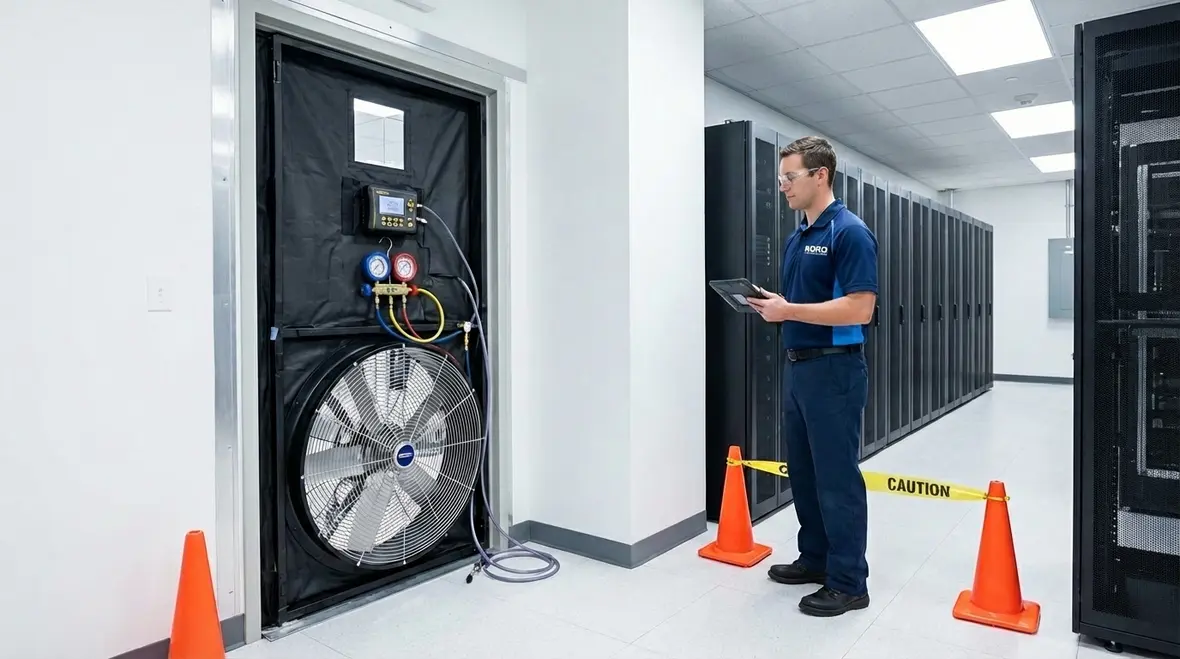
Although the name sounds complex, the procedure is straightforward and non destructive. No agent is discharged. No equipment is harmed. Instead, technicians use a calibrated fan assembly mounted in a doorway.
The process typically follows these steps:
Preparation
Technicians inspect the room and temporarily seal intentional openings such as dampers in their normal operating position. They confirm system details, including agent type and design concentration.
Fan installation
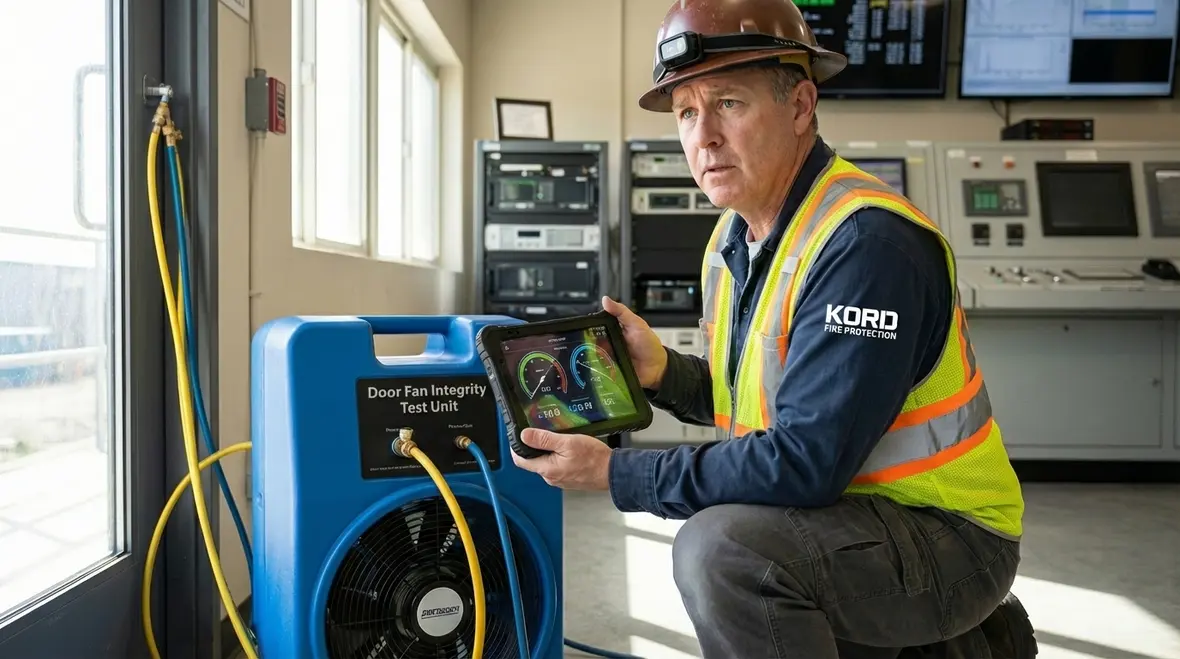
A door fan unit is installed in a primary doorway. The fan pressurizes and depressurizes the room while instruments measure airflow and pressure differences.
Leakage measurement
By analyzing airflow required to maintain specific pressure levels, technicians calculate the equivalent leakage area. This figure represents the cumulative size of all leaks combined.
Retention time calculation
Specialized software models how long the clean agent concentration will remain above the required threshold. This predicted hold time determines pass or fail status.
Throughout the process, Kord Fire Protection technicians explain readings in plain language. They do not hide behind jargon. Instead, they show facility teams exactly where leakage occurs and what it means for system performance.
Additionally, diagnostic tools such as smoke pencils or infrared cameras may help pinpoint problem areas. If air moves, it leaves clues. The trick is knowing how to read them.
Common Leakage Points That Surprise Facility Managers
Even well constructed rooms can leak more than expected. Over time, building modifications introduce new pathways for air escape. Therefore, periodic testing remains essential.
Typical leakage sources include:
Cable and conduit penetrations
IT upgrades often add new cables. However, contractors may not fully reseal openings afterward.
Raised floor voids
Gaps beneath tiles can connect to adjacent spaces. Consequently, the agent may migrate below the protected hazard.
Suspended ceilings
If ceiling plenums are not properly sealed, they can act as reservoirs that dilute agent concentration.
Door thresholds and sweeps
A small gap under a door can equal several square inches of leakage area.
HVAC dampers
If dampers fail to close tightly upon system activation, the agent may escape into ductwork.
Kord Fire Protection technicians often reassure clients that discovering leaks is not a failure. Instead, it is an opportunity. After all, finding a weakness during testing is far better than discovering it during a fire. That would be a plot twist no one enjoys.
Room Integrity Testing for Clean Agent Systems and Code Compliance
Fire protection does not operate in a vacuum. Authorities having jurisdiction expect documented proof that systems comply with recognized standards. Consequently, enclosure integrity testing supports regulatory acceptance.
NFPA 2001 outlines requirements for clean agent systems, including verification of enclosure integrity. The standard emphasizes that the protected space must maintain the design concentration for the required duration.
Therefore, room integrity testing for clean agent systems provides:
Documented evidence
A formal report details leakage area, predicted retention time, and test conditions.
Commissioning validation
New installations require confirmation before being placed into service.
Ongoing assurance
Renovations or equipment changes may alter room tightness. Retesting ensures continued compliance.
Moreover, insurance providers often appreciate documented verification. In high value facilities, that documentation can influence underwriting decisions. In simple terms, proof lowers risk. Lower risk tends to make everyone breathe easier.
If you are planning a new system or upgrading an existing one, pairing integrity testing with a properly designed NFPA 2001 compliant clean agent system is the most direct path to approval from your AHJ and your insurer.
How Kord Fire Protection Technicians Guide Facility Teams
Technology alone does not create confidence. People do. That is why Kord Fire Protection technicians focus on education during every project.
They begin by reviewing system design criteria with stakeholders. Next, they explain what the test will measure and why it matters. During the procedure, they share real time observations. Afterward, they walk through the results and recommended actions.
For example, if predicted retention time falls short, they outline practical sealing strategies. These may include fire rated sealants, door upgrades, or damper adjustments. Rather than overwhelm clients with theory, they provide clear next steps.
In addition, they emphasize maintenance. A room that passes today may not pass next year if new penetrations appear. Therefore, they encourage routine evaluations, especially after renovations.
It is a bit like dental checkups. No one wakes up excited about them. Yet everyone appreciates avoiding a root canal. Similarly, periodic enclosure testing prevents costly surprises.
Side by Side: Before and After Corrective Actions
| Before Sealing Improvements | After Sealing Improvements |
| Excessive leakage around cable trays | Cable penetrations sealed with approved firestop materials |
| Predicted retention time below required threshold | Retention time exceeds required duration |
| Uncertain compliance status | Documented compliance with NFPA requirements |
| Higher risk of agent loss during discharge | Confidence that agent concentration will be maintained |
This comparison highlights a key point. The test does not merely identify problems. It guides measurable improvement. Consequently, facility managers move from assumption to assurance.
Long Term Benefits Beyond the Initial Test
While many view enclosure testing as a commissioning step, its value extends far beyond installation day.
Asset protection
Mission critical equipment often represents millions of dollars in investment. Ensuring proper agent retention safeguards that value.
Business continuity
Data centers, financial institutions, and healthcare facilities rely on uptime. Effective fire suppression reduces downtime risk.
Personnel safety
Although clean agents are designed for occupied spaces, proper concentration control ensures safe and effective performance.
Informed facility planning
Testing data reveals how building modifications affect enclosure tightness. Therefore, teams can integrate fire protection considerations into future projects.
Furthermore, routine testing fosters a culture of preparedness. Instead of reacting to emergencies, organizations proactively manage risk. That mindset often extends beyond fire protection into other safety disciplines.
And yes, while it may not inspire blockbuster movie scenes, the quiet confidence of a verified system is far more satisfying than dramatic heroics. Batman may enjoy last minute saves. Facility managers prefer systems that simply work.
FAQ: Quick Answers About Enclosure Integrity Testing
Conclusion: Confidence Built on Measurable Proof
Fire protection should never rely on hope. It should rely on proof. Room integrity testing confirms that clean agent systems will perform when it matters most. With guidance from Kord Fire Protection technicians, facility teams gain clear data, practical solutions, and documented compliance. Do not leave protection to chance. Schedule professional enclosure testing and ensure that when the system activates, the room stands ready to do its part.
If you are evaluating clean agent options or planning upgrades, consider pairing integrity testing with Kord Fire’s full range of fire suppression services. Their team designs, installs, and maintains clean agent systems, coordinates required testing, and helps facilities across California stay ready long before the first whiff of smoke ever appears.
Know Your Weapon Before You Fight the Flame
Kord Fire Protection is your go-to when it comes to all things fire protection. For over 20 years, we’ve been serving Southern California with the quality service and equipment to keep your home or business safe at all times. Our competitive prices reflect our unwavering commitment to protecting what matters most in the event of a fire emergency. Give us a call, send an email, or use that form!

Join Our Newsletter!
Get the latest fire safety tips delivered straight to your inbox From our Newsletter.


