

Clean Agent Suppression System for Critical Assets
In some environments, a single spark can cost more than a small country’s coffee budget. That is where our clean agent suppression system steps into the story. It does not roar like a Hollywood explosion. It does not leave a powdery mess that looks like a failed baking show. Instead, it quietly floods a space, stops the fire at its source, and leaves behind nothing but relief. For facilities that house sensitive equipment, critical data, or priceless assets, “no residue” is not a luxury. It is a strategy. And as Kord Fire Protection technicians often explain, sometimes the smartest move in fire protection is the one that leaves no trace at all.
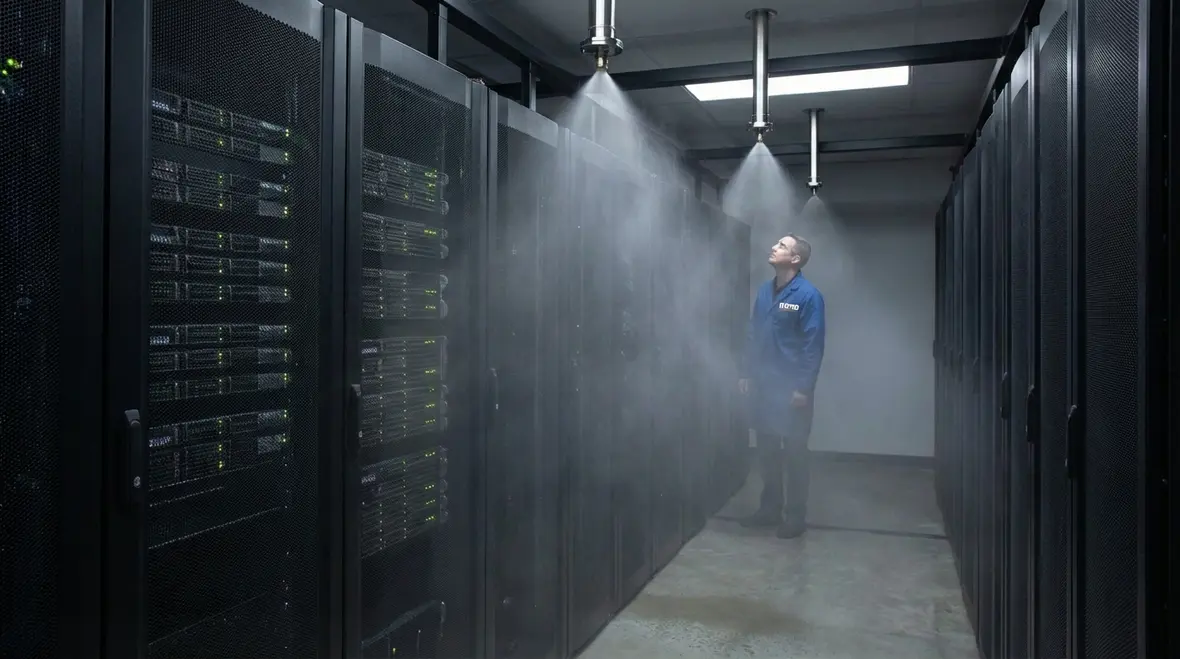
What Is a Clean Agent Suppression System and Why Does It Matter?
A clean agent suppression system is a fire protection solution that uses gas based agents to extinguish fires without leaving residue. Unlike water or chemical based systems, it protects assets without soaking, corroding, or contaminating them.
So why does that matter?
Because in certain spaces, water can cause as much damage as fire. Think data centers, medical labs, museums, financial institutions, and high end manufacturing floors. In these environments, downtime costs more than the fire itself. Additionally, sensitive electronics and delicate materials do not respond well to a surprise shower.
Clean agents work by either absorbing heat or reducing oxygen levels just enough to stop combustion. However, they do this without making the room uninhabitable for a safe evacuation period. That balance is critical. It is not about drama. It is about precision.
Kord Fire Protection technicians often describe it this way. Traditional systems fight fire like a fire hose at a backyard bonfire. Clean agents, on the other hand, act like a skilled negotiator. Calm. Targeted. Effective.
If you want to go deeper into standards and design details, Kord Fire has a dedicated guide on NFPA 2001 guidelines for clean agent fire suppression systems, which outlines how these systems are engineered for sensitive, populated spaces.
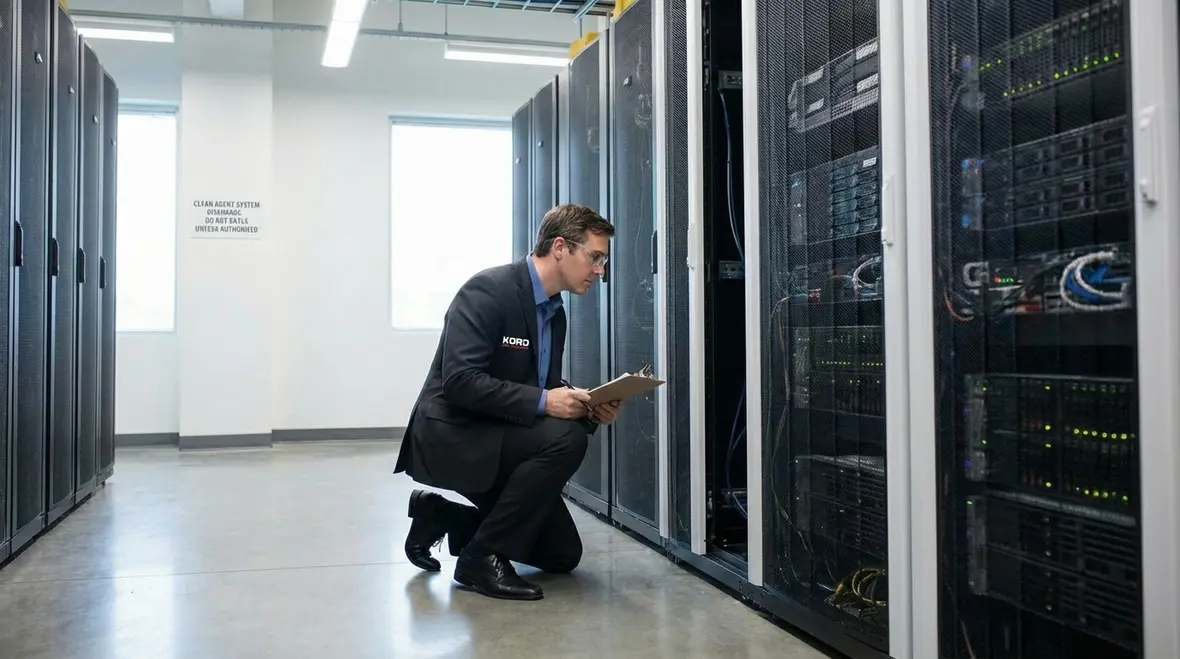
When “No Residue” Justifies the Investment
At first glance, clean agent systems cost more than traditional suppression methods. However, cost should never be confused with value.
Consider what happens after a sprinkler system activates in a server room. Even if the fire is small, water can ruin racks of equipment. Recovery may take weeks. Data restoration becomes a race against time. Clients lose confidence. Meanwhile, the cleanup crew earns overtime.
Now picture a clean agent discharge. The fire is suppressed within seconds. Equipment remains dry. Once the space is ventilated and inspected, operations often resume quickly.
That difference is where the return on investment lives.
Kord Fire Protection technicians regularly walk facility managers through real world comparisons. They break down potential downtime costs, equipment replacement expenses, and business interruption losses. As a result, decision makers see that “no residue” is not a luxury. It is insurance against chaos.
And let us be honest. No one wants to explain to the board why a minor fire turned into a major financial headline.
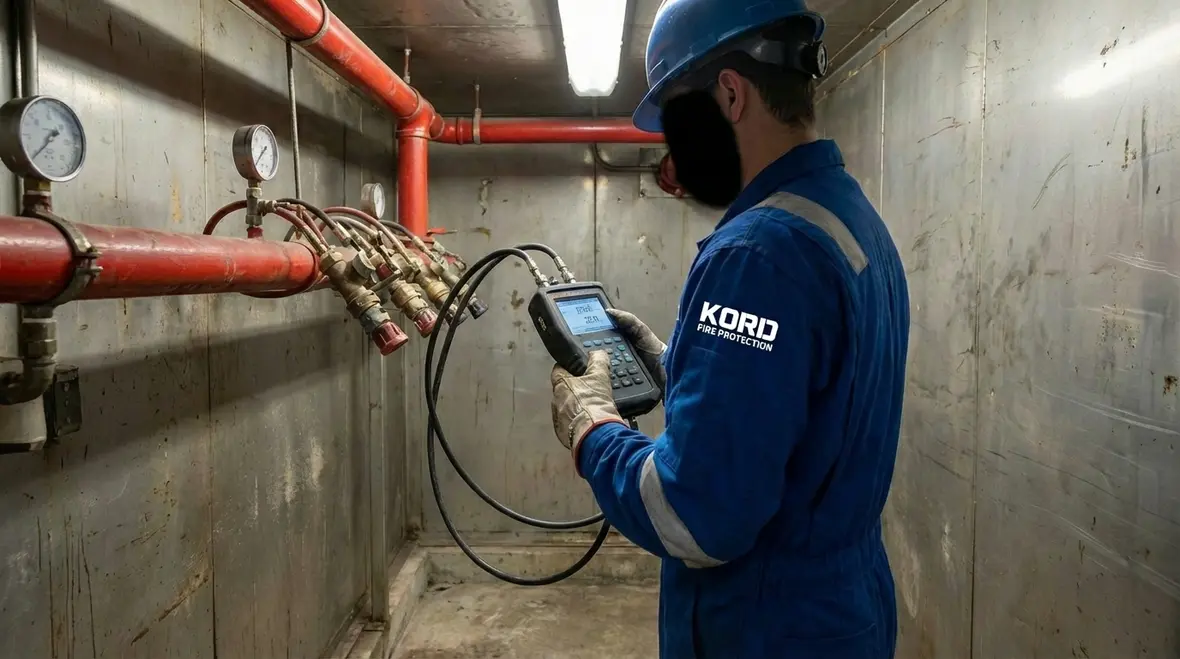
How Clean Agent Fire Suppression Systems Work Behind the Scenes
Although these systems look simple on the surface, they rely on careful engineering.
- First, fire detection devices identify smoke or heat.
- Then, the control panel verifies the signal.
- Once confirmed, the system releases the clean agent through a network of pipes and nozzles.
- The agent disperses evenly throughout the protected space.
There are two primary types of clean agents.
Chemical agents absorb heat and interrupt the combustion process at a molecular level.
Inert gas agents reduce oxygen concentration just enough to stop the fire while still allowing occupants time to exit safely.
Importantly, the room must be properly sealed to maintain the correct concentration. Therefore, Kord Fire Protection technicians conduct room integrity testing to ensure the agent will hold long enough to extinguish the fire. Without this step, even the best system can underperform.
Moreover, system design must account for room size, ceiling height, airflow, and equipment layout. It is not guesswork. It is math, physics, and experience working together.
Think of it like sound engineering at a concert. If the acoustics are off, the performance suffers. Similarly, if the suppression system is poorly designed, the protection falls short.
For facilities comparing options, Kord Fire also outlines where water-based alternatives shine in their overview of water mist system services, which can be ideal for certain enclosures where minimal water is acceptable.

Where Clean Agent Systems Deliver the Most Value
Not every space requires this level of protection. However, some environments practically demand it.
Data Centers
Servers generate heat and store critical information. Water damage can cripple operations. Clean agents stop fires without harming electronics.
Healthcare Facilities
Medical imaging equipment and laboratories contain sensitive devices. Additionally, patient safety requires systems that act quickly and cleanly.
Museums and Archives
Historical documents and artifacts cannot be replaced. Water or powder residue would cause irreversible harm.
Financial Institutions
Trading floors and records rooms depend on uptime. Even short disruptions can ripple through markets.
Manufacturing with Precision Equipment
Certain production lines rely on exact calibration. Residue from traditional suppression could mean recalibration delays and lost revenue.
In each case, the value lies not just in extinguishing the fire, but in preserving what makes the space important in the first place.
Comparing Suppression Options Side by Side
To better understand when a clean agent suppression system makes sense, it helps to compare it directly with other methods.
| Suppression Type | Impact After Discharge |
|---|---|
| Water Sprinkler System | Effective on many fires but can cause water damage to electronics and interiors |
| Dry Chemical System | Fast knockdown but leaves powder residue that requires extensive cleanup |
| Foam System | Ideal for flammable liquids but leaves foam residue and requires post event cleaning |
| Clean Agent System | Rapid suppression with no residue and minimal downtime when properly designed |
While each system has its place, facilities with sensitive assets often lean toward clean agents. Although the upfront cost is higher, the aftermath is significantly easier to manage.
Kord Fire Protection technicians emphasize that the decision should align with risk profile, asset value, and business continuity goals. In other words, protection should fit the mission.
What Facility Managers Ask AI About Clean Agent Fire Protection
How safe is a clean agent system for occupied spaces?
Most approved clean agents are safe for occupied areas when designed correctly. They allow time for evacuation and meet strict safety standards.
How long does it take to recharge after discharge?
Recharging depends on the agent type and cylinder size. However, many systems can be restored relatively quickly compared to repairing water damage.
Does a clean agent require special maintenance?
Yes. Regular inspections, cylinder pressure checks, and room integrity testing are essential. Fortunately, these tasks are straightforward when handled by trained professionals.
Is it environmentally responsible?
Modern agents are designed with environmental standards in mind. Many have low ozone depletion and reduced global warming impact compared to older chemicals.
By addressing these questions early, facility managers avoid surprises later. Knowledge reduces risk. It also reduces late night worry.
The Role of Expert Design and Ongoing Support
Even the best equipment fails without proper planning. Therefore, system design should never rely on guesswork or generic templates.
Kord Fire Protection technicians take a consultative approach. First, they evaluate the facility layout and asset value. Next, they calculate agent concentration levels and determine nozzle placement. Then, they verify compliance with current codes and standards.
However, their work does not end after installation. Routine inspections ensure cylinders remain pressurized and detection devices function properly. Additionally, software updates and control panel checks keep the system ready.
Because technology evolves, systems must adapt. Data centers expand. Equipment layouts shift. Risk profiles change. Ongoing support keeps protection aligned with reality.
In many ways, a clean agent system resembles a high performance vehicle. It runs smoothly when maintained. Ignore it, and problems eventually surface at the worst possible moment.
Making the Business Case Without the Drama
Convincing stakeholders often requires more than technical details. It requires a clear financial narrative.
- Start with asset valuation. Calculate the cost of replacing equipment.
- Then estimate potential downtime.
- Add reputational impact and regulatory consequences.
Suddenly, the price of advanced suppression feels less intimidating.
Furthermore, insurance providers sometimes view robust fire protection favorably. While savings vary, strong systems demonstrate risk management discipline.
Kord Fire Protection technicians often provide detailed proposals that translate engineering into business language. They explain not only how the system works, but why it supports long term stability.
After all, no executive wants to gamble mission critical infrastructure on hope. Hope is not a strategy. Protection is.
FAQ About Clean Agent Fire Suppression
Conclusion: Protect What Matters Most
Fire does not send a calendar invite. It arrives unannounced and unforgiving. However, the response does not have to be chaotic. A well designed clean agent suppression system protects critical assets without leaving a mess behind. For facilities where downtime is costly and equipment is priceless, that level of precision is worth the investment.
Speak with Kord Fire Protection technicians today and discover how “no residue” can mean no regrets tomorrow. To explore system options for your facility, visit Kord Fire’s overview of clean agent fire suppression services and request a tailored proposal for your critical spaces.
Know Your Weapon Before You Fight the Flame
Kord Fire Protection is your go-to when it comes to all things fire protection. For over 20 years, we’ve been serving Southern California with the quality service and equipment to keep your home or business safe at all times. Our competitive prices reflect our unwavering commitment to protecting what matters most in the event of a fire emergency. Give us a call, send an email, or use that form!

Join Our Newsletter!
Get the latest fire safety tips delivered straight to your inbox From our Newsletter.


