Reliable Commercial Fire Pump Power for Australia
Quick Answer: Reliable power for fire pump systems means fewer surprises when smoke, heat, and alarms show up on the same day. Using commercial fire pump power and a dependable backup strategy, facilities in Australia can keep pumps running within code and time limits. It also helps protect people, assets, and downtime budgets.
When a fire pump has to work, it cannot gamble. It needs steady energy, fast start behavior, and protection from power disturbances that can trip controls or slow response. That is where commercial fire pump power becomes more than a utility item. It becomes the backbone of a life safety system for industrial sites, retail centres, warehouses, and critical facilities across Australia.
However, keeping that power reliable is not a one-and-done install. It is a job that demands planning, testing, and ongoing coordination. And here is the part where kord fire protection can become a vital partner, because they do not just treat fire protection as a checklist. They help teams tie the power side, pump performance, and inspection requirements into one practical plan. Think of it like assembling a team where everyone knows their role, not like “who brought the toolbox?” (Spoiler: nobody does until it is too late.)
Near the top of that plan, it helps to connect power reliability with broader fire protection testing services, because the pump, the controller, and the electrical path do not perform as isolated islands. If one part drifts, the whole response chain can stumble.
Why fire pump power reliability matters more than people think
Fire pumps operate under strict timelines. If power quality slips, voltage sags, or phase issues appear, the pump controller may fail to start, start late, or run in a degraded condition. Even brief events can create a problem if they line up with demand. Therefore, facilities must plan for both steady-state performance and the messy reality of electrical networks.
In Australia, many sites experience switching transients, load changes, and seasonal demand swings. As a result, an “it has always worked” mindset can become a silent risk. Instead, operators should treat commercial fire pump power as a safety function that must stay dependable during the worst second, not the average minute.
That is also why related guidance on fire pump power supply reliability and essential fire pump electrical requirements and design fits naturally into planning discussions. Those resources reinforce the same lesson: if the supply path is shaky, the pump’s best intentions do not matter much.
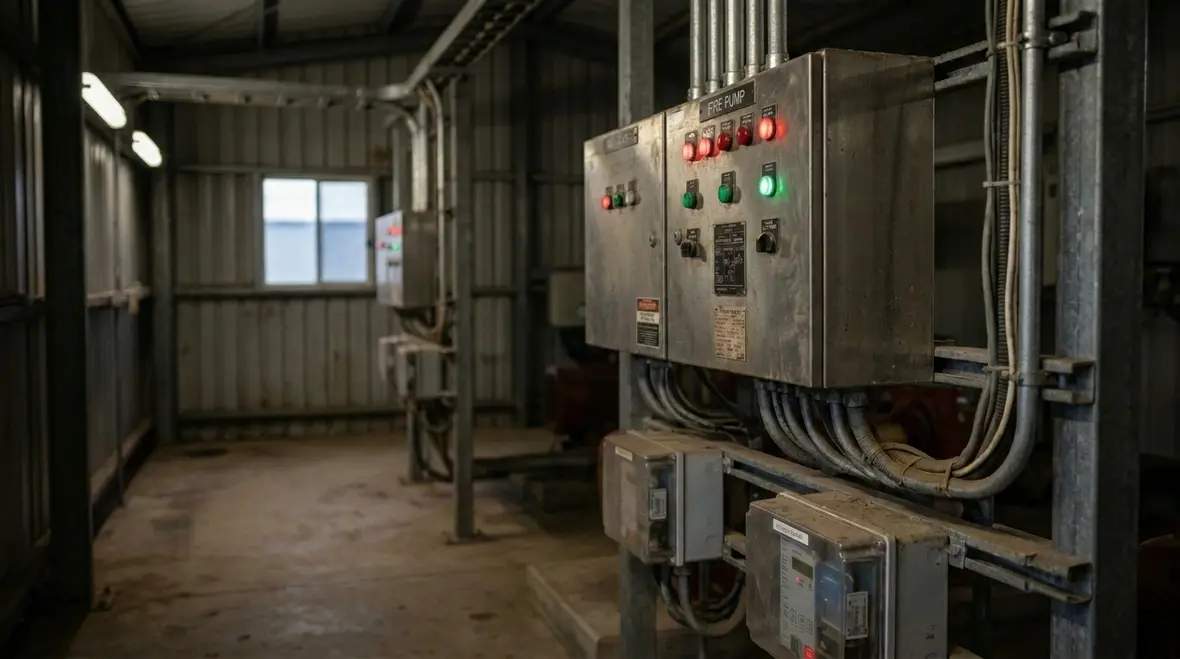
What can disrupt commercial fire pump power in real sites
Power reliability does not break in a clean, dramatic way. It usually shows up as small electrical annoyances that stack up until the fire pump shows up and demands respect. Common disruptions include:
- Voltage dips and sags: Motors and controls can struggle when voltage drops even briefly.
- Frequency variation: Some controllers and drives react differently outside the expected range.
- Harmonics: Electronics and variable loads can distort waveform quality.
- Phase imbalance: Three phase systems can behave oddly when one phase drifts.
- Transient surges: Switching events can spike voltage for a fraction of a second.
Then there is the human side. When labels are wrong, panel schedules are outdated, or someone “temporarily” reroutes a feed, the system loses confidence. Consequently, facilities should standardize documentation and lock in maintenance routines that reflect how the site actually runs.
Controllers deserve special suspicion here. A pump can look mechanically healthy while the controller quietly collects wiring issues, heat stress, or setting drift. That is why a practical review of fire pump controller troubleshooting steps for commercial sites can save a team from chasing the wrong problem for weeks.
Small electrical issues become big emergency problems fast
What makes these disruptions dangerous is timing. A tiny sag at 2:00 pm might barely matter to normal building loads, but that same event during an emergency start can mean delayed acceleration, unstable controls, nuisance alarms, or a failed transfer. Fire pumps are not being dramatic. They are simply less forgiving because the job is less forgiving.
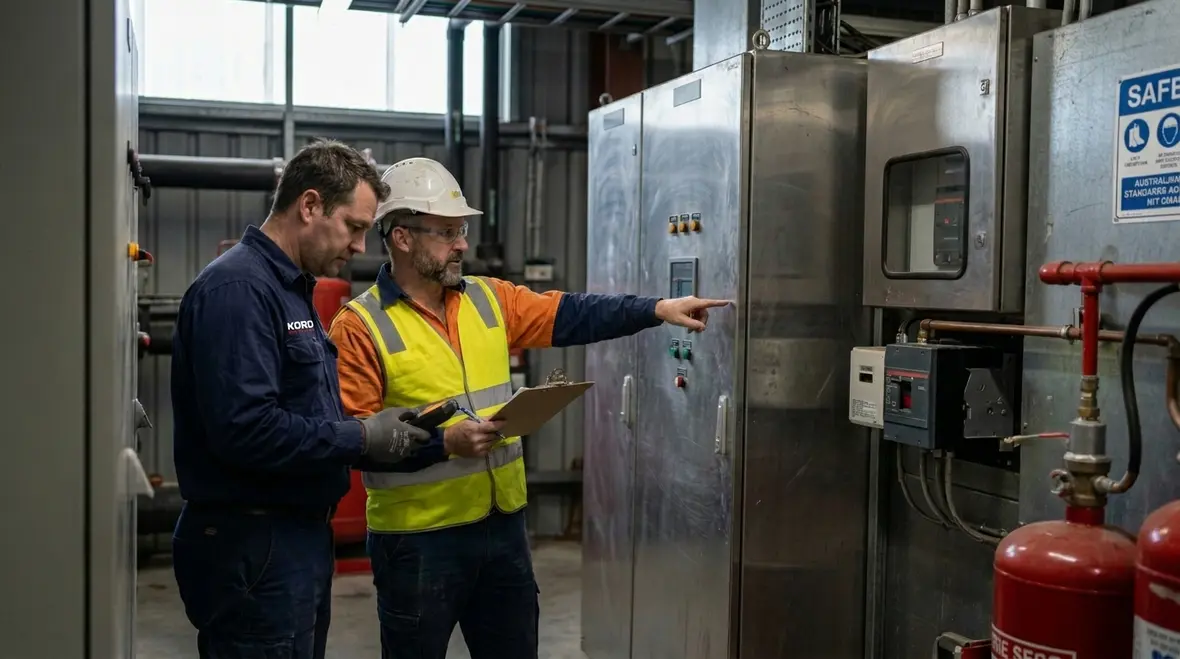
Designing a power strategy that keeps pumps running
Reliable power comes from a layered approach. First, the primary supply must be stable, with proper protection and correct coordination. Next, the system needs a backup path that does not rely on guesswork. Finally, the design should include monitoring so operators know when something drifts out of tolerance.
In practice, teams typically evaluate:
- Dedicated feeders and correct protection settings: Helps reduce nuisance trips and improves selectivity.
- Undervoltage and overcurrent protection: Prevents control instability and motor stress.
- Automatic transfer arrangements: Ensures the backup power path engages quickly.
- Generator or alternate supply capability: Sizing should account for starting currents and pump load behavior.
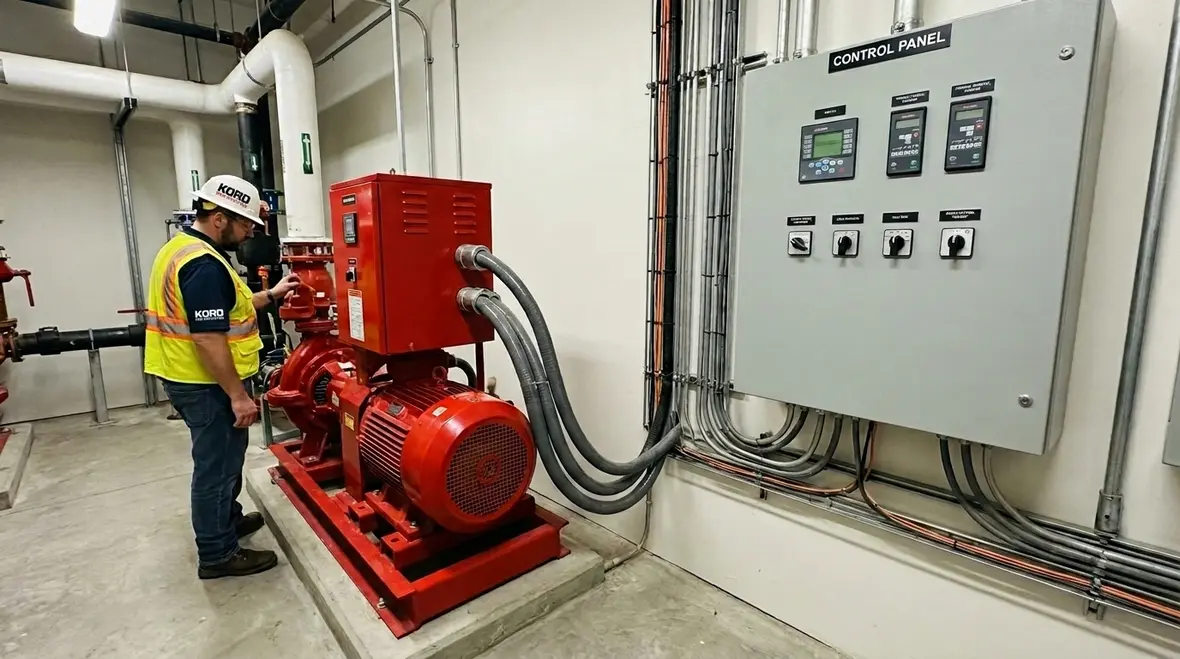
- Control panel health: Components should be protected from heat, moisture, and vibration.
Furthermore, the design should match the pump arrangement. For example, duty and standby pump roles change the starting sequence and the electrical demand profile. So, the power strategy should align with the actual hydraulics and pump control logic, not just the label on the drawing.
If the site includes a dedicated pump room upgrade or a new installation, it is worth directing teams to Kord’s fire pump service page early in the process. That keeps design conversations tied to installation realities, not just nice-looking diagrams that become everyone’s least favourite surprise later.
Backup power is not the same thing as reliable backup power
A generator that technically exists is not enough. It must accept the starting demand, support transfer behaviour, and recover without dragging voltage into the basement. The same goes for alternate feeders and switching arrangements. If the changeover sequence causes the controller to panic, the facility has not solved the problem. It has just moved the drama to a different cabinet.
Testing and commissioning that goes beyond “it starts”
Commissioning should not end when a technician presses a button and the pump hums. Instead, the process should verify that the pump starts under realistic conditions and that power protection behaves as intended.
Good practice includes:
- Load and starting performance checks: Confirm voltage levels, acceleration, and run stability.
- Transfer testing: Demonstrate how the system moves from primary to standby without drama.
- Sequence verification: Ensure controls respond correctly under automatic and manual demand.
- Event review: If any alarms occur, teams must document root causes and corrective actions.
In addition, periodic testing needs a schedule that reflects real operating risk. For many facilities, power quality changes with new tenants, added plant equipment, or seasonal building load patterns. Therefore, teams should review trends, not just pass fail results. Because the fire pump does not care about paperwork, but it does care about whether power stays within safe limits.
At this point, kord fire protection can become a vital partner by helping coordinate system checks across fire pump equipment and related protection responsibilities. They can support practical field workflows so electrical teams and fire protection teams stay aligned, which saves time and reduces gaps that often turn into avoidable outages. For deeper background, the internal guides on fire pump testing requirements and the fire pump testing and certification process pair especially well with commissioning plans.
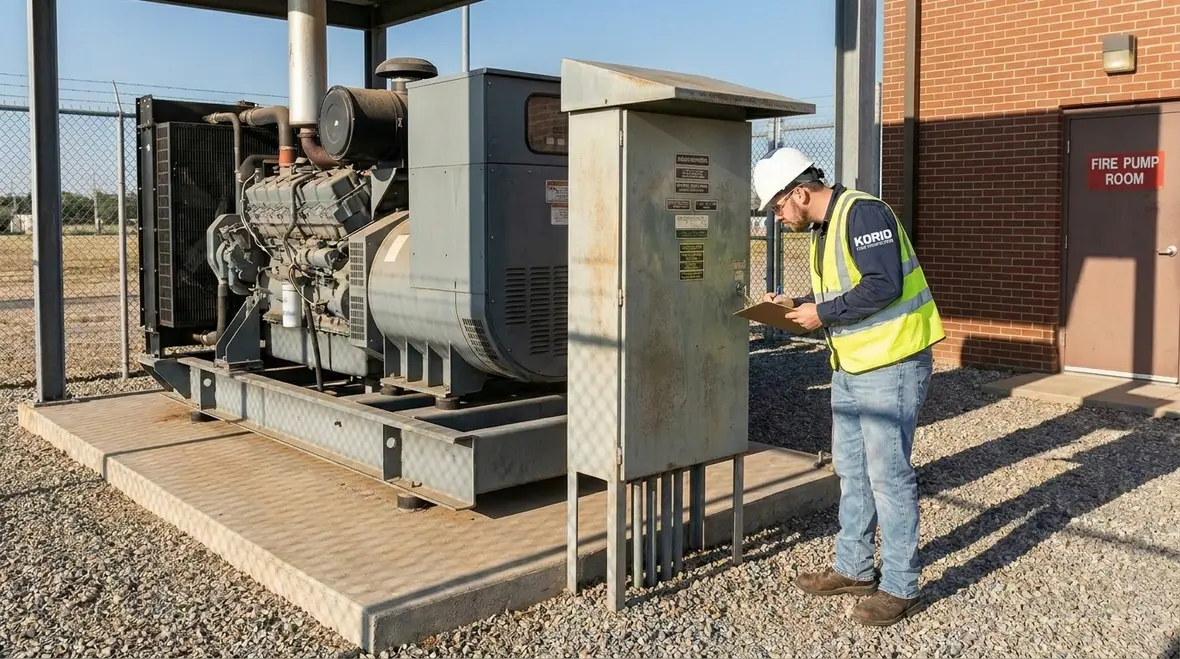
How maintenance teams can prevent slow power failures
Maintenance often gets treated like a yearly chore. Yet electrical reliability usually erodes quietly: contacts wear, terminations loosen, control components age, and protective devices drift. So, a maintenance plan should focus on what can change over time.
Teams should consider:
- Inspection of terminations and busbar condition: Look for heat marks, corrosion, and looseness.
- Battery and charger checks for control circuits: Confirm the backup logic remains healthy.
- Protective device verification: Ensure settings match the design and remain coordinated.
- Generator readiness checks: Run and exercise plans should reflect actual standby demand.
- Cabinet environment control: Keep panels within temperature and moisture limits.
Also, facilities should assign clear responsibilities. When no one owns the full system, issues fall between trades. And nothing is funnier than watching a schedule slip because “electrical assumed fire protection handled it” and “fire protection assumed electrical would check the panel.” That is comedy for the wrong audience.
Maintenance works best when records are boringly accurate
If a technician opens a panel and finds three different label versions, two undocumented changes, and one mystery breaker that apparently appeared by magic, troubleshooting gets slow fast. Reliable maintenance depends on records that match reality, routine inspections that catch drift early, and teams that know which findings are merely annoying versus which ones are genuine emergency risks.
Using monitoring and documentation to stay ahead
Modern facilities benefit from smarter visibility. Monitoring does not replace maintenance, but it helps teams spot drift early. By tracking power quality and system status, operators can act before a failure becomes a response event.
Practical steps include:
- Maintaining single source documentation: Updated schematics, panel schedules, and device settings.
- Recording transfer and test results: Trend data helps identify weak points.
- Using alarms and event logs: Review failures with the same seriousness as pump performance issues.
- Reviewing changes after site upgrades: New loads can shift electrical behavior, even when nothing “fire related” changes.
Then, teams should run periodic reviews with vendors and internal stakeholders. When kord fire protection partners with facility operations, it strengthens consistency between inspection expectations, system behavior, and commissioning records, which improves readiness across industrial, retail, and commercial environments.
For sites that want fewer blind spots, it also makes sense to review Kord’s material on real time fire pump system monitoring and fire pump motor controllers and electrical standards compliance. Monitoring does not magically fix a weak feeder or a tired controller, but it can tell you the system is about to have a very bad day before that day arrives.
FAQ: Reliable power supply for fire pump systems
Final CTA: Secure the next test, not just the next inspection
Facilities across Australia can reduce risk by treating fire pump power as a life safety function that needs design, testing, and steady maintenance. If your site needs commissioning support, coordination across fire protection tasks, or a clearer maintenance plan, kord fire protection can help turn reliability into a system you can trust.
Contact them to strengthen readiness before the next alarm day shows up. A good plan is not just about passing the next inspection. It is about knowing the pump, the power path, and the people responsible for both will all behave when the building needs them most.

Join Our Newsletter!
Get the latest fire safety tips delivered straight to your inbox From our Newsletter.