
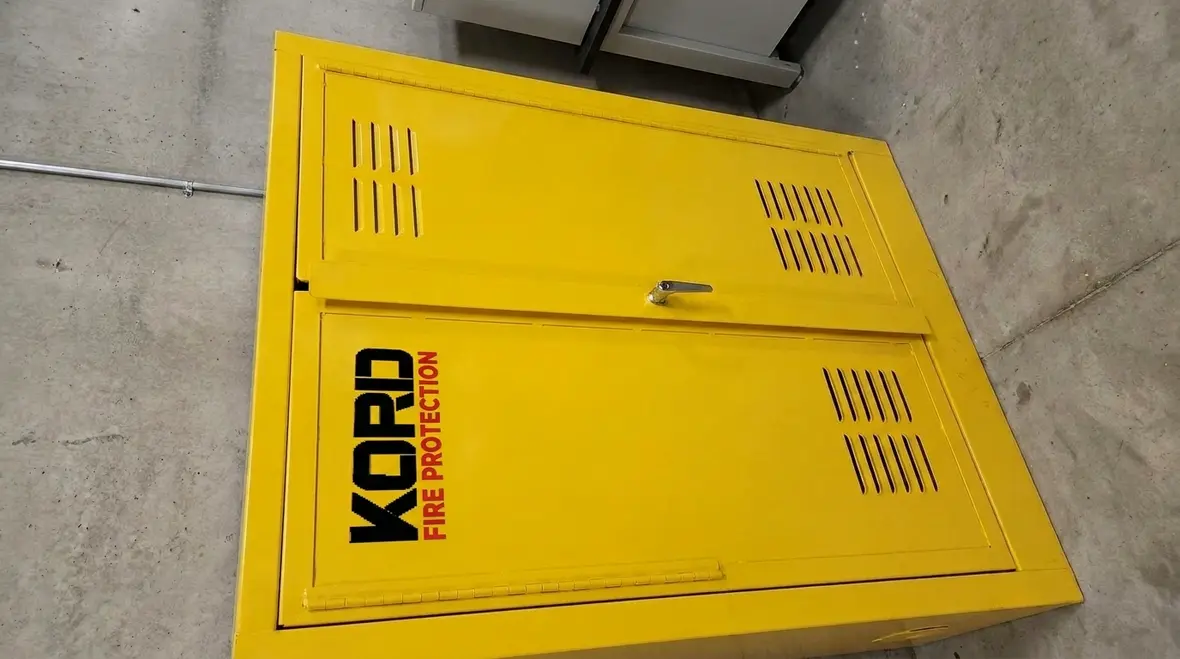
NFPA 40 Section 6.4: Permanent Storage Cabinets and Freezers
Quick Answer
NFPA 40 Section 6.4 sets construction, installation, and operational expectations for permanent storage cabinets and freezers used to store combustible liquids. The requirements focus on safe containment, compatible materials, proper venting, and inspection-ready designs that reduce ignition risk during normal use and abnormal conditions.
For facilities building a stronger inspection and maintenance workflow, full lifecycle fire protection servicing offers a useful parallel for keeping life safety equipment compliant, documented, and ready for the next inspection.
What NFPA 40 Section 6.4 Covers for Cabinets and Freezers
NFPA 40 regulates the storage of liquids that can create fire hazards, particularly in commercial and industrial settings where storage locations may be near active work areas, public access, or equipment heat sources. Section 6.4 addresses permanent storage cabinets and freezers, including units intended to store combustible liquids in a way that limits release, manages heat and vapor migration, and supports reliable inspection.
For teams searching for NFPA 40 permanent storage cabinet freezer requirements, the practical takeaway is that compliance is not only about selecting an approved enclosure. Facilities must also ensure correct installation, compatible components, correct operational controls, and ongoing maintenance that preserves the enclosure’s safety functions over time.
How Compliance Usually Breaks Down in Real Facilities
Commercial facilities often meet initial purchasing requirements but fail in the field due to installation details and long term maintenance. Common problem areas include:
- Improper placement that compromises separation from ignition sources, exhaust paths, or required clearances.
- Non compatible accessories such as replacement latches, door seals, or internal racks that are not compatible with the stored liquid or its vapors.
- Venting and vapor pathway failures where ducting, fittings, or penetrations are altered, blocked, or poorly sealed.
- Door closure and sealing drift caused by routine impacts, misalignment, or missing gaskets.
- Maintenance gaps where cleaning agents, solvents, or field modifications weaken coatings or degrade enclosure integrity.
These failures directly undermine the intent behind NFPA 40 Section 6.4, which is to keep the cabinet or freezer functioning as a controlled containment system throughout its service life.
Construction and Installation Expectations Under Section 6.4
NFPA 40 Section 6.4 focuses on how permanent storage cabinets and freezers are built and how they are installed. In practice, the enclosure must support containment of the stored combustible liquid and limit the pathways that could allow vapor release to reach an ignition source.
Key installation controls to verify during acceptance
- Correct location and securing so the cabinet or freezer remains stable, level, and properly aligned after routine cleaning and foot traffic.
- Penetration management at any electrical, piping, or ventilation interfaces to prevent unintended vapor migration.
- Separation and access that supports safe door operation and inspection without forcing staff to bypass clearance needs.
Operational alignment and fit
Section 6.4 expectations typically assume that doors close fully, seals remain intact, and internal components stay in serviceable condition. Facilities should confirm that:
- Doors latch consistently under normal use and after transport of stored products.
- Gaskets and seals are installed correctly and remain elastic and continuous.
- Internal storage racks support safe container placement without creating mechanical stress that can lead to leaks.
Vapor Control, Venting, and Heat Transfer Considerations
For permanent storage cabinets and freezers, managing vapor movement is a core fire safety concept. If combustible vapors accumulate or migrate, ignition becomes far more likely. Facilities must understand how their specific cabinet or freezer design handles vapor pathways, pressure changes, and heat transfer.
Where staff often unintentionally interfere with safety
- Blocking vents with packaging, rags, or storage clutter.
- Altering covers or re routing ductwork during maintenance projects.
- Using non approved cleaning methods that damage internal linings or seals.
- Allowing container overfilling that increases spill or vapor generation risk.
Inspection ready design matters
Compliance requires that equipment remains inspectable. That means venting routes stay accessible, components remain identifiable, and any modifications are documented and evaluated for ongoing safe operation. Where a cabinet or freezer includes electrical components, temperature control functions should remain in specification to support the enclosure’s intended safe behavior.
Maintenance, Testing, and Inspection: The Ongoing Work
NFPA 40 Section 6.4 compliance is not a one time event. For commercial and industrial facilities, the inspection and maintenance program must preserve the cabinet or freezer’s containment and vapor limiting capabilities.
Practical maintenance checklist for facilities
- Door seal and gasket condition: verify continuity, elasticity, and proper seating.
- Hinges, latches, and closures: check for misalignment and ensure full closure under expected loading.
- Internal surfaces and coatings: identify degradation, corrosion, blistering, or chemical attack.
- Vent interfaces and penetrations: confirm no gaps, missing fittings, or blocked passages.
- Electrical and control systems: confirm normal operation and safe temperature behavior for freezer units.
Kord Fire Protection supports commercial facilities with recurring compliance services that help organizations maintain safety performance, reduce downtime, and document due diligence. For teams preparing for inspections or correcting recurring deficiencies, Kord can help establish a maintenance and testing cadence aligned with facility operations and risk.
To learn more about service capabilities, reference commercial fire protection support for inspection, maintenance, and system servicing.
Featured Compliance Strategy: Documentation, Training, and Change Control
Many NFPA 40 issues occur after the initial installation due to changes in staffing, product types, or maintenance contractors. A defensible compliance program includes:
- Written equipment inventory identifying each cabinet or freezer model, location, and service history.
- Standard operating procedures that limit overfilling, prevent blocking vents, and ensure proper door closure habits.
- Training for operators and maintenance so staff recognize damage patterns and report them early.
- Change control for any modification to seals, venting components, electrical controls, or internal racking.
When documentation supports a repeatable inspection process, facilities can respond quickly to deficiencies and avoid recurring noncompliance during routine audits.
Frequently Asked Questions
Conclusion and Call to Action
NFPA 40 Section 6.4 requires more than purchasing a cabinet or freezer. Facilities must verify proper installation, protect vapor control pathways, and maintain door seals, vents, and internal components so equipment remains inspection ready. Kord Fire Protection helps commercial teams build a reliable compliance workflow that supports ongoing testing, documentation, and corrective action. Schedule a review to identify gaps and implement a maintenance program aligned with your facility’s operating realities.

Join Our Newsletter!
Get the latest fire safety tips delivered straight to your inbox From our Newsletter.



