Real Time Fire Pump System Monitoring for Safety
Why real time fire pump system monitoring matters for safety
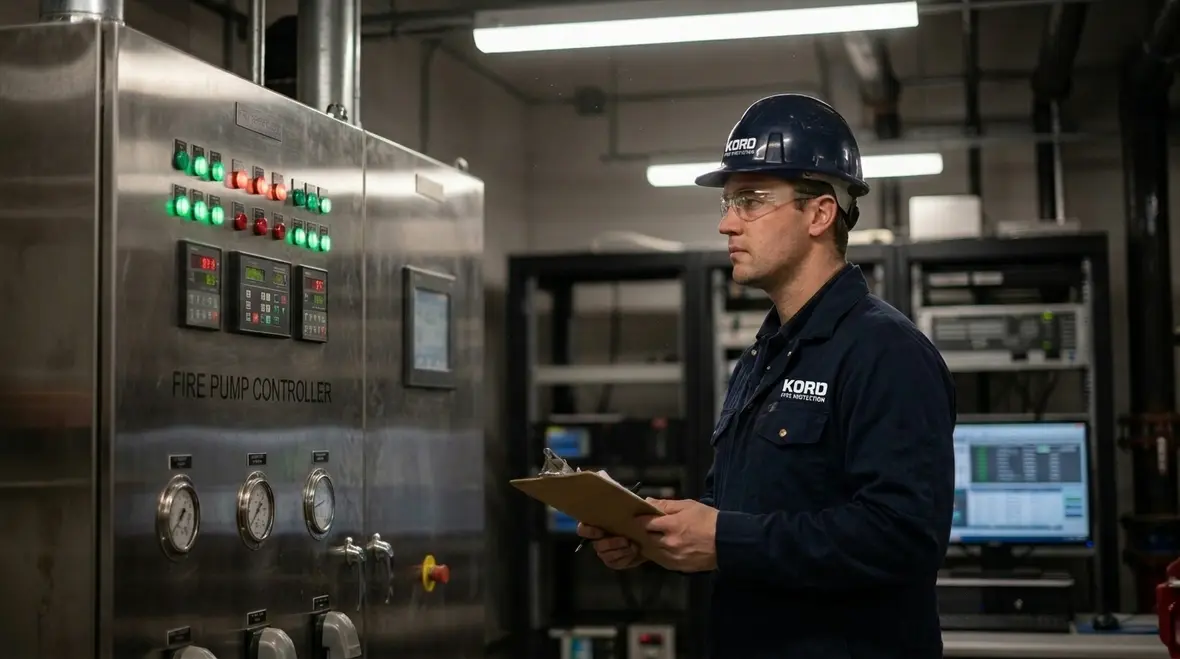
In a real emergency, seconds feel like hours, and that is exactly why fire pump system monitoring should run in real time. With our fire pump system monitoring, teams get live insight into pump status, pressure, alarms, and key controller points, instead of waiting for a test report that shows up later like a late pizza delivery. Kord Fire Protection technicians explain that monitoring is not “extra paperwork.” It is the difference between catching a fault now and discovering it during an actual event. That difference can mean the system performs exactly as expected or struggles when timing matters most.
And yes, fire systems are meant to be boring in the best way. They should start, deliver water, and perform when they must. When monitoring runs continuously, it helps keep that performance steady, so safety does not depend on luck or memory. Instead of hoping everything works, you actually know what is happening at all times, which removes uncertainty and builds confidence across the entire facility team.
What “real time” means in a fire pump context
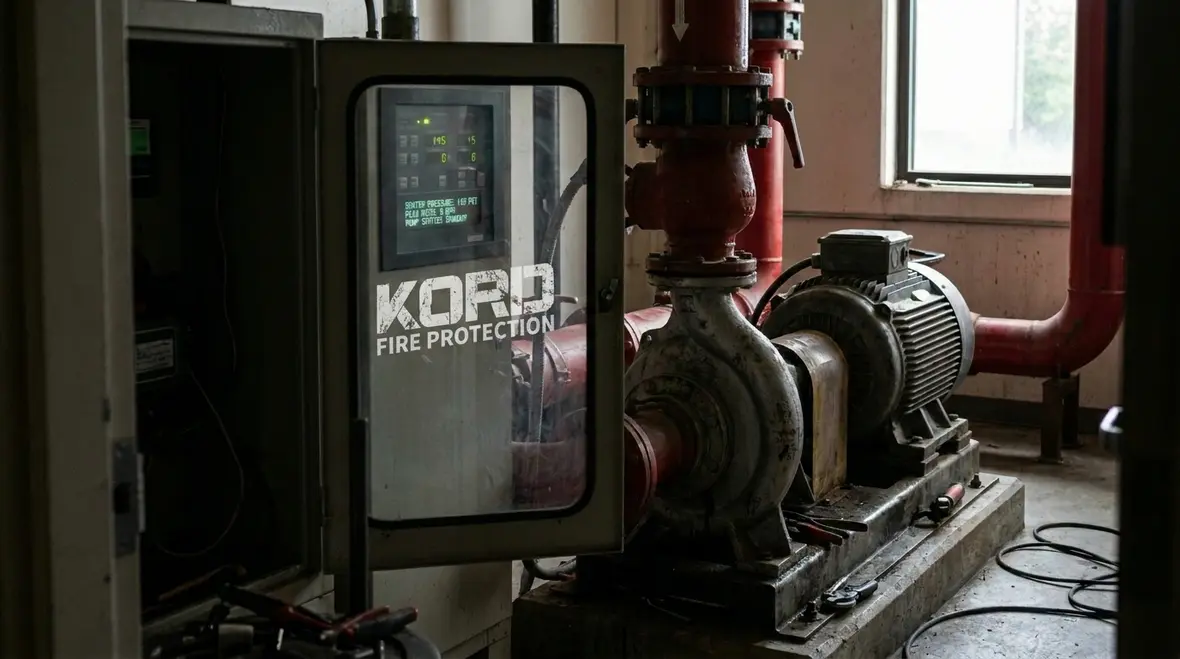
Real time does not mean vague “we will know soon.” It means signals flow from the fire pump controller and related devices to the monitoring view as conditions change. Therefore, if pressure drops, an alarm triggers, or a controller status shifts, the system reports it quickly enough for action. That immediacy is what allows teams to respond before small issues become system failures.
Kord Fire Protection technicians often describe it like a dashboard in a sports car. You do not drive by guessing, and you do not want to find out the engine overheated after you pulled into the driveway. In the same way, monitoring connects the pump, the controller, and the alert paths so teams respond while the problem is small. It transforms the system from something you check occasionally into something you actively understand.
Meanwhile, better visibility supports routine checks too. Even if the pump stays online, monitoring trends can show slow changes that a quick walk through might miss. Those gradual shifts are often where early warnings live, and catching them early is what keeps systems reliable over time.
How monitoring reduces risk before an emergency starts
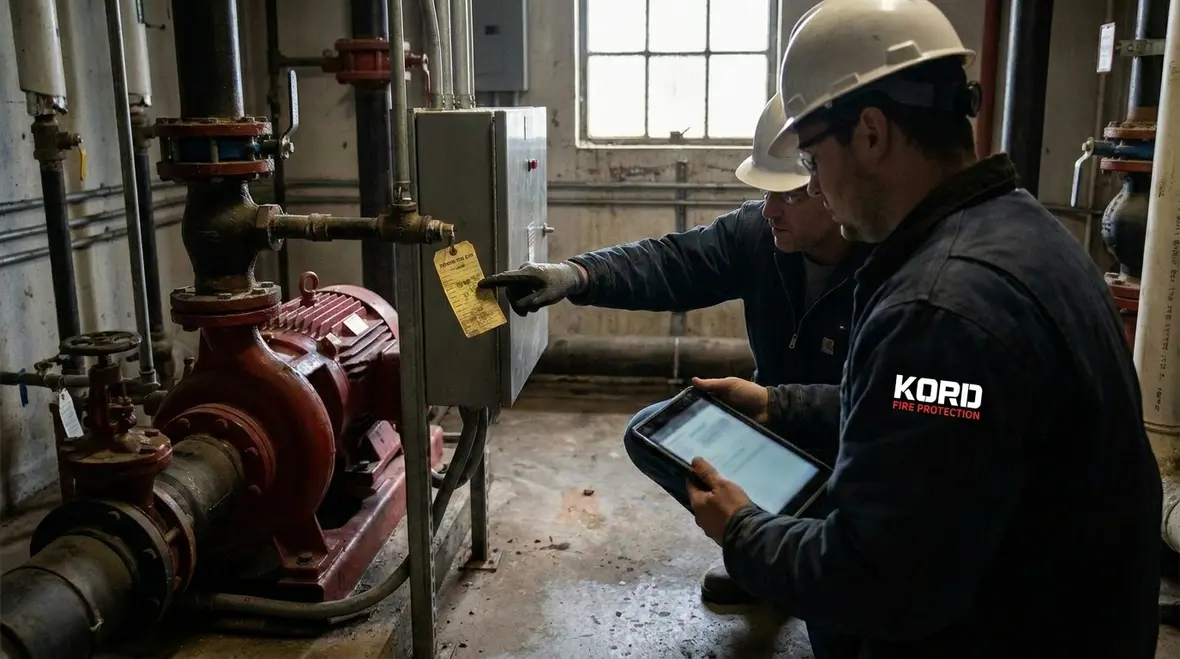
Fire pump systems sit at the boundary between “looks fine” and “works when needed.” That boundary can shift due to wear, power issues, valve movement, control circuit drift, or sensor problems. However, without active monitoring, a failure can hide until the demand test, or worse, until a real incident. That hidden risk is what makes real time monitoring such a valuable layer of protection.
With fire pump system monitoring, teams can spot early warnings. Then they can correct the root cause. For example, if the system flags a recurring alarm, technicians can inspect the specific component linked to that alarm instead of replacing parts like a mystery box from a pop culture themed store. That targeted approach saves time, reduces cost, and improves accuracy in maintenance decisions.
Additionally, live data helps confirm that the system responds the way it should. When there is a call for water, the pump should start within expected timing, build pressure, and hold performance. Monitoring gives evidence that the system did what it was designed to do. Over time, that data becomes a valuable record that supports both maintenance planning and operational confidence.
What technicians watch when alarms and trends appear
- Pressure trends that suggest wear, valve issues, or suction problems
- Start and run behavior that shows whether the pump reaches the expected operating point
- Power and phase information that can indicate unstable supply or control wiring trouble
- Alarm history that reveals repeated faults, even when the pump still “seems to work”
- Controller status changes that help confirm sensors and input devices stay reliable
And because humans need context, monitoring also supports clear handoffs. When a maintenance tech arrives, they can use the event timeline to focus their time where it matters, not where it is convenient. This reduces guesswork and ensures that each visit is productive and aligned with actual system behavior.
Dual view monitoring helps teams act fast and stay accurate
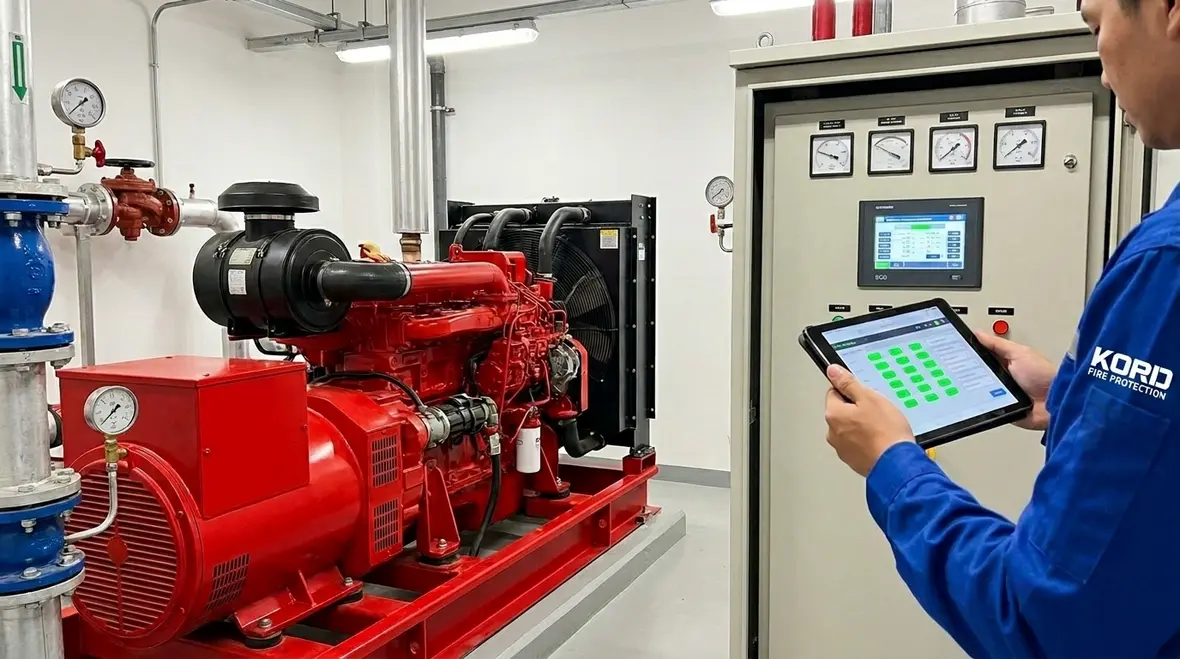
When a fire system issue appears, time matters, and so does clarity. Therefore, a strong monitoring setup provides a dual view so teams can see both device level detail and an easy operational summary. Kord Fire Protection technicians often recommend this approach because it reduces guesswork and speeds up decision making.
Think of it like streaming a game. One screen shows the live scoreboard, and the other shows player stats. You still need the play by play, but you also need to know what it means right now. That is how dual visibility supports faster, more accurate decisions in the field. It allows teams to move quickly without losing important context.
Keeping compliance strong without turning safety into paperwork
Fire pump systems need to meet inspection and testing expectations. However, compliance should not feel like a never ending stack of forms. Instead, real time monitoring supports the idea that the system stays ready. It shifts the focus from reactive documentation to proactive system health.
When monitoring provides a clear history of events and status changes, it helps teams show due diligence. Furthermore, it can reduce the “surprise inspection” effect where problems surface at the worst possible time. By addressing small issues early, facilities often avoid bigger shutdowns and rushed repairs later.
Of course, monitoring does not replace required testing. It strengthens it. It helps technicians plan service based on what the system signals rather than only on calendar dates. If you want to explore more about maintaining fire protection systems, visit Kord Fire Protection for additional insights and services.
FAQ: quick answers for featured snippets
Conclusion: take action now
Real time monitoring helps fire pump systems stay ready, and it helps people make better decisions under pressure. By catching early faults, tracking trends, and giving clear event history, monitoring reduces risk and supports safer outcomes.
Strengthen your system today
Kord Fire Protection technicians can help assess your setup and recommend practical monitoring steps that match your facility. Do not wait for the day the system has to prove itself. Take action now and improve your fire protection strategy.

Join Our Newsletter!
Get the latest fire safety tips delivered straight to your inbox From our Newsletter.