NFPA 40 Section 6.3: Vault Requirements Other Than Permanent Storage Vaults
Quick Answer: NFPA 40 Section 6.3 sets construction, placement, and operational requirements for vaults used for storing nitrate film when they are not permanent storage vaults. It focuses on fire-resistive construction, controlled openings, and safe heat, ventilation, and access conditions to reduce ignition and propagation risk.
What NFPA 40 Section 6.3 covers for vaults (and why it matters)
NFPA 40 Section 6.3 addresses vault requirements other than permanent storage vaults, including how these vaults must be built, maintained, and operated to protect building occupants and limit fire growth. For facilities handling nitrate film, compliance is not a one-time inspection. Operational controls, hardware integrity, and periodic verification of sealing and access systems determine whether the built design performs as intended during a fire scenario.
In practice, commercial facility teams often encounter the same pressure points: existing building constraints, retrofitting vault openings, coordinating with electrical and HVAC pathways, and maintaining door hardware and sealing systems over time. This is where clear documentation and field verification become decisive. The goal of NFPA 40 nitrate film vault construction requirements is to keep potential ignition sources isolated and to prevent heat and flame spread from degrading adjacent areas or accelerating involvement of film material.
If your team is reviewing vault compliance as part of a larger protection strategy, Kord Fire’s fire protection services in Southern California can help connect inspections, repairs, and documentation into one less-chaotic plan.
Which vaults fall under Section 6.3?
Section 6.3 applies to vaults used for nitrate film that are not classified as permanent storage vaults. Facilities may use these spaces for interim staging, managed storage, or operational workflows that do not meet the stricter classification and lifecycle expectations of permanent installations.
From a compliance standpoint, the classification determines the expectations placed on the vault envelope, access controls, and how the facility manages abnormal conditions such as damaged film, door impairment, or changes in use. Teams should treat classification as an engineered decision supported by documented fire safety intent, not only as a label assigned during design.
NFPA 40 vault construction basics: envelope, openings, and fire resistance
NFPA 40 Section 6.3 emphasizes construction that limits fire spread and supports safe containment. Facility designers and contractors typically start with the vault envelope, then evaluate every penetration, opening, and interface with the building structure.
1) Vault walls, ceiling, and door assembly integrity
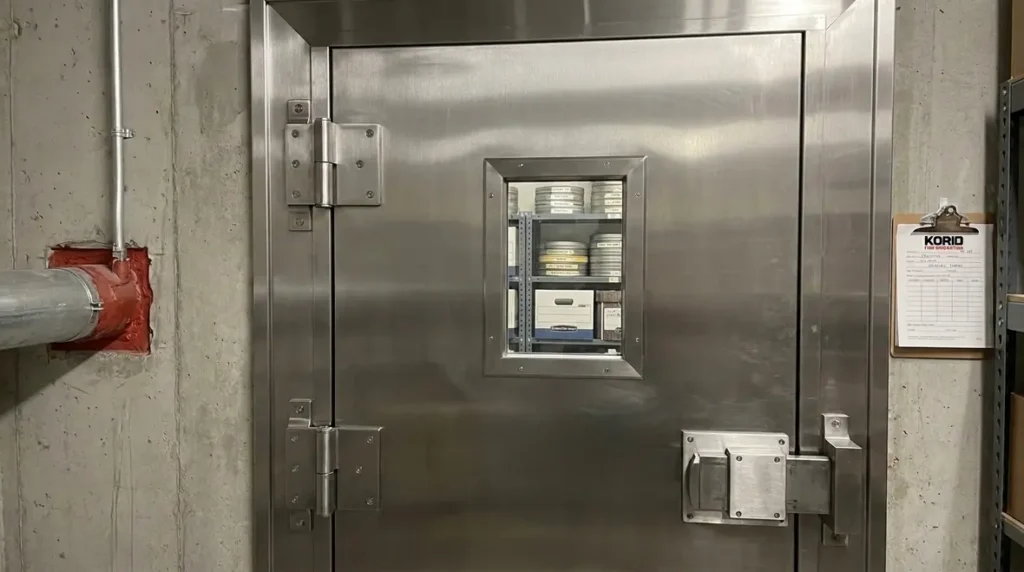
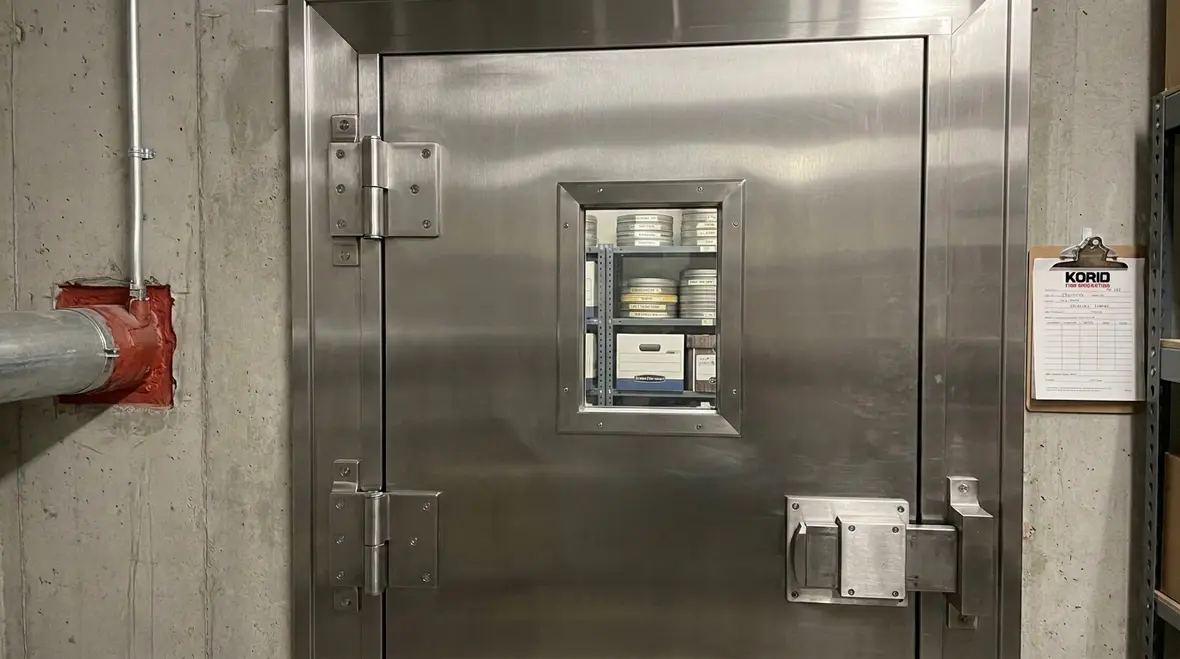
Vault construction must maintain fire-resistive performance throughout the full service life. This includes verifying that the door assembly, frame, and threshold details preserve the designed containment capability. The most common failure point during inspections is not the original specification. It is deterioration or improper reinstallation after routine maintenance, door hardware replacement, or building renovations that create unintended gaps.
2) Openings and penetrations must be controlled
Any opening through or into the vault envelope must support fire and containment objectives. Penetrations for cable trays, conduit, and services can undermine the fire-resistive value if they lack approved sealing methods. Even when penetrations are permitted, facilities often fail by leaving voids, skipping seal inspections, or using materials that are not compatible with the vault construction and sealing requirements.
3) Hardware and latching systems are part of fire protection
Vault doors are engineered containment components. Latching hardware, hinges, closers, and alignment must remain in correct working order. If a door closes late, does not fully latch, or exhibits binding due to floor settling or installation drift, the facility effectively disables a core protective barrier.
How facilities maintain compliance day to day
Section 6.3 should be treated as operational as well as construction oriented. A compliant vault is one that stays compliant after installation. Kord Fire Protection typically sees that the biggest risk does not come from dramatic failures. It comes from gradual drift: sealing degradation, door gasket mismatch, changes to workflow that increase door cycling, and insufficient inspection frequency.
Inspection routines that reduce risk
- Door condition checks: verify closure timing, latching engagement, and absence of warping or impact damage.
- Seal and gap verification: inspect for gaps at frames, thresholds, and any controlled interfaces after maintenance activities.
- Penetration monitoring: confirm that service modifications preserve original sealing and firestop integrity.
- Housekeeping around vaults: keep combustibles away from access routes and door operation areas.
Common commercial compliance challenges
Commercial, industrial, and retail environments often introduce complications that are easy to overlook during design. Examples include tenant fit-outs, frequent maintenance access, shared electrical infrastructure, and space repurposing. Each change can alter the vault risk profile. Facilities benefit from a documented change management process tied to fire safety components, so that vault integrity is reevaluated when the building evolves.
To build a defensible compliance program, organizations can use a fire protection partner model for ongoing inspection, testing, and documentation. Kord Fire Protection supports commercial facilities with routine verification and maintenance planning aligned to fire safety objectives and applicable code expectations.
Internal guidance link: Kord Fire Protection services
What inspectors and auditors look for in the field
Even when drawings look correct, field conditions determine compliance. Inspectors commonly focus on whether the vault operates as designed and whether the fire resistant performance is maintained.
Field verification priorities
- Door closure and latching performance: evidence that doors close fully and latch without obstruction.
- Continuity of fire resistant construction: no unintended openings, damaged assemblies, or compromised interfaces.
- Penetration firestop continuity: no missing or deteriorated seals and no unapproved materials.
- Operational controls: access pathways maintained, signage and procedures consistent with the vault use, and staff training aligned to safe handling expectations.
Documentation that supports compliance
A mature program includes inspection reports, corrective action tracking, and maintenance logs tied to vault components. Auditors typically expect evidence that problems get corrected promptly and that replacements use materials and installation methods consistent with the original fire protection intent.
Where vault systems commonly fail, and how to prevent it
Businesses can avoid recurring noncompliance by addressing predictable failure modes. The most frequent issues involve mechanical drift, seal mismatch, and incomplete risk review after modifications.
Top failure points
- Door alignment drift: normal settlement or impacts can cause imperfect sealing and reduced latching reliability.
- Improper hardware substitutions: maintenance replacements that do not match required characteristics can compromise performance.
- Unmanaged building penetrations: new service lines installed without firestop verification.
- Insufficient reinspection after repairs: the facility assumes the repair fixed the issue without validating closure and seal integrity.
Best practice: tie maintenance to verification
When vault doors, frames, or penetrations are repaired or modified, the facility should schedule post maintenance verification. Kord Fire Protection can support commercial facilities with periodic assessments, targeted testing, and documentation to help organizations maintain defensible compliance.
Related reading: For a broader compliance picture, see NFPA 40 Section 4.1: Construction Requirements for Nitrate Film Buildings.
Frequently Asked Questions
Take action now to keep vaults compliant
Facilities should confirm their vault classification, validate that construction and penetrations align with NFPA 40 Section 6.3 intent, and build a maintenance program that includes post repair verification. Engage Kord Fire Protection for routine inspections, targeted testing, and documentation support so the vault stays compliant through real world operations. Start with an assessment of your vault doors, seals, and penetrations, then develop a corrective action plan with verification dates.

Join Our Newsletter!
Get the latest fire safety tips delivered straight to your inbox From our Newsletter.