Fire Extinguisher Placement Strategy for Compliance Australia
Quick Answer: A compliant fire plan does not start with buying extinguishers. It starts with strategic fire extinguisher placement. That means correct travel distance, hazard matching, clear access, and signage that people can actually find during a real emergency. Kord Fire Protection helps facilities in Australia design placement that stands up to audits.
When a fire breaks out, nobody has time for a scavenger hunt. Still, many workplaces accidentally set extinguishers up like they are hidden Easter eggs, tucked behind clutter or placed where the risk is not. That is why a fire extinguisher placement strategy matters from the first site walk, not the last minute purchase. Kord Fire Protection supports industrial, retail, and commercial facilities across Australia by pairing practical placement planning with documentation, training coordination, and on time service. Near the start of that process, it also helps to understand how Kord Fire Protection approaches full fire protection support and how fire extinguisher service planning fits naturally into a compliant layout. In other words, Kord becomes the calm, reliable partner that turns compliance from a checkbox into a system.
Why strategic placement drives compliance and survival
Workplace safety rules in Australia expect extinguishers to be both accessible and suitable. However, compliance is not just about having the right number. It is about where each unit sits relative to the hazard, so staff can reach it before conditions worsen. Furthermore, proper placement supports safe evacuation routes because extinguishers do not block doors, walkways, or emergency equipment.
Strategic fire extinguisher placement also reduces delay time. In an emergency, every second matters, and teams naturally reach for equipment they can see. Therefore, placement must consider sightlines, lighting, and whether signage remains visible even when the area is active during business hours. This is the same practical logic echoed across Kord’s related guidance on placement basics, accessibility, and faster response planning, where visibility and route clarity are treated as part of the safety system, not decorative extras. ([kordfire.com](https://kordfire.com/fire-extinguisher-placement-guide-basics-for-safety/?utm_source=openai))
And yes, facilities sometimes place units where they look neat on a wall. Neat is not the same as reachable. A neat extinguisher is like a button on a microwave: it feels helpful until you need results, fast.
Placement is a response tool, not wall decor
That is the mindset that keeps a layout useful under pressure. A building can pass a casual glance and still fail the real world test if the extinguisher is hidden behind a door swing, shelving, or temporary stock. Kord’s recent placement articles repeatedly frame extinguisher location around realistic building use, human behavior, and clean access paths. ([kordfire.com](https://kordfire.com/fire-extinguisher-placement-guide-basics-for-safety/?utm_source=openai))
Match extinguisher type to the hazard, then plan the routes
Placement and hazard selection work together. First, safety teams identify fuel sources and likely fire classes in each area. For example, an office suite may hold ordinary combustibles, while a workshop may include oils, solvents, or electrical risks. Then, facilities position extinguishers so the right device arrives at the right moment.
Next, teams map typical response paths. People do not move in straight lines when stress hits. They move around pallets, equipment corners, and parked cages. As a result, facilities must place units where staff can navigate around obstacles without stepping into immediate danger.
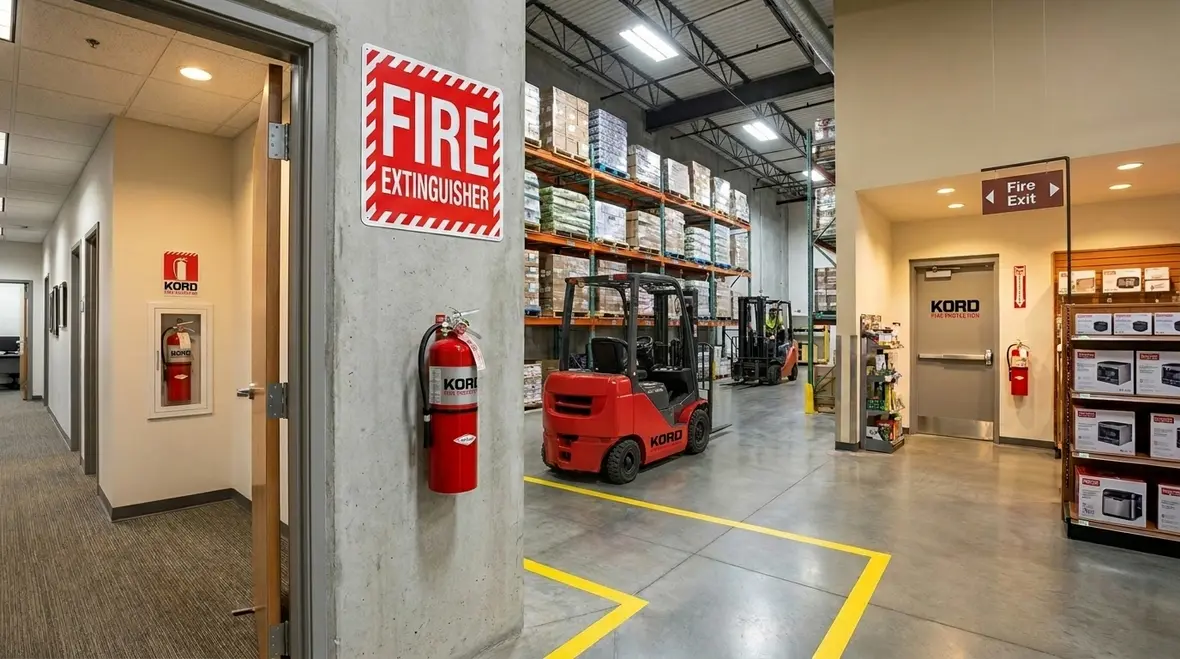
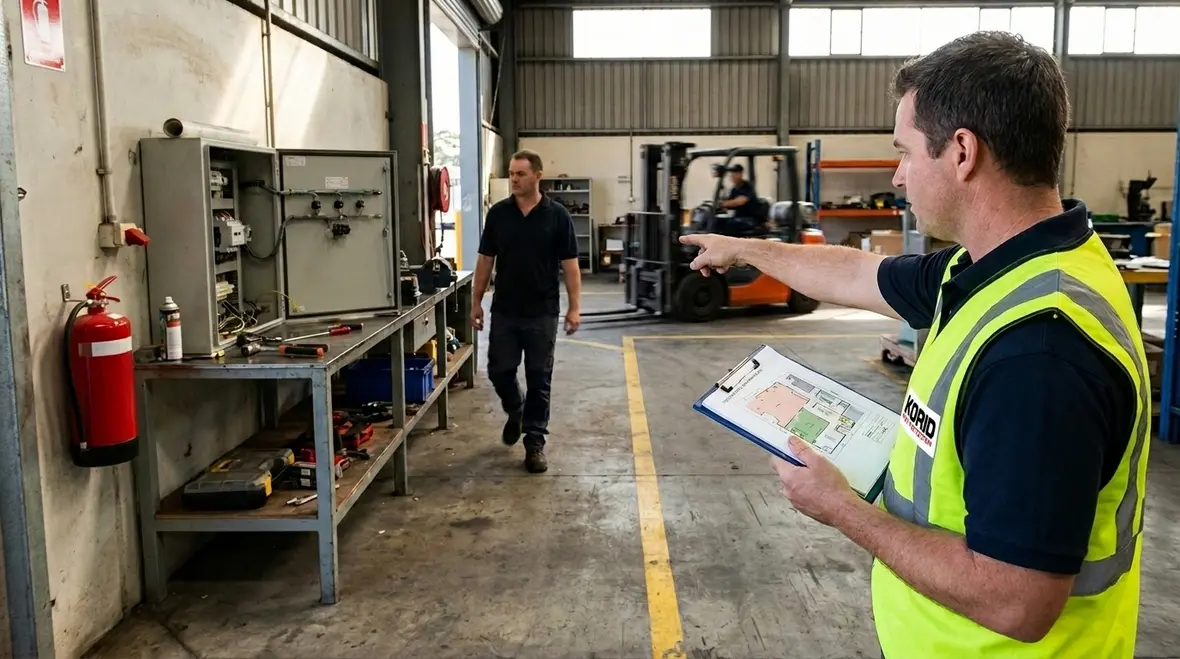
In industrial environments, Kord Fire Protection often coordinates placement with operational realities, like forklift traffic, high racking, and access constraints. Consequently, the plan stays usable on Monday morning, not just in a folder on a shelf. Kord’s extinguisher related guidance also notes support across Class A-B-C, Class D, Class K, Purple K, portable units, wheeled units, inspection, testing, replacement, and annual service, which reinforces why matching the hazard comes before simply hanging a canister on an empty wall. ([kordfire.com](https://kordfire.com/fire-extinguisher-placement-guide-basics-for-safety/?utm_source=openai))
Control travel distance and reach with the real-world floor plan
Many workplaces have fire plans drawn on paper. Yet the actual floor changes every week. New stock arrives, storage shifts, signage gets moved, and sometimes temporary barriers appear. Because of this, a fire extinguisher placement strategy must use the current site layout and reflect likely movement patterns.
Facilities should consider travel distance from a typical point of risk to the nearest extinguisher. If the unit is too far, staff may choose an unsafe shortcut, or the fire may grow before help arrives. Also, placement height matters. Extinguishers must remain reachable for staff while still protected from accidental knocks. Kord’s mounting height guide and office placement guide both emphasize that reach, visibility, and route logic work together, not as isolated code items. ([kordfire.com](https://kordfire.com/fire-extinguisher-placement-for-office-guide/?utm_source=openai))
Finally, the plan should account for doors that open outward, narrow aisles, and loading bays. In retail, for instance, aisles may shorten during stocking, and displays can restrict access. In commercial corridors, maintenance schedules can temporarily crowd the area. Therefore, placement should include practical clearance standards and update triggers.
Use the floor plan people actually walk
A beautiful compliance sketch means very little if the real route now includes a pallet jack, a temporary display, and one mysterious gate that is always closed. The better strategy is to review layout changes as part of regular service, especially in warehouses, retail stock zones, and high movement areas. That keeps extinguisher access grounded in reality rather than optimism.
Keep access clear, visible, and signed for fast action
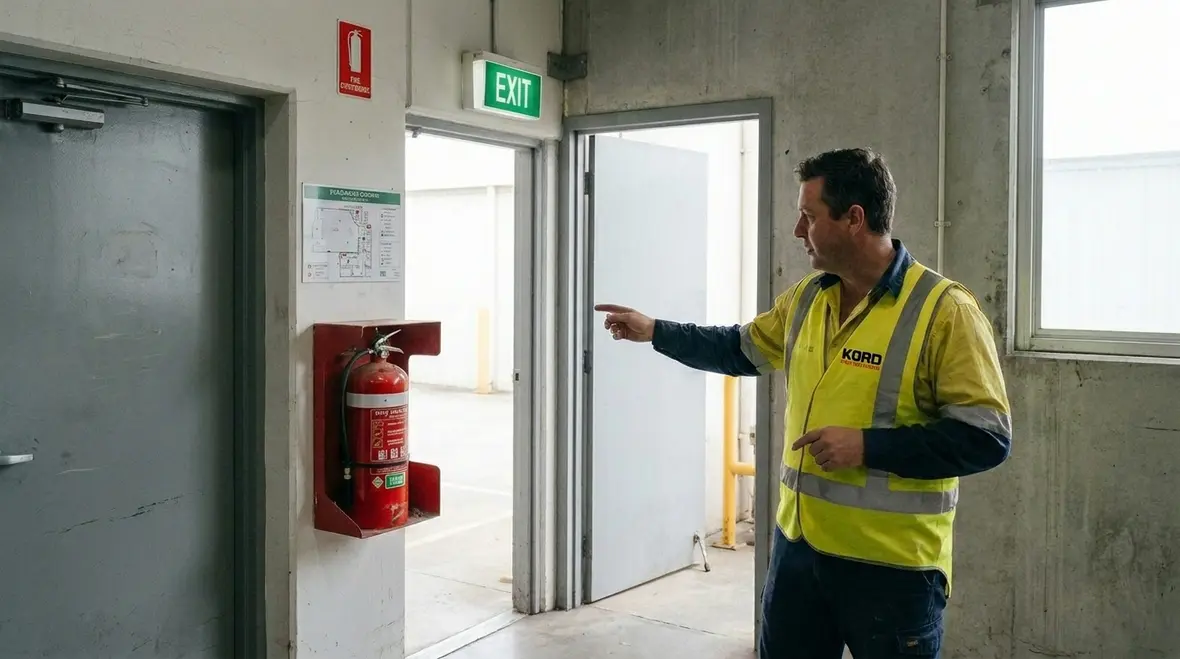
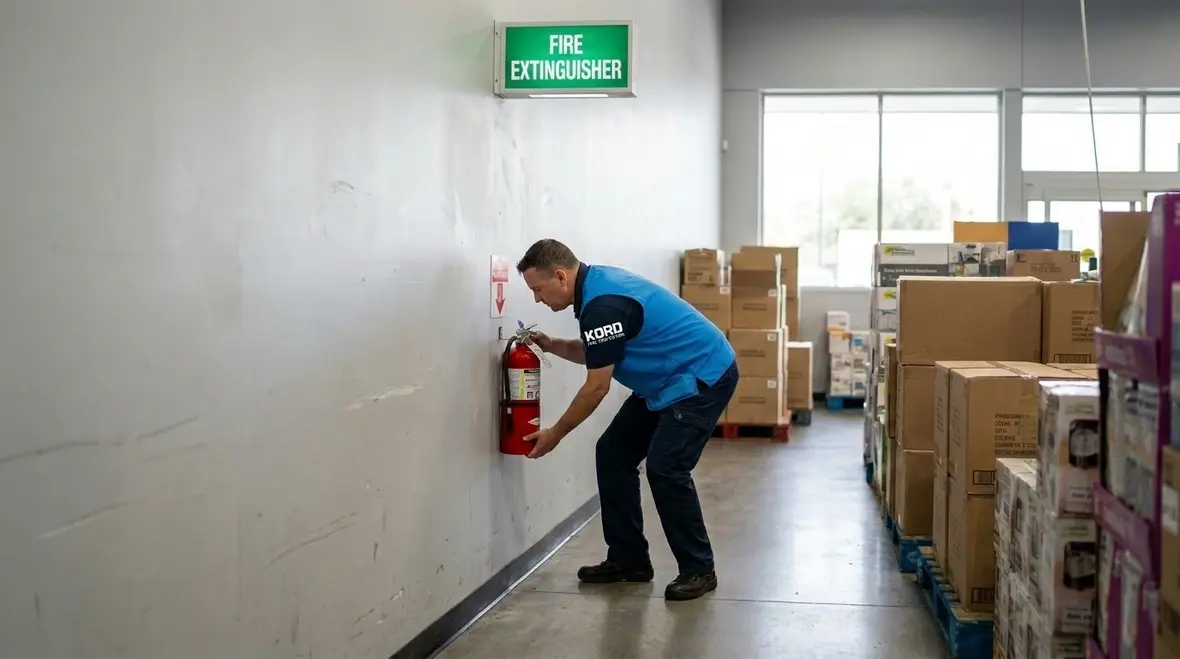
Even when units are technically near, they may not be useful. Visibility often decides whether staff act or freeze. Accordingly, extinguishers need clear lines of sight and consistent signage that stands out in the lighting and decor of each zone.
Facilities also must protect access routes from obstructions. This means no storage immediately in front of units, no temporary shelving, and no hanging banners that drift into the clearance zone. Moreover, teams should confirm signage placement so it remains visible when the unit is partially covered by stacked goods.
At Kord Fire Protection, the service approach often includes verifying that the extinguisher location supports human behavior. People scan for labels first, then reach. If labels blend into the background, performance drops fast. In other words, signage is not decoration; it is part of the firefighting system. That people-first focus appears throughout Kord’s accessibility and complete coverage articles, where visible signage, unblocked floor space, and safe approach routes are treated as core placement checks. ([kordfire.com](https://kordfire.com/fire-extinguisher-placement-and-accessibility-by-kord/?utm_source=openai))
Use consistent spacing across buildings, but allow for special risks
Workplaces often follow a repeatable pattern. That consistency helps staff remember where equipment sits. Still, not every zone follows the same risk profile. Therefore, facilities should design a baseline coverage plan and then adjust for special hazards.
Examples include kitchen prep areas, battery charging rooms, paint or solvent storage, and switch rooms. In these spaces, extinguisher placement must consider closer access to the hazard and the speed at which a fire can spread through fuels unique to that area.
For multi level buildings and large sites, teams should also consider wall partitions and compartment boundaries. A unit placed near on a map may be separated by a door that stays locked during normal operations. Consequently, the plan needs to include staff access routes and any restrictions that could block response.
And just to keep it real: if the extinguisher is behind the one gate nobody opens except the security guard who just got back from lunch, the plan is only theoretical.
How audits and documentation stay smooth with Kord Fire Protection
Compliance does not end with placement. Facilities must also maintain, inspect, and document. Regulators and insurance partners often want clear evidence that extinguishers are correctly located, maintained, and matched to risks.
Kord Fire Protection helps companies manage the full placement-to-service loop. That means the placement plan aligns with practical site operation and then supports ongoing service scheduling. As a result, facilities can reduce last minute rushes and avoid missed checks that create avoidable risk. Kord’s About page describes the company as a trusted name in fire protection since 2008, with services spanning fire extinguishers, sprinkler service, alarm service, pumps, fire doors, hydrants, emergency exit lights, and more, which supports this broader systems-based approach. ([kordfire.com](https://kordfire.com/about-fire-protection/?utm_source=openai))
When teams choose a partner who understands both hazard realities and compliance expectations, the process becomes calmer. It also improves accountability. So instead of someone will deal with it, responsibilities get organized and tracked through a clear service workflow.
Implementation steps for facilities across Australia
To implement a placement plan that works in the field, teams can follow a simple sequence. First, conduct a site walk that observes normal movement, storage patterns, and equipment access. Second, identify hazard zones and select extinguisher types that match the fuel sources. Third, mark locations on a current plan and verify clearance around each unit.
Then, confirm visibility and signage, including placement height and label clarity. After that, coordinate with operations so temporary layouts and construction changes do not undo the plan. Finally, document the arrangement and create a schedule for inspection and maintenance updates.
For industrial, retail, and commercial facilities, this approach supports consistent results across multiple sites. And when Kord Fire Protection becomes the vital partner, facilities gain both practical guidance and ongoing support, which tends to keep everyone sleep better at night. Mostly because the plan is real, not wishful thinking.
A simple field checklist that keeps the plan honest
- Walk the site during normal operations, not just during a tidy inspection window
- Check whether stock, displays, carts, or doors interfere with reach
- Confirm the extinguisher type matches the actual hazard in that zone
- Review signage from the angle staff would first approach
- Update records whenever layout or process changes affect access
Dual-site quick reference for placement decisions
Industrial and workshop zones
- Prioritise near ignition sources and safe approach paths
- Account for high traffic areas and restricted access doors
- Ensure visibility despite machinery shadows and busy routines
- Review access after racking, machinery, or storage changes
Retail and commercial zones
- Place where staff can see and reach quickly without aisle detours
- Maintain clear access when displays and stock shift
- Use consistent signage that stays readable under lighting changes
- Check temporary setups before they become permanent bad habits
FAQ
Partner with Kord Fire Protection to place with confidence
Strategic placement is not guesswork, and compliance is not luck. Kord Fire Protection helps Australian industrial, retail, and commercial facilities build a practical extinguisher layout that staff can use when it matters. If the site has changed, or audits feel stressful, contact Kord for a placement review and a service approach that keeps your safety system dependable.
The real win is confidence. Not the crossed fingers kind. The kind that comes from knowing the right extinguisher is visible, reachable, documented, and backed by a team that understands how buildings actually operate. Then you can stop hoping and start knowing.

Join Our Newsletter!
Get the latest fire safety tips delivered straight to your inbox From our Newsletter.