
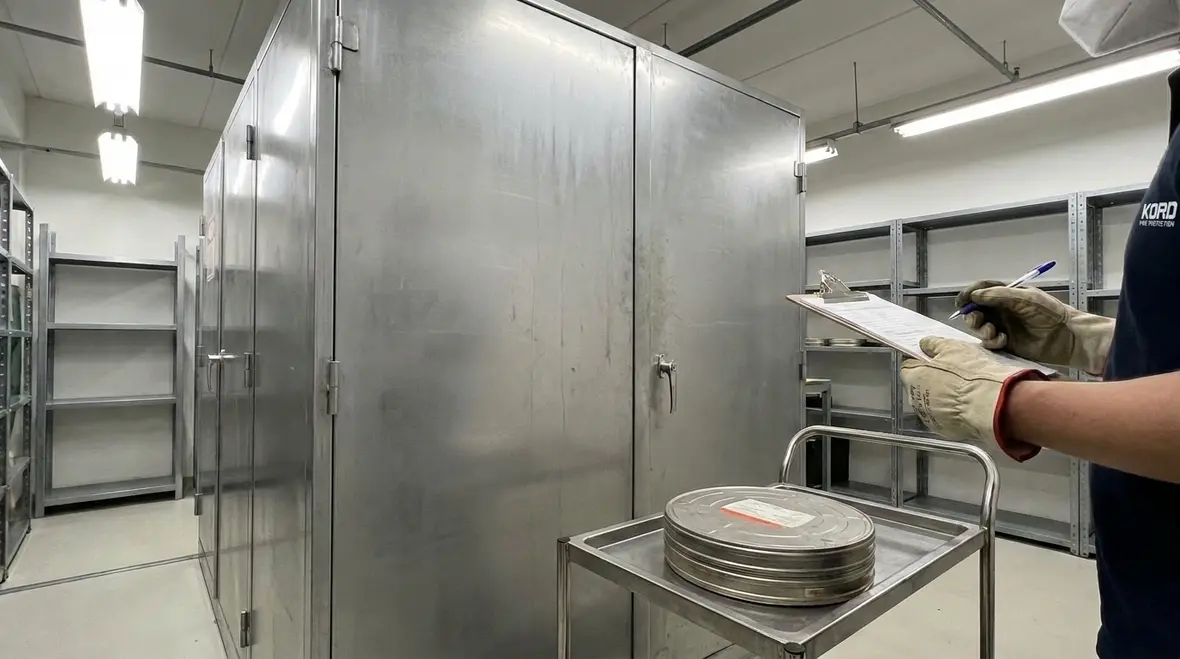
NFPA 40 Section 6.1: Quantity-Based Storage Rules for Nitrate Film
Quick Answer
NFPA 40 Section 6.1 sets quantity-based rules that determine when nitrate film must be stored in specified cabinets or vaults. The key compliance step is matching your stored amount to the applicable threshold and then using the required storage construction, separation, and inspection practices.
What NFPA 40 Section 6.1 Requires for Nitrate Film Quantities
NFPA 40 Section 6.1 focuses on controlling the hazard of nitrate film by limiting how much material may be stored without moving to more protective storage arrangements. In practice, facilities must determine the maximum quantity of nitrate film on site, then apply the correct storage category based on the applicable quantity threshold.
For many commercial and industrial operators, the main operational question becomes: what storage enclosure type is required once the NFPA 40 nitrate film storage quantity threshold cabinet vault criteria are met. Compliance hinges on both quantity determination and storage integrity, not just the existence of a cabinet or vault.
Kord Fire Protection routinely supports facilities with document review, storage configuration verification, and maintenance planning to prevent common failure points that lead to inspection deficiencies and higher risk during incident response. Teams tightening their inspection readiness can also review this fire protection system documentation checklist for a practical look at how records, maintenance history, and proof of care support smoother compliance reviews.
How the Quantity Threshold Drives Storage Configuration
Quantity-based storage rules work because they tie expected fire load and potential heat release to building risk management. Under NFPA 40 Section 6.1, the storage requirements escalate as film quantities increase. The practical compliance workflow typically includes the following steps:
Inventory the nitrate film by roll, canister, container count, and documented storage condition. Facilities often miss partial collections, obsolete reels, or film staged for transfer.
Convert inventory to the measurement method used by your plan for the code basis. If your internal records do not match the code basis, compliance errors follow.
Compare total in storage to the Section 6.1 threshold and determine if the cabinet level is sufficient or if vault-level storage becomes required.
Verify enclosure performance characteristics (construction, closure method, and any required listing or equivalency basis used by the AHJ).
Maintain ongoing control so receipts and returns do not quietly push storage above the threshold.
Operationally, the largest risk comes from “threshold drift.” Storage quantities rise during seasonal demand, production surges, remediation activities, or film consolidation projects, and the facility continues operating under a storage approach that no longer matches Section 6.1.
Cabinet and Vault Expectations: What Inspectors Usually Look For
Once the quantity threshold indicates the required cabinet or vault type, inspections typically evaluate how the enclosure is used and maintained. Common expectations include:
1) Closure integrity and controlled access
Cabinets and vaults must operate as intended during normal and emergency conditions. Inspectors focus on whether doors close fully, latching is functional, and access procedures prevent leaving openings unattended. Even when the enclosure is present, degraded hardware or propped doors can defeat the safety purpose.
2) Segregation and placement
Facilities must place the storage enclosure to maintain required separation from combustibles and to support safe fire department access. In commercial settings, storage locations sometimes get moved for workflow reasons without revalidation of code compliance.
3) Condition monitoring and deterioration controls
Nitrate film can deteriorate, increasing hazard. A practical compliance program includes periodic condition checks, clear segregation of problem reels, and documented removal or disposal handling. If the facility treats the storage unit as a passive container only, deterioration management often lags behind.
4) Recordkeeping that matches real operations
AHJs and auditors frequently request evidence that stored quantities are tracked and that the facility can demonstrate it has stayed within threshold limits for the relevant period. Without a usable log, the enclosure may be assumed compliant but later found noncompliant in practice.
Common Compliance Challenges in Commercial and Retail Environments
Although nitrate film storage occurs in specialized use cases, the compliance model often appears in broader commercial operations such as film archives, media production sites, processing contractors, and certain retail backroom storage scenarios where legacy materials exist. In those settings, the most frequent challenges include:
Inconsistent inventory methods across departments, especially when marketing, production, and archival teams each track film differently.
Storage relocation without re-approval, where cabinets or vaults are moved to accommodate renovations or workflow changes.
Maintenance gaps, including unverified door hardware, seals, or closure mechanisms that degrade over time.
Training shortfalls, where staff do not understand what triggers threshold reassessment or what “hazardous condition” film segregation requires.
Kord Fire Protection helps facilities close these operational gaps by building a maintainable compliance system. This includes routine verification support, documentation alignment for inspection readiness, and practical maintenance planning to keep storage enclosures functioning as designed.
Operational Procedures That Prevent Threshold Drift
Facilities meet NFPA 40 expectations more reliably when they establish procedures that link receiving, storage, and disposal to quantity-based compliance decisions. Effective controls include:
Receiving and reconciliation
Receiving procedures should require immediate logging of added nitrate film and an instant reconciliation against stored totals. The goal is to prevent “end of quarter” inventory fixes that allow days or weeks of out-of-threshold storage.
Periodic quantity audits
Quantity audits should occur at an interval that matches operational risk, such as monthly for active production or quarterly for low change environments. Audits should compare physical counts to records and verify that no film is staged in nonapproved locations.
Maintenance checklists for cabinets and vaults
Maintenance should verify closure function, hardware condition, and any required monitoring features. A common failure point is a delayed repair cycle when door alignment or latch engagement drifts, which can cause repeated “almost closed” states.
Condition segregation and escalation
Procedures should define what staff do when deterioration signs appear. Escalation should route to trained personnel, with documented removal and controlled relocation to prevent worsening conditions in standard storage.
For additional fire protection support that aligns with commercial compliance and maintenance realities, facilities can review Kord Fire Protection resources here: fire protection compliance auditing guidance.
Frequently Asked Questions
Next Steps
Facilities that handle nitrate film should verify their current inventory against NFPA 40 Section 6.1 quantity thresholds and confirm that the cabinet or vault configuration matches the required enclosure level. Engage Kord Fire Protection to support inspection readiness through practical maintenance planning, closure and enclosure verification, and compliance documentation alignment. Take action now so threshold drift, deteriorating hardware, or incomplete records do not become the reason for deficiencies during your next evaluation.

Join Our Newsletter!
Get the latest fire safety tips delivered straight to your inbox From our Newsletter.



