Suppression Panel Trouble Signal: What It Means
When a suppression panel trouble signal shows up, it usually does not mean “everything is fine.” It means the system is sending a clear message that something needs attention. And if the team ignores it, the fire protection hardware can sit there like a smoke detector with a dead battery, quietly judging everyone. In this article, the writer explains the most common trouble signs in fire suppression control panels, what they mean in real life, and how Kord Fire Protection can become a vital partner to keep inspection, troubleshooting, and repairs moving fast.
That message matters because suppression panels are built to supervise system health every day, not just during emergencies. When they report trouble, they are pointing toward a fault that could interfere with dependable response later. Kord Fire Protection regularly explains this same distinction in its article about fire alarm trouble signal meanings, where panel trouble is treated as urgent maintenance information rather than harmless noise. In other words, the panel is not being dramatic. It is doing its job. ([kordfire.com](https://kordfire.com/fire-alarm-trouble-signal-meanings-explained/?utm_source=openai))
Common suppression panel trouble signal indicators and what they mean
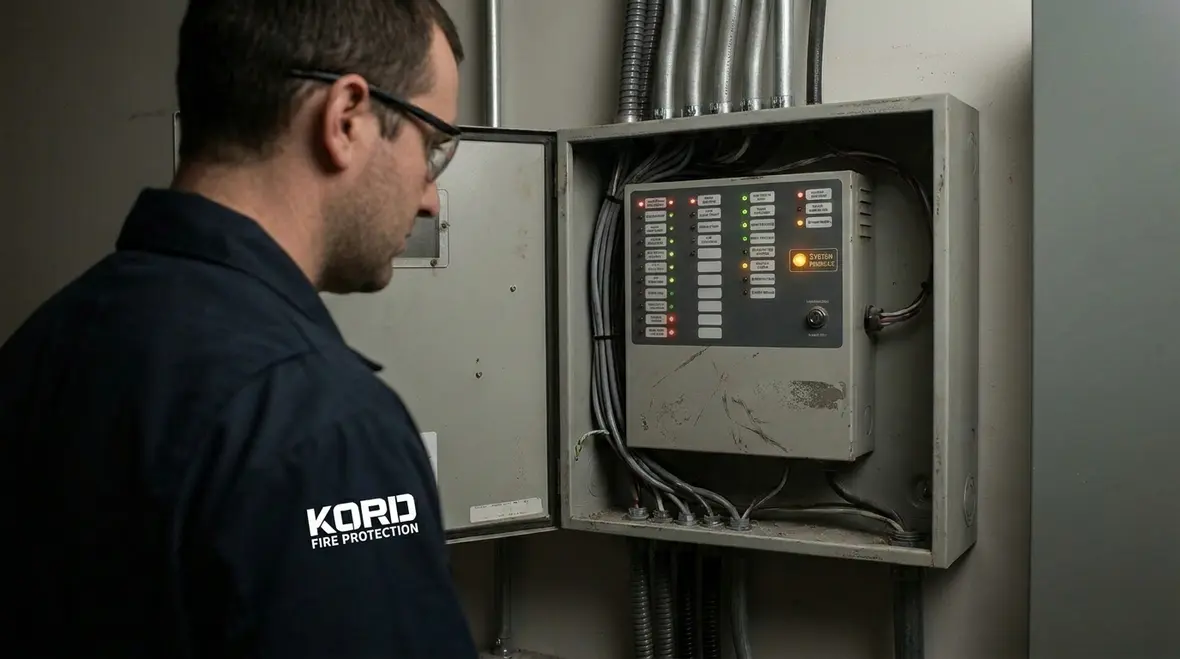
Fire suppression control panels constantly watch sensors, wiring paths, and device status. Therefore, when the suppression panel trouble signal activates, the panel typically reports one or more non normal conditions. Technicians often see these signals after routine work, environmental changes, or equipment aging. Kord Fire Protection’s release panel indicators guide also notes that an amber trouble light commonly points toward wiring, battery, pressure, or supervision faults, even when the system is not in alarm. ([kordfire.com](https://kordfire.com/fire-suppression-release-panel-indicators-guide/?utm_source=openai))
Here are frequent trouble indicators and what they usually point to:
- Supervisory trouble on initiating devices, such as switches or modules, which means the system sees a fault but cannot confirm the exact fire event.
- Open or short circuit trouble on wiring loops, which can happen after renovations, rodent activity, or loose terminations.
- Low power or battery trouble, which often shows up as panels age or after long periods of standby.
- Communication fault between panel and field devices, which can come from bad connections or unstable network paths.
- Device maintenance trouble, which can signal dirty sensors, end of life components, or performance drift.
Importantly, the panel does not always tell the full story. Still, it gives strong direction for the next diagnostic step. So, the best teams treat trouble signals as urgent information, not background noise. Kord Fire Protection makes a similar point in its electrical faults guide, where early trouble conditions are described as the first visible clue that wiring, power, or device performance has drifted off track. ([kordfire.com](https://kordfire.com/detect-electrical-faults-in-fire-alarm-panels-early/?utm_source=openai))
How trouble signals differ from fire alarms during real incidents
Many people hear “trouble” and assume it is the same as a fire alarm. However, the two behave differently. A trouble report usually means the system detects a condition that could affect reliable operation later. A fire alarm means the system likely detected a fire condition now. Kord Fire Protection’s published material on panel logic and trouble meanings consistently separates these functions, explaining that trouble reflects supervision or equipment health while alarm reflects active detection and programmed emergency response. ([kordfire.com](https://kordfire.com/fire-alarm-trouble-signal-meanings-explained/?utm_source=openai))
For example, if the panel indicates a supervisory issue, the system is telling the team that one part of the chain is not fully verified. Meanwhile, a real alarm sequence typically includes fire confirmation paths, zoning logic, and alarm outputs. That difference is why a calm response matters. Panic wastes time, but ignoring a supervisory or trouble signal is not smart either.
And yes, sometimes the trouble can be caused by something harmless, like a temporarily disconnected device during service. Yet, the safest approach stays consistent: the team verifies the issue, documents it, and restores normal status before trusting the system. If the panel clears and then returns to trouble, Kord’s release panel article notes that the underlying condition was never actually solved, which is the life safety version of sweeping crumbs under the rug and calling the kitchen clean. ([kordfire.com](https://kordfire.com/fire-suppression-release-panel-indicators-guide/?utm_source=openai))
Environmental and wiring causes that quietly trigger trouble
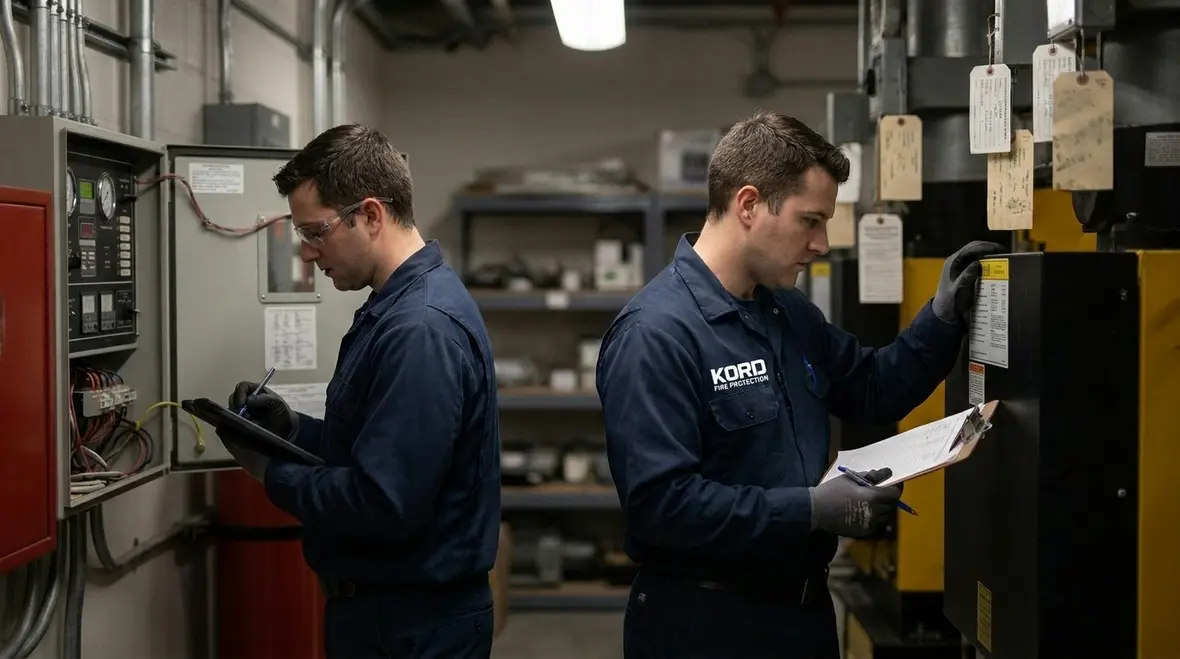
Trouble signals rarely arrive by magic. They usually follow changes in the building or in the field equipment. Consequently, the investigation should start with the physical location of the affected device and work outward. Kord Fire Protection’s troubleshooting content repeatedly identifies moisture, loose terminations, insulation failures, and damaged pathways as common starting points for panel trouble and circuit faults. ([kordfire.com](https://kordfire.com/fire-alarm-signal-circuits-troubleshooting-guide/?utm_source=openai))
Common triggers include:
- Moisture and condensation that cause corrosion at terminals or inside enclosures.
- Dust and airflow patterns that shift sensor performance over time.
- Temperature swings that stress components or affect power regulation.
- Vibration from nearby equipment, which can loosen connections.
- Renovations that accidentally disturb wiring or add new obstacles around detection zones.
Additionally, rodent damage is an old enemy in building maintenance. It can chew through insulation and create an intermittent open circuit. Then the panel complains on and off, like a neighbor’s car alarm that only goes off when nobody is watching. The fix requires tracing the circuit, checking terminations, and restoring the integrity of the loop. Kord’s circuit troubleshooting and electrical hazard articles support that same methodical approach, especially when intermittent faults make the system look possessed for no good reason. ([kordfire.com](https://kordfire.com/fire-alarm-signal-circuits-troubleshooting-guide/?utm_source=openai))
What technicians check first when suppression control panels report trouble
When a team receives a suppression panel trouble signal report, they should avoid random guesses. Instead, they follow a methodical path so the work stays safe, fast, and repeatable. Kord Fire Protection’s troubleshooting guides describe the same sequence: review the panel message, verify the affected circuit, confirm electrical conditions, isolate devices as needed, and compare what the field is doing against what the panel expects to see. ([kordfire.com](https://kordfire.com/fire-alarm-signal-circuits-troubleshooting-guide/?utm_source=openai))
Typically, the first checks include:
- Verify panel history and event logs to identify when the trouble began and whether it returns after resets.
- Confirm power levels, battery condition, charger output, and proper grounding.
- Inspect wiring for loose terminations, corrosion, cuts, and signs of water intrusion.
- Test device status in the affected circuit, then compare readings to manufacturer expectations.
- Check device supervision paths, including end of line resistors or supervision modules.
Next, the technician examines control logic. For instance, some systems use staged supervisory behavior, which can cause certain signals to appear only under specific conditions. Therefore, the best teams read the panel’s instructions and verify that any changes made during previous service did not alter the expected behavior. Kord’s article on fire alarm control panel logic reinforces that panels respond to state changes and programmed sequences, not guesses. ([kordfire.com](https://kordfire.com/kentec-fire-control-panels-and-fire-alarm-control-panel-logic/?utm_source=openai))
To keep confusion down, the panel labels and circuit numbers should match as built documentation. When they do not, the troubleshooting time grows, and the building wins the who can wait longer game. Nobody wants that.
Where Kord Fire Protection fits as a vital partner
At this point, the reader may wonder who should handle the troubleshooting, documentation, and restoration. That is where Kord Fire Protection becomes a vital partner. Fire suppression is not a one time task. It is a living system that needs periodic verification, prompt service, and clear reporting. Kord’s service page describes support for inspections, testing, repairs, and readiness across fire alarm, sprinkler, and extinguisher systems, with a focus on compliance and dependable performance. ([kordfire.com](https://kordfire.com/full-fire-protection-services/?utm_source=openai))
Kord Fire Protection supports property teams by combining practical troubleshooting with organized service workflows. For example, they help teams respond to the suppression control panel trouble signal with:
- Fast issue triage based on panel event data and device location.
- On site diagnostics that check power, wiring, supervision devices, and device health.
- Clear documentation that keeps compliance records ready for inspections.
- Repair and restore work that returns the system to normal operation, not just reset and hope.
Moreover, the team explains the likely cause in plain terms so maintenance staff understand what changed. Then, Kord can recommend steps that reduce repeat issues, like enclosure sealing, terminal upgrades, or changes to how field devices handle airflow and moisture. For related system coordination strategy, Kord also has a useful resource on industrial fire suppression integration tips for safer buildings, which pairs well with this topic near the planning and prevention side of the conversation.
Common trouble symptom
Supervisory or circuit trouble on a specific zone
Most likely next action
Confirm circuit integrity, inspect terminations, then test supervised devices
Common trouble symptom
Battery or power supervisory trouble
Most likely next action
Measure output, verify charger function, then test and replace batteries if needed
How to reduce repeat trouble and keep compliance on track
Once the immediate trouble is fixed, the next goal is prevention. Therefore, the team should treat the panel reports as useful data for improving the whole building system. Kord’s published resources on system reliability, electrical faults, and signal circuit troubleshooting all point toward the same lesson: repeated trouble is usually a pattern, and patterns are valuable if someone actually pays attention to them. ([kordfire.com](https://kordfire.com/fire-alarm-signal-circuits-troubleshooting-guide/?utm_source=openai))
Practical steps include:
- Schedule regular inspections that focus on the same circuits that previously reported trouble.
- Use updated labeling so circuit identification stays accurate after tenant improvements.
- Protect enclosures from moisture and water splash where the panel or modules sit.
- Train maintenance staff to record conditions and avoid resets that hide real faults.
- Perform planned device replacements before end of life conditions cause faults.
In addition, property teams should review trends. If trouble signals show up seasonally, the root cause may be environmental. If they show up after contractors walk through, wiring stress is likely. By linking the timing to building events, the team can stop treating trouble reports like mystery novels where every chapter ends with a new clue.
FAQ about fire suppression control panel trouble signals
Calm action leads to reliable protection
Fire suppression control panels do not warn for fun. When the suppression panel trouble signal appears, it points to a real condition that needs attention. Therefore, building teams should investigate event logs, inspect affected devices, and restore normal operation without delay. The smartest response is calm, documented, and methodical. That keeps people safer, keeps systems trustworthy, and keeps small issues from quietly becoming expensive ones.
Then, they should partner with Kord Fire Protection’s full fire protection services for dependable troubleshooting, documentation, and corrective work. If you want fewer repeat faults and faster returns to compliance, reach out to Kord Fire Protection today. And if your team is looking at broader system coordination, review Kord’s industrial fire suppression integration tips for the bigger picture. ([kordfire.com](https://kordfire.com/full-fire-protection-services/?utm_source=openai))

Join Our Newsletter!
Get the latest fire safety tips delivered straight to your inbox From our Newsletter.