Fire Suppression Release Panel Indicators Guide
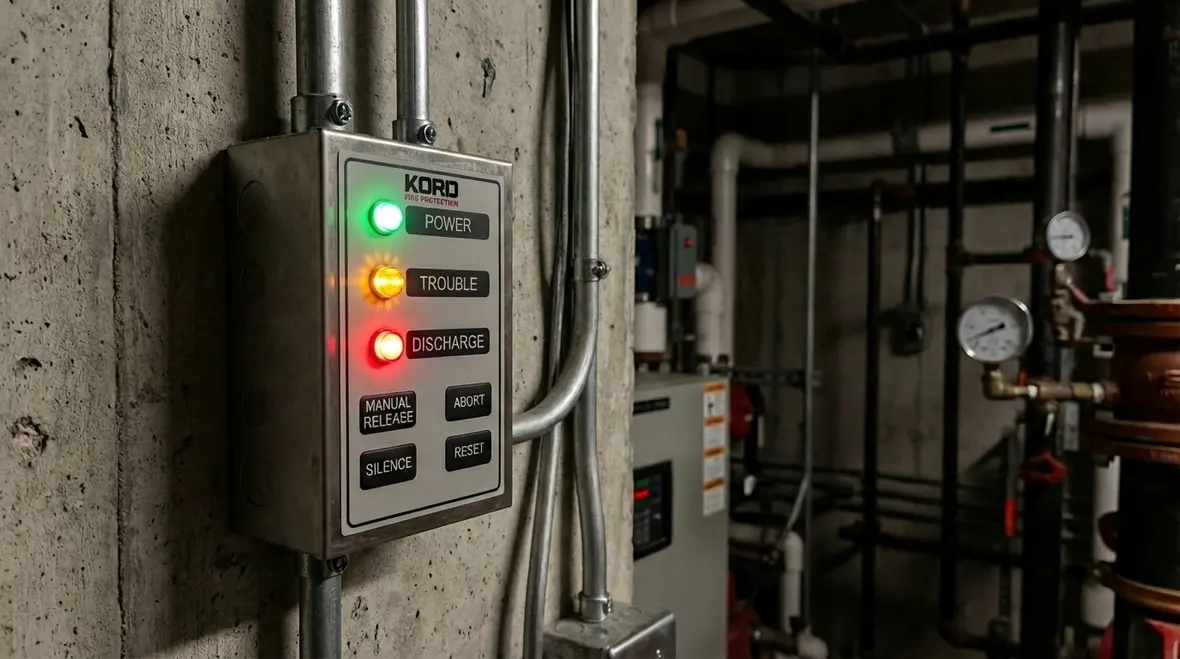
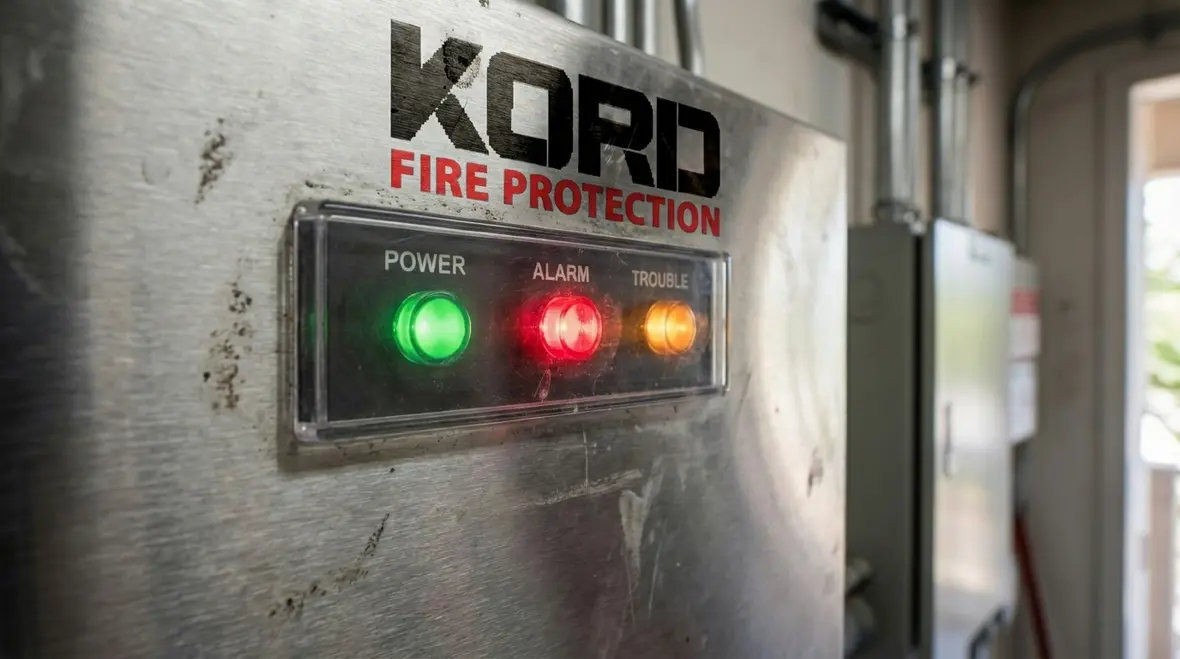
Walk into a mechanical room and you may see a box on the wall glowing like a quiet Christmas tree. Green light steady. Amber light blinking. Red light waiting like it has a story to tell. Those are the fire suppression release panel indicators, and they are not there for decoration. They speak a clear language about system status, alarms, discharge readiness, and faults. Kord Fire Protection technicians often say the panel is like the voice of the suppression system. If you know how to listen, it tells you everything. If you ignore it, well, that is when things get dramatic.
This guide breaks down what the lights and buttons mean, how they work together, and why building owners should pay attention. Because when it comes to fire protection, guessing is not a strategy.
Understanding the Fire Suppression System Release Panel
A fire suppression system release panel acts as the command center for specialized fire suppression systems. While a standard fire alarm panel alerts occupants, the release panel takes it further. It detects a hazard and then activates a suppression agent such as clean agent gas, foam, or kitchen wet chemical.
In other words, it does not just shout about danger. It does something about it.
These panels are common in data centers, commercial kitchens, paint booths, generator rooms, and any space where water from sprinklers may cause damage or fail to control the fire. Therefore, the release panel monitors detection devices, controls agent discharge, manages shutdowns, and communicates with the building fire alarm system. For spaces with clean agent systems protecting sensitive equipment, the panel often works hand in hand with systems like those described in Kord Fire Protection’s clean agent fire suppression services.
Kord Fire Protection technicians explain that the release panel follows a strict logic sequence. First detection. Then verification. Then countdown. Finally discharge. Each stage shows up through lights and audible signals. That is why understanding the panel display is not just helpful. It is essential.
What Do the Fire Suppression Release Panel Indicators Mean?
When someone searches for “what do the lights mean on my fire suppression panel,” they want a clear answer fast. So here it is.
Green Light
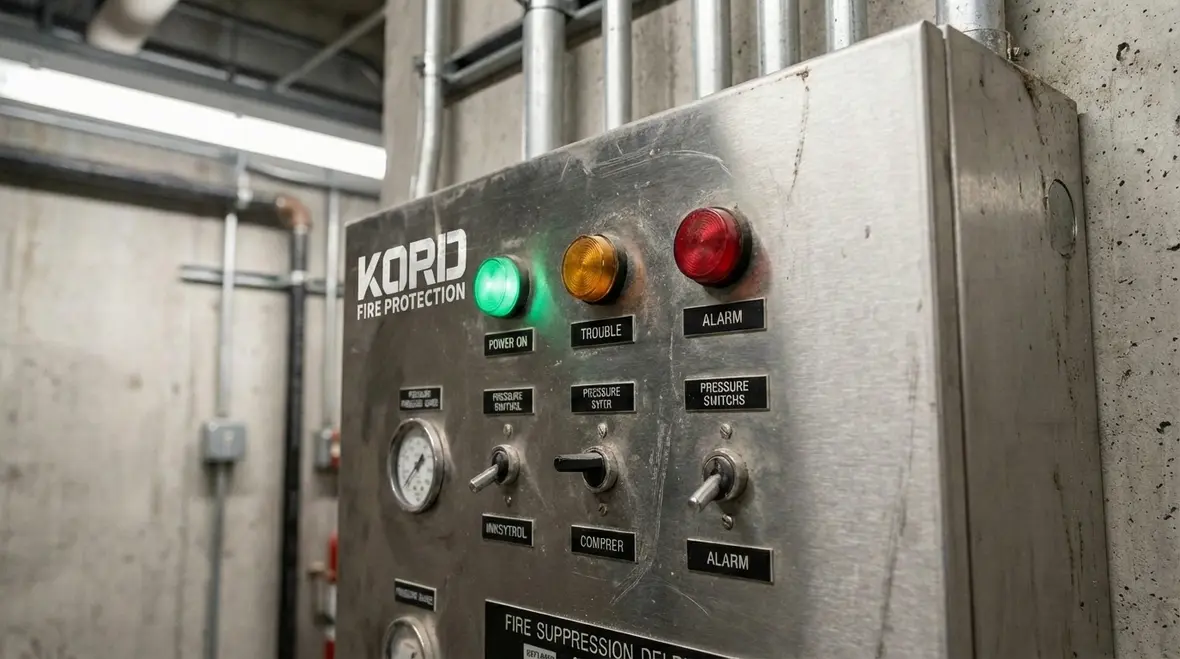
The green light usually means normal condition. Power is on. Circuits are intact. The system stands ready. If this light is off, that is your first sign something is wrong.
Red Light
A red indicator typically signals alarm or discharge. If it flashes, the system has detected a fire condition. If it remains steady, the suppression agent may have been released. At this point, the system is not being subtle.
Amber or Yellow Light
This light points to a trouble condition. It may indicate low agent pressure, wiring issues, battery problems, or disabled circuits. The system is still operational in many cases, but it needs attention.
Audible Signals
Buzzers or piezo alarms accompany visual indicators. A steady tone may indicate alarm. An intermittent chirp often signals trouble. The pattern matters, and trained technicians know the difference.
Because every manufacturer has slight variations, Kord Fire Protection technicians walk clients through their specific panel layout. They translate blinking lights into plain English. No decoder ring required.
Buttons and Switches That Control More Than You Think
Lights tell a story. Buttons allow action. However, pressing the wrong one without understanding the outcome can create confusion.
Manual Release Button
This button allows a person to activate the suppression system manually. It is usually protected by a cover to prevent accidental discharge. Once pressed, it begins the release sequence immediately.
Abort Switch
Found in many clean agent systems, this switch delays or stops discharge while held down. It is designed for situations where smoke triggers detection but no fire exists. When released, the countdown resumes.
Silence Button
This button silences audible alarms but does not reset the system. The condition remains active until resolved.
Reset Button
After an alarm or trouble condition is cleared, this button restores the system to normal. However, if the underlying issue remains, the panel will return to alarm or trouble.
Consequently, technicians stress that building staff should know which buttons they may use and which ones require professional guidance. As one Kord Fire Protection technician joked, “If you would not randomly press buttons in a spaceship, do not do it here.”
How the Panel Thinks During a Fire Event
To understand the indicators fully, it helps to know what happens behind the scenes.
Most suppression systems use cross zone detection. This means two separate detectors must activate before the system releases the agent. For example, a smoke detector and a heat detector in the same hazard area.
First detection triggers a pre alarm. The panel may flash a red light and sound a warning. It may also start a countdown timer. During this stage, personnel can investigate. If a second detector confirms the hazard, the system proceeds to discharge.
At discharge, the panel energizes releasing solenoids or actuators. It may shut down HVAC systems, close dampers, and cut power to protected equipment. Meanwhile, the red discharge indicator illuminates steadily.
Afterward, the panel enters a lockout condition. It requires manual reset and often cylinder replacement. Therefore, the indicators serve as a timeline of events. They show what happened and what must happen next.
Dual View: Common Indicator Lights and What They Signal
Below is a simplified reference that Kord Fire Protection technicians often review with facility teams.
| Indicator | What It Signals |
| Green Power Light | System normal and energized |
| Red Alarm Light | Fire condition detected |
| Red Discharge Light | Agent released or releasing |
| Amber Trouble Light | Fault in wiring, battery, or pressure |
| Supervisory Light | Valve closed or device off normal |
| Battery Fault | Backup power issue |
Although this table simplifies things, real world panels may combine signals. For instance, a trouble light and supervisory light together can point to a closed control valve. That is why professional interpretation matters.
Why a Trouble Light Should Never Be Ignored
It is tempting to treat an amber light like the check engine light in a car. The vehicle still runs, so everything must be fine, right? Not quite.
A trouble signal means the system may not perform as designed during a fire. Low agent pressure could reduce discharge effectiveness. A ground fault in wiring could prevent activation. Dead batteries could leave the system powerless during an outage.
Therefore, Kord Fire Protection technicians respond quickly to trouble conditions. They test circuits, measure voltage, inspect cylinders, and verify programming. In many cases, the fix is straightforward. However, ignoring the warning increases risk.
Additionally, insurance providers and fire codes require functioning suppression systems. A persistent trouble signal can result in citations or liability concerns. So while the amber light may not scream, it certainly whispers with purpose.
Routine Testing and What the Indicators Reveal
Regular inspection and testing keep release panels reliable. During maintenance visits, technicians place the system in test mode. They activate detectors, verify countdown timers, and confirm that releasing circuits energize properly without discharging agent.
Throughout the process, they monitor the fire suppression release panel indicators to confirm proper response. Each light should activate in the correct order. Each signal should match programming logic.
Moreover, technicians check event history logs when available. Modern panels record alarms, troubles, resets, and supervisory conditions. This digital memory helps identify patterns such as recurring faults.
Kord Fire Protection technicians also train onsite staff during inspections. They explain what normal looks like. They point out which lights should remain steady. They encourage staff to report changes immediately. Because awareness shortens response time. For facilities with clean agent protection on critical equipment, this training pairs well with resources like Kord Fire Protection’s guide to clean agent fire suppression for critical equipment.
When to Call a Professional
Some situations require immediate expert support.
Call for service if:
• The red discharge light activates unexpectedly
• The trouble light remains on after reset
• The panel displays multiple simultaneous faults
• The system fails a routine inspection
• Buttons or switches feel damaged or unresponsive
Furthermore, any system modification such as room renovation, equipment changes, or ventilation updates may require panel reprogramming. Suppression systems depend on room integrity and hazard classification. Even small changes can affect performance.
Kord Fire Protection technicians evaluate these updates carefully. They test detection coverage, review agent concentration calculations, and verify that the release panel aligns with the current risk. Fire protection is not a set it and forget it arrangement.
The Calm Authority Behind the Lights
A release panel does not panic. It does not guess. It follows logic built by engineers and refined by code standards. Its lights and buttons form a clear language of readiness, warning, and action.
However, that language only protects when people understand it. Therefore, building owners and managers benefit from learning the basics and partnering with experienced professionals. Kord Fire Protection technicians make a point of explaining systems in plain terms. They believe confidence grows from clarity.
Because in the rare moment when a red light flashes and a countdown begins, no one wants confusion. They want calm. They want certainty. They want a system that works exactly as designed.
Frequently Asked Questions
Clarity Today Prevents Chaos Tomorrow
Those glowing lights are more than decoration. They are status reports, early warnings, and confirmation that protection stands ready. Facility leaders who understand their panels make smarter decisions and respond faster. Kord Fire Protection technicians stand ready to inspect, explain, and maintain every component with precision.
If your facility relies on clean agent systems to protect critical equipment, pairing panel training with a review of resources such as Kord Fire Protection’s clean agent fire suppression services can help you see the full picture—from agent cylinders to nozzles to the release panel that ties everything together.
Schedule a professional evaluation today and ensure your system speaks clearly when it matters most. Whether you manage a data center, hospital, control room, or commercial kitchen, Kord Fire Protection offers comprehensive fire suppression services—including clean agent, kitchen hood, and room integrity testing—to keep your release panels and suppression systems ready for anything.
Explore Kord Fire Protection’s clean agent fire suppression services to see how expert design, installation, and maintenance can support your release panels, or contact their team through your nearest regional fire protection services page to request a tailored fire suppression assessment.
Know Your Weapon Before You Fight the Flame
Kord Fire Protection is your go-to when it comes to all things fire protection. For over 20 years, we’ve been serving Southern California with the quality service and equipment to keep your home or business safe at all times. Our competitive prices reflect our unwavering commitment to protecting what matters most in the event of a fire emergency. Give us a call, send an email, or use that form!

Join Our Newsletter!
Get the latest fire safety tips delivered straight to your inbox From our Newsletter.