Fire Pump Controller Troubleshooting Guide for Faults
Quick Answer: Fire pump controllers often stumble due to power issues, sensor faults, failed contactors, or bad phase readings. This guide walks through practical checks, what the alarms usually mean, and how to restore reliable fire flow fast. When the stakes rise, Kord Fire Protection can act as a steady partner for testing, repair, and compliance.
Fire pump controllers sit at the center of an emergency water supply system, and when they misbehave, time stops being a concept and starts being a problem. In this Fire Pump Controller Troubleshooting guide, the team looks at common controller failures, explains what to check on site, and shows how to confirm the pump will deliver the right pressure when it matters. And yes, even the best equipment can throw tantrums, because no one reads the label at 2 a.m. Then again, that is why structured troubleshooting exists.
Near the top of any troubleshooting plan, it helps to connect controller faults with the broader system condition. That is where professional fire pump service fits naturally into the conversation, because controller alarms are rarely just a panel problem. They often reflect supply, motor, sensing, or maintenance issues elsewhere in the fire pump system.
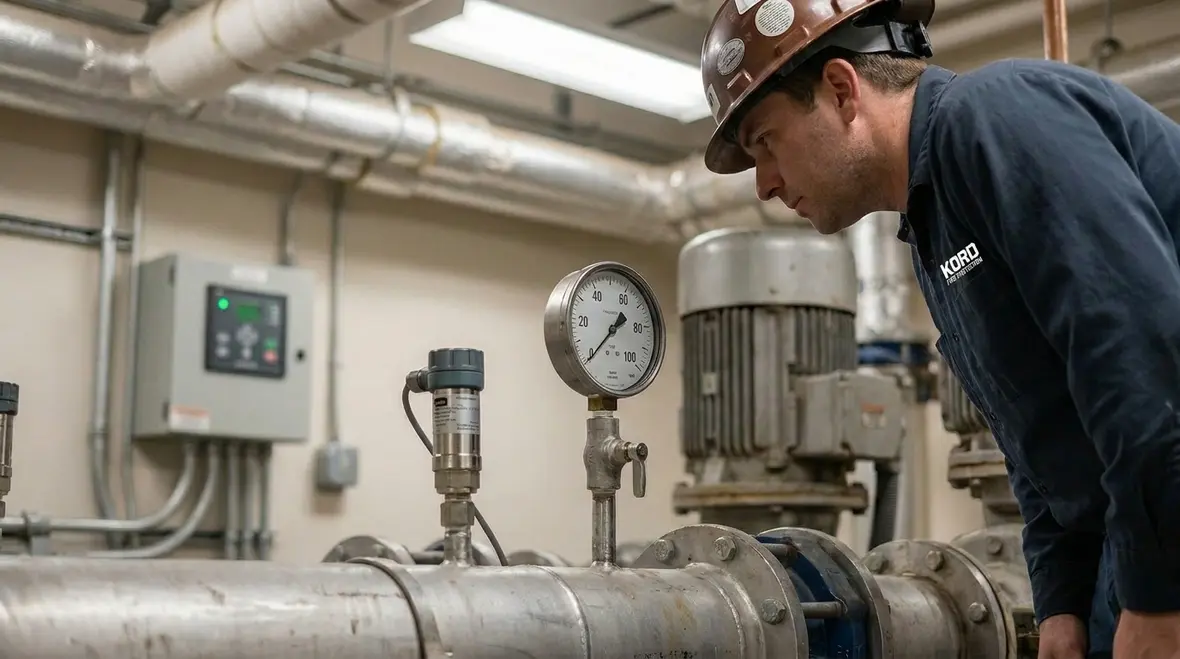
Spot warning signs before the controller fails
Most controller trouble does not arrive like a villain in a cloak. Instead, it shows up as small changes that build up. For example, the controller may cycle the start sequence repeatedly, log phase or fault messages, or prevent automatic operation after a prior event. Additionally, operators might notice odd panel behavior such as indicator lights that flicker or relays that chatter. These are not mystery vibes. They usually point to a measurable issue.
From a practical standpoint, the team starts by confirming the event history. Then it compares that history with the last known changes on the asset, like switchboard work, cable repairs, or a facility equipment shutdown. Next, it checks for visible signs of heat stress around terminals and contactors. High resistance connections often create heat, and heat quietly accelerates failure. Finally, it verifies that the pump room environment stays within the controller’s design range, because dust and moisture can affect insulation and sensor accuracy.
This early-stage review is also where teams can catch repeat issues that never received a proper root-cause fix. Maybe the panel has been reset three times in two months. Maybe a nuisance alarm keeps appearing after heavy cleaning in the plant. Maybe a recent shutdown introduced a wiring change that nobody documented because the phrase “we will remember it later” has betrayed humanity for generations. Small clues matter, and a disciplined technician treats them like breadcrumbs, not background noise.
Early signs worth logging every time
- Intermittent fault messages that clear without explanation
- Unexpected changes to automatic start behavior
- Warm terminals, odor, or discoloration inside the panel
- Repeated event history tied to one input or output
- Environmental changes such as moisture, dust, or unusual room heat
How power and phase issues show up in the controller
When a controller refuses to run, power problems rank near the top of the list. Even if the facility power looks on, the controller may still detect wrong phase sequence, missing phase, or voltage dips during start. Therefore, the team treats phase and supply voltage checks as the first step, not the last.
Key checks on site:
- Measure supply voltage at the controller terminals during a start attempt, not only when idle.
- Confirm phase sequence and phase balance. A small imbalance can cause weak motor response.
- Inspect isolators, fuses, and breakers for signs of overheating or looseness.
- Check door interlocks and stop circuits that can block run logic.
Then comes the part where a controller behaves like it is being dramatic. If the supply drops during motor inrush, undervoltage detection can stop the sequence. In that case, the team evaluates cable size, contactor condition, and the upstream protections. Also, it checks if the controller has programmable settings that match the pump motor ratings. One mismatch can turn an otherwise healthy system into a no start machine.
It also helps to compare what the controller reports with what the motor and supply are actually doing. A phase-loss alarm may trace back to a failed fuse, but it can also come from a loose terminal, damaged incoming cable, or monitoring circuitry that is reading unstable voltage. Troubleshooting gets faster when the team avoids assumptions and measures under real conditions. Static readings with no start demand can miss the exact fault that appears only when the system is asked to work.
For deeper context on electrical reliability, Kord Fire Protection also covers related issues in its article on fire pump power supply reliability for commercial buildings, which pairs well with controller diagnostics when recurring phase or voltage faults appear.
Sensor and pressure control faults that delay fire pump delivery
A fire pump needs stable feedback, and controllers depend on sensors and transducers to decide when to start, when to stop, and how to maintain pressure. If a sensor goes out of range, the controller may behave cautiously or lock out. As a result, the pump can delay startup or refuse to operate in automatic mode.
Common symptoms to look for:
- Pressure readings that jump or drift during normal operation
- Faults related to transducer signals or analogue input errors
- Frequent starts without sustained pressure stabilization
- Failure to meet pump start thresholds even when water supply exists
To troubleshoot effectively, the team verifies sensor wiring integrity, checks for loose terminals, and confirms the sensor is calibrated or at least consistent with known pressure references. Then it checks the controller’s input scaling and confirms the transducer type matches the controller configuration. A pressure sensor can be working, yet still misreported due to configuration errors. In addition, the team inspects impulse lines and strainers where applicable, since blocked lines can cause sluggish or inaccurate readings.
Sensor faults can also create secondary problems that look mechanical at first glance. If the controller sees false low pressure, it may start too often. If it sees false normal pressure, it may hold back when the system actually needs help. That means a bad signal can imitate a pump problem, a pipe problem, or an operator problem, which is rude but common. The answer is to compare the displayed value against a trusted reference and follow the signal path from the device all the way into the controller logic.
Questions that narrow sensor faults quickly
- Does the displayed pressure match a calibrated gauge nearby?
- Has the transducer type or scaling ever been changed?
- Are impulse lines clear and free of debris or trapped moisture?
- Do the readings drift only during pump starts or all the time?
Contactor, relay, and output problems that cause repeat alarms
When a controller runs the start sequence but fails to complete, contactors and output circuits are often the culprits. If a contactor does not fully pull in, the controller may see an open auxiliary contact or an incomplete feedback signal. Consequently, it will stop and log a fault, then attempt again. This cycle can damage components and also erode confidence in the system.
What the team checks first:
- Contactor coil voltage at the moment of energizing
- Auxiliary contact feedback signals to confirm the contactor fully engages
- Burn marks, pitting, or discoloration on contact surfaces
- Relay contacts that stick or chatter during start
- Control wiring continuity and signs of corrosion
After that, the team inspects overload devices and checks whether the controller’s output logic matches the pump start method used on site. Also, it confirms that any anti-condensation heaters are operating where installed, because damp panels can lead to intermittent faults. If the system includes alternation logic for multiple pumps, the controller’s sequencing must match the configured number of pumps and priority rules. Otherwise, it may rotate pumps in a way that triggers faults, like swapping band members in the middle of the song and hoping nobody notices.
Some repeat alarms are caused less by a single failed part and more by wear spreading across a control circuit. A weak coil, oxidized contact, and loose terminal can combine into one frustrating intermittent failure that disappears when the cabinet is open and returns the moment everyone leaves. That is why voltage measurements, feedback checks, and physical inspection need to happen together. The controller is telling a story. The job is to make sure the technician is not only reading the title.
Controller lockouts, fault logs, and reset logic
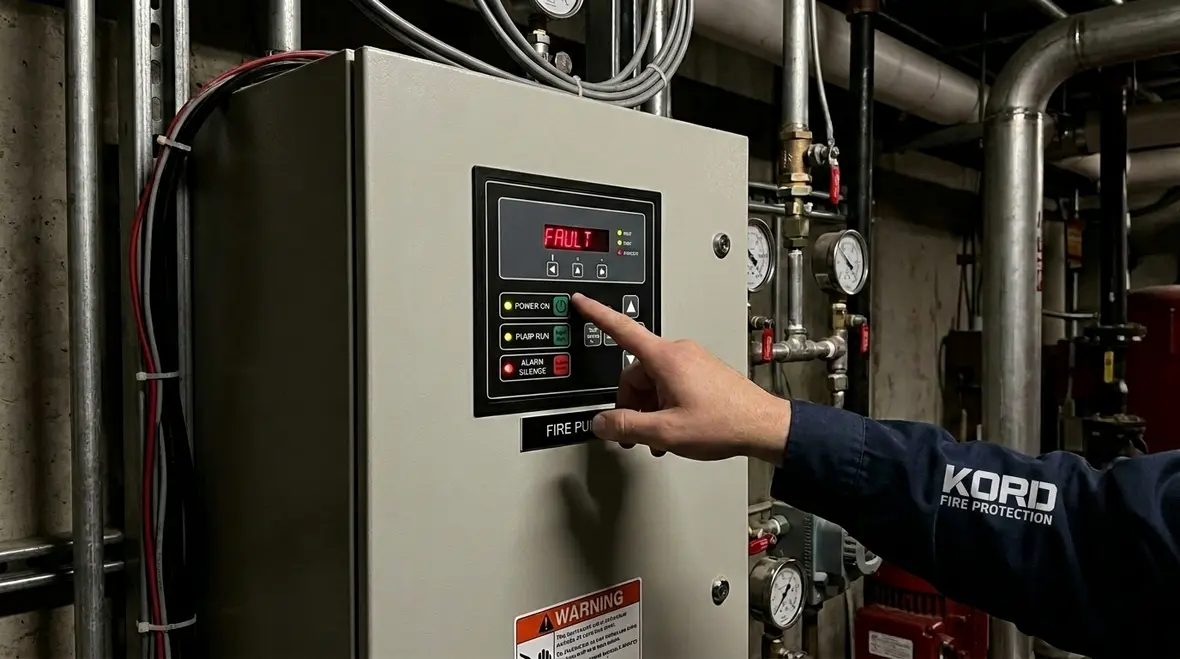
Many controllers store fault codes and event timelines. Therefore, the most efficient Fire Pump Controller Troubleshooting happens when technicians use those logs like a map, not a riddle. Instead of resetting repeatedly, the team reads the fault source, identifies whether it is a latching condition, and checks the recovery requirements.
Then it considers how the controller behaves under test conditions. Some systems require specific test modes to run the pump for a timed period, while others rely on auto logic. If testing bypasses interlocks incorrectly, the controller may block operation after the test completes. So, the team verifies that the test method matches the controller’s programmed safety steps.
Also, the team checks the stop circuit and remote shutdown inputs. A temporary shutdown input stuck in the circuit can keep the controller from starting even when everything else looks good. And yes, someone might have installed a test switch and labeled it poorly. Facilities teams do not lack creativity, but the labeling could use a therapist.
Logs become even more useful when they are reviewed beside recent maintenance activity. A lockout that starts right after panel cleaning or upstream electrical work should raise different questions than one that appears after months of stable operation. Date, time, operating mode, and the sequence of alarms all matter. The controller may not gossip, but it does keep receipts.
Best practices for safe and repeatable diagnostics
Effective troubleshooting means more than fixing the immediate fault. It also means leaving the system safer and easier to maintain. First, the team verifies isolation and safe work practices before touching wiring, especially in panels with capacitors and drive components. Then it documents measurements, photos of terminal condition, and the controller settings at the time of inspection. Next, it clears faults only after addressing the cause, not just the symptom.
Repeatable process the team follows:
- Confirm reported faults and capture fault code details
- Check power quality, phase, and voltage during start attempt
- Verify sensor inputs against stable reference readings
- Test control outputs and confirm feedback signals
- Perform controlled run and observe pressure performance
- Record final settings and confirm compliance documentation
Additionally, the team evaluates whether the issue points to aging components. If multiple faults trace back to the same contactor bank or terminal block, patching one part may not prevent the next failure. Instead, targeted component replacement and tightening practices can reduce recurring alarms. Finally, Kord Fire Protection becomes a vital partner here, because they can support ongoing testing, fault response, and service scheduling across industrial, retail, and commercial facilities, where uptime and compliance requirements never take a day off.
Facilities that want a stronger maintenance rhythm can also review Kord Fire Protection’s article on the fire pump testing and certification process. It connects controller health with broader performance checks, documentation habits, and system readiness, which is exactly where troubleshooting becomes prevention.
Why Kord Fire Protection supports controller reliability
Fire pump systems live in the real world: busy sites, uneven access, seasonal demand, and strict reporting expectations. When Fire Pump Controller Troubleshooting turns into a repeated cycle, having a dedicated service partner matters. Kord Fire Protection can assist by providing structured inspections, responsive support, and practical guidance that connects controller health to real pump performance. In other words, the team does not just read alarms, it helps prevent them from coming back.
For many facilities, the biggest win is continuity. Instead of trying to explain fault history to a new contractor every time, Kord can track trends, support corrective actions, and help teams stay ready for audits and planned testing. That means fewer surprises and more confidence, which is good for operations and even better for the people who have to sleep at night.
FAQ: Fire pump controller troubleshooting
Next steps for reliable fire pump performance
When a controller shows faults, teams need answers fast and fixes that last. Kord Fire Protection supports facilities with structured diagnostics, clear documentation, and service that aligns controller health with real pump reliability. If your site faces recurring alarms or delayed starts, reach out to Kord and get a plan for corrective action, testing, and ongoing support.
Because in fire protection, close enough is not a strategy. A dependable controller, a verified start sequence, and a service partner who understands the full fire pump picture can make the difference between recurring frustration and real confidence. That is the kind of reliability facilities teams can actually build around.

Join Our Newsletter!
Get the latest fire safety tips delivered straight to your inbox From our Newsletter.