Suppression Manual Release Station: Kord Fire Protection
The suppression manual release station sits at the center of many fire protection plans, quietly ready to act when people need protection most. It gives an operator a clear way to start a release of a fire suppression system, often when seconds matter and automation alone cannot cover every scenario. And while the idea sounds simple, the real work shows up in design details, placement, labeling, access control, and reliable maintenance. That is where Kord Fire Protection steps in. Because when the stakes are real, it helps to have a partner who treats the service like it matters, not like it is another checkbox on a form.
In practice, a manual release station becomes part of a larger life safety strategy that depends on timing, visibility, training, and dependable system behavior. It is not there for decoration, and it definitely is not there to make a wall look more official. It exists because real facilities need a direct, human controlled action point when conditions shift fast. That need becomes even more important in buildings where release logic, alarms, and equipment shutdowns must work together without confusion. Kord Fire Protection helps facility teams connect those moving parts with practical service, sharp documentation, and field experience shaped by how buildings actually operate, not how they look in a perfect drawing.
What a manual release station actually does in a suppression system
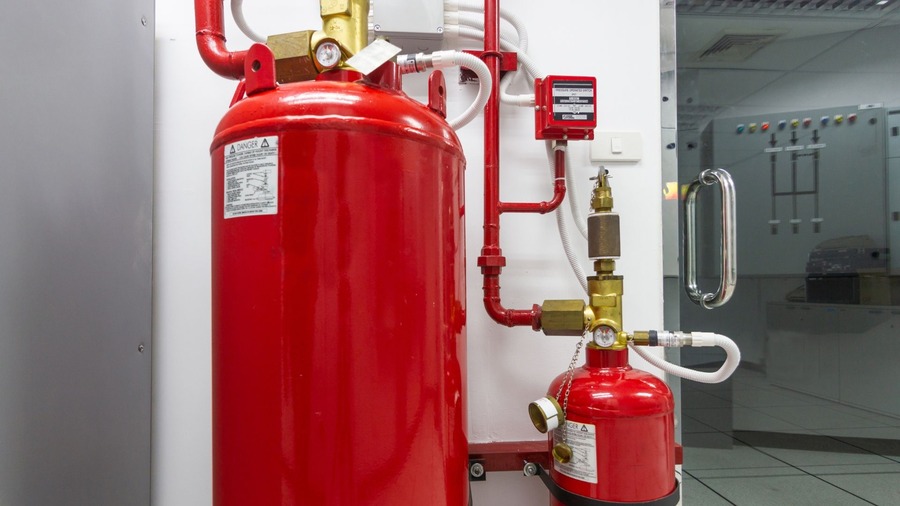
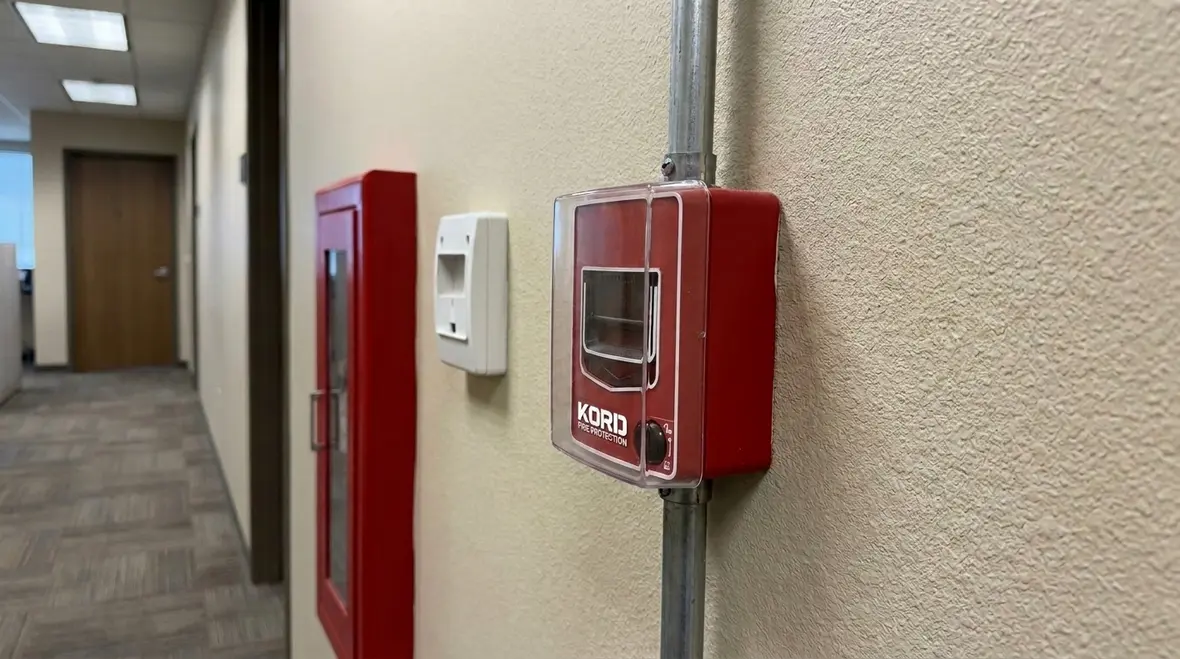
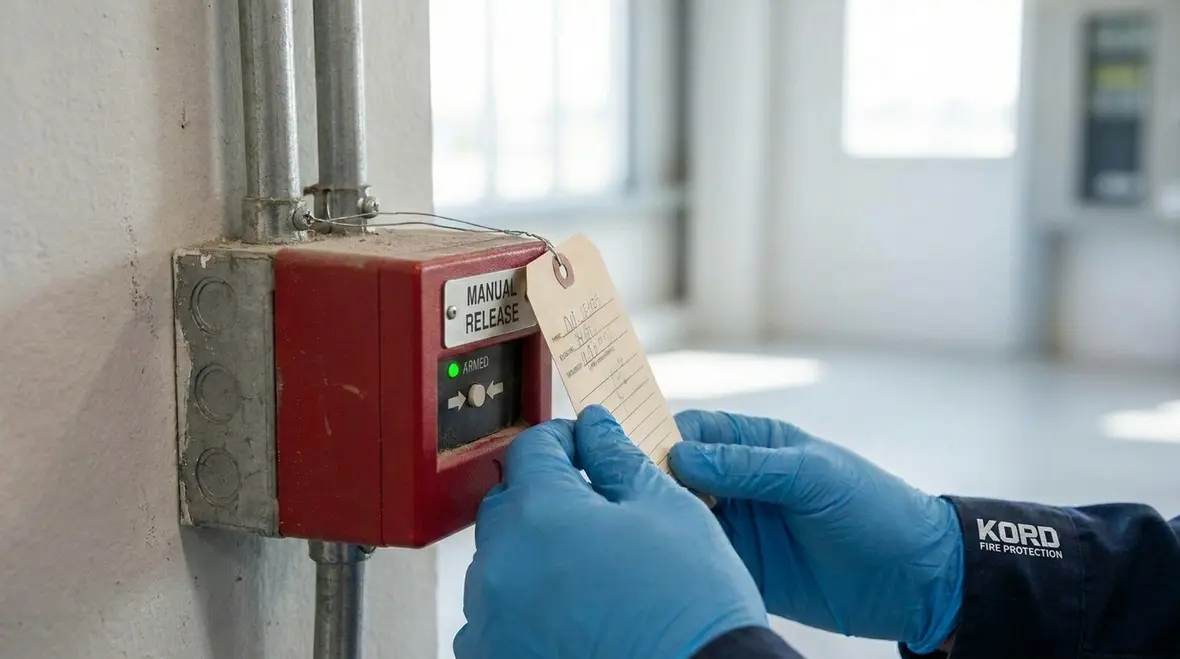
A manual release station is an intentional control point that lets trained staff start the flow of an extinguishing agent. In many setups, it interfaces with valves, control circuits, and detection logic so the system can release the right agent at the right time. However, the manual release station is not just a button on a wall. Instead, it operates inside a larger chain of events that includes alarms, safety interlocks, and confirmation signals.
To keep operations safe and consistent, a proper setup typically includes visible status indications, clear activation instructions, and safeguards against accidental use. Then, after an activation, the system returns to a managed state so teams can investigate the cause and restore readiness. In other words, it is not a “press and forget” kind of device. Fire protection is more like air travel than it is like ordering pizza.
That is also why coordination with suppression controls matters so much. When the release station is tied into broader building protection logic, it should behave predictably alongside alarms, interfaces, and reporting. Kord Fire Protection regularly emphasizes this kind of coordination in related resources like Fire Suppression System Integration for Life Safety and Fire Suppression Electrical Interface for Reliable Protection, where the focus stays on how systems communicate clearly under pressure.
Where suppression manual release stations get installed for best access
Placement matters because fire behavior does not ask for convenience. Teams must reach the station quickly, even when smoke, heat, or panic reduce visibility. Therefore, designers usually locate manual release points near safe egress routes, at points staff can access without crossing hazardous areas, and within the operational flow of the site.
Contractors often follow a location logic like this:
- Near control areas where trained staff already work
- Close to stairways and paths people can use during emergencies
- In rooms or corridors where the station remains reachable during typical fire conditions
- Away from places where equipment loading or vehicle traffic could block access
Meanwhile, the station’s mounting height and clearances also affect real-world use. A station that is “technically reachable” but hidden behind cabinets becomes a problem when the building is under stress. So, Kord Fire Protection helps teams plan placement with practical walk tests and review of site operations, not just paper specs.
Access has to work in the real building, not just on the blueprint
This is where many projects either look smart or actually become smart. A station may satisfy a drawing review, but if carts, pallets, doors, or equipment zones crowd the approach, staff lose precious seconds. Kord Fire Protection looks at the traffic patterns, the work rhythm, and the places where people naturally move during a stressful event. That practical review helps keep release points visible and useful instead of hiding them in plain sight like the world’s worst emergency scavenger hunt.
Key design and code considerations for safe operation
Fire suppression control systems require careful attention to interlocks, labeling, and system behavior. Manual release actions must align with the suppression system’s design intent. That means the station must fit the correct agent type and system configuration, and it must integrate with the valves and control modules that actually release the agent.
In addition, the station needs clear identification so staff immediately know what it controls. After all, if a technician sees three similar boxes during a crisis, the fire does not care which one was meant. Common code driven expectations also include:
- Durable, readable signage that stays legible in typical lighting conditions
- Protective covers or guards when needed to reduce accidental activation
- Proper supervision, so system monitoring can detect faults
- Reset procedures that align with system requirements and training
As the system designer or installer tightens these details, they also reduce downtime and confusion later. And if anyone thinks maintenance is optional, that person has clearly never had to explain a failed inspection with a straight face. Kord Fire Protection supports that whole life cycle with service plans that keep documentation and performance aligned.
The design conversation also connects to broader building coordination. If the electrical interface is inconsistent or the suppression logic is not mapped clearly, a manual release point may be present but not reliable. That is one reason Kord Fire Protection’s related guidance on Commercial Fire Alarm Integration for Safe Building Automation and Fire Suppression System Integration for Life Safety remains useful for facility teams reviewing how signals, control authority, and suppression actions are expected to work together.
How the system responds after manual activation
When staff activate the manual release station, the suppression system must behave in a controlled way. First, it should trigger the release sequence, often supported by detection logic and alarm signaling. Then, it should ensure the correct agent releases to the protected area. Finally, it should provide status feedback so the operator understands what happened.
In many systems, the response includes time delays or staged actions to allow evacuation, vehicle control, or pre discharge warnings, depending on the risk profile. Consequently, teams must train staff on what they will see and hear. The manual release station should not surprise people during an emergency.
Here is where professional service becomes valuable. Kord Fire Protection can review the sequence logic, validate response behavior, and support testing that checks both control functions and notification circuits. That reduces the chance of a system that “should work” but actually fails under real conditions. Nobody wants to find out the hard way, and nobody gets a trophy for improvising during a fire.
Sequence logic should be clear before anyone needs it
A reliable suppression system does not rely on assumptions. Operators should know whether alarms sound first, whether delays apply, whether shutdowns happen automatically, and how the system shows release status afterward. Kord Fire Protection helps teams test these sequences in a way that reflects actual site conditions. That kind of review keeps emergency behavior predictable, which is exactly what people want when everything else in the room is trying to become memorable for the wrong reasons.
Maintenance and testing that keep the station trustworthy
Even the best-designed suppression manual release station depends on ongoing care. Over time, stations can suffer from dust buildup, mislabeled controls, damaged covers, or electrical faults in the supervision circuit. Additionally, building changes can affect access routes or obstruct clearances, which may change how staff reach the station.
Effective maintenance usually includes a mix of visual inspection, functional checks, and verification of control wiring and status indications. It also includes documentation updates so stakeholders can track service history. A solid approach often covers:
- Inspection of station condition, labeling, and protective hardware
- Verification of alarm and supervision status reporting
- Testing of the control interface per the system requirements
- Review of site access conditions after renovations or layout changes
To make this easier for facilities teams, Kord Fire Protection can become a vital partner by managing service schedules, coordinating test access, and providing clear reporting. That way, the station stays ready, and the team does not waste time chasing details like it is a scavenger hunt with smoke alarms.
For teams comparing maintenance priorities across systems, Kord Fire Protection also covers related inspection and coordination topics in articles like Commercial Fire Suppression Integration With Smart Automation and How Commercial Building Fire Safety Systems Work. Those resources help reinforce a simple truth: reliable life safety systems stay reliable because somebody keeps paying attention to the details.
Dual view of manual release readiness and accountability
Facilities often want the “big picture” as well as the details. So, this dual view shows how readiness and accountability connect in the field.
Readiness items
- Correct installation and wiring integrity
- Clear labeling and protected access
- Status indicators that match system state
Accountability items
- Service logs that support audits and reviews
- Maintenance procedures followed consistently
- Training and reset steps communicated to staff
When these two areas move together, teams lower risk and improve response quality. And when Kord Fire Protection partners with the facility, it helps align practical field readiness with the paperwork that keeps everyone calm at inspection time.
How Kord Fire Protection supports manual release station projects
Kord Fire Protection supports organizations that rely on manual release stations and the systems behind them. First, it helps teams plan service and testing that matches actual site conditions, including access routes, staffing patterns, and ongoing operations. Then, it supports installation quality through attention to interface requirements, labeling, and system sequence behavior.
Finally, it provides continuing service so the suppression manual release station remains a reliable control point, not a questionable relic from last year’s project. In business, people love “turnkey.” In fire safety, they need it to be real. Kord Fire Protection treats each job like it must pass scrutiny, function under pressure, and document cleanly for the long run.
For organizations looking at broader protection support, Kord Fire Protection also offers guidance and service aligned with integrated suppression planning through Industrial Fire Suppression Integration Tips for Safer Buildings. Near the service side of the conversation, teams can explore Fire Suppression System Integration for Life Safety as a relevant next step and practical call to action for facilities that want a stronger, more coordinated suppression strategy.
FAQ
Conclusion and CTA
A well planned suppression manual release station turns a fire response plan into an action plan. It supports safe access, controlled sequence behavior, and dependable operation over time. However, that reliability only happens when placement, design details, and maintenance all work together.
If a facility needs a partner to handle service, testing, and documentation with real accountability, Kord Fire Protection is ready. Contact Kord Fire Protection today to review the station setup and build a service plan that keeps staff prepared.

Join Our Newsletter!
Get the latest fire safety tips delivered straight to your inbox From our Newsletter.