Commercial Fire Suppression Integration With Smart Automation
Commercial fire suppression integration is no longer a “set it and forget it” project. In modern buildings, smart automation and fire suppression systems work like a coordinated team, exchanging signals, verifying conditions, and guiding responders to the right actions fast. To make it real, Kord Fire Protection technicians explain that the goal is not just faster alarm sounds. Instead, the goal is controlled, accurate responses that protect people, limit property loss, and reduce confusion when seconds matter. And yes, it still needs a professional hand on the controls, not a hope and a prayer, like a sitcom plot that somehow fixes itself in six minutes.
Smart building automation and suppression systems share one brain
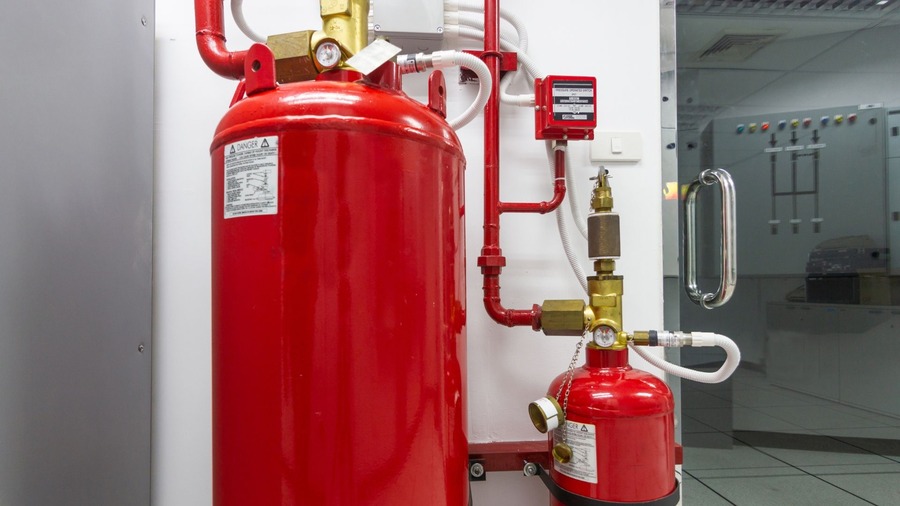
Smart building automation uses sensors, controllers, and software to monitor building conditions in real time. Fire suppression systems do the life safety work, such as releasing water, gas, or foam based on approved design. When these systems integrate, they exchange information so the building can respond in a coordinated way.
For example, when smoke or heat rises, the fire detection side triggers alarms. Then automation can adjust related systems in a safe sequence: fans, dampers, access control, and occupant alerts. Meanwhile, the suppression system stays governed by its own listing, wiring rules, and control logic. As Kord Fire Protection technicians emphasize, smart automation supports the event, but it does not “freestyle” outside the design.
That difference matters more than people think. A smart building platform can be incredibly helpful, but it is not there to rewrite life safety rules on the fly. Instead, it acts like a disciplined coordinator that reads system status, displays meaningful information, and carries out approved support actions in order. That helps everyone from operators to responding teams understand what is happening without guessing. In a stressful event, less guessing is a beautiful thing.
Why the integration model works
When these systems are designed together, the building behaves more like a trained team than a pile of unrelated equipment. Operators can see where the alarm started, what sequence has already occurred, and what systems are currently active. That can shorten decision time and keep emergency actions focused. It also reduces the odds of the building reacting in odd, scattered ways that make staff stare at screens like they are decoding a secret message from outer space.
How integration improves response time without adding risk
Fire events rarely happen in isolation. They also create side effects like smoke spread, elevator recall needs, and door release timing. Therefore, integration helps prevent the building from acting like it has no idea what is happening.
In a well planned setup, the automation platform can do these tasks as conditions change:
- Trigger staged occupant notifications using approved audio and signage messages
- Coordinate HVAC shutdown or smoke control to reduce spread
- Manage fire doors and smoke dampers that belong to the life safety sequence
- Provide a clear event timeline to the building operator and emergency plan team
Importantly, suppression discharge still follows the fire system’s design and code requirements. So, the integration focuses on coordination and visibility first, while keeping the suppression actuation logic within the proper fire control equipment. Think of it as a playbook, not a jam session.
Faster does not mean looser
One of the biggest misconceptions is that integration means giving the automation platform broad freedom to “figure it out.” Good systems do the opposite. They narrow behavior to approved sequences and verified conditions. That way, the response is faster because it is already defined, not because the building suddenly becomes creative under pressure. Creative writing is lovely. Creative life safety control logic, not so much.
What signals get exchanged between systems
Integration depends on clean signal mapping and reliable device status. Usually, the fire and automation layers share defined inputs and outputs, such as alarm status, supervisory states, and controller fault signals. Then the automation system translates those inputs into readable actions for operators.
Kord Fire Protection technicians often describe the common categories of exchange:
- Alarm and pre alarm status so the building can prepare controlled steps
- System supervisory signals, like valve tamper or pressure switches
- Trouble and fault alerts to speed up service calls
- Occupancy and equipment context, such as where people are located during the event
Additionally, integration usually includes time based logic. For instance, automation may initiate certain actions on verified alarm conditions only, then lock out non essential changes. This reduces false triggers and keeps operations calmer during real life stress. Nobody wants the building doing interpretive dance with dampers when a pull station gets tapped by accident.
Readable data makes better decisions
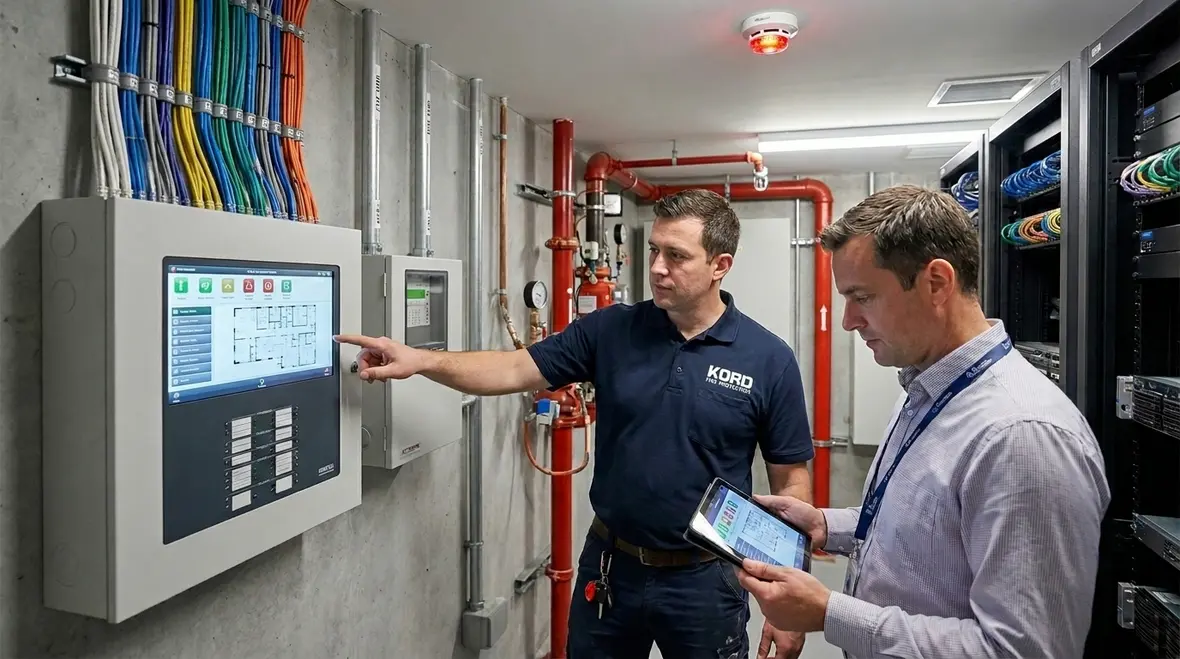
The operator side of integration is often where the value becomes obvious. Raw signal status is helpful to technicians, but facility teams usually need a clearer picture: which zone is in alarm, what equipment has responded, what still needs verification, and whether any fault condition could interfere with the sequence. Converting technical status into readable event information helps teams follow the fire plan instead of getting lost in abbreviations and blinking lights.
Dual column planning view for zones, interfaces, and verification
In the field, project teams need a clear method. So, the next view shows how planning typically breaks down. This is where Kord Fire Protection technicians like to keep drawings simple enough for installers, and strict enough for inspectors.
That planning table may look simple, but it usually prevents the biggest problems. When teams skip exact interface definitions or leave sequence details fuzzy, confusion shows up later during commissioning. It is much better to settle those details on drawings and submittals than in front of an inspector with everyone suddenly pretending the missing note was “implied.”
Real world sequences that techs explain in plain language
When integration works, operators do not have to guess. They can read what the system already knows. However, this requires thoughtful sequence design and careful testing. Kord Fire Protection technicians often walk teams through the same example scenarios to remove confusion.
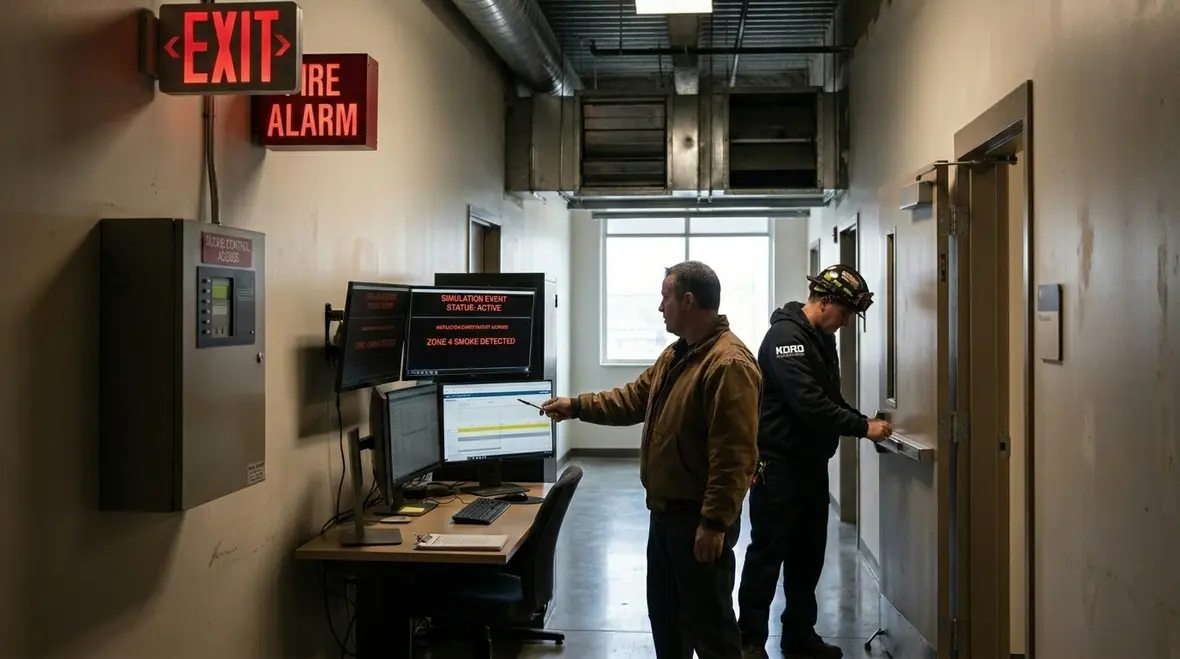
One common scenario involves a smoke event in a specific tenant area. After detection triggers, automation can immediately do these things:
- Announce an alert in the affected zones using the approved message set
- Send status updates to the building management workstation so staff can act under the fire plan
- Activate smoke control actions tied to that zone boundary
- Enable elevator recall and restrict access through interfaces that match the life safety plan
Next, if the suppression system discharges based on the approved criteria, automation can record discharge confirmation and update alarms. Even then, the system should not “invent” new behavior. Instead, it should follow the pre approved logic so the response stays consistent and defensible.
In short, integration gives people the right information fast, so they do not spend those precious minutes interpreting blinking LEDs like it is a space mission countdown.
A practical example from the operator view
From the workstation, a good sequence does not just say “alarm.” It shows the area, the initiating condition, the current equipment state, and the next expected response. Staff can then confirm evacuation procedures, help direct responders, and avoid interfering with automatic sequences. That clarity may sound small, but in real events it saves time and lowers panic. Calm information beats frantic guesswork every single time.
Commissioning, testing, and code minded safeguards
Smart integration fails when it looks fine on paper but breaks during inspection or commissioning. Therefore, teams must treat testing as part of design, not an afterthought.
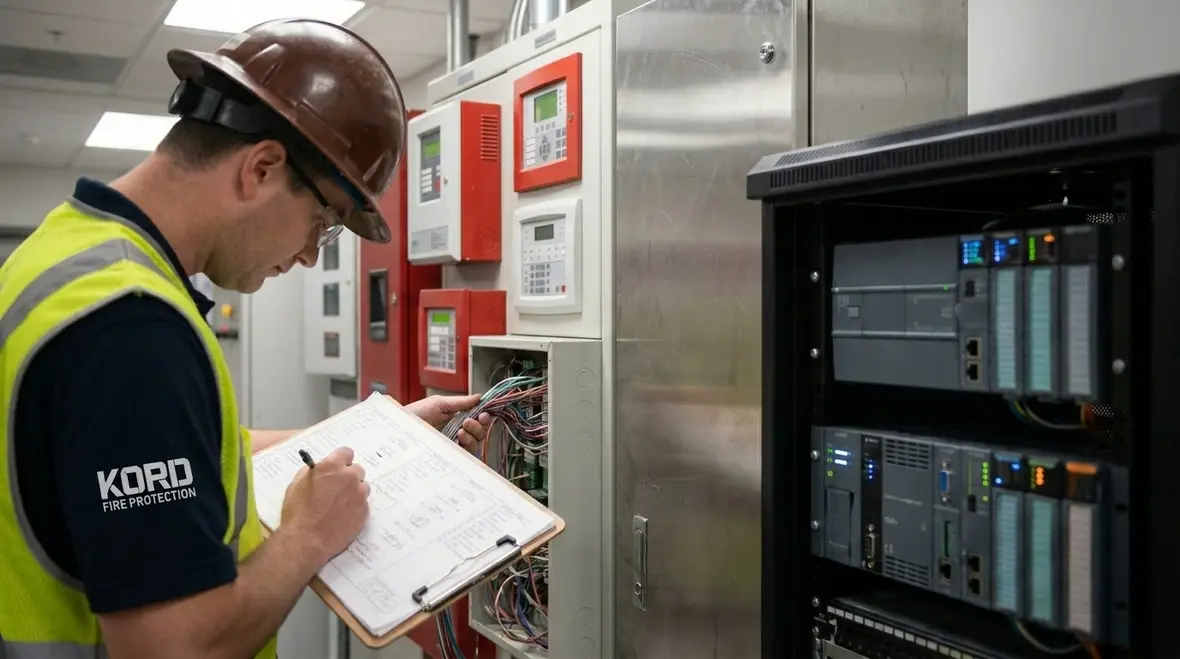
During commissioning, the fire suppression system remains the authority for actuation. Then automation verifies status, logs events, and supports controlled actions that do not conflict with fire control equipment. Kord Fire Protection technicians typically push for clear documentation that shows:
- Point to point mapping between detection, suppression, and automation
- Approved sequence of operations with timing details
- Fail safe behavior, such as what happens if network communication drops
- Training materials for facility staff and emergency plan managers
Additionally, robust cybersecurity practices help keep interfaces stable. After all, no one wants a “smart” system to become a chaotic one. Integration should protect life safety, not add a new problem for the facilities team to solve during an emergency.
This is also where routine inspection and documentation become part of the bigger picture. Facilities that already maintain disciplined alarm inspection programs are in a better position to support integrated response strategies. For teams reviewing those requirements in detail, Kord Fire Protection covers the basics and expectations in Fire Alarm Inspection and Testing for Commercial Buildings.
Why commissioning deserves real attention
Commissioning is where assumptions go to either become proof or become paperwork problems. Functional tests confirm the sequence really happens in the field, with real timing, real devices, and real fail safe behavior. If something is unclear, this is the moment to correct it. No one wants to discover a missing relay, a mislabeled point, or a logic conflict after the project team has packed up and the building is live.
FAQ
Final thoughts and next step
Commercial fire suppression integration works best when smart automation behaves like a disciplined partner, not a wildcard. When teams map zones, define clear sequences, test thoroughly, and train operators, the building responds faster and more calmly. Kord Fire Protection technicians can help plan the interfaces, document the logic, and verify performance so life safety stays the center of the design.
If your building needs tighter coordination between detection, suppression, and automation, contact Kord Fire Protection for an assessment and commissioning plan. You can also explore Kord’s broader commercial solutions through Full Fire Protection Services to connect inspection, testing, service, and system support under one team.

Join Our Newsletter!
Get the latest fire safety tips delivered straight to your inbox From our Newsletter.