Commercial Fire Alarm Integration for Safe Building Automation
When a building’s life safety systems work smoothly with the rest of the automation platform, occupants stay safer and operators sleep better. That is where commercial fire alarm integration comes in, and it should be handled with care, not wishful thinking. Kord Fire Protection Technicians often explain that the goal is simple: alarms must report reliably, controls must behave predictably, and the building automation system must not guess. In other words, no “magic” behaviors, no late-night surprises, and definitely no fire panel doing the building’s chores like it is the unpaid intern of the mechanical room.
Plan the integration goals before anyone pulls cable

First, the team should define what success looks like in plain language. Then they should translate those goals into testable requirements. For example, the building owner may want event reports in the monitoring software, but operations teams usually need very specific outcomes like door release sequences, fan shutdown logic, and alarm device status display. Kord Fire Protection Technicians advise that planning must cover both functional needs and timing. A delay of a few seconds can change how occupants behave, how elevators respond, and how HVAC dampers position under alarm.
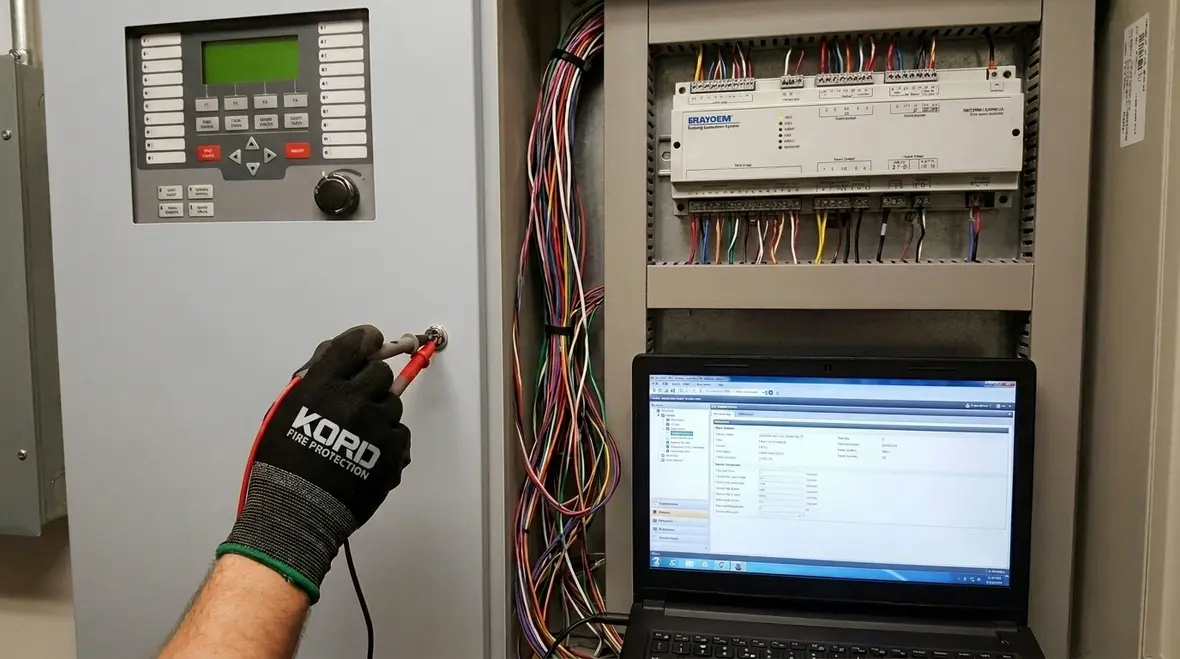
Next, they should map the fire alarm control panel interfaces to the building automation controls. This includes understanding which points are supervised, which are normally open or normally closed, and which signals trigger local actions versus network reporting. If the project includes multiple buildings, the plan should spell out how events roll up through the monitoring layer so the right team sees the right alert. After all, “integrated” means the system works together, not that everyone installed a gadget and called it a day.
Use proper signal mapping between the fire panel and automation
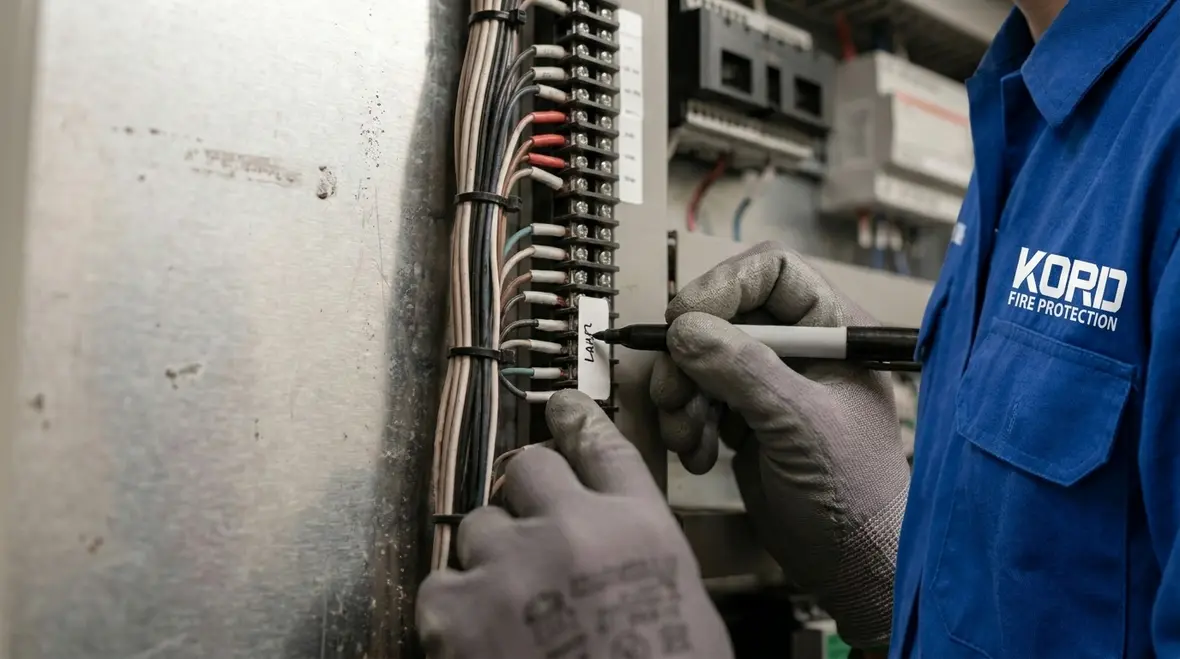
Accurate signal mapping is where most trouble starts, and it also where most reliability is won. The fire alarm system typically sends alarm, supervisory, and trouble events. Meanwhile, building automation may command HVAC shutdown, smoke control behaviors, or fan status reporting. Therefore, each point name should follow a consistent standard, and each mapping should specify signal type, wiring method, and expected response time.
To keep things steady, Kord Fire Protection Technicians recommend documenting the input and output list before installation. Then they should verify it during commissioning. This reduces the risk of mismatched polarity, incorrect relay assignment, or a point that points nowhere like a satellite dish aimed at the wrong planet. When mapping is clear, the integration behaves like a well-run meeting: everyone knows their role, and nobody talks over the boss.
Comply with codes and avoid unsafe control shortcuts
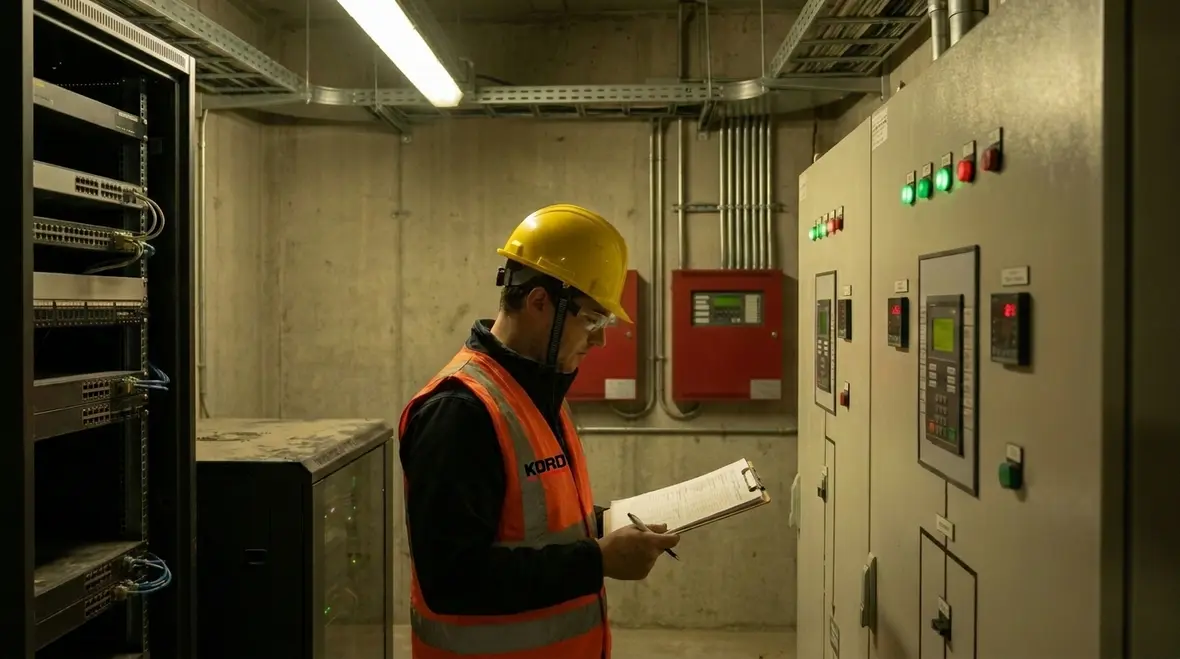
Commercial spaces demand strict compliance, and fire alarm integration does not get a free pass. The team should follow applicable code requirements, manufacturer instructions, and local authority guidance. In practice, that means the integration design must not override required fire life safety functions. Also, it must prevent the building automation system from issuing commands that could interfere with alarm processing.
Instead, the integration should follow safe control principles. For example, a fire alarm output used for building functions must be treated as life safety signaling, not as a convenience feature. Therefore, the design should specify fail safe behavior, supervised wiring where required, and protective device placement. Kord Fire Protection Technicians often stress that the fire alarm panel must remain the controlling authority for life safety. The building automation system should support the response, not rewrite the rules.
Coordinate commissioning so the system tests like it will run
Even with perfect drawings, real life has a way of humbling everyone. That is why commissioning should include end to end checks that prove the fire alarm and building automation behave correctly together. The team should test alarms, supervisory signals, and trouble events, then confirm how each event appears in the building management interface. They should also verify that control actions occur only when they should.
During commissioning, Kord Fire Protection Technicians suggest using event scripts. These scripts describe the expected sequence: what triggers first, what commands follow, and what indicators must update on the operator screens. When that sequence matches the plan, the integration earns trust. When it does not, the team fixes the cause before occupants ever need the system to perform. After all, nobody wants a “successful” test that fails on the next alarm because someone assumed a point behaved a certain way.
Strengthen cybersecurity and data integrity for life safety networks
Modern building automation systems can share data over networks, and while that improves visibility, it also introduces new risks. The commercial fire alarm integration should include a cybersecurity plan that protects the communication path and limits exposure. The team should separate networks where possible, use secure communication methods, and control access using role based permissions. Also, they should document how logs flow, who can view them, and how incident responses work.
Just because an interface exists does not mean it should be exposed to every device on the floor. Kord Fire Protection Technicians emphasize limiting access to only the services that require it. That includes monitoring stations, authorized maintenance accounts, and automation servers. Then they should confirm that firmware updates follow a controlled process so the integration keeps working after changes. Security should not be an afterthought because, unfortunately, hackers do not care that the HVAC is “just” the HVAC.
Design for maintainability with clear labeling and spare capacity
A system that works today but fails during the next maintenance visit is not truly integrated. Therefore, maintainability must sit in the design phase, not the “future project” phase. The team should label terminal points, relays, network addresses, and zones clearly. Then they should store wiring diagrams and interface documentation in an accessible location for technicians.
Next, they should consider spare capacity. That means leaving room for future points, verifying cabinet space, and confirming that control modules have enough rating margin for the expected loads. Kord Fire Protection Technicians often note that troubleshooting becomes faster when the team can locate and test signals without guessing. Also, they recommend training operators on what the system displays during different event states so staff do not panic at every nuisance message. Fire safety is serious, but confusion is not a friend.
Understand common integration pitfalls and how to prevent them
Many integration projects suffer from predictable issues. First, teams sometimes treat the fire alarm panel like a generic I O controller, but life safety systems follow stricter rules. Second, they may rely on assumptions about event timing or the behavior of relays under supervisory conditions. Third, they might skip verifying that building automation logic stays aligned with fire alarm states during power events.
To prevent these pitfalls, the team should validate wiring polarity, confirm supervision status, and test power loss scenarios where relevant. They should also ensure the automation logic uses the correct event inputs and avoids contradictory states. When the design includes clean state management, the integration behaves more like a conductor than a drummer with a grudge. Kord Fire Protection Technicians encourage teams to review the interface list, then repeat the verification during commissioning so the system remains consistent across the full lifecycle.
FAQ
Ready to integrate safely and smoothly?
Commercial fire alarm integration should feel steady, not chaotic. Kord Fire Protection Technicians help teams plan the interface, map points correctly, and test the system so it performs under real conditions.
If the project needs better reporting, safer control coordination, or cleaner commissioning documentation, the next step is simple. Contact Kord Fire Protection to review the interface design and commissioning plan.

Join Our Newsletter!
Get the latest fire safety tips delivered straight to your inbox From our Newsletter.