clean agent pre discharge alarm timing and safety
In clean agent fire protection, the last moments before system handoff matter more than most people expect. That is where the clean agent pre discharge alarm earns its keep, because it helps occupants understand what is happening before the agent releases. In other words, it buys time for safe action, and it reduces the odds of confusion that can turn a controlled event into a chaotic one. However, the real value shows up when the alarms connect to procedures, monitoring, and verification. And once those pieces align, Kord Fire Protection can become a vital partner, turning a checklist into a reliable, repeatable job.
What is a clean agent pre discharge alarm and why it comes first
A clean agent pre discharge alarm is an alert phase that runs before the system releases a gaseous extinguishing agent. Instead of surprising people with a sudden discharge, the system signals occupants that the hazard is being managed and that they should take action based on the building’s emergency plan. Then, if conditions stay valid, the discharge phase follows.
Because time is safety, these alarms support a simple chain of events. First, the fire detection equipment confirms an alarm condition. Next, the control panel initiates the pre discharge warning. Then, occupants evacuate or follow the approved response, while shutdown and control actions proceed as designed. Finally, the clean agent discharges to protect the protected space.
In practice, the pre warning period helps staff avoid common mistakes, like opening doors that spread smoke or continuing work that should stop right away. It also reduces the odds that people treat the discharge like a prank, which, let’s be honest, never ends well. And while some buildings rely on verbal directions alone, a properly set alarm phase makes responses consistent.
Why staged warning matters in real buildings
The idea sounds simple, but field conditions are rarely simple. People may be wearing hearing protection, focusing on equipment, or entering a room for a task that should have taken five minutes and somehow became forty. A clear warning period helps reset attention fast. It tells occupants that this is not background noise and not one of those moments to shrug and keep typing. It is the system saying, politely but firmly, that now is the time to move.
How pre discharge timing supports life safety and system integrity
Timing cannot be guessed. It has to match the building layout, occupant behavior, and the specific clean agent system design. Therefore, the pre discharge period gives people enough time to recognize the alarm, move toward safe exits, and stop actions that increase risk. At the same time, it gives the system time to confirm that the event remains within approved parameters.
When engineers set the delay, they consider factors like room volume, typical occupant travel paths, and how long it takes to complete required actions such as door hold open controls, ventilation shutdown, and damper operations. If the system warns too briefly, people may not react in time. If the warning runs too long, staff may ignore it or assume it will cancel. Neither outcome supports safety.
To keep the warning meaningful, maintenance and verification must happen on schedule. Detectors drift, panels age, and alarm devices lose output over time. So, rather than treating the timing as set it and forget it, teams should test and document performance. This is where Kord Fire Protection can step in as a steady partner, helping owners maintain the exact alarm behavior they approved during design.
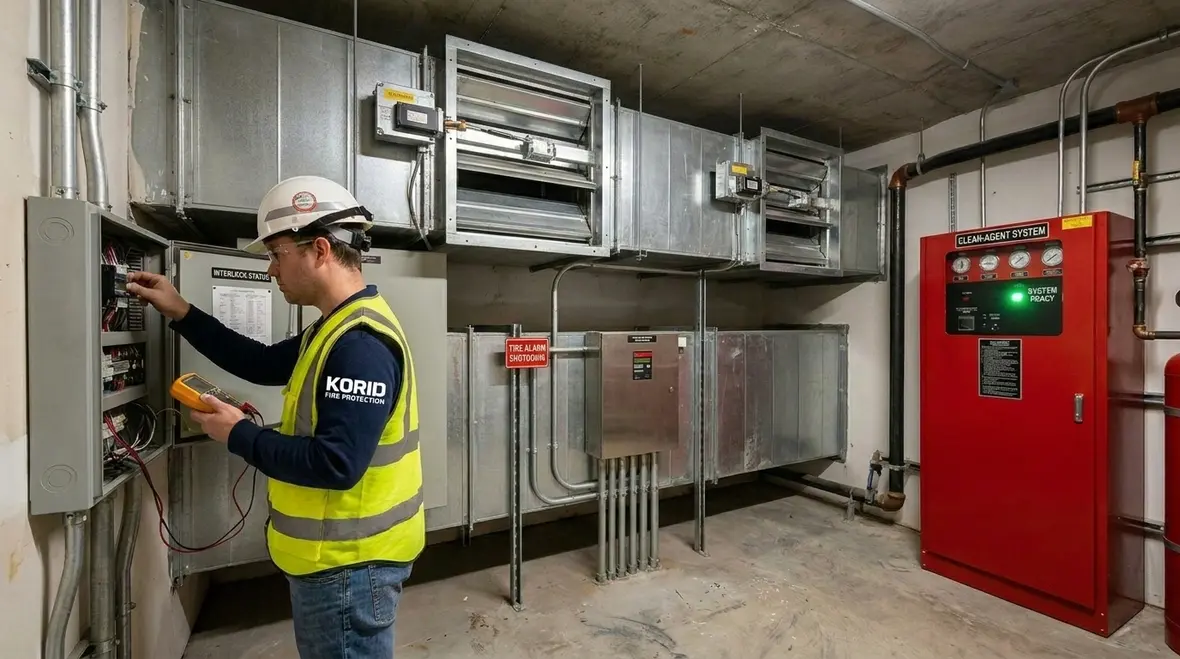
Testing keeps the countdown honest
A delay value on paper is not the same thing as a reliable field sequence. Real reliability means the warning starts when it should, the visible and audible devices actually communicate the event, and supporting controls respond in the right order. That is why inspection and verification matter so much. They keep the countdown honest and keep everyone from learning about a sequence problem during the worst possible test, which is a real emergency.
Where the pre warning fits with detection, release, and interlocks
A clean agent system functions like a coordinated orchestra. Detection triggers the process, the control panel manages the sequence, and interlocks control the protected environment. The pre discharge alarm sits at the center of that workflow, because it links the detection event to safe, staged response.
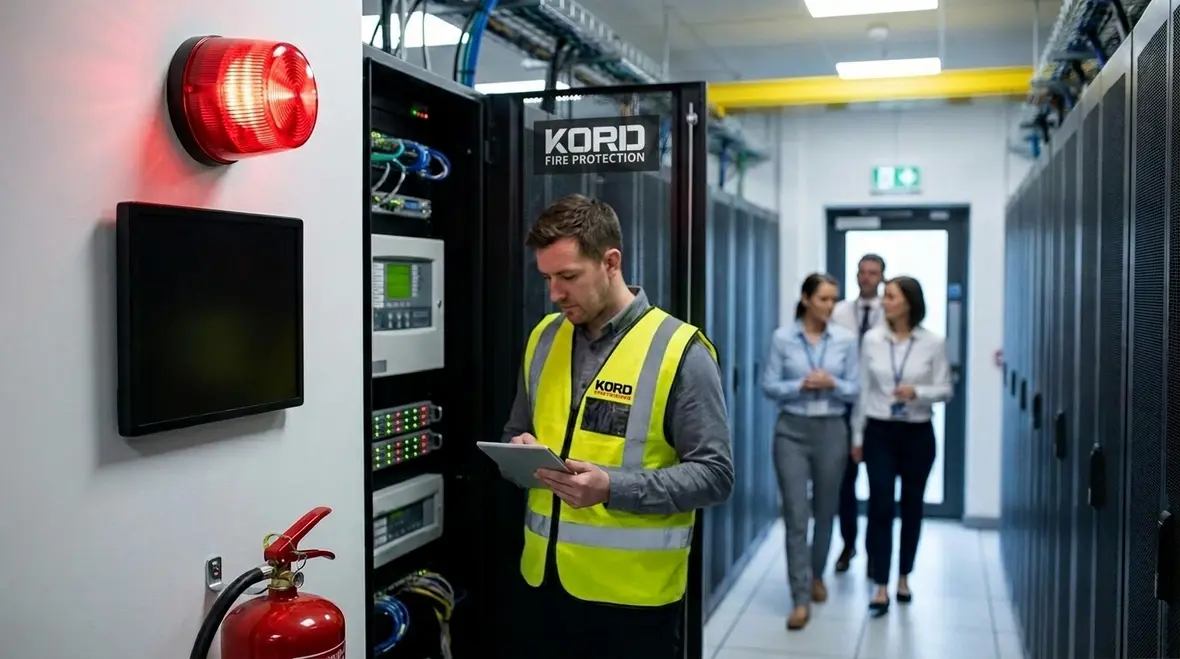
For example, the system may require that certain interlocks complete before the discharge phase starts. Those actions can include stopping HVAC fans, closing dampers, and confirming door status. Meanwhile, audible and visual pre discharge indicators signal occupants to take action. If an interlock fails or the panel does not confirm conditions, the system may hold or abort discharge based on design intent.
Additionally, many facilities include manual release stations or release delay modes. Even then, the pre warning should remain clear and consistent. If the panel only alarms once the agent begins releasing, occupants lose the chance to react during the most useful window. So, teams should confirm that the pre discharge alarm covers the right areas, uses approved sound levels, and activates during the correct stage.
Kord Fire Protection can help ensure that these sequences align with the site reality, not just the original drawing. Because, as any seasoned operator knows, buildings change. Tenants remodel. Access routes shift. Labels fade. A partner who stays engaged can keep the alarm logic and field conditions working together instead of drifting apart.
For readers comparing broader system behavior across protected spaces, Kord Fire Protection’s industrial fire suppression integration tips for safer buildings offers helpful context on how suppression sequencing, controls, and building operations should work together instead of pulling in different directions. That kind of coordination makes the pre warning phase far more effective in the real world.
Common mistakes that teams avoid with clean agent pre discharge alarms
Even when a system looks compliant on paper, issues can show up during real operations. First, some facilities install warning devices but fail to confirm coverage in the spaces that actually hold people. That leads to alarm blind spots, where the panel reports trouble but occupants hear nothing at the moment they need it most.
Second, teams sometimes overlook message consistency. Staff may not recognize the meaning of the pre discharge alarm, especially if the building uses multiple alarm types. As a result, people may react late or move in the wrong direction. Therefore, signage and training should match the system behavior.
Third, maintenance gaps can turn a good alarm into a weak one. If an audible appliance loses output or a strobe pattern fails, the pre warning may not carry its full message. Also, weak verification routines can miss problems like detector sensitivity changes that affect alarm timing.
Finally, companies occasionally skip documentation. When service records remain thin, owners cannot prove that the sequence, timing, and alarm outputs continue to meet the approved setup. That is a business risk, not just a safety issue.
With Kord Fire Protection onboard, organizations can build a routine that prevents those mistakes from returning. They can verify alarm output, review sequence behavior, and update records so the system stays dependable as the facility evolves.
Small oversights become big headaches fast
This is the part people tend to underestimate. A faded sign, a relocated workstation, a louder mechanical room, or a changed access route can all chip away at response quality. None of those things feel dramatic during a renovation. Yet together they can make a warning phase far less useful. Fire protection has a way of punishing casual assumptions, usually with terrible timing and zero patience.
How Kord Fire Protection supports a dependable service workflow
A clean agent job is not just a box on a maintenance plan. It is a service workflow that must stay disciplined from inspection to testing to reporting. Kord Fire Protection can become a vital partner by supporting that full loop, so the clean agent pre discharge alarm behaves exactly as intended during real events.
Here is how a strong service approach typically shows up.
- Sequence verification so the pre discharge warning activates in the right stage, with the correct delay.
- Alarm device checks to confirm audible and visual output meets the expectations of the space.
- Interlock and control review so shutdown and damper actions match the system logic.
- Documentation that keeps owners confident and prepared for audits and operational review.
- Practical recommendations that account for field changes like renovations, signage updates, and access route shifts.
Then, once the service plan repeats on schedule, owners get something valuable: predictability. And in fire protection, predictability is a form of peace. No drama, no guessing, just a system that tells people the truth at the right time.
If you want a broader technical backdrop, Kord Fire Protection’s clean agent standard for fire suppression systems explains how design, installation, testing, and maintenance all have to support each other. It pairs naturally with this topic because a warning phase only works well when the entire clean agent sequence is disciplined from detection through discharge.
Featured considerations for the field, from signage to training
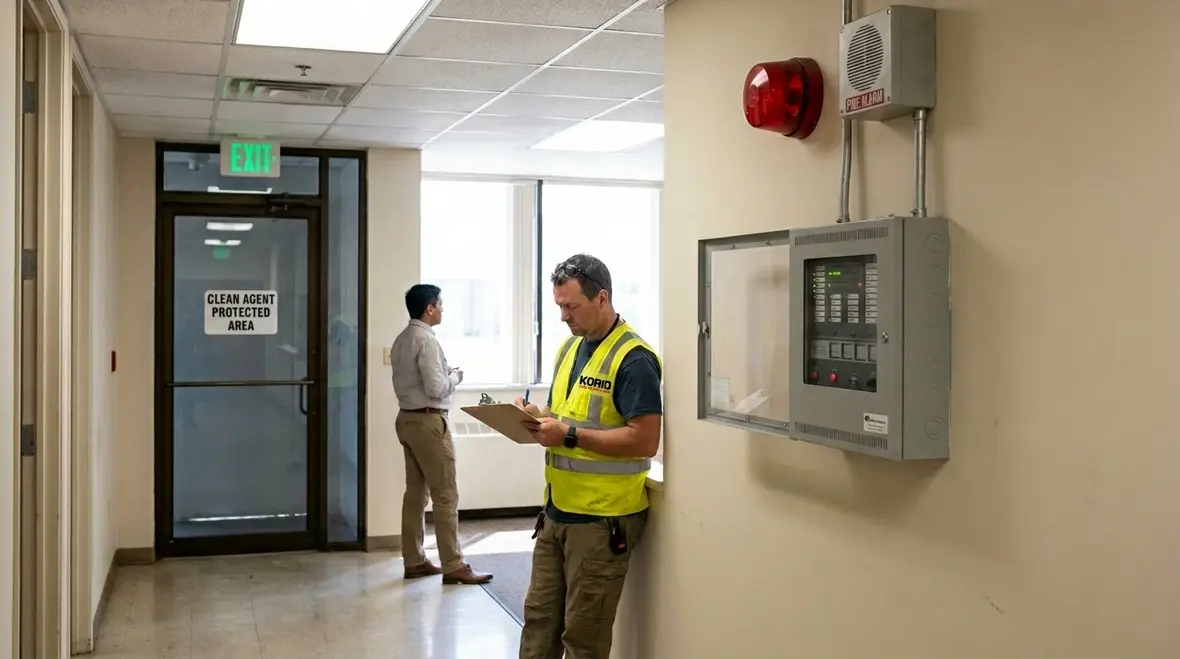
Technical reliability matters, but human response matters just as much. Therefore, teams should treat pre discharge alarms as part of a larger safety experience. Signage should clearly explain what the alarm means and what actions to take. Staff training should cover the difference between general evacuation alarms and clean agent pre warning signals.
Also, the alarm should tie into building procedures. For instance, if a staff member hears pre discharge warnings in a server room, they should know the next steps, including when to stop work and move to safe areas. If a contractor is on site, their supervisors should receive a quick briefing so the alarm does not become a confusion contest.
Finally, facilities should evaluate whether additional controls help. Some sites benefit from enhanced monitoring, clear strobe placement, or improved door signage near protected spaces. These adjustments do not change system design. Instead, they improve how people interpret the warnings.
When Kord Fire Protection supports the service job, they can help owners align these practical steps with the technical sequence, so the alarm stays more than a sound. It becomes a trusted signal that people recognize under stress.
Training should sound as clear as the alarm itself
People respond better when the warning has a familiar meaning. That is why training should not be vague, rushed, or hidden in a binder that nobody opens unless an auditor appears in the parking lot. Staff should understand what the pre discharge signal means, what steps come next, and what not to do. A little clarity before an event saves a lot of scrambling during one.
FAQ
Conclusion: make the pre warning work like it should
A clean agent system protects property, but the pre warning phase protects people, because it gives them time to act. When the clean agent pre discharge alarm functions reliably, with correct timing, verified coverage, and clear procedures, the entire event runs with less confusion and more control. Kord Fire Protection helps facilities keep that sequence dependable through disciplined service and documentation.
If you want fewer surprises and stronger compliance, explore Kord Fire Protection’s clean agent fire suppression system services and schedule a service review today. It is a practical next step for owners who want warning logic, interlocks, room conditions, and ongoing maintenance to work together without the usual guesswork.

Join Our Newsletter!
Get the latest fire safety tips delivered straight to your inbox From our Newsletter.