Standpipe System Pressure Testing Tips for Reliability
Introduction: Reliability Starts with Standpipe Pressure Testing Tips
Ensuring reliability during standpipe system pressure testing begins with smart standpipe system pressure testing tips you can use right away. First, he checks the test plan before any valve turns. Next, he confirms the right pressure target, timing, and acceptance criteria for the building type. Then he makes sure every fitting, hose connection, and gauge stays stable during the test. Finally, he documents results clearly so the system stays ready when crews need it, not when paperwork needs it. Kord Fire Protection technicians often say the same thing in plain terms: test it like you mean it, because fire does not care about schedules. And yes, the gauge can be dramatic when it is not calibrated.
Why Reliability Matters for Fire Standpipes
Fire standpipes sit in the background until the moment they cannot. However, the reliability requirement is not vague. It becomes real when a system fails to meet pressure needs, or when a leak turns a good plan into a wet problem. Therefore, he treats pressure testing as a system check, not a formality. He also links results to real-world use, meaning water flow expectations, hose use, and how quickly crews can operate.
In practice, reliability comes from three things. First, the system must hold pressure without significant drops. Second, it must pass for the right duration. Third, it must show no evidence of leaks, trapped air, or faulty connections. Kord Fire Protection technicians explain that a reliable standpipe is one that behaves predictably under test conditions that match what the system will face during an incident. For readers who want a broader foundation, Kord Fire’s Standpipe System Requirements and How It Works is a strong companion read, especially if you want the why before the wrench-turning starts.
How Technicians Prepare the System Before Testing
Before any pressure is applied, he confirms the standpipe configuration and test method. This step prevents one of the most common problems in the field: testing the wrong section, at the wrong time, or using the wrong setup. Kord Fire Protection technicians emphasize that preparation is where most confidence is built.
- Review documentation: he matches test procedures to the approved drawings and prior inspection records.
- Inspect visible components: he checks valves, elbows, couplings, and hose outlets for obvious defects.
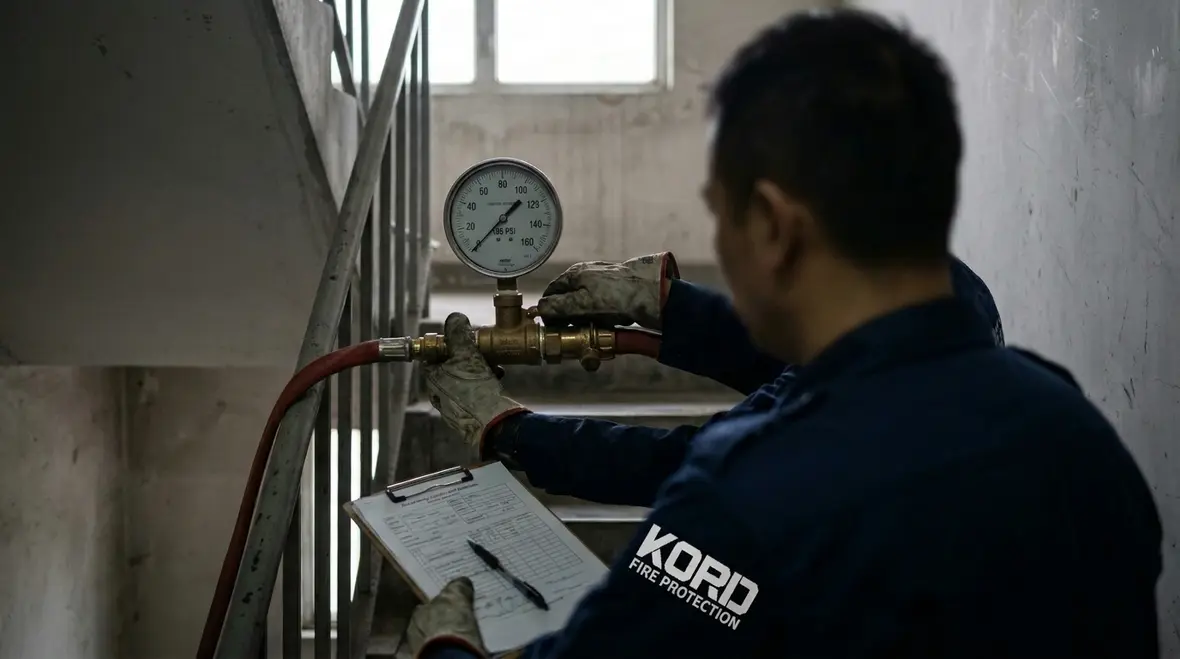
- Confirm gauge equipment: he verifies calibration dates and ensures the gauge range fits the expected pressures.
- Check power and control items: if the system ties into pumps or controls, he confirms they run as intended.
Then, he sets up the test boundaries. If he cannot define what is included, the results can become a guessing game. And nobody wants a guessing game during a fire. That is entertainment, not engineering. This is also where system classification matters. If your team needs a fast refresher on the differences between user types and outlet arrangements, Kord Fire’s Standpipe Class I II III Explained Clearly helps put the test setup into real operating context.
Step By Step: Pressure Testing Procedures That Hold Up
Once preparation is complete, he runs the test with control and consistency. Pressure testing only looks simple until the details start stacking up. So, he uses a step by step approach and records readings at the right intervals.
Typically, he follows this flow. First, he establishes the initial pressure and removes trapped air where the method requires it. Next, he monitors pressure over the full test duration. After that, he records any pressure drop trends and compares them to the allowable limits. If there is a steady loss beyond what the acceptance criteria allow, he treats it as a real issue, not “noise.”
- Stabilize: he waits for the system to reach a steady state before taking key readings.
- Monitor: he logs pressure at set times, and he notes gauge behavior.
- Verify endpoints: he confirms the test end conditions match the procedure, not “close enough.”
- Look for signs of leakage: he checks fittings, drains, and joints while readings are taken.
To keep results trustworthy, he avoids quick changes. In other words, he does not slam valves open just to speed things up. Fast moves can cause pressure spikes, and spikes can mislead. Kord Fire Protection technicians often say, “Slow is smooth, and smooth is defensible,” and it sounds like a driving lesson because it is.
A disciplined sequence also makes later review easier. When the readings show a shift, the technician can trace that change back to a specific moment in the procedure instead of squinting at a clipboard and blaming the pen. That level of control is what makes a pressure test useful. Otherwise, it is just a wet ritual with paperwork attached.
What makes a pressure test result trustworthy
Trustworthy results come from repeatable conditions. The gauge must be appropriate, the boundary must be clear, the pressure source must be stable, and the readings must be taken on purpose rather than whenever someone remembers. He also makes sure communication stays tight among the crew. If one technician changes a valve position without calling it out, the data can get weird in a hurry. “Weird in a hurry” is not a recognized acceptance standard, by the way.
Common Failure Points and How to Prevent Them
Even when a crew is careful, standpipe systems can fail the test for predictable reasons. He reduces the risk by focusing on the usual culprits first, then checking for less obvious issues.
One frequent failure point is air entrapment. When air remains in the piping, pressure behaves oddly and the test can show unexpected drops or delayed stabilization. Another common issue is gauge error. If the gauge is out of calibration or the connection is loose, readings lose accuracy.
Leaks also show up in places that seem harmless. A small seep at a threaded fitting can be invisible until pressure makes it honest. Therefore, he inspects and confirms tightness, and he watches for wet spots during the test. He also checks that shutoff valves and control components function correctly, because a valve that moves slowly can change the test outcome.
Finally, he avoids setup mistakes such as incorrect test boundary selection. If someone includes sections that should not be tested, the results become harder to interpret. Kord Fire Protection technicians explain that clear boundaries keep the findings actionable, and they keep repairs focused instead of random.
Small causes, big consequences
The most annoying problems are often the smallest. A slightly loose fitting, a tired gasket, a poorly chosen gauge range, or a hidden pocket of air can waste time and muddy the result. He treats those items seriously because the goal is not simply to pass. The goal is to know the system will behave predictably when firefighters rely on it. A standpipe is supposed to support response, not audition for a mystery series.
Documentation and Traceability for Audit Ready Results
Reliability is not just about passing the test. It is also about proving what happened. He builds traceability with complete records that someone can review later without calling the original technician at midnight like it is an emergency hotline.
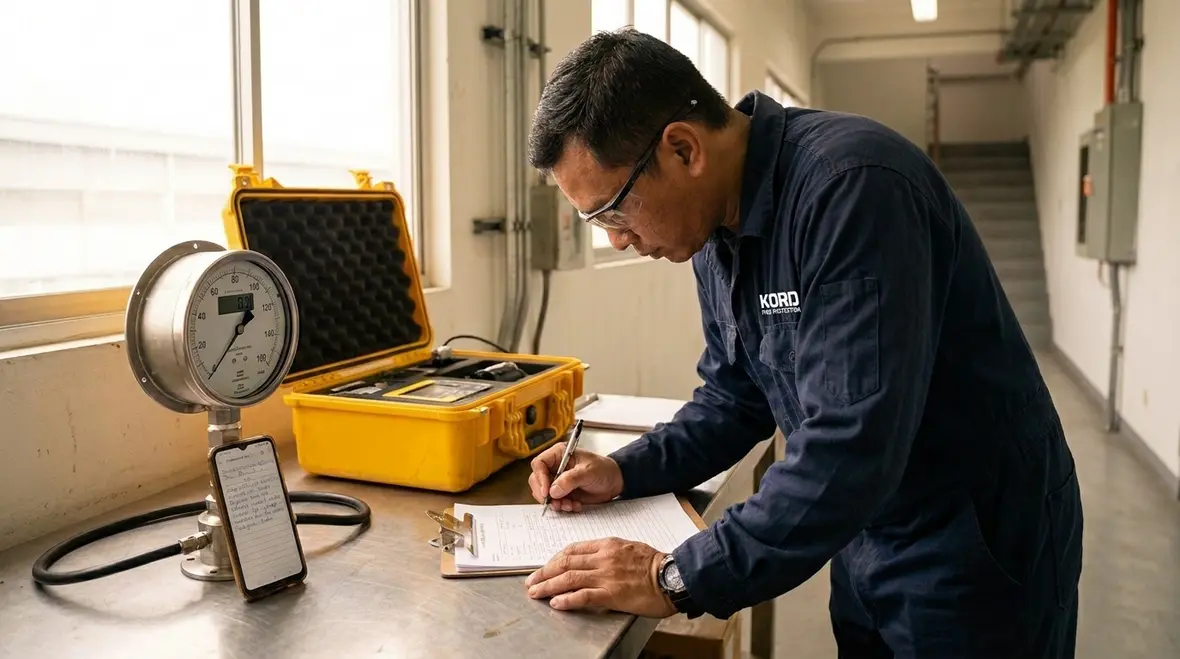
Good documentation includes the date, site details, system identification, test method used, pressure values, duration, gauge identification, and calibration status. He also includes notes about conditions, such as weather effects if applicable, and he records any anomalies. If repairs occur, he documents the corrective action and when the system returns for retesting.
- Gauge details: model, serial number, calibration date, and connection type
- Test parameters: target pressure, duration, interval readings
- Outcome: pass or fail with a clear explanation tied to criteria
- Observations: leaks, valve behavior, stabilization time, and any deviations
Thus, when the next inspection arrives, the story is clear. And when a regulator or insurer asks questions, the records answer them without drama.
Best Practices for Ongoing Reliability After the Test
After the pressure test, he does not just move on. He improves long-term reliability by linking test results to the maintenance plan. That means he follows up with targeted inspections and confirms that any repaired components get rechecked. It also means he keeps an eye on changes that can affect standpipe performance, such as building renovations, pipe modifications, or equipment swaps.
To keep the system dependable, he schedules routine checks that align with local requirements and internal risk. He also ensures that valves remain accessible and that outlets stay clear. During inspections, he verifies that control spaces remain safe for technicians and that signage supports quick access during incidents.
In addition, he trains relevant staff on what the results mean. That way, the information supports operations, not just compliance. Kord Fire Protection technicians often encourage teams to treat findings as guidance for reliability, not just a pass line. When people understand the “why,” they maintain the “what.”
If your facility also manages alarm infrastructure, Kord Fire’s Fire Alarm System Reliability and Battery Health is worth reading alongside this article. Different systems, same lesson: reliability is rarely accidental. It is built, checked, documented, and revisited before a problem has the chance to introduce itself at the worst possible time.
FAQ: Standpipe Pressure Testing Reliability
Conclusion: Book a Professional Test and Get Confidence Fast
Standpipe reliability depends on preparation, controlled procedures, correct equipment, and clear documentation. He should not treat standpipe system pressure testing as a checkbox, because predictable performance matters when seconds count. If you want results that hold up to review and real fire conditions, schedule a Kord Fire Protection technician-led inspection and testing plan.
He will confirm targets, monitor readings, document every step, and help close gaps before they become emergencies. For direct support, explore Kord Fire’s Standpipe Systems service page to connect testing, inspection, and system support in one place. Call now to start with confidence.

Join Our Newsletter!
Get the latest fire safety tips delivered straight to your inbox From our Newsletter.