Standpipe System Integrity Testing for High Rise Reliability
Quick Answer: High rise standpipe systems last when teams test early, document everything, and act fast on findings. Standpipe system integrity testing checks flow paths, pressure behavior, and readiness over time. With ongoing inspection, the building avoids nasty surprises, like a fire event being the first time anyone “gets around” to checking.
In high rise buildings across Australia, reliability is not a one time promise. It is a daily habit, backed by evidence. That is why teams start with standpipe system integrity testing early and then repeat it on a schedule that matches building risk and use. When this testing finds issues before an incident, facilities teams can fix problems while parts are still available, access is still simple, and the cost is still reasonable. And yes, nobody wants to discover a defect during an emergency drill either, because drills have a way of turning “minor issues” into full drama.
For owners that want a broader service path instead of a one off reaction, Kord Fire’s Standpipe Systems Class I-II-III service fits naturally into a long term reliability plan, especially when testing data needs to turn into field action without a lot of hand waving.
Why Standpipe System Integrity Testing Protects Long Term Performance
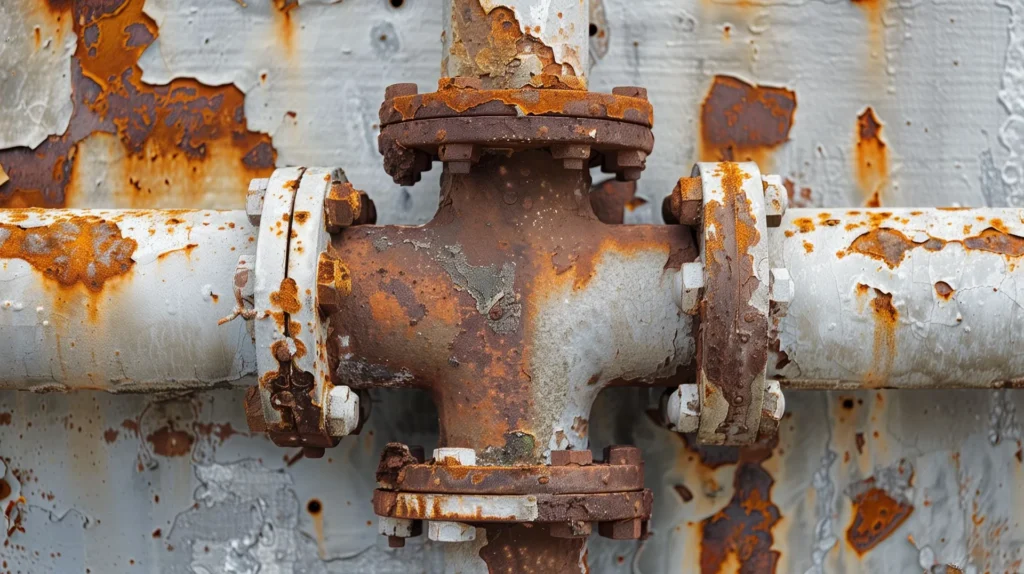
Standpipe systems must deliver water when the building needs it most. However, time works on every system. Corrosion quietly reduces pipe wall life. Valve stems can seize. Connections can shift. Even well maintained buildings can develop hidden gaps in performance due to changes in occupancy, alterations, or aging equipment. Therefore, integrity testing functions as the building’s proof, not just its paperwork.
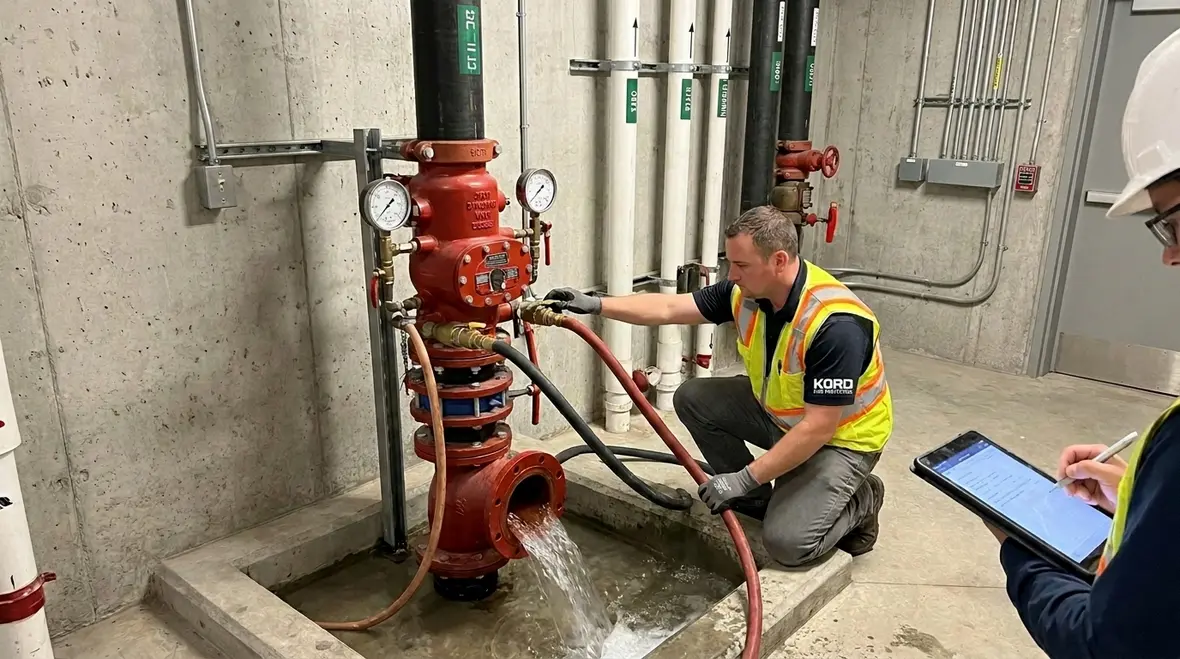
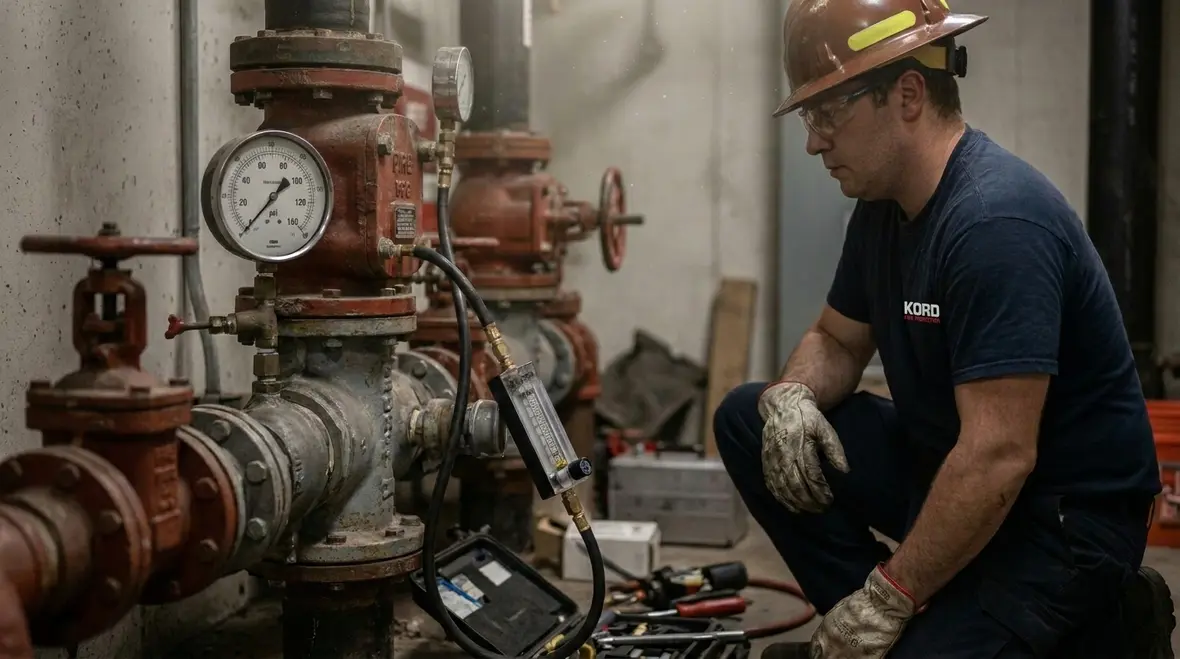
During standpipe system integrity testing, technicians evaluate how the system behaves under conditions that match real world demand. They also confirm that key components support dependable operation. When results are clear and repeatable, the site team can plan maintenance with confidence rather than guessing based on the last time a witness statement was “pretty sure it worked.”
Reliability Is Built From Repeatable Evidence
That distinction matters more than most people realize. Plenty of systems can look fine during a quick visual check, yet still hide pressure inconsistencies, flow restrictions, or wear that only shows up during structured testing. A high rise building does not need optimism. It needs proof that the water path, valves, and critical points still behave the way the design intended. That is the difference between a system that merely exists and a system that earns trust.
Kord Fire’s related resources on standpipe flow testing and the standpipe inspection checklist also reinforce a simple point: the best programs test, document, compare, and then act before a small defect graduates into a very expensive personality.
Build a Maintenance Plan That Works With Your Building Operations
Facilities teams in industrial, retail, and commercial environments need plans that fit the day to day rhythm. Because standpipes sit inside building life, the best strategy balances access, downtime, and risk. For that reason, a long term plan should align testing frequency with factors such as system age, water quality, past repair history, and any construction or tenant change impacts.
When schedules come from actual data, crews spend less time reacting. They also reduce the chance of doing maintenance at the wrong time. For example, if testing shows early valve friction, then a service visit can target the specific valve assemblies and prevent a chain reaction later. In short, a good plan creates a feedback loop: test, learn, correct, and then confirm.
Planning Around Access, Tenants, and Downtime
This is where practical building management enters the chat. A sound maintenance program does not live in a binder and then magically cooperate with real operations. It accounts for occupied floors, access restrictions, water isolation timing, contractor coordination, and the reality that nobody enjoys surprise shutdowns. If testing and maintenance are planned intelligently, building teams can minimize disruption while still getting meaningful results. That makes the work easier to schedule and much harder to postpone into the mythical season known as “later.”
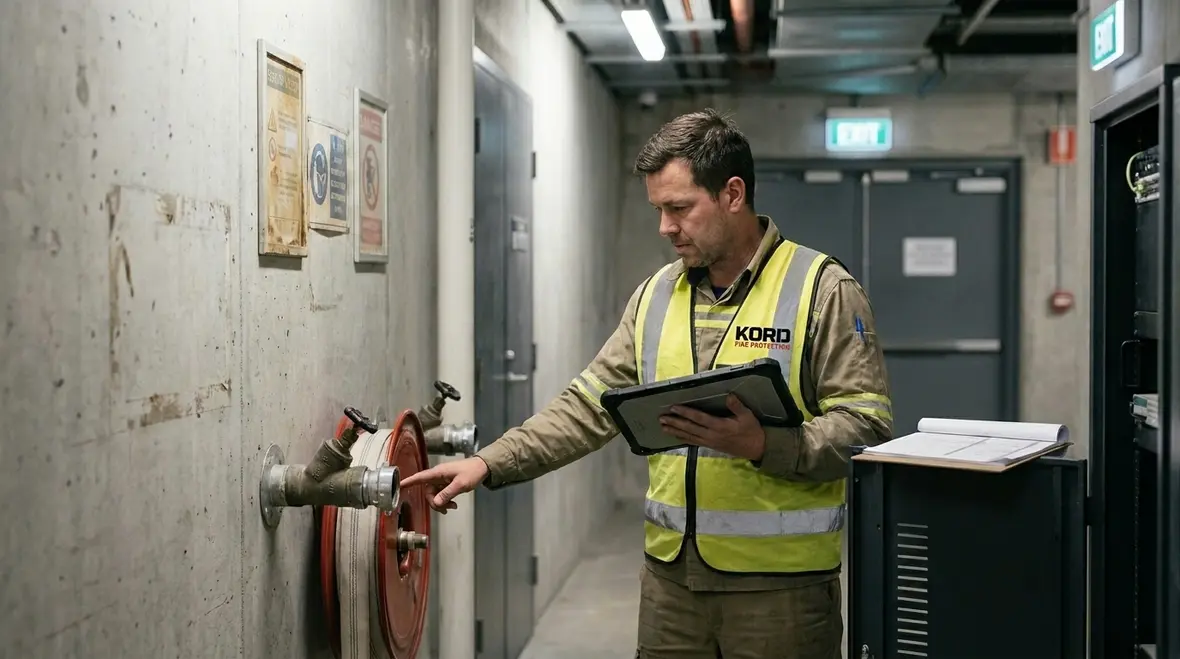
What High Rise Teams Should Inspect Beyond the Obvious
Standpipe reliability does not hinge on one component. Instead, it depends on the full path from supply to connection points and the controls that coordinate the system. Therefore, high rise owners should ensure their program covers more than surface level checks. They should look at operational readiness, physical condition, and performance indicators that matter during demand.
Typical focus areas include the state of valves, the integrity of joints and couplings, the function of control components, and the condition of hose stations and related accessories. Technicians should also verify that the system supports the required delivery pattern and that any interfaces with other fire protection equipment behave as designed. Each check adds a small piece of clarity, and together those pieces form a reliable picture of what the system will do.
To keep operations smooth, many teams also use a documented approach: they record findings in a way that supports follow up actions and future comparisons. This matters because the best maintenance programs do not just fix problems, they also explain what changed and why.
Scope Should Follow the Full Water Delivery Path
If a program only checks what is easy to see, it leaves too much to luck. High rise teams should think through the entire path, from supply and riser condition through outlets, controls, and user access. Kord Fire’s article on standpipe system requirements and how it works is useful here because it frames the system as a working chain, not a random collection of red hardware that happens to live in stairwells.
How to Turn Test Results Into Corrective Action Without Delays
Testing produces numbers and observations. However, numbers do not prevent failure by themselves. Therefore, the building must convert results into a clear corrective action plan. The fastest way to derail reliability is to treat findings as optional or to push work into a vague future date, which is a classic move in facility management. It is also a classic way to keep problems “healthy” by letting them grow.
A strong process includes quick triage of critical findings, agreed timelines for repairs, and verification after work completes. For example, if a valve shows increased resistance, then maintenance should include appropriate adjustment or replacement, followed by a confirmation check. Similarly, if the system shows signs of pipe degradation, then repair planning needs to consider access constraints and water isolation requirements.
In the same way that a good maintenance team documents parts used and work completed, the site should retain records that support audits and future engineering decisions. When history stays searchable, teams can prevent repeat issues and reduce downtime.
Fast Triage Prevents Slow Motion Failure
Some findings deserve same week action. Others can be scheduled more strategically. The key is deciding which is which, documenting the reason, and then closing the loop with confirmation testing. Otherwise, reports pile up, repairs drift, and everyone assumes someone else is handling it. That assumption has launched many unnecessary headaches. A tidy report alone does not restore reliability. Completed work, verified performance, and clear ownership do.
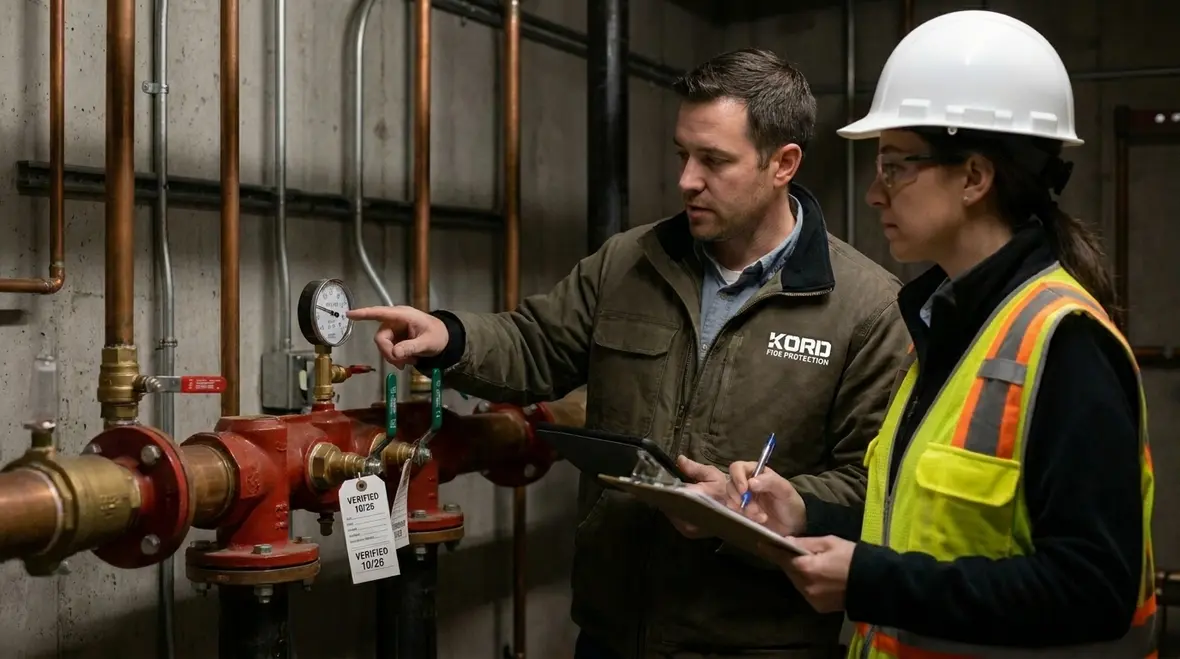
Kord Fire Protection as a Vital Partner for Long Term Standpipe Reliability
Standpipe systems do not exist in isolation. In real buildings, fire protection relies on coordinated performance across equipment and maintenance workflows. That is where kord fire protection can become a vital partner with this service job. A strong partner helps owners connect testing outcomes to actionable service, ensuring the system stays aligned with standards and the building’s risk profile.
When kord fire protection supports integrity efforts, it can help teams standardize reporting, improve follow up quality, and bring practical field experience into the planning stage. Instead of treating standpipe work as a one time event, the partner approach supports ongoing reliability through consistent service practices. Furthermore, it reduces the chance that findings sit in a folder while the system slowly loses performance.
And let us be honest: fire protection is not a place for “we will deal with it later.” The future does not bargain. It just keeps moving. With the right partner, the building keeps pace.
Smart Verification: Keeping Systems Reliable After Repairs and Upgrades
Repairs and upgrades matter, but only verification makes them reliable. After any changes, teams should confirm that the system returns to the required performance level and remains stable. This includes re checking relevant components, validating readiness, and ensuring that operational behavior matches design intent.
Moreover, a high rise site often undergoes updates over the years. Tenant fit outs, service upgrades, and circulation changes can affect access routes, valve access, or hose station visibility. Therefore, the verification cycle should include not only the system itself but also the practicality of how crews reach it under time pressure.
When verification happens consistently, facilities teams reduce uncertainty and support safe operations. In addition, the building gains better planning clarity for future budgets, because the asset story becomes more than guesses and vibes.
Upgrades Still Need Proof After the Dust Settles
A replacement part, access improvement, or routing change may solve one issue while introducing another if nobody validates the result. Verification protects against that kind of accidental creativity. It confirms that the repaired or upgraded system performs as intended in the real building, not just on the work order. That extra step keeps everyone from congratulating themselves too early.
Common Reliability Mistakes That Cost Owners Later
Even in well run sites, mistakes can slip in. These often include irregular testing intervals, incomplete documentation, delayed repairs, and unclear ownership of follow up work. In some cases, teams run a test, then file results without confirming that the corrective steps actually restored performance. That is like changing the oil, taking a picture, and then driving for another year without checking if the engine still sounds healthy. The picture feels great. The engine, not so much.
Another common issue involves scope gaps. Teams may inspect valves but not confirm the full delivery path behavior. Or they may focus on visible components while neglecting elements that fail quietly over time. Therefore, the best programs define scope clearly, set expectations for reporting, and align testing with service actions.
For multi faceted commercial and retail operations across Australia, scope clarity also supports coordination with contractors, building managers, and local stakeholders. That coordination reduces delays and prevents rework.
FAQ
Get Long Term Reliability in Motion
Standpipe reliability improves when testing leads to action, and action leads to verification. High rise owners should set a clear schedule, document findings, and correct issues quickly. For teams across Australia, partnering with kord fire protection can strengthen the service workflow and keep the system aligned with real world expectations.
Request an assessment and build a long term plan that protects operations and confidence. A measured program today is far better than discovering tomorrow that the system was surviving on assumptions, good intentions, and a heroic amount of luck.

Join Our Newsletter!
Get the latest fire safety tips delivered straight to your inbox From our Newsletter.