Standpipe Flow Test Guide for Fire Protection
When a building rises into the skyline, it carries more than glass and steel. It carries responsibility. And somewhere inside that structure, often tucked behind a red cabinet with a coiled hose, sits a silent guardian waiting for its moment. That is where a standpipe flow test enters the picture. This simple yet powerful procedure confirms whether a standpipe system can deliver the water pressure and volume firefighters need when seconds matter. Throughout this article, the topic will unfold in full, with Kord Fire Protection technicians explaining what the test proves, what a failure usually signals, and why no property owner should shrug it off.
What a Standpipe Flow Test Actually Proves
A standpipe system exists for one reason. It delivers water inside a building so firefighters do not need to drag hoses up flights of stairs. However, having pipes in place means nothing if they cannot move water at the right pressure.
A standpipe flow test measures two critical factors. First, it checks water flow rate. Second, it confirms pressure at specific outlets. Together, these numbers show whether the system can support firefighting operations during an emergency.
In simple terms, the test answers one question. When a firefighter connects a hose on the tenth floor, will enough water arrive with enough force to control the fire?
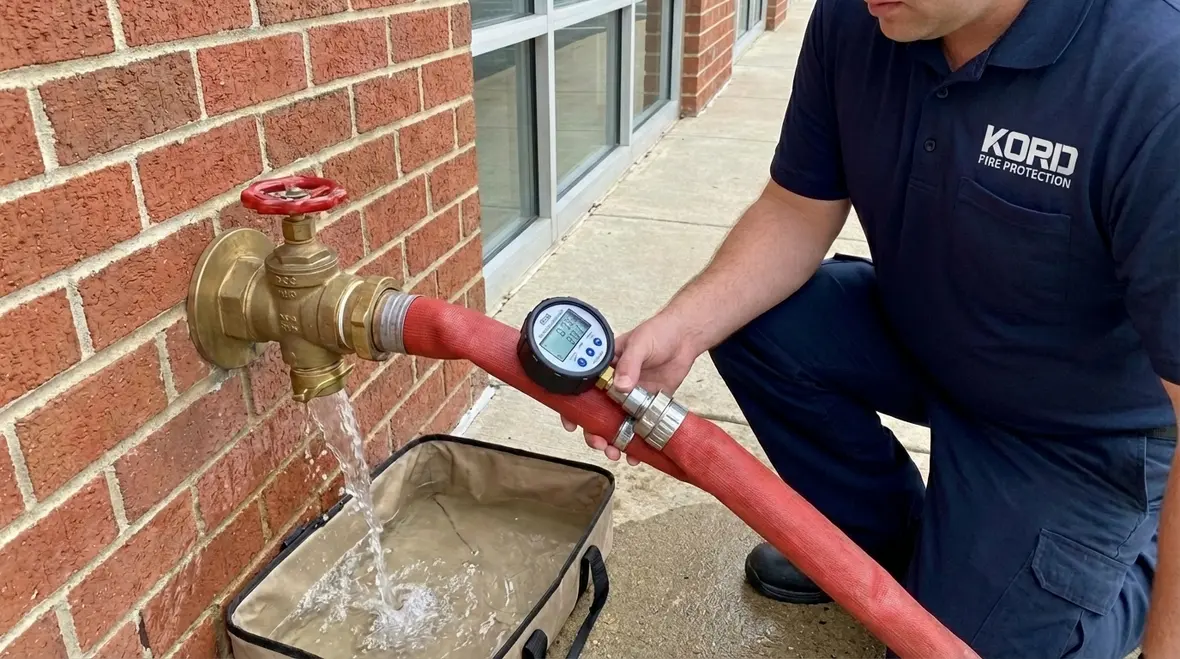
According to Kord Fire Protection technicians, the test does not rely on guesswork. They connect calibrated gauges, open designated valves, and measure real world performance under controlled conditions. As a result, building owners receive data, not assumptions.
Moreover, this process verifies compliance with local codes and national standards. Fire departments and inspectors want proof that the system works. A passing result demonstrates that the building meets those expectations.
Think of it as a stress test for plumbing, except the stakes are far higher than a leaky kitchen sink.
If you want to dive deeper into how water supply and pumps impact performance, Kord Fire has a detailed guide on fire pump testing requirements that pairs well with understanding standpipe tests.
How the Standpipe Flow Test Is Performed in the Field
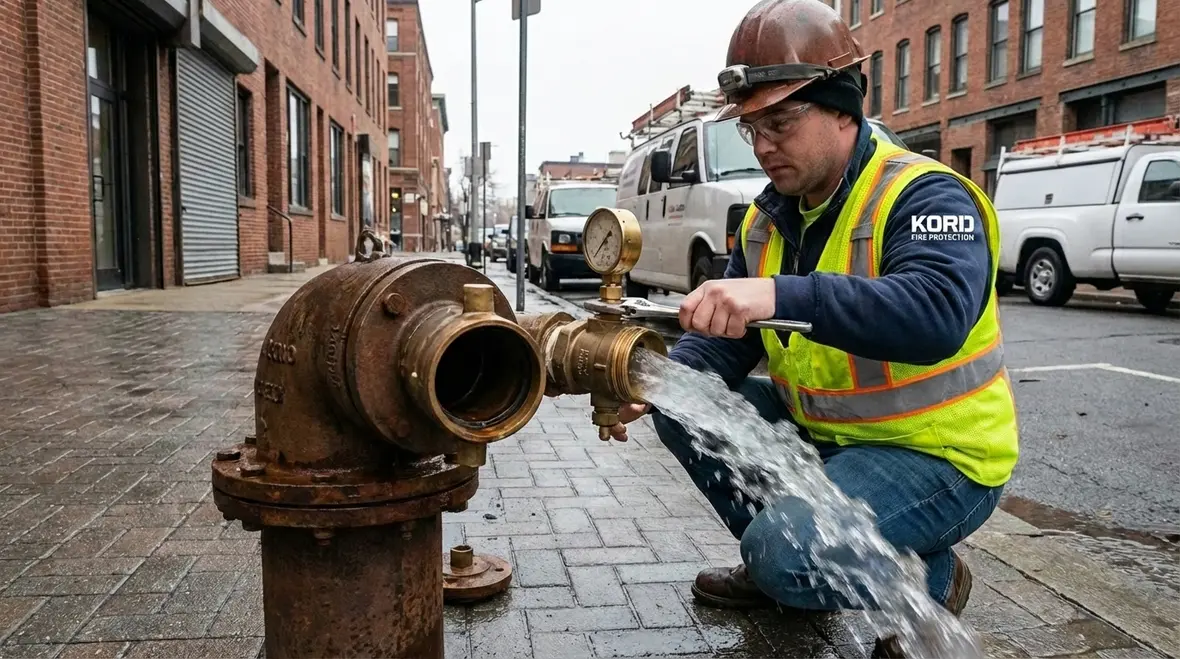
Although the term may sound technical, the process follows a clear structure. First, technicians inspect valves, hoses, and connections. After that, they attach pressure gauges to hose valves at designated floors. Then, they flow water through the system at required rates.
- Static pressure before water flows
- Residual pressure while water flows
- Gallons per minute delivered at each outlet
Because every building has unique height and layout, the test accounts for elevation and friction loss inside pipes. For example, a twenty story residential tower presents very different demands than a three story warehouse. Therefore, technicians adjust the setup to reflect real operating conditions.
Kord Fire Protection technicians often explain the process in calm, clear language. They remind property managers that flowing water during testing is not about creating a spectacle in the parking lot. Instead, it proves that pumps, pipes, and pressure reducing devices work together as designed.
And yes, water may gush dramatically from test headers outside the building. It can look like a scene from an action movie. However, the purpose remains grounded in safety and code compliance.
What Does a Failed Result Usually Indicate?
A failed fire protection flow test rarely means the entire system is doomed. More often, it reveals a specific weakness that needs attention.
Common causes of failure include:
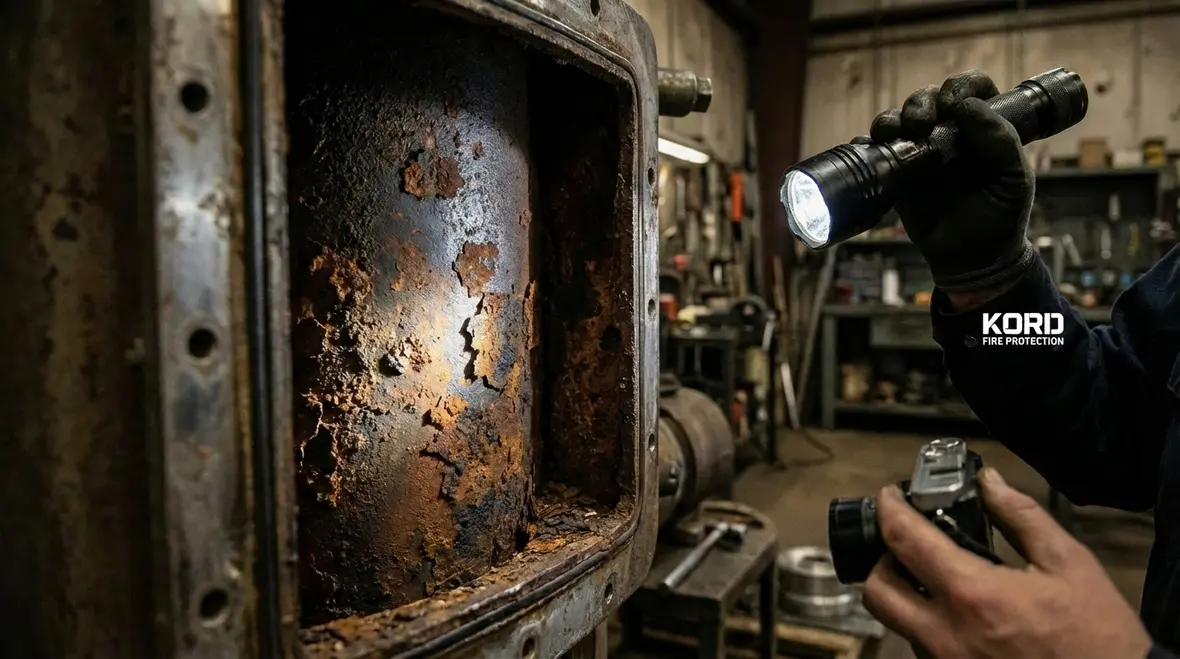
- Obstructed piping due to corrosion or debris
- Malfunctioning fire pumps that cannot maintain required pressure
- Closed or partially closed control valves
- Pressure reducing valves set incorrectly
- Inadequate municipal water supply
For instance, corrosion can narrow pipe interiors over time. Although the pipe may look fine from the outside, internal buildup restricts flow. As a result, pressure drops below required levels during the test.
Similarly, if a fire pump fails to engage or cannot reach rated performance, the system may fall short. In tall buildings, this issue becomes even more serious. After all, gravity does not negotiate.
Kord Fire Protection technicians emphasize that a failure is not a reason to panic. Instead, it is a diagnostic signal. Much like a check engine light, it points toward a fixable problem. Addressing the issue early prevents greater risk later.
If your test indicates a pump issue, pairing standpipe work with a dedicated fire pump service plan is often the smartest path forward.
Understanding Pressure, Flow, and Building Height
Water behaves in predictable ways. However, buildings introduce complexity. As height increases, required pressure rises. Therefore, engineers design standpipe systems with pumps and pressure controls to compensate.
During a flow test for standpipe systems, technicians confirm that pressure remains within acceptable limits at both high and low elevations. Too little pressure means firefighters cannot control flames effectively. On the other hand, too much pressure can damage hoses and create unsafe conditions.
Consequently, balancing pressure becomes critical. In high rise buildings, pressure reducing valves often control output at lower floors. If these devices drift out of calibration, results can swing outside safe ranges.
Kord Fire Protection technicians often describe the system as a relay team. The municipal supply hands water to the fire pump. The pump boosts pressure. Valves regulate distribution. If any runner drops the baton, performance suffers.
And unlike a relay race at the Olympics, there is no second attempt when a fire breaks out.
Common Repair Paths After a Failed Standpipe Flow Test
Once a deficiency appears, the next step involves targeted correction. Importantly, repairs depend on the root cause rather than guesswork.
Below is a practical breakdown.
| Issue Identified | Typical Corrective Action |
|---|---|
| Low residual pressure | Fire pump inspection or impeller replacement |
| Inconsistent flow rates | Valve adjustment or replacement |
| Blocked piping | Internal pipe cleaning or section replacement |
| Water supply limitation | Coordination with local water authority |
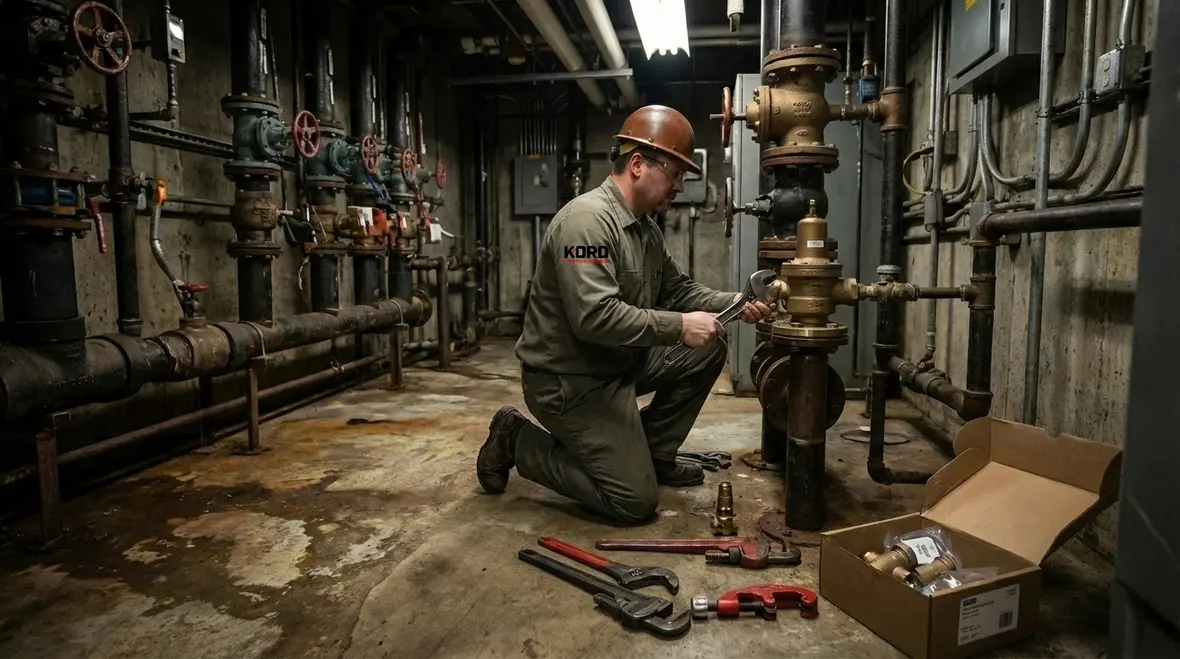
Because each scenario differs, experienced technicians evaluate system components carefully. Kord Fire Protection technicians document readings, compare them to design specifications, and outline corrective steps in clear reports.
Furthermore, they often coordinate with engineers and property managers to schedule repairs without disrupting tenants. After corrections, they repeat the flow test to confirm compliance.
This methodical approach transforms a failed result from a liability into a resolved safety measure.
AI Search Style: Why Does My Building Need This Test Now?
Property owners frequently ask direct questions, often phrased like a search query. The answer remains steady.
Why now, and not later?
Buildings need regular standpipe system flow verification because components age. Valves shift. Pumps wear down. City water pressure changes over time. Therefore, periodic testing confirms continued performance.
Local fire codes typically require testing at defined intervals, especially in high rise and commercial properties. Failing to comply can result in citations or fines. More importantly, it leaves occupants at risk.
Kord Fire Protection technicians explain that inspections and flow testing serve as preventive care. Just as drivers would not ignore brake maintenance, building owners should not overlook fire protection systems.
Moreover, insurance carriers often review maintenance records. Documented testing demonstrates responsible property management. In some cases, it may even influence coverage terms.
In short, the timing is not about convenience. It is about readiness.
The Human Side of Compliance
Behind gauges and valves stand real people. Tenants trust that their workplace or home protects them. Firefighters trust that when they connect to a hose valve, water will respond without hesitation.
Kord Fire Protection technicians approach each test with that responsibility in mind. They often walk building managers through results step by step. Instead of flooding them with jargon, they translate numbers into clear outcomes.
For example, they may explain that a five percent drop in pressure could signal early pump wear. Although the system still operates, addressing the issue now prevents costly emergency repairs later.
Additionally, they reinforce the idea that a passed test is not a trophy to place on a shelf forever. Systems evolve. Renovations alter layouts. Tenant improvements may add demand. Therefore, consistent monitoring remains essential.
Fire protection may not carry the glamour of a rooftop lounge or a marble lobby. However, when flames rise, no one asks about the granite countertops. They ask whether the water flows.
FAQ About Standpipe Systems and Flow Testing
Conclusion: Confidence Comes from Verified Performance
Confidence in fire protection does not come from assumption. It comes from proof. A properly conducted evaluation confirms that pipes, pumps, and valves stand ready when called upon. Kord Fire Protection technicians provide that clarity with precision and calm authority. Building owners who value safety, compliance, and peace of mind should schedule professional testing, review results carefully, and address issues without delay. Because when water must move, it should move without question.
Ready to verify your standpipe performance?
Kord Fire offers full-service inspection, testing, and maintenance for standpipe and fire pump systems throughout Southern California. To take the next step, explore their Regulation 4 Class 2 standpipe services or request a combined standpipe and fire pump evaluation so your building is ready long before an emergency arrives.
Know Your Weapon Before You Fight the Flame
Kord Fire Protection is your go-to when it comes to all things fire protection. For over 20 years, we’ve been serving Southern California with the quality service and equipment to keep your home or business safe at all times. Our competitive prices reflect our unwavering commitment to protecting what matters most in the event of a fire emergency. Give us a call, send an email, or use that form!

Join Our Newsletter!
Get the latest fire safety tips delivered straight to your inbox From our Newsletter.