Choosing Fire Extinguishers for Offices in Australia
Quick Answer: Selecting the right fire extinguisher for an office starts with knowing what fuel can burn, where hazards sit, and how people will reach and use equipment under stress. Then the building matches extinguisher types, locations, and inspection routines to local requirements. Kord Fire Protection can handle risk assessment and ongoing compliance.
In busy workplaces, the moment a small flame starts to grow feels like the plot of the office sitcom everyone hates. That is why Choosing fire extinguishers for offices should not be guesswork. In the next sections, this guide walks an office through the practical steps: identifying fire risks, matching extinguisher classes, sizing units for real spaces, planning placement, and setting up inspection routines that do not collapse the first time someone “forgets.” Along the way, Kord Fire Protection can become a vital partner, turning safety plans into something the facility can run day after day across Australia.
If your team wants support beyond the theory, Kord Fire Protection also offers fire extinguisher service and certification that fits naturally into office compliance planning, especially when the goal is to keep equipment ready instead of just wall-mounted and forgotten.
Assess the fire risks before picking any extinguisher
Before an office buys anything, a facility team needs a clear picture of what can burn and how fast it can spread. That means looking at processes and daily activity, not just the brochure version of fire risk. For industrial, retail, and commercial sites, common drivers include electrical panels, server rooms, shared kitchens, printing areas, store rooms with packaging, and cleaning products.
Then the team should map risks by location. For example, server rooms and communications closets often involve energized electrical equipment. Meanwhile, kitchens and break areas may involve cooking oils and aerosols. As a result, offices need different extinguisher categories in different zones, and they should not rely on one “magic” unit that claims it can do everything.
At this stage, Kord Fire Protection can help teams move from vague concerns to documented hazard control. In other words, they help the office choose the right extinguishers based on actual risks, rather than hope and vibes. For broader planning, their Australia fire protection approach also fits neatly into multi-site readiness work.
Why hazard mapping beats generic shopping lists
A generic shopping list tends to create generic protection, and generic protection gets awkward fast when the real hazard is hiding in a comms room, kitchenette, or storage nook full of cardboard. Hazard mapping forces the team to think about where ignition starts, what fuel loads sit nearby, and whether staff can respond quickly without making the situation worse. That is a much smarter method than ordering whatever looked sensible in an online catalog five minutes before lunch.
Match extinguishers to the right fire classes
Different fires need different extinguishing agents. In offices, the most frequent classifications include flammable solids, flammable liquids, and energized electrical equipment. Therefore, the extinguisher selection should line up with those hazards.
- Electrical equipment: Look for units designed for energized electrical sources. They usually use clean agents or specific media suitable for electrical risks.
- Flammable liquids: Areas with solvents, fuels, adhesives, or cleaning chemicals need agents that control liquid fires safely.
- Combustible solids: Paper, cardboard, packaging, and office materials require extinguishers that tackle solid fuels effectively.
- Cooking-related hazards: Kitchens need special attention, because oils and grease behave differently than ordinary combustibles.
Also, staff must understand what each extinguisher is for. If employees grab the wrong unit in an emergency, time gets wasted, and that is when a small incident becomes a production meeting nobody wants. Kord Fire Protection can support this with site-specific guidance and extinguisher selection that reflects real office layouts.
Do not let “multi-purpose” become “misused”
A lot of office confusion starts when people assume one unit solves every problem. It sounds efficient, but in practice it can blur decision-making. Staff need clear labels, clear training, and clear expectations about what belongs near electrical equipment versus what belongs near pantry or kitchen hazards. Simplicity matters, but false simplicity is how people end up second-guessing themselves at exactly the wrong time.
Where extinguishers belong in an office floor plan
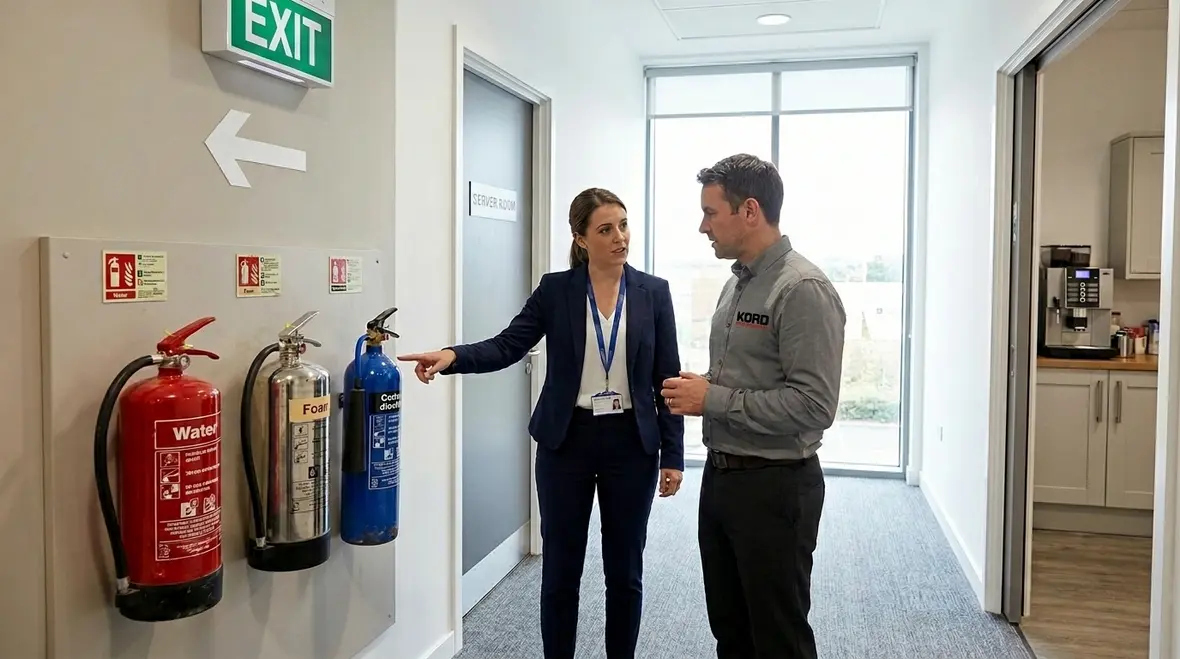
Even the perfect extinguisher fails if people cannot find it or reach it quickly. So placement matters as much as the type. A facility should locate units where they can be accessed with minimal obstacles, and where travel distance aligns with exit routes and risk areas.
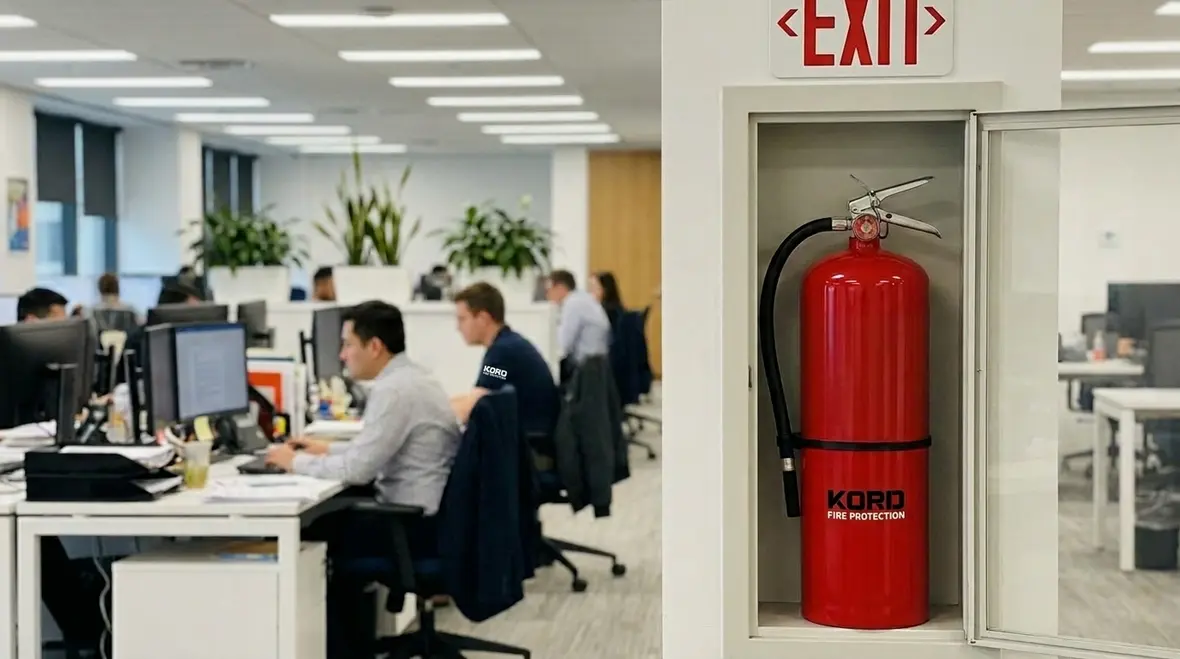
Typically, offices place extinguishers in visible spots near exits, along primary corridors, and close to higher-risk rooms like electrical plant areas, loading bays, and storage. Then the team should consider practical obstacles such as locked doors, furniture clusters, and equipment that blocks access during normal operations.
Additionally, signage and simple wayfinding help people act under stress. In a calm moment, it is easy to spot equipment. In the chaos of smoke, it becomes harder. That is where a well-thought-out placement plan earns its keep. Kord Fire’s fire extinguisher placement for office guide is a useful related read if your layout already feels like a maze with desks.
For multi-facility businesses across Australia, Kord Fire Protection can align placement with consistent standards so each site stays coherent, even when departments rotate staff or renovate spaces.
Get the right size and quantity for real spaces
Offices vary widely. A small administrative suite is not the same as a retail back-of-house with storage racks or a commercial floor with multiple tenants. Therefore, teams should choose extinguisher capacity and quantity based on the size of risk areas and the likely fuel load.
Instead of ordering a handful of units and calling it done, a facility should calculate needs by reviewing floor plans, occupancy, and hazard spread potential. The goal is coverage that makes sense for the building, not coverage that looks good on a checklist.
Quantity also affects inspection and management. When a building has too few units, coverage gaps appear. When it has too many, maintenance can become inconsistent and people may stop paying attention. So the office should aim for the right balance, and then maintain it.
Coverage should feel practical, not theatrical
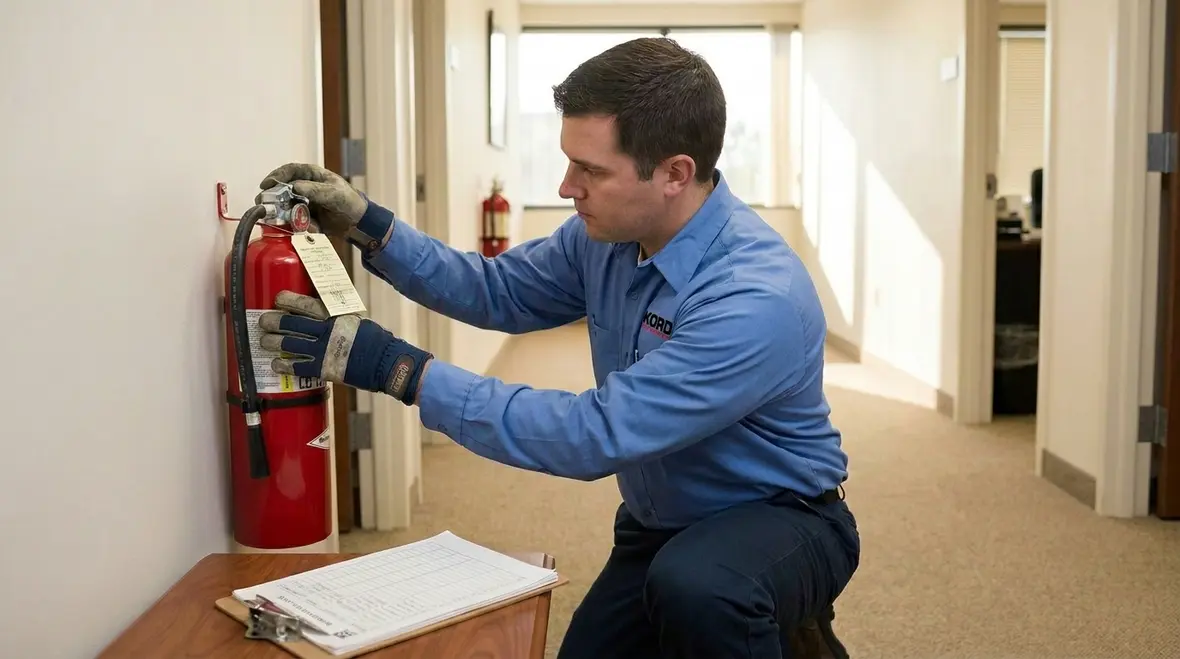
There is a sweet spot between sparse coverage and turning the office into a museum of red cylinders. Teams should think about how quickly someone can access a unit, whether the unit matches the likely hazard, and whether the maintenance load remains realistic over time. That is how a fire safety setup stays useful instead of becoming one more dusty obligation hidden in plain sight.
Inspection, maintenance, and compliance that does not drift
Fire safety systems do not stay “correct” just because they started that way. Over time, pressure gauges get knocked, seals get damaged, and units move during renovations. In addition, staff changes can affect accountability.
That is why an office needs a maintenance plan with routine checks, recordkeeping, and timely service. A strong program includes:
- Monthly checks by trained personnel on key indicators such as access, signage, and basic condition.
- Service schedules that match the manufacturer and local expectations.
- Replacement triggers when equipment reaches its service life or fails inspection.
- Documentation so audits and incidents never turn into a scavenger hunt.
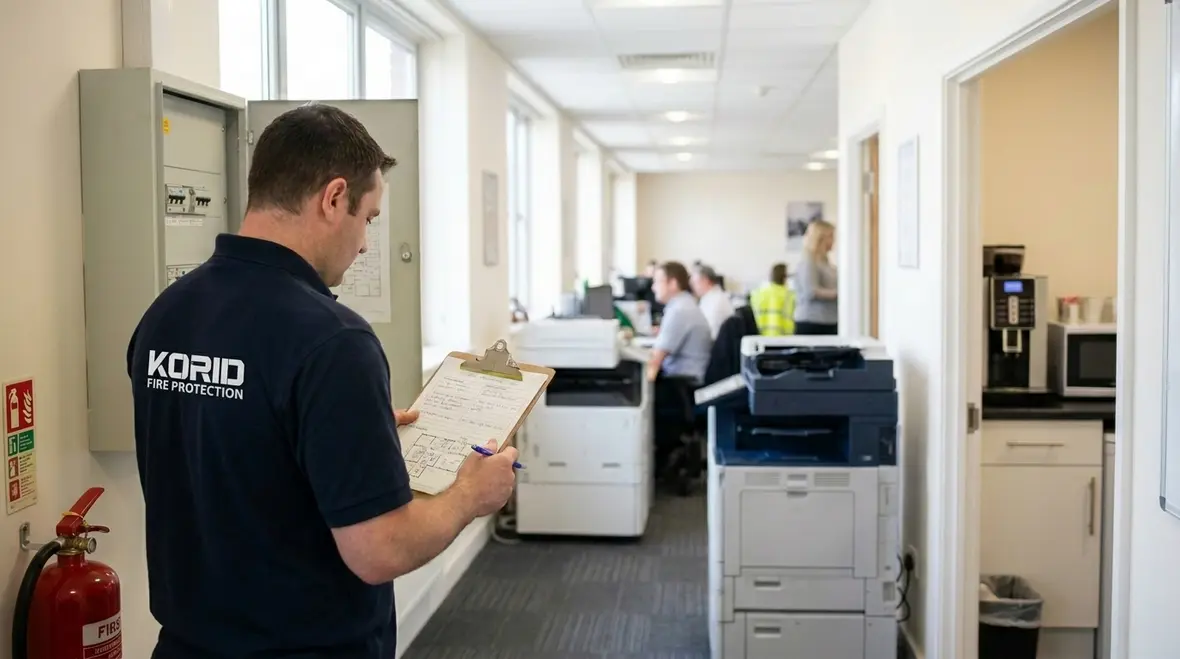
When Kord Fire Protection partners on this work, it becomes simpler for facilities teams to stay current. They can help keep extinguisher status consistent across office spaces, warehouses, and retail back areas, so compliance does not turn into a last-minute scramble. Their monthly inspection and annual service page is especially relevant for teams trying to replace reactive maintenance with a real routine.
Train staff so the equipment becomes usable in emergencies
Once the correct extinguisher choices are in place, training turns them into real protection. Staff should learn the basics in plain language: identifying hazards, selecting the right unit, understanding what the extinguisher can handle, and knowing how to act without taking unnecessary risks.
In addition, office training should include what to do before and after use. That includes raising the alarm, following evacuation steps, and reporting the incident so the facility can address root causes.
Because offices are diverse, training should also consider different roles. Receptionists, security staff, cleaners, and maintenance technicians often hold different responsibilities. Therefore, a good plan trains people where their responsibilities actually sit, not where an admin once guessed they might.
Kord Fire Protection can support this process by helping facilities align training and signage with the actual hazards in each building area. That way, staff receive guidance that matches the extinguisher they will see in real life, not the extinguisher imagined in someone’s spreadsheet.
Common mistakes offices make during extinguisher upgrades
Even careful teams make errors. The trick is to spot them before they cost time, money, or safety. Here are frequent issues facilities face during updates to fire protection systems:
- Buying a single extinguisher type for every area, even when hazards differ between electrical rooms, storage, and kitchens.
- Placing units behind locked doors or in locations that become blocked during normal operations.
- Forgetting new risks after renovations, tenant changes, or new equipment installs.
- Skipping records, which makes compliance verification painful and slow.
- Assuming inspections alone solve problems, when staff training and clear placement still matter.
To avoid these pitfalls, facilities should treat extinguisher selection as part of a living safety system. Then they should document decisions so the next upgrade cycle starts with facts, not guesswork. Kord Fire Protection can help offices keep those decisions organized and consistent across multiple commercial sites.
FAQ
Final word and next step
Choosing the right extinguishers for office buildings is not a one-time purchase. It starts with risk assessment, matches extinguishers to fire classes, places them where people can actually reach them, and maintains them with consistent inspections and training.
When Kord Fire Protection partners with a facility, the process becomes clearer and easier to sustain across multiple sites. Reach out through the Kord Fire Protection contact page to review your office hazards and build a practical extinguisher plan that holds up under pressure.

Join Our Newsletter!
Get the latest fire safety tips delivered straight to your inbox From our Newsletter.