Standpipe System Installation Guidelines for High Rises
When a project team plans standpipe system installation for a new high-rise, they should follow clear standpipe system installation guidelines from day one. In the first pass, that means coordinating the riser route with the building layout, then sizing outlets based on the design fire flow, and finally confirming that valves, hose connections, and fire department connections get placed where they can actually be reached. Next, the crew verifies pressure requirements and water supply reliability, and they document every test and inspection step before the system gets buried behind drywall. Of course, the plan still needs to live in the real world, where schedules slip and drawings multiply like houseplants. That is where Kord Fire Protection technicians step in, calm the chaos, and keep the project moving with practical checks that match code expectations.
How high-rises change standpipe planning
High-rise construction adds layers of complexity that mid-rise projects rarely face. For one, pressure losses stack up as height increases, and hose teams need consistent performance on the upper floors. In addition, stair pressurization, smoke control systems, and elevator access often shape where piping can run. Consequently, teams cannot treat standpipes as a simple “run pipe up the building” task.
Kord Fire Protection technicians typically begin by reviewing the life safety concept and the water supply plan. They then compare that information to the architectural and structural constraints. Moreover, they look for places where the design might force awkward routing, such as long offsets through fire-rated assemblies. If routing gets messy, the install becomes slower and the risk of rework rises.
And yes, sometimes the drawings show a beautiful straight line where the field finds a structural beam and a conduit nest, then everybody suddenly learns what “value engineering” feels like. The best projects handle that early, not after the first section is already cut and capped.
Why early coordination matters
Early coordination keeps the standpipe system from colliding with the rest of the building’s life safety strategy. A riser may look perfectly placed on one sheet and completely impossible on another. That is why teams should compare architectural, structural, mechanical, electrical, and fire protection drawings before fabrication and before anyone gets emotionally attached to a pipe route that exists only in theory.
For related background on how these systems function in the field, teams can review Standpipe System Requirements and How It Works, which helps connect installation decisions to real firefighting use.
Design inputs that drive a safe and workable installation
Standpipe planning depends on several inputs, and the team should confirm them before fabrication starts. First, the design fire flow and required duration determine the water demand. Next, the system type and hose outlet arrangement influence where components land on each level. Additionally, the intended use during firefighting affects whether the design expects occupant use, fire department use, or both.
In practice, Kord Fire Protection technicians focus on the practical details: route the riser so it stays accessible for valves and inspections, keep hose connections within safe reach, and verify that fire department connections get located for reliable operation. They also account for how the building management system and alarm pathways might interface, especially when supervisory signals get required. That is one reason it helps to align the standpipe scope with broader building communication planning through Fire Alarm Services when monitoring and supervisory visibility matter.
Finally, the team should plan for how the water supply will behave under demand. Municipal pressure alone might look fine on paper, yet the actual system may need storage, pumps, or a combination. Therefore, the installation plan should connect to the water supply design and the test plan, not exist as a stand-alone document.
Choosing the right standpipe approach
Before installation gets too far, the project team should be clear on whether the design leans toward automatic or manual operation and how that choice affects the rest of the system. If that discussion still feels fuzzy, Automatic vs Manual Standpipe Systems Explained offers useful context that can keep meetings shorter and forehead wrinkles lighter.
Coordinating risers, shafts, and access like a pro
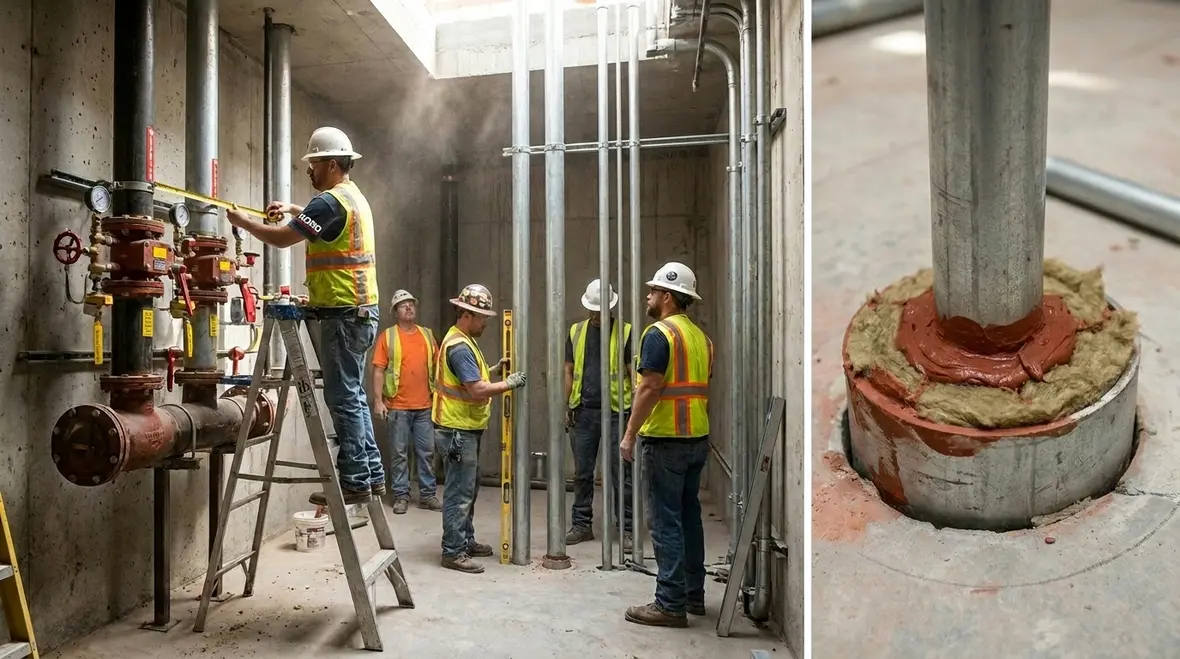
Good standpipe layouts need clean paths and enough space for maintenance. That means teams coordinate with mechanical and electrical trades early, then protect pipe clearance and firestopping requirements. Also, the team should confirm that the riser shaft size allows proper supports, isolation valves, and access panels where needed.
Kord Fire Protection technicians often recommend using a coordinated routing strategy that prevents late-stage changes. Instead of improvising once the ceiling grid is in, the team checks interference points and routes around them. Then they verify that every floor penetration keeps the fire rating intact. If firestopping gets treated like an afterthought, the system can end up “installed” but not actually protected.
As a result, coordinated planning speeds up installation and supports inspection readiness. It also reduces the chance of having to remove finished work because a valve ended up behind a cabinet, like hiding a key in a place that only the contractor remembers.
Field access is not optional
Access matters just as much as routing. A valve that is technically present but buried behind finishes, signage, or another trade’s equipment is a problem waiting for a bad day. Crews should think ahead about how inspectors, maintenance staff, and firefighters will reach each critical component without gymnastics, guesswork, or a sudden desire to argue in a stairwell.
Pressure, outlets, and performance checks for upper floors
As building height climbs, pressure management becomes the heart of the standpipe system installation goals. The team should confirm that the system can maintain required pressure at the highest outlets while handling losses from friction and elevation. Moreover, valves, check devices, and any standpipe accessories need to match the pressure assumptions in the design.
Kord Fire Protection technicians typically emphasize performance verification. They help teams plan hydrostatic testing and flow testing, then confirm that test points and gauges get included where needed. In addition, they guide crews on proper installation practices that protect performance, like correct orientation of components and secure support placement.
For outlets, the plan should ensure that hose connections remain consistent and usable. That includes spacing, height placement, and clear access. Otherwise, firefighters may face delays during operations, and nobody wants a “standby” moment in the middle of an emergency.
Teams that want a closer look at outlet hardware and pressure-regulating details can also review Fire Standpipe Basics: Hose Valves and PRVs. It is a practical companion when upper-floor performance becomes the topic of the week for the fourth meeting in a row.
Fire department connections and water supply reliability
Fire department connections sit at the doorway between design intent and real-world response. Therefore, the installation team should place them where fire apparatus can reach safely, and where connections allow quick hookup. The route to the standpipes must stay dependable, too, which means maintaining appropriate slopes, protecting piping from damage, and ensuring valves operate as intended.
Kord Fire Protection technicians often stress that water supply reliability must be tested and verified. They help teams align the standpipe system installation guidelines with pump settings, backflow preventer needs, and any check valve behavior. Then they ensure that supervisory and alarm interfaces, when required, show the right status signals.
Just like a good playlist needs smooth transitions, a reliable water supply plan needs predictable behavior under stress. If the system cannot sustain flow, the best piping layout in the world will not help when it matters most.
For teams double-checking exterior connection placement and common field issues, Standpipe Fire Department Connection Requirements is a useful reference that fits naturally into pre-install review and punch planning.
Inspections, testing, and documentation that pass scrutiny
Many projects stumble not because the pipe never got installed, but because the documentation and testing did not match the plan. For that reason, the team should integrate inspection and test steps into the schedule from the start. They should also verify that submittals, cut sheets, and as-built updates stay consistent with what gets built in the field.
Kord Fire Protection technicians support crews by outlining what inspectors typically look for and by helping teams maintain inspection-ready organization. They also guide field acceptance steps, such as verifying valve labeling, checking that hose outlets show correct installation details, and confirming that firestopping matches approved methods. Additionally, they encourage teams to capture test results early so issues can get corrected before close-in work.
In other words, the goal is to avoid the classic situation where everything seems fine, until the inspector asks for a test report that looks like it came from a parallel universe. Proper documentation prevents that headache.
Keep records current while work is happening
As-built records should change as the job changes. Waiting until the end invites missing dimensions, forgotten reroutes, and a last-minute scavenger hunt through marked-up sheets. A clean documentation process saves time, supports inspection approval, and gives building owners a far better handoff once the project wraps up.
FAQ
Conclusion: plan early, build correctly, and call the pros
Planning standpipe installations for new high-rise construction requires more than routing pipe up a shaft. It demands coordinated design inputs, reliable water supply planning, pressure checks, and inspection-ready documentation. To keep the job efficient and code-aligned, teams should work with experienced partners. Kord Fire Protection technicians can help guide the process, spot risks early, and support testing that passes scrutiny.
If the project team wants fewer surprises and smoother approvals, they should reach out for support through Standpipe System Class I-II-III services. For projects that need coordination across detection, monitoring, and supervisory pathways as well, Kord Fire’s broader Fire Alarm Services page is also a strong next step and a practical CTA near the finish line.

Join Our Newsletter!
Get the latest fire safety tips delivered straight to your inbox From our Newsletter.