Fire Protection System Integration with Building Automation Controls
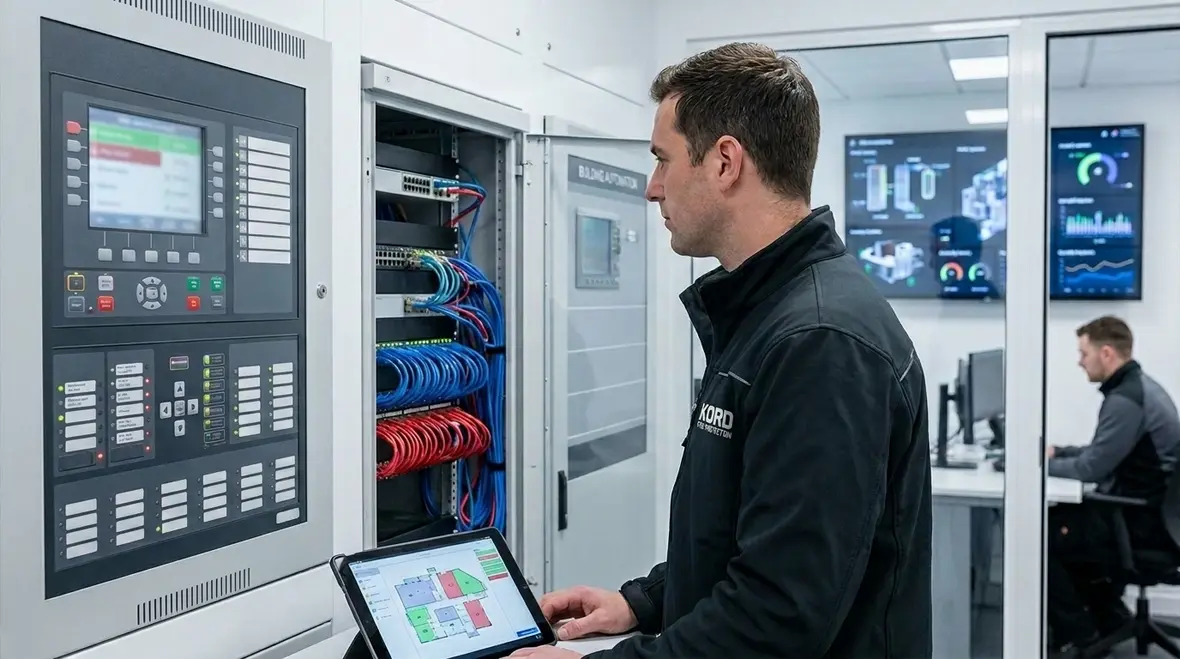
When teams plan a modern building, they rarely stop at lights and thermostats anymore. They also expect fire protection system integration to work smoothly with today’s building automation controls, so safety, comfort, and efficiency share one brain. That is where Kord Fire Protection Technicians come in, because they explain how detection, suppression, and monitoring should align with the building’s operating system. And yes, the goal is not to turn life safety systems into a trendy gadget. Instead, it is to make sure alarms, signals, and status updates arrive on time, in the right format, and with the right level of trust. In other words, the building should behave like a well trained security guard, not like a confused extra in a sitcom.
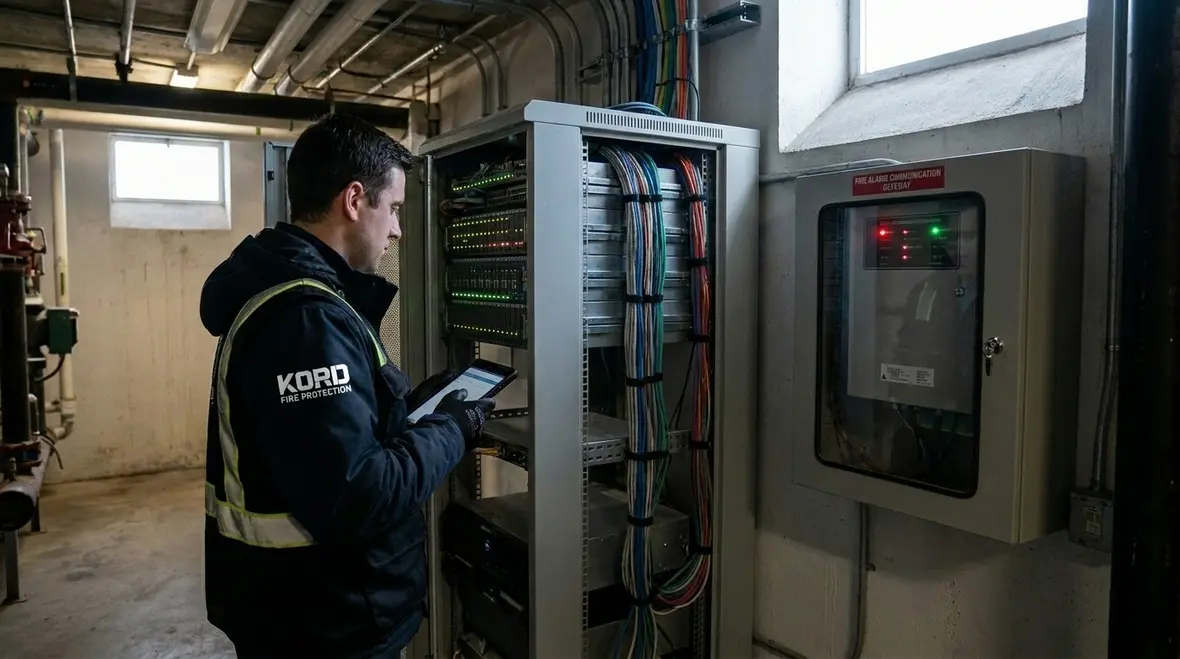
In practice, that means the fire alarm panel, sprinkler supervisory devices, smoke control interfaces, and monitoring points need to communicate clearly without crossing lines they should never cross. Kord Fire Protection’s fire alarm services focus on exactly that kind of reliable coordination, where life safety stays in charge and supporting systems respond the way the design intended. For facilities teams, the benefit is simple: fewer blind spots, cleaner event visibility, and a building that reacts with purpose instead of panic.
Why modern buildings demand smarter safety coordination
Modern building automation links many subsystems, including HVAC control, access management, energy monitoring, and life safety interfaces. However, fire alarms and sprinkler systems follow strict rules. Therefore, integration must respect safety priorities and code requirements. When it works well, the building automation layer can respond fast, while fire protection equipment stays fully supervised and independent where it must. Kord Fire Protection Technicians often describe it this way: the alarm panel is the captain, and the automation system should never order the captain to do something unsafe.
Also, buildings now run on data. So, when fire occurs, the right system messages should reach the right people and the right displays. This reduces chaos, because operators get clear status, not blurry guessing. Meanwhile, facilities teams gain better visibility during routine tests and inspections, since system health signals can flow into the building dashboard. That kind of visibility becomes even more useful when paired with disciplined maintenance and the recordkeeping practices discussed in Kord Fire Protection’s fire safety system documentation guidance, where proof matters just as much as performance.
Where coordination helps most
- Displaying live alarm, trouble, and supervisory conditions in a readable format
- Supporting HVAC and smoke control strategies already defined by the life safety design
- Giving operators better status visibility during testing, inspections, and service visits
- Reducing delays caused by unclear naming, poor point mapping, or missing notifications
Mapping sensors, panels, and controls into one clear workflow
Integration starts with a practical map of how signals move from field devices to the control room. First, Kord Fire Protection Technicians review what exists: smoke or heat detectors, pull stations, sprinkler supervisory switches, water flow devices, tamper switches, and any flow or pressure monitoring. Then, they define the event types that should trigger automation responses. For instance, a sprinkler supervisory event may require a notification and a status tag, while an alarm event can require automatic door release, elevator recall, and HVAC actions, depending on the design.
Next, they confirm how each signal should be formatted and timed. Fire alarm panels often communicate via specific interfaces, such as relay outputs, digital protocols, or approved gateways. Then the building automation system consumes those signals to drive actions. In addition, the team sets up a clear fail safe path. If the automation network fails, the fire system still operates correctly, because it must rely on its own life safety design. That separation is not optional. It is like keeping a fire extinguisher in the hallway even if the building has an AI app. Tech can help, but it cannot replace the basics.
Core integration goal
- Transmit correct alarm and supervisory states to building automation
- Trigger only approved responses tied to life safety design
- Maintain fail safe behavior if networks or controllers fail
What Kord technicians typically confirm
- Alarm device list and location tagging
- Supervisory circuits and tamper monitoring
- Point mapping, signal timing, and integration limits
- Testing methods and documentation for audits
A strong workflow also keeps naming conventions consistent. If one dashboard says “Zone 4 Alarm,” another says “South Wing Detector,” and a third says something that sounds like a Wi-Fi password, operators lose precious clarity. Good integration translates device activity into labels people can understand quickly. That is one reason building teams often connect this work with broader service planning through Kord Fire Protection’s full fire protection services, where alarms, sprinklers, extinguishers, and support systems are approached as one coordinated responsibility instead of a collection of unrelated headaches.
How the building automation layer should respond during an alarm
Once the interface plan exists, the next step involves behavior. Building automation can support people during an emergency, but it must not improvise. Therefore, teams define response logic ahead of time. For example, when an alarm condition activates, the system can display the correct zone, log the event, and initiate evacuation support actions like smoke control where permitted. It can also communicate with annunciators, security consoles, and facility dashboards.
In HVAC, integration often includes controlled shutdown, smoke damper status display, and fan control based on the life safety strategy. However, these actions depend on the building design, the hazard type, and the fire protection approach. Kord Fire Protection Technicians emphasize that automation should follow the fire alarm’s command signals, not guess. This prevents the classic “we thought it was a drill” problem, which is funny only until the drills stop being funny.
Response logic should be boring in the best way
When life safety systems activate, predictable behavior beats clever behavior every time. The automation layer should confirm status, display it clearly, and execute only the responses that were intentionally designed, tested, and documented. Nothing about a real alarm is the right moment for a creative software surprise. If a building wants a personality, it can start with the lobby artwork, not the emergency sequence.
Network design, cybersecurity, and signal reliability
Safety systems deserve cybersecurity attention, even when they do not look like typical IT gear. Therefore, integration planning should include network separation, controlled access, and clear rules for data flow. Fire protection devices and alarm panels often require dedicated pathways or approved interface methods. Meanwhile, the building automation network can use standard security practices, but teams must ensure that security changes do not block life safety communications.
Also, reliability matters. Signal polling intervals, event buffering, and alarm acknowledgment rules can affect response timing. Kord Fire Protection Technicians usually work with the site design team to verify that event transmission remains consistent under normal loads and during test conditions. They also validate that the building automation system displays the correct states even after a restart, because emergency control logic must stay steady when power cycles happen.
For some properties, remote visibility is part of the equation too. If a site uses a supervising station or monitored alarm path, the integration strategy should preserve that chain without muddying accountability. Kord Fire Protection’s fire alarm monitoring systems page highlights the value of rapid signal handling and consistent communication, which fits naturally with the bigger goal here: every important event should reach the right system, the right display, and the right people without turning into a mystery novel.
Commissioning, testing, and documentation that stands up to audits
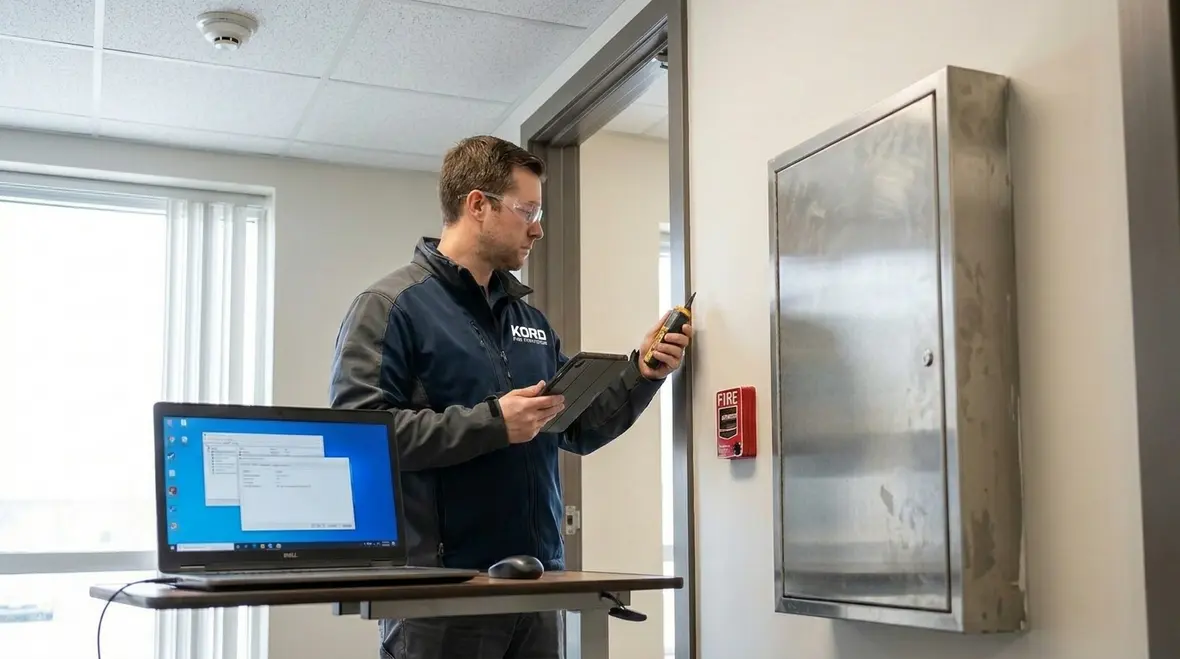
Integration without proof is just a fancy story. So commissioning and testing should include both system sides: fire protection performance and automation behavior. First, technicians verify point mapping, zone naming, and event types. Then they run functional tests that confirm the automation system receives the signal and performs the intended action. This includes verifying logs, alarms, and operator notifications.
Next, teams document how the integration works and how it was tested. That documentation supports ongoing maintenance and helps during inspections. Kord Fire Protection Technicians typically advise that field changes should trigger a review. If someone swaps a device, reroutes wiring, or updates the automation database, the integration logic should be checked again. It is like updating a playlist, but instead of music you are risking safety status labels.
A practical commissioning checklist
- Verify every mapped point matches the field device and the intended label
- Test alarm, supervisory, and trouble states separately
- Confirm operator workstations show correct status after restart or loss of communication
- Review logs, reports, and change records so future service teams are not guessing
- Retest after updates, replacements, or network modifications
Common pitfalls and how to avoid them
Teams run into predictable issues when they integrate safety systems with modern building automation. One common pitfall involves unclear signal definitions. If the automation system cannot tell the difference between an alarm and a supervisory condition, operators may respond incorrectly. Another issue involves overreach, where designers try to optimize responses without a life safety basis. That approach can create delays and confusion.
Also, incomplete testing leads to surprises. A system may look correct on day one but fail after firmware updates, controller restarts, or network changes. Therefore, a change management process should exist, and it should include both fire protection and automation stakeholders.
Finally, teams sometimes forget the human side. Operators need clear displays and training so they understand what the system is telling them. Kord Fire Protection Technicians often phrase it plainly: automation can deliver the message, but people still need to interpret it fast and correctly. That same people first reality shows up in Kord Fire Protection’s recent integrated fire and security systems article, which reinforces the idea that coordinated systems work best when the design stays readable, purposeful, and easy to act on under pressure.
FAQ
Next steps for a safer, smoother building
If the goal is reliable coordination between safety and building automation, the team should start with a clear interface plan, then commission with real tests, not guesswork. Kord Fire Protection Technicians help teams map signals, confirm approved responses, and document the system behavior so it holds up over time. Buildings do not need more drama. They need better signal flow, clearer displays, and emergency sequences that work the first time, every time.
For teams ready to move from good intentions to dependable performance, Kord Fire Protection offers support through its fire alarm services and broader fire protection solutions. You can also explore more related articles on the Kord Blog. Reach out to schedule an integration review for your site and get a practical path from design to dependable operations. Because when alarms happen, the building should perform like it means it.

Join Our Newsletter!
Get the latest fire safety tips delivered straight to your inbox From our Newsletter.