
Southern California Fire Code Compliance Guide
Southern California does not whisper about fire safety. It speaks with sun baked hills, offshore winds, and long dry seasons that demand respect. That is exactly why this Guide to Fire Code Compliance exists. It offers clarity in a region where one spark can rewrite a skyline. Kord Fire Protection technicians often explain it this way: fire codes are not red tape. They are guardrails. And when businesses understand those guardrails, they move with confidence instead of fear.
This article walks through the rules, the inspections, the systems, and the mindset required to stay compliant. Along the way, it answers the same questions property owners ask every week. It does so plainly, calmly, and with just enough wit to keep things human. Because yes, compliance matters. But no one said it had to be boring.

Understanding Fire Code Compliance in Southern California
Southern California follows the California Fire Code, which builds on the International Fire Code. However, local cities and counties often add their own amendments. Therefore, a warehouse in Los Angeles may face slightly different requirements than a retail space in San Diego.
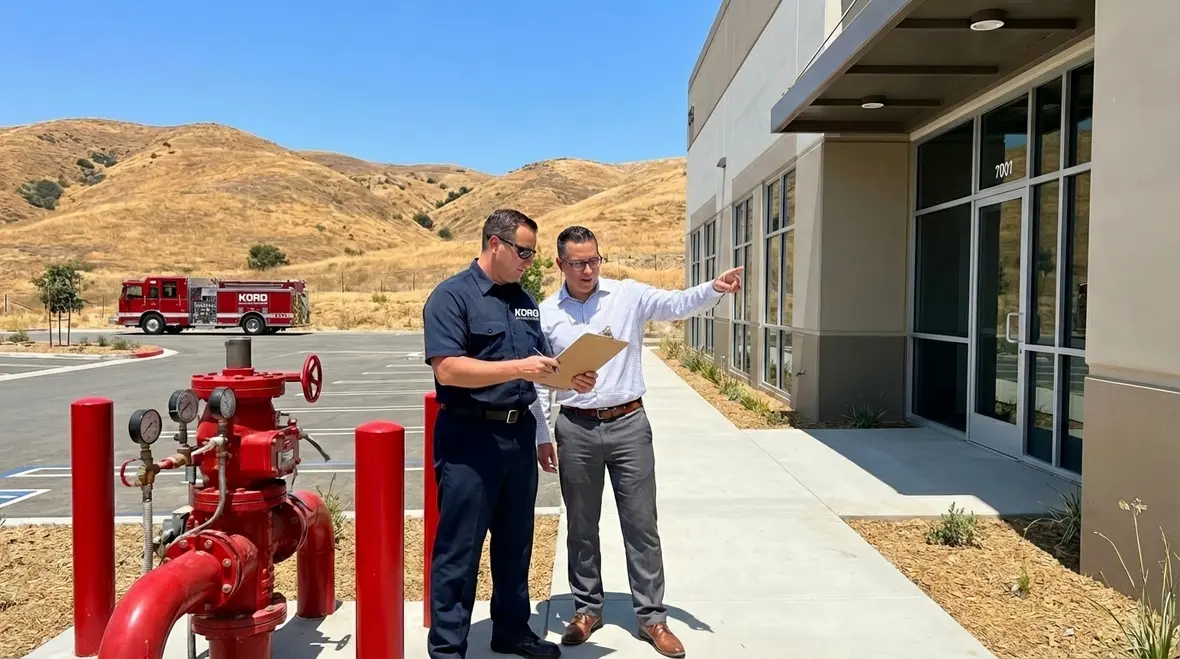
Kord Fire Protection technicians explain that compliance begins with knowing which authority has jurisdiction. Is it the city fire department? The county? A fire protection district? Each authority enforces permits, inspections, and corrections in its own way.
Moreover, the region’s wildfire risk shapes many requirements. Defensible space, fire resistant construction, and vegetation management often come into play. Coastal humidity might be forgiving. Inland heat is not. As a result, codes reflect real environmental risk.
In simple terms, fire code compliance means a building has the right systems installed, maintained, and documented. It also means staff know what to do in an emergency. Because even the best sprinkler system cannot help if exit doors are chained shut. Yes, that still happens. No, it should not.
For a deeper dive into how inspections and testing keep systems ready across Los Angeles County, many businesses pair this guide with Kord Fire’s overview of fire sprinkler testing requirements in Los Angeles County. That combination turns broad code language into practical, local steps.
What Does a Complete Guide to Fire Code Compliance Cover for Businesses?
When business owners search for answers, they usually want specifics. They want to know what applies to them. Therefore, this section lays out the core components most commercial properties must address.
Fire alarm systems
These systems detect smoke or heat and alert occupants. However, installation alone is not enough. They require annual testing, monitoring, and proper documentation.
Fire sprinkler systems
Sprinklers control or suppress fires before they spread. In Southern California, many commercial buildings must have them. Furthermore, inspections occur quarterly and annually, depending on system type. Kord Fire technicians often point owners to detailed resources like their article on wet sprinkler system inspections so expectations are crystal clear.
Fire extinguishers
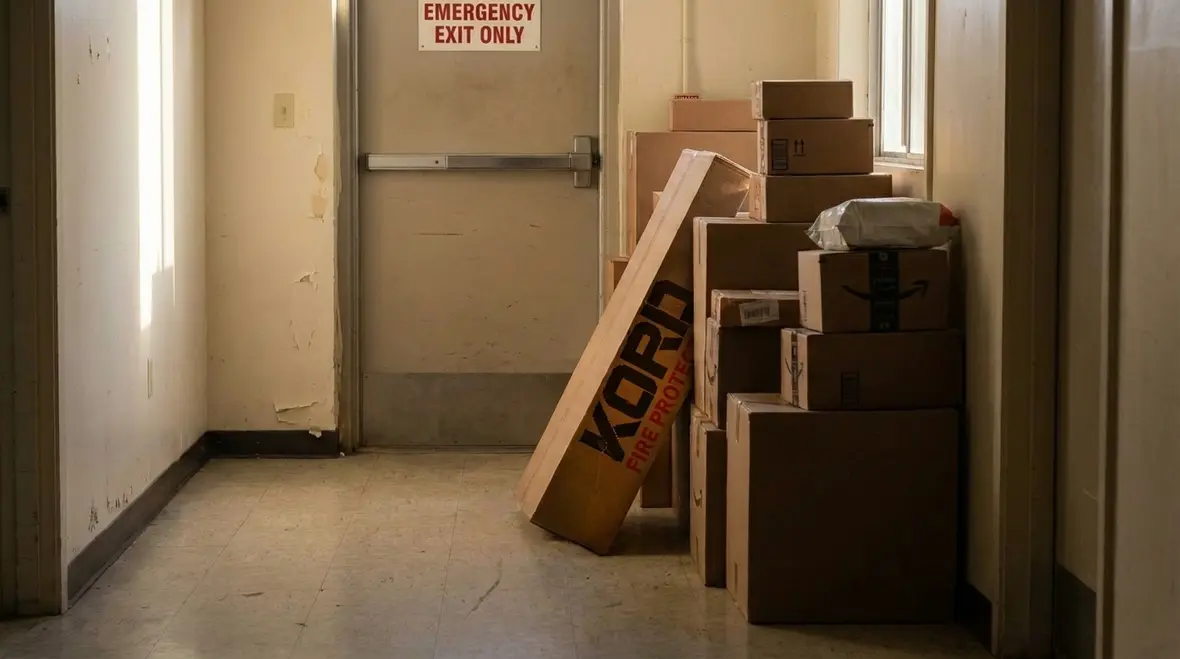
Portable extinguishers must be mounted correctly, accessible, and serviced yearly. Additionally, staff should know how to use them. A dusty extinguisher behind a stack of boxes is about as helpful as a seatbelt stored in the trunk. Pairing this guidance with services like Kord Fire’s monthly inspection and annual extinguisher service keeps those red cylinders ready instead of decorative.
Emergency lighting and exit signage
Power fails. It happens. Therefore, battery backed lighting and illuminated exit signs must function during outages. Inspectors check them closely.
Occupancy limits
Every space has a maximum occupant load. Exceeding it can result in fines or closure. Besides, no one enjoys being packed tighter than a music festival crowd in July.
Together, these elements form the backbone of any reliable fire safety compliance resource.
The Inspection Process and How to Prepare
Inspections often cause anxiety. However, they should not. When a property follows a structured fire code compliance guide, inspections become routine rather than dramatic.
Typically, the process includes:
- 1. Scheduled or surprise visit
Some inspections are annual. Others occur after complaints or renovations. - 2. Review of documentation
Inspectors request service tags, inspection reports, and permits. Therefore, organized records save time and stress. - 3. Physical walkthrough
They check alarms, sprinklers, exits, storage practices, and electrical panels. - 4. Correction notice if needed
If issues appear, the authority provides a deadline for repair.
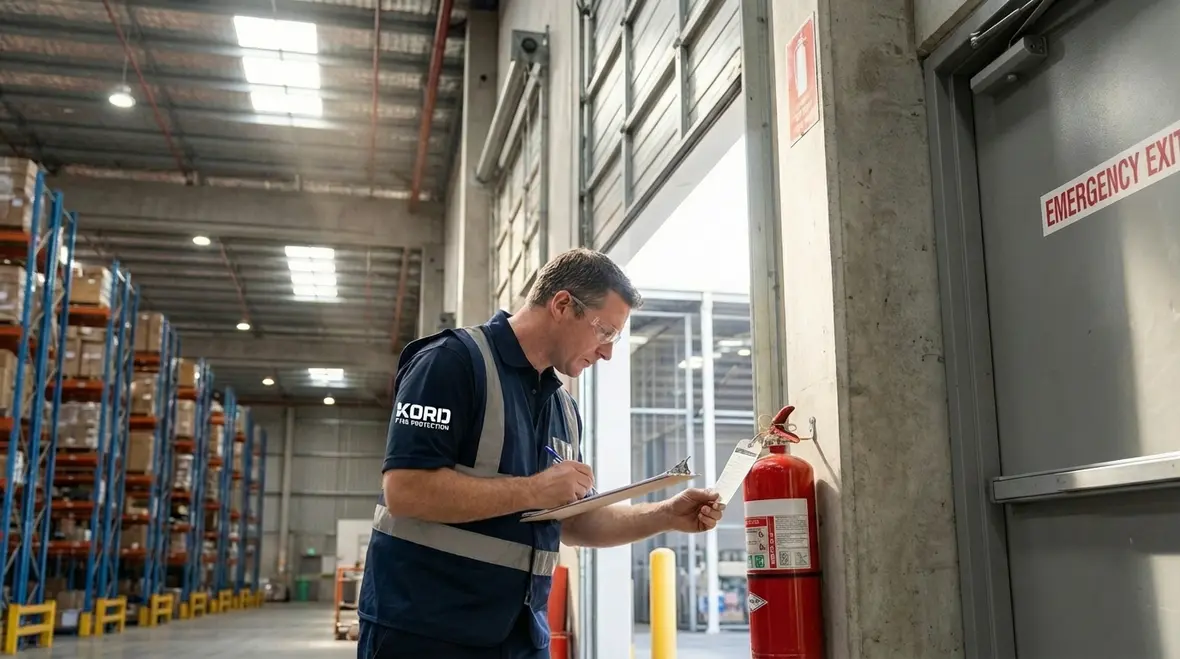
Kord Fire Protection technicians often walk clients through mock inspections. They point out small issues before they become official violations. For example, they might notice a blocked fire riser or an expired extinguisher tag. Fixing those early prevents larger penalties later.
Additionally, preparation includes staff training. Fire drills, evacuation maps, and clear roles make a strong impression. More importantly, they protect lives.
Common Fire Code Violations in Southern California
Some violations appear so often they deserve their own highlight reel. Fortunately, most are preventable.
Blocked exits
Storage creeps into hallways. Displays inch toward doors. However, exits must remain clear at all times.
Improper storage of flammable materials
Cleaning supplies, solvents, and fuels require approved containers and spacing. Moreover, certain quantities trigger additional permits.
Electrical hazards
Extension cords used as permanent wiring create risk. So do overloaded panels. Inspectors notice quickly.
Neglected maintenance
A sprinkler valve left closed can disable an entire system. Therefore, routine checks are essential.
Kord Fire Protection technicians explain these issues in plain language. They do not lecture. Instead, they show how small habits affect overall safety. And sometimes they add a light joke, because even serious topics benefit from a breath of humor. Fire safety may not be a blockbuster movie, but ignoring it can lead to a disaster sequel no one wants.
Key Systems and Their Compliance Requirements
Below is a simplified dual column overview of major systems and what inspectors expect. This snapshot supports any thorough fire safety compliance manual used by property managers.
System
Fire Alarm System
Sprinkler System
Fire Extinguishers
Emergency Lighting
Kitchen Suppression
Core Requirement
Annual testing, monitoring, updated permits
Quarterly inspections, unobstructed heads, clear riser access
Annual service, monthly visual checks
90 minute battery test annually
Semi annual inspection for commercial kitchens
Although the table looks simple, each line involves detailed standards. For instance, sprinkler inspections follow NFPA guidelines. Similarly, kitchen systems must link to fuel shutoffs. Therefore, working with licensed professionals ensures nothing falls through the cracks.
Renovations, Change of Use, and Permits
Whenever a building changes use, codes may shift. A quiet office converted into a restaurant suddenly faces stricter rules. Increased occupant load, commercial cooking, and grease ducts introduce new hazards.
Therefore, permits matter. Before construction begins, plans often require review by the fire authority. Kord Fire Protection technicians coordinate with contractors to align system design with code. They verify sprinkler coverage, alarm device placement, and water supply demands.
Additionally, temporary disruptions during renovations can create violations. For example, disabling a fire alarm without a fire watch plan can trigger penalties. Thus, planning ahead protects both timeline and budget.
This step by step approach reflects any strong fire code compliance roadmap. It anticipates change instead of reacting to citations.
Building a Culture of Ongoing Compliance
True compliance is not a one time event. It is a habit. Therefore, leaders must set the tone.
- First, they schedule regular inspections beyond the minimum required.
- Second, they train employees during onboarding and annually after that.
- Third, they encourage reporting of hazards without fear of blame.
Kord Fire Protection technicians often say that systems protect buildings, but culture protects people. When staff understand why doors must stay closed or why storage height matters, they follow through. Besides, explaining the reason behind a rule works far better than simply saying because the code says so.
Technology also supports this effort. Digital inspection reports, cloud based records, and automated reminders reduce missed deadlines. Consequently, businesses stay ahead of requirements rather than scrambling at the last minute.
Frequently Asked Questions
Conclusion and Next Steps
Fire safety in Southern California demands attention, consistency, and expert guidance. A trusted Guide to Fire Code Compliance turns confusion into clarity and risk into readiness. Kord Fire Protection technicians stand ready to explain each requirement, inspect every system, and help businesses move forward with confidence.
Connect with their team today, strengthen compliance, and protect what matters most before the next inspection ever reaches the front door. To turn this guide into an action plan, explore Kord Fire’s full fire protection services in Southern California and schedule coordinated inspections for sprinklers, alarms, and extinguishers with a single, code focused partner.
Know Your Weapon Before You Fight the Flame
Kord Fire Protection is your go-to when it comes to all things fire protection. For over 20 years, we’ve been serving Southern California with the quality service and equipment to keep your home or business safe at all times. Our competitive prices reflect our unwavering commitment to protecting what matters most in the event of a fire emergency. Give us a call, send an email, or use that form!

Join Our Newsletter!
Get the latest fire safety tips delivered straight to your inbox From our Newsletter.


