Wet Sprinkler System Inspection by Kord Fire Protection
There is a quiet moment before every emergency. A pause. A breath. And in that stillness, systems that were inspected, tested, and explained calmly are the ones that speak up when it matters.
Within the first moments of Kord Fire Protection’s Wet Sprinkler System Inspection, clients notice something different. The room settles. Questions get answered before they are even asked. Kord Fire Protection technicians take time to explain what they are doing, why it matters, and how each component protects people and property. This article walks through what happens during that inspection, step by step, in plain language. The details that follow bring clarity, confidence, and yes, a few light moments, because even fire protection deserves a smile now and then.
Setting the Stage for a Reliable Wet Sprinkler System Inspection
A wet sprinkler system stands ready at all times, pipes full of water, waiting patiently like a loyal guard dog. Because of that constant readiness, inspection is not a casual glance. Instead, it is a methodical process guided by codes, experience, and a calm sense of purpose.
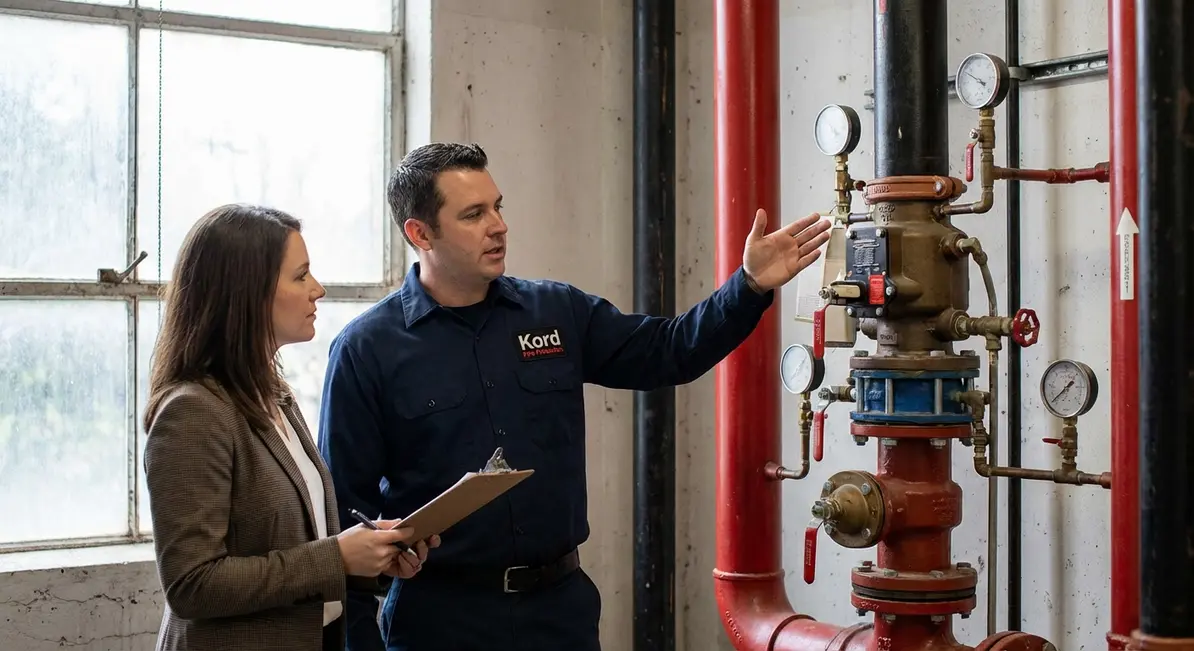
During Kord Fire Protection’s Wet Sprinkler System Inspection, certified technicians begin by explaining the overall condition of the system. They describe how water moves through pipes, how signals reach the fire alarm panel, and how each device plays a role. Meanwhile, they follow requirements set by NFPA 13 and CSFM Title 19. These are not dusty rule books. They are living standards shaped by real world fires and real world lessons.
Because authority having jurisdiction requirements vary, inspections occur as often as required by local enforcement. However, the goal stays the same everywhere. Keep the system ready. Keep occupants safe. And keep surprises to a minimum, unless we are talking about birthday parties.
How Often Service Happens and Why Timing Matters
Frequency is not about checking a box. It is about respecting time. Water sits in pipes. Valves stay open for months. Switches wait patiently for movement. Over time, even the best equipment can drift out of tune.
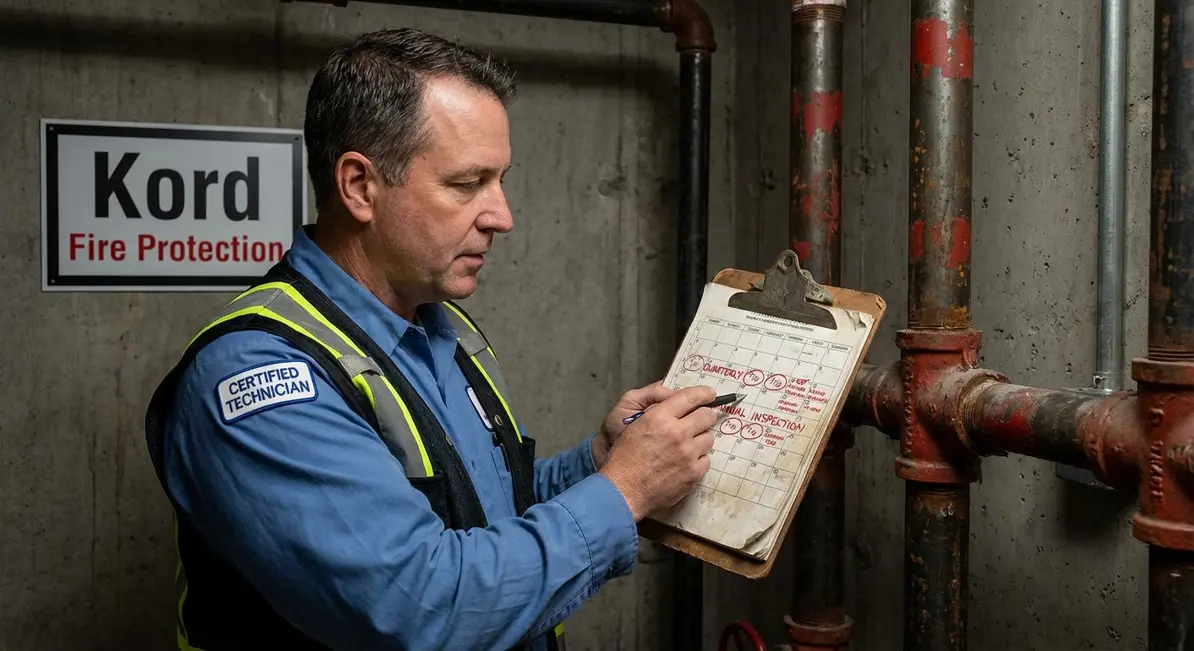
Therefore, inspections are performed by KFP certified technicians at intervals set by the authority having jurisdiction. Quarterly and annual visits serve different purposes. Quarterly checks catch early issues. Annual inspections dig deeper and confirm long term reliability.
Technicians often explain this with a simple analogy. Skipping inspections is like skipping oil changes and hoping the engine stays quiet. Sometimes it does. Until it does not. The humor lands gently, but the point sticks.
Additionally, consistent service helps building owners plan repairs before they become urgent. That foresight saves money, reduces downtime, and keeps everyone sleeping better at night. And yes, sleep matters, especially when alarms are involved.

Core Devices Examined During the Inspection Process
The heart of the inspection focuses on devices that sense water movement and valve position. These components communicate with the fire alarm system and alert responders. When they work, they are heroes. When they fail, they are silent. Silence is not helpful in an emergency.
Waterflow switches receive careful attention. Technicians activate them to confirm they trigger the alarm within the required time. They explain how these switches detect flowing water, not just pressure. This distinction matters because a broken pipe and a flowing sprinkler create different conditions.
Valve tamper switches and post indicator valve switches come next. These devices monitor whether control valves remain open. A closed valve is one of the most common reasons sprinklers fail. During inspection, technicians operate the valves and confirm signals reach the panel correctly.
Throughout this process, explanations flow steadily. No rushing. No jargon. Just clear language and steady hands. The tone feels less like an exam and more like a guided tour. And yes, someone usually cracks a joke about valves behaving better than teenagers.
Annual and Quarterly Procedures Explained Clearly
Quarterly procedures focus on function. Annual procedures focus on condition. Together, they tell the full story of system health.
Quarterly procedures
Quarterly visits include waterflow testing and valve supervision testing. These tests confirm signals reach the alarm panel and notify monitoring services as intended. Technicians explain the expected delay times and why those seconds matter. In fire protection, seconds are not just numbers. They are outcomes.
Annual procedures
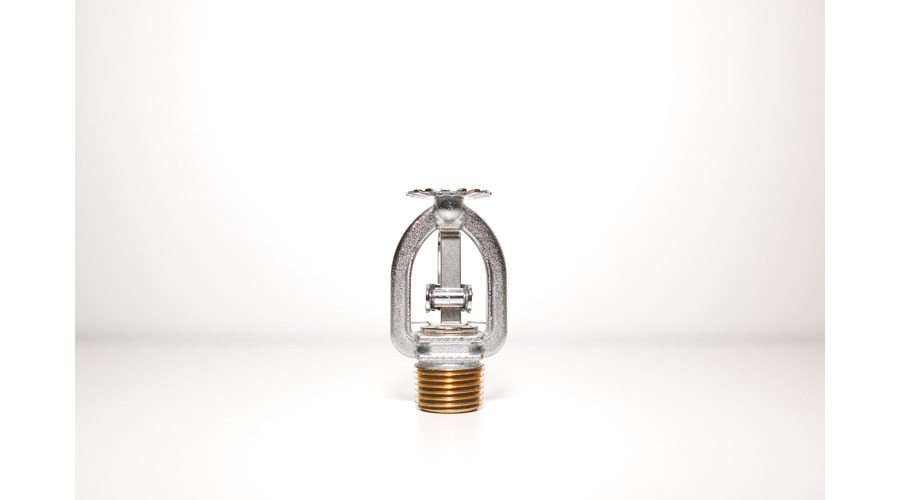
Annual procedures go further. Sprinkler heads receive visual inspection for damage, corrosion, or paint. Riser gaskets are inspected to ensure seals remain intact. Small leaks often start here, and catching them early prevents larger failures.
Throughout the inspection, Kord Fire Protection technicians narrate their actions. They describe what they see and what it means. This transparency builds trust. It also turns a routine inspection into an educational experience. Suddenly, the system feels less mysterious and more like a well understood partner.
Wet Sprinkler System Inspection Requirements at a Glance
The following overview brings structure to the process and highlights how standards guide each step. It is a quick reference, but behind each line sits years of field experience.
This structure ensures nothing slips through the cracks. It also gives building owners a clear map of what to expect during each visit.
Why Kord Fire Protection Technicians Take Time to Explain

Inspection is not only about compliance. It is about understanding. Kord Fire Protection technicians believe informed clients make better decisions. Therefore, they explain findings in real time.
When a technician points out a painted sprinkler head, they explain how paint can delay activation. When a valve shows wear, they describe how that wear could affect flow. These explanations turn abstract risks into clear pictures.
The calm, steady delivery matters. It lowers stress. It builds confidence. And it reminds everyone that fire protection is not about fear. It is about preparation. Even the occasional pop culture reference finds its way in. Someone might compare a reliable sprinkler system to a dependable movie hero who shows up every time. No cape required.
How Local Codes Shape Each Inspection Experience
While NFPA 13 and CSFM Title 19 provide the foundation, local authorities add specific requirements. Kord Fire Protection technicians stay current with these variations. That knowledge ensures inspections meet both national standards and local expectations.
Because of this, inspections feel tailored rather than generic. A facility in one city may require different documentation or testing frequency than another. Technicians explain these differences clearly, so building owners understand not just what is required, but why.
This attention to detail reduces delays during audits and fire marshal visits. It also prevents costly re inspections. In short, it keeps everyone on the same page. And yes, staying on the same page is much easier than rewriting the book later.
What Happens After the Inspection Ends
Once testing concludes, documentation follows. Reports detail findings, actions taken, and any recommendations. Kord Fire Protection technicians review these reports with clients, highlighting priorities and timelines.
If repairs are needed, they explain options clearly. No pressure. No scare tactics. Just facts and professional guidance. This approach builds long term partnerships rather than one time transactions.
Over time, clients begin to recognize patterns. They understand their systems better. They ask sharper questions. And they approach fire protection with confidence instead of anxiety. That shift might be the most valuable outcome of all.
FAQS
Conclusion and Next Steps
Kord Fire Protection’s Wet Sprinkler System Inspection offers more than compliance. It offers clarity, confidence, and a calm voice guiding each step.
For building owners who value safety without stress, now is the time to schedule an inspection, ask questions, and partner with technicians who explain every detail. Reach out today and let preparation speak before emergencies ever do.

Join Our Newsletter!
Get the latest fire safety tips delivered straight to your inbox From our Newsletter.