
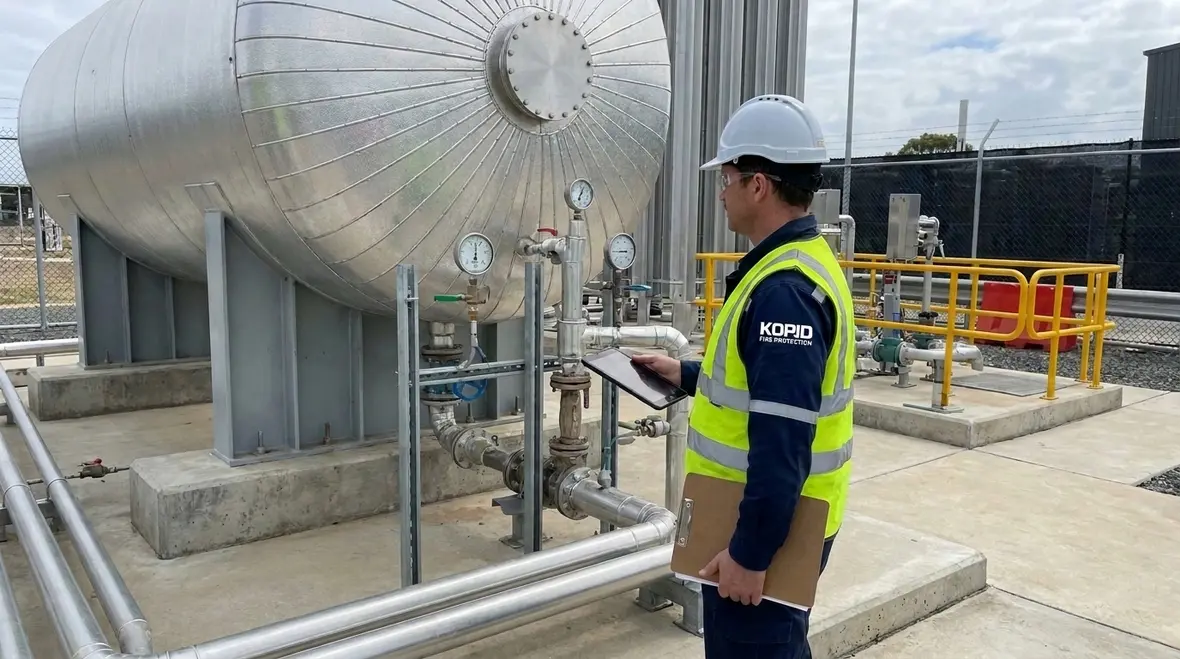
NFPA 52 Section 21.7: Inspection Requirements for ASME LNG Tanks
Quick Answer
NFPA 52 Section 21.7 sets the inspection expectations for ASME LNG tanks to confirm integrity, manage deterioration, and verify key pressure containment and safety features. Compliance focuses on timely inspections, documenting findings, and taking corrective actions before conditions degrade tank safety.
For a practical adjacent topic that fits naturally with inspection planning, review LNG facility maintenance requirements to strengthen how inspection intervals, maintenance discipline, and documentation work together.
What NFPA 52 Section 21.7 is trying to prevent
NFPA 52 is designed to reduce the likelihood of catastrophic LNG releases by controlling ignition sources, limiting hazardous conditions, and maintaining the reliability of life safety and containment systems. Within that framework, NFPA 52 ASME LNG tank inspection requirements drive the operational discipline that ensures tanks remain capable of safely containing cryogenic contents and resisting degradation mechanisms that can develop over time.
For commercial and industrial LNG facilities, the inspection regime typically serves two real world purposes: it confirms that the tank still meets the original design intent under actual operating conditions, and it provides an auditable record that the facility has managed risk through proactive maintenance rather than reactive repair.
Where Section 21.7 fits in an LNG facility inspection program
Section 21.7 operates as part of a broader inspection and maintenance ecosystem that includes code compliance, ASME construction requirements, facility operational practices, and safeguarding systems. In practice, facilities build a “single accountable program” where multiple compliance streams align, including:
- Tank internal and external condition verification aligned to ASME acceptance and continued integrity expectations.
- Pressure relieving and containment related components inspections, coordinated with tank condition.
- Documentation, corrective action tracking, and repeat inspection triggers when deficiencies occur.
- Operational controls that ensure inspections occur under safe and controlled conditions, including isolation and cryogenic safety procedures.
Because retail, industrial, and commercial sites often run under tight uptime expectations, the inspection schedule must align with outage windows and maintenance planning. Facilities that fail to coordinate inspections with operations frequently incur extended downtime, rushed scope changes, or incomplete documentation, all of which create compliance risk.
Key inspection elements covered for ASME LNG tank integrity
Although Section 21.7 is framed around inspection responsibilities, effective compliance depends on the facility understanding which tank attributes drive safety and how inspection methods validate them. The most common inspection focus areas include pressure boundary condition, insulation and support condition, and performance of safety related systems that protect the tank.
1) Pressure containment and structural integrity
Inspections evaluate whether the pressure boundary remains free from unacceptable damage, corrosion, cracking, distortion, or other degradation. LNG tanks experience stresses from thermal cycling, mechanical loads, and cryogenic contraction and expansion. Facilities typically emphasize:
- Verification that no degradation indicators exceed the threshold for repair or evaluation.
- Assessment of areas more vulnerable to stress concentration, including supports and transition regions.
- Coordination with ASME construction and inspection records to track long term trends rather than isolated snapshots.
2) Insulation performance and moisture ingress control
LNG tank reliability depends heavily on insulation effectiveness and controlling heat leak. Insulation degradation can increase boil off rates, stress tank systems, and accelerate thermal cycling. Inspection programs commonly include checks for:
- Signs of insulation displacement, wet insulation, or breakdown of thermal barriers.
- Evidence of ice formation or unusual temperature gradients that suggest loss of insulation performance.
- Support system condition that can affect insulation alignment and containment of cold zones.
3) External components and interfaces
Tank safety can be compromised at interfaces, not just within the pressure boundary. Inspections therefore include adjacent components that influence safe operation, such as:
- Valves, piping connections, and fittings that can introduce leaks or stress into the tank interface.
- Protective systems and enclosures intended to keep hazardous conditions from developing around the tank.
- Grounding and bonding where required to manage electrical hazard control for the facility environment.
How inspection planning avoids compliance gaps
Commercial facilities typically struggle with execution details, not the concept of inspection. A compliant program depends on disciplined planning, safe access, and documented results. The following operational practices help teams meet expectations in a practical way.
Plan inspections around safe work and controlled conditions
Effective inspections require controlled isolation of tank systems, safe handling of cryogenic hazards, and verification that work can proceed without introducing new failure pathways. Facilities should confirm:
- Isolation and safe purge or cool down procedures where required for internal or close approach work.
- Access planning for instrumentation, inspection ports, and inspection zones that may be hard to reach safely.
- Equipment readiness for both inspection and any immediate defect response, such as temporary supports, repair staging, and monitoring tools.
Use trend based assessment, not only pass fail results
Many compliance failures arise when inspections record findings but do not evaluate trends. Trend analysis connects the dots between:
- Prior inspection reports and changes in defect growth rate.
- Operating history, including fill patterns, pressure profiles, and thermal cycle intensity.
- Maintenance actions taken previously and how those actions affected subsequent condition.
Close corrective actions with verification, not just paperwork
Deficiencies must trigger a corrective action plan with clear responsibility, timelines, and verification steps. Compliance improves when facilities require proof of effectiveness, such as:
- Re inspection of repaired areas within an appropriate window.
- Updated documentation that links the defect, root cause, repair scope, and follow up results.
- Management of change when repair affects operating parameters or monitoring methods.
Common failure points during audits and how to prevent them
Auditors and AHJs often focus on whether the facility can demonstrate an inspection system that works in the real world. The most frequent issues seen during compliance reviews include:
- Incomplete scope definition: Facilities schedule “tank inspections” but fail to include required interfaces and supporting systems that affect integrity.
- Documentation gaps: Reports that record observations without linking them to inspection criteria, thresholds, and corrective action outcomes.
- Delayed corrective action: Defects remain open too long, especially where insulation condition or interface integrity shows deterioration trends.
- Weak coordination with operations: Inspections occur without adequate planning for safe access, leading to partial data capture and repeat costs.
To reduce these risks, facilities benefit from a structured maintenance and inspection partner that can help align operational schedules, documentation, and verification testing. Kord Fire Protection supports commercial and industrial teams with practical compliance execution that fits facility realities, including testing, maintenance coordination, and documentation readiness.
Where to connect other compliance requirements
Tank inspections rarely stand alone. LNG facilities often must maintain readiness across multiple safety and fire protection systems. For adjacent planning and integrated compliance workflows, facilities frequently review related guidance such as:
- Kord Fire Protection compliance services to support ongoing testing, maintenance, and documentation practices that reduce audit friction and operational downtime.
- Inspection, testing, and maintenance services aligned to commercial facility needs and consistent execution standards.
- Ignition source control at LNG sites for a related operational topic that pairs naturally with tank access planning, hazardous work controls, and inspection execution.
- ASME tanks for LNG coverage for context on how inspection and maintenance expectations fit within the broader NFPA 52 treatment of ASME LNG containers.
Frequently Asked Questions
Call to action
Facilities that want reliable, audit ready compliance should treat NFPA 52 ASME LNG tank inspection requirements as a governed program, not a one time event. Kord Fire Protection can help align inspection planning, documentation, testing coordination, and corrective action verification with commercial facility expectations. Contact Kord Fire Protection to review your tank inspection workflow, close documentation gaps, and build a repeatable compliance path for ongoing LNG safety.

Join Our Newsletter!
Get the latest fire safety tips delivered straight to your inbox From our Newsletter.


