NFPA 52 Section 13.9: Testing Residential CNG Fueling Systems
Quick Answer
NFPA 52 Section 13.9 establishes when and how residential compressed natural gas (CNG) fueling systems must be tested to confirm safe performance. This includes verification of pressure regulation, leak integrity, functional operation of safety devices, and documented results aligned with the required inspection and test intervals.
For a related look at how safe day to day use ties into testing and maintenance, see NFPA 52 Section 13.10: Operation of Residential CNG Fueling Appliances.
What Section 13.9 Covers (and Why It Matters for Safe Operation)
NFPA 52 governs the safe design, installation, and operation of vehicular natural gas fueling systems. Section 13.9 focuses on testing residential CNG fueling systems, targeting equipment performance that directly affects risk scenarios such as uncontrolled gas release, failed pressure control, improper valve sequencing, and degraded hose or connection integrity.
In practice, NFPA 52 residential CNG fueling system testing is not a one-time check. Facility managers and maintenance teams must ensure that fueling components perform correctly under expected operating conditions and that testing records remain audit-ready. For commercial, industrial, and retail environments that host residential-style fueling infrastructure, compliance expectations still translate into consistent documentation, competent testing personnel, and repeatable procedures.
If your compliance team is also tightening documentation discipline across other life safety systems, Kord Fire Protection’s overview of fire pump testing protocols for reliable industrial uptime is a useful companion read near the operations side of the house.
Baseline Preparation Before Any Tests Begin
Strong testing outcomes depend on setup discipline. Before performing functional checks, leak testing, or pressure verification, the tester confirms readiness and safety controls.
Common pre test steps used by competent service providers
- Verify system configuration: confirm components match the approved installation (regulator type, shutoff valves, rated pressure relief devices, meters, dispensers, and connection fittings).
- Confirm grounding and electrical safety: ensure electrical connections and any bonded components remain secure to reduce ignition risk in the presence of static charge or electrical faults.
- Establish work zone controls: implement exclusion zones, remove ignition sources, post signage, and confirm gas detection and ventilation practices where required.
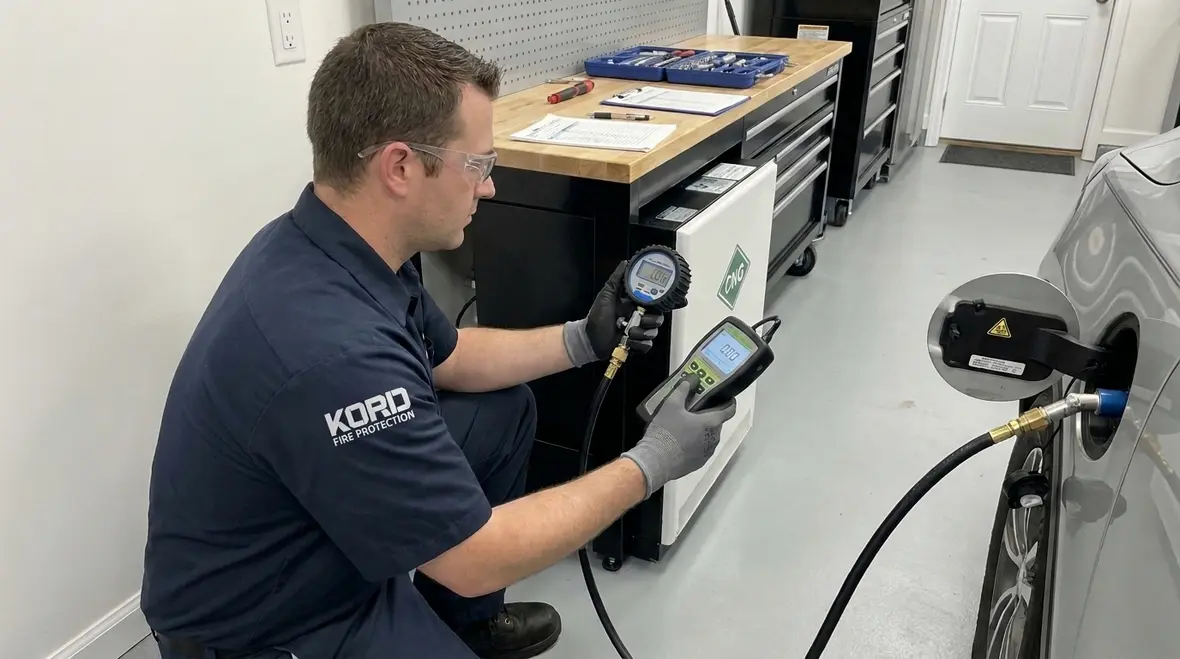
- Use calibrated instruments: leak detection devices and pressure measuring equipment must be within calibration date, with recorded identification and calibration status.
- Inspect visible condition first: check for damaged hoses, corroded fittings, loose fasteners, degraded seals, and improper installation practices that can invalidate test results.
How NFPA 52 Testing Typically Verifies System Performance
Section 13.9 testing activities generally aim to confirm that the system can safely achieve and maintain intended pressures, control gas flow, and prevent leakage through connections and protective devices. While exact test sequences can vary by system design, the operational logic remains consistent.
1) Pressure regulation and stable operation
Technicians verify that regulators deliver stable pressure at intended set points and that the system does not oscillate or deviate during normal operation. Pressure-related failures frequently trace to regulator wear, contamination, incorrect setpoint adjustment, or inlet pressure variations.
Testing commonly includes:
- Observation of regulator response during controlled demand or flow simulation.
- Verification that upstream and downstream pressures remain within design limits during fueling operations.
- Confirmation that protective devices respond correctly if abnormal pressures occur.
2) Leak integrity at connections, valves, and interfaces
Leak testing targets both static leakage and leakage that may appear after pressure cycling or temperature change. The most common failure points include flare or compression interfaces, hose end connections, regulator sealing surfaces, and valve packing.
Competent testing practices typically use one or more of the following approaches depending on the system and test method requirements:
- Measured pressure hold tests for system sections where applicable.
- Instrument based detection at joints and potential release points.
- Systematic sweep methodology to prevent missed interfaces and to support repeatable coverage.
3) Functional verification of shutoff, venting, and safety controls
Residential CNG systems rely on safety devices to stop flow, manage abnormal conditions, and limit hazard consequences. Testing verifies that valves operate on command, that any venting or relief behavior occurs as designed, and that indicators or controllers respond correctly.
Technicians confirm:
- Correct valve actuation timing and full open and full close positions.
- No sticking or delayed response under simulated operating conditions.
- Proper interaction between components, especially when multiple shutoffs and regulators are present.
What Can Go Wrong During Residential System Testing (and How to Reduce It)
Field experience consistently shows that test failures often originate from preparation errors, instrumentation issues, or hidden installation defects rather than from the fueling system itself.
Frequent failure points
- Seal degradation: aged O rings, cracked sealing surfaces, or damaged gaskets can produce intermittent leaks.
- Improper torque or alignment: loose or over tightened fittings can warp sealing faces and cause release under pressure.
- Instrument mismatch: using uncalibrated equipment or incorrect probe positioning can yield false negatives or false positives.
- Environmental effects: drafts, wind, temperature swings, and confined spaces can change detection behavior.
- Component substitution: using parts that are not compatible with the original design can invalidate the intended pressure and flow behavior.
Operational controls that prevent rework
- Document the as found condition before adjustment. This supports root cause analysis after a failed test.
- Retest after each corrective action rather than performing a single end of job check.
- Use a test plan aligned to the actual system rather than a generic checklist.
- Control pressure ramp rates during tests to avoid overstressing components and creating transient leak conditions.
Compliance Documentation and Maintenance Follow Through
NFPA 52 testing functions as a documented compliance mechanism. For facilities supporting residential style CNG fueling infrastructure, the practical challenge is producing consistent, complete records that stand up to internal audits, insurer review, and third party AHJ inquiries.
What strong test records include
- System identification: location, equipment identifiers, and configuration notes.
- Date and time stamps with test duration and conditions.
- Instrument details: serial numbers, calibration dates, and measurement units.
- Test method and acceptance criteria used for each check.
- Results and pass fail statements for every test step.
- Corrective actions with retest outcomes.
Maintenance follow through matters because a passed test does not eliminate future degradation. A disciplined maintenance program includes periodic inspections of hoses, fittings, regulators, and safety controls, along with timely replacement of wear items before they produce failures during later NFPA 52 residential CNG fueling system testing cycles.
For commercial operators, Kord Fire Protection supports compliance workflows with field tested execution, documentation rigor, and maintenance planning that reduces downtime and improves readiness for audits and inspections. If you want to align broader fire and life safety responsibilities with fueling risks, review Kord Fire Protection resources here: Kord Fire Protection.
Frequently Asked Questions
Next Steps: Schedule Testing With a Compliance Focus
NFPA 52 residential CNG fueling system testing succeeds when preparation, instrumentation, test execution, and documentation work together. Kord Fire Protection can help commercial and industrial facilities plan compliant testing, address findings with traceable corrective actions, and keep records organized for inspections and audits. Contact Kord Fire Protection to schedule an assessment or arrange recurring testing support.

Join Our Newsletter!
Get the latest fire safety tips delivered straight to your inbox From our Newsletter.