
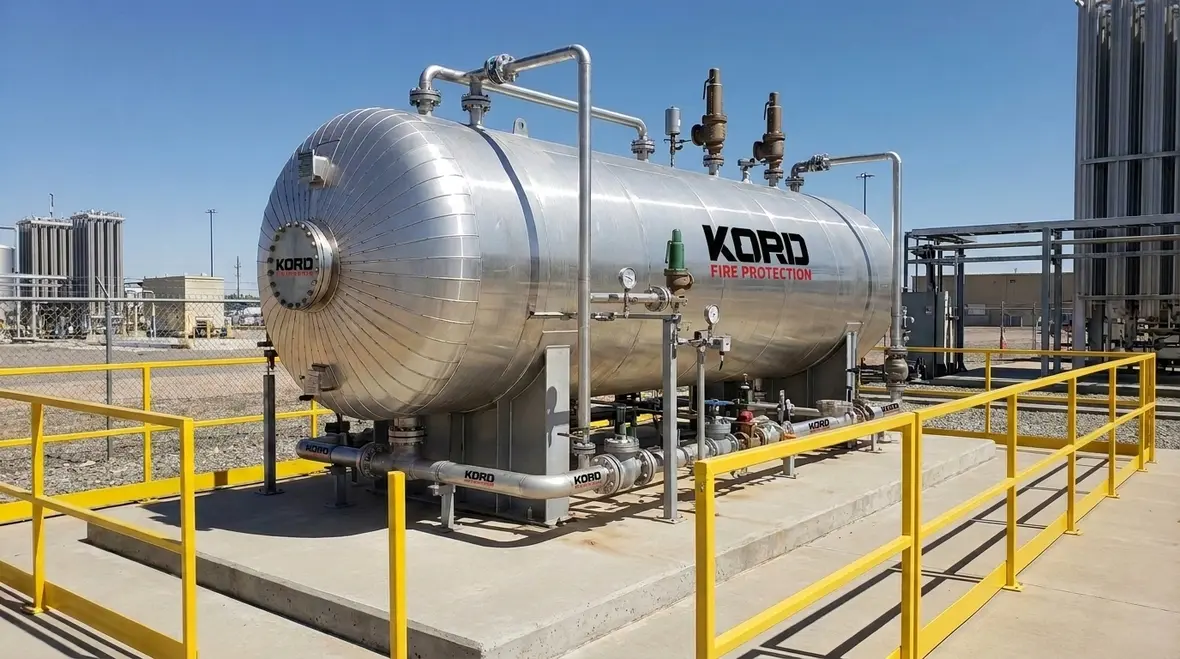
NFPA 52 Section 21.1 Application: ASME Tanks for LNG Coverage
Quick Answer
NFPA 52 Section 21.1 addresses when and how ASME pressure vessels may be used for LNG storage and certain related systems. It clarifies acceptance, installation, inspection, and maintenance expectations so the tank’s ASME listing aligns with NFPA 52 fire safety requirements.
For broader support with inspection planning, maintenance execution, and NFPA-aligned system readiness, facilities can review fire suppression system services from Kord Fire Protection. That link fits naturally here because LNG compliance is rarely just about one vessel; it is about the safety program around it. ([kordfire.com](https://kordfire.com/fire-suppression/?utm_source=openai))
Why NFPA 52 ASME LNG tank application coverage is a compliance hotspot
Commercial LNG facilities regularly treat the tank package as a single procurement line item, but regulators often evaluate coverage at the intersection of construction standards, safeguards, and ongoing verification. That is exactly where NFPA 52 ASME LNG tank application coverage becomes critical: facilities must ensure the ASME design and documentation do not stop at delivery, but also support NFPA 52 installation and lifecycle requirements.
For many industrial, commercial, and retail support environments, the practical challenge is not whether a tank is ASME stamped. The challenge is whether the full tank system, appurtenances, connections, and protective features remain in acceptable condition through inspection intervals, maintenance activities, and operational changes.
What Section 21.1 is trying to accomplish
NFPA 52 Section 21.1 focuses on application of ASME tanks within LNG systems. The underlying objective is straightforward: LNG hazards require consistent pressure vessel quality, but fire and safety performance depends on how the tank is integrated, protected, and monitored.
In practice, compliance teams use Section 21.1 as a bridge between two layers of requirements:
- ASME pressure vessel construction that governs pressure design, materials, fabrication controls, and certification documentation.
- NFPA 52 LNG system safeguards that govern fire safety outcomes such as protection against ignition sources, adequacy of controls, and the inspection and maintenance process that keeps those outcomes achievable.
When these layers are treated separately, facilities often experience gaps during plan review, site walkdowns, or after-notice inspections.
How ASME tank acceptance typically plays out during plan review
1) Documentation and listing alignment
Plan review teams often expect an auditable link between the ASME tank information and the NFPA 52 application. Facilities should be prepared to provide tank identification, certification records, and the basis for how the tank is being used within the LNG system.
Common commercial compliance friction points include missing or unclear records, inconsistent tag mapping between engineering drawings and field equipment, and documentation that describes the vessel but not the installed configuration.
2) Installation details that affect fire safety performance
Even with valid ASME construction, NFPA 52 performance depends on installation. Typical review areas include:
- Routing and configuration of cryogenic piping and associated supports.
- Condition and protection of valves, manifolds, and fittings exposed to thermal stress and vibration.
- Vent and relief arrangements that support safe discharge behavior.
- Means of limiting ignition sources and controlling hazards in the tank area.
These items frequently change from the basis of design to field conditions due to constructability revisions. A controlled document process and field verification reduce the probability of later nonconformities.
3) Appurtenances and interfaces are not “optional add ons”
Section 21.1 application relies on the complete tank assembly, not only the pressure boundary. Appurtenances that interact with pressure control and LNG containment must be inspected and maintained under the same safety philosophy that governs the vessel.
Facilities that treat appurtenances as generic spares often discover incompatible materials, seal degradation, or improper installation practices after commissioning. Those issues can drive recurring maintenance costs and, in worst cases, unsafe release conditions.
Operational procedures and the lifecycle maintenance expectations
NFPA 52 compliance is not a one time milestone. The safest LNG operations depend on disciplined lifecycle controls that keep the ASME tank and the protective features within acceptable limits.
Inspection readiness: what inspectors often look for
For commercial facility teams, inspection readiness means the site can demonstrate that inspection results translate into actionable maintenance. Inspectors frequently focus on evidence that aligns with the risk profile of cryogenic systems.
Practical evidence packages usually include:
- Maintenance logs for valves, relief devices, and critical fittings.
- Records showing inspection intervals and corrective action outcomes.
- Verification that repairs and replacements use approved components and procedures.
- Thermal and mechanical condition indicators where applicable.
Common failure points that create repeated findings
- Seal and gasket degradation from repeated thermal cycling and improper handling during maintenance.
- Corrosion or wear at interfaces such as flange faces, supports, and nearby piping joints.
- Improper calibration or out of tolerance set points for pressure and control devices that protect the tank system.
- Accumulation of conditions that reduce accessibility for safe inspection, such as clutter, obstructed access panels, or unmanaged work clearances.
How Kord Fire Protection supports ongoing compliance
For many operators, the compliance burden grows as the facility transitions from commissioning to routine operations. Kord Fire Protection supports commercial LNG sites with practical inspection and maintenance service planning that aligns safety expectations with operational realities, helping organizations stay audit ready and reduce maintenance drift between planned and actual conditions. Kord Fire describes its service model as practical and compliance-focused, with scheduled inspections, routine testing, preventive maintenance, and broader fire protection support across commercial and industrial properties. ([kordfire.com](https://kordfire.com/?utm_source=openai))
To strengthen your broader fire protection program across LNG risk areas, facility teams can also reference Kord Fire Protection’s resource library here: Kord Fire Protection. ([kordfire.com](https://kordfire.com/?utm_source=openai))
Installation and maintenance controls for commercial, industrial, and retail contexts
LNG facilities can exist within industrial campuses and also within proximity to commercial and retail operations where public interface expectations increase. This makes disciplined site controls essential for safe operations and smooth inspections.
Access control, signage, and controlled work practices
Facility teams should treat tank areas as controlled zones. That means clear access routes for inspectors and technicians, lockout and tagout procedures aligned with hazardous energy controls, and controlled hot work permissions where applicable.
Document control that survives changes
As operations evolve, small changes to piping runs, valve models, or insulation methods can unintentionally affect compliance alignment. A change management process ensures updated drawings, updated maintenance procedures, and updated inspection criteria remain consistent with the implemented configuration.
Maintenance execution quality matters
For cryogenic systems, “close enough” installation practices can lead to leaks, degraded performance, and increased inspection frequency. Quality execution includes using approved parts, following torque or joining requirements, and verifying system parameters after work completion.
How to confirm you meet NFPA 52 ASME LNG tank application coverage requirements
Facilities can confirm readiness by treating compliance as an evidence chain. Use the following practical checklist approach for internal reviews before authority having jurisdiction visits.
| Checklist area | What to verify | Why it matters |
|---|---|---|
| ASME vessel records | Tank identification, certification documentation, and traceability to installed equipment | Supports the Section 21.1 application basis and reduces plan review friction |
| Installed configuration | Field alignment of drawings, interfaces, and appurtenances | Prevents mismatches that show up during walkdowns |
| Protective features | Condition and operational readiness of pressure relief and control interfaces | Ensures the system remains safe beyond vessel construction |
| Inspection and maintenance records | Planned intervals, results, corrective actions, and part traceability | Demonstrates lifecycle control, not one time compliance |
| Work controls | Hot work approvals, access controls, and hazardous energy controls | Reduces human factor risks and improves inspection outcomes |
When facilities maintain a clean evidence chain, they reduce the probability of enforcement actions tied to documentation gaps or maintenance execution quality, and they improve operational stability.
Frequently Asked Questions
Next step: validate your Section 21.1 readiness now
Facilities should review their ASME documentation traceability, confirm installed configuration against approved drawings, and verify that inspection and maintenance records show consistent lifecycle control. If your program needs structure or independent verification, contact Kord Fire Protection to assess LNG fire safety coverage readiness and strengthen ongoing compliance planning before the next inspection cycle.
Teams working through adjacent LNG compliance topics may also find it useful to review NFPA 52 ignition source control at LNG sites and NFPA 52 emergency response measures for LNG sites, both of which support the broader compliance picture around tank installation, safeguards, and operational readiness. ([kordfire.com](https://kordfire.com/nfpa-52-section-16-4-ignition-source-control-at-lng-sites/?utm_source=openai))

Join Our Newsletter!
Get the latest fire safety tips delivered straight to your inbox From our Newsletter.


