
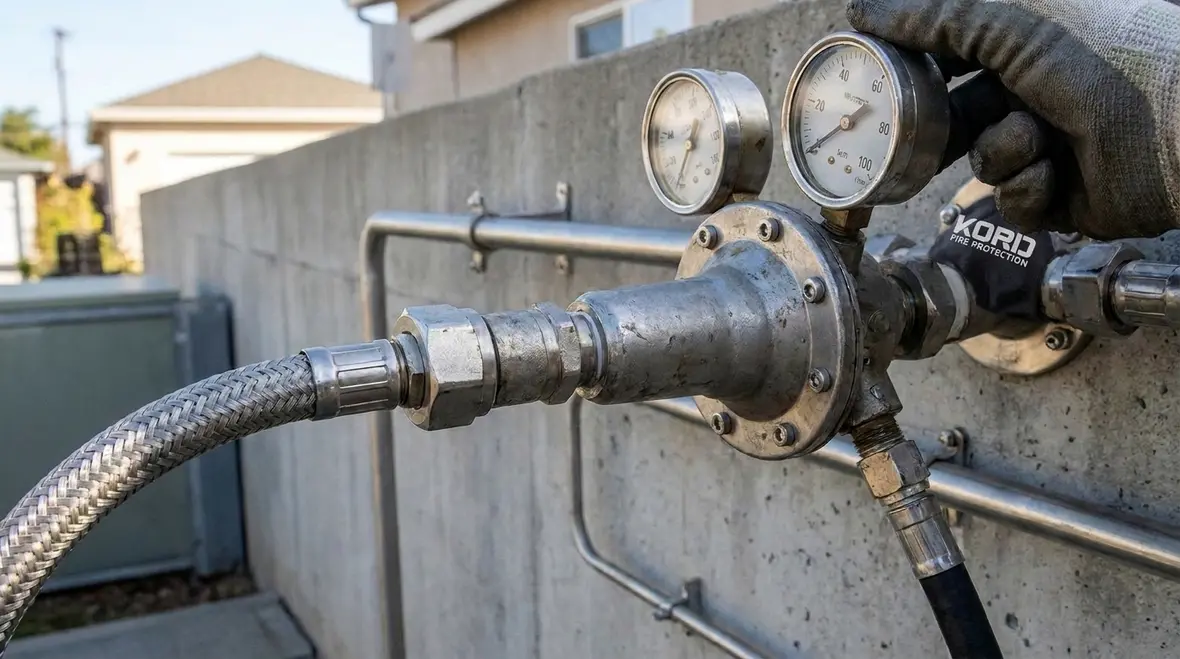
NFPA 52 Section 13.7: Pressure Regulation for Residential CNG Fueling
Quick Answer: NFPA 52 Section 13.7 requires pressure regulation systems for residential CNG fueling to control delivery pressure, ensure safe operation, and maintain system integrity under normal and abnormal conditions. Compliance depends on proper regulator selection, installation, protection, and routine inspection and maintenance.
For broader context on how CNG systems are evaluated across commercial sites, see CNG fueling systems requirements. Facilities that need inspection support and coordinated compliance services can also review Kord Fire Protection.
Why NFPA 52 residential CNG pressure regulation requirements matter in real facilities
Residential CNG fueling is often treated as “small scale,” but the safety expectations are still strict. NFPA 52 residential CNG pressure regulation requirements focus on how pressure is reduced and stabilized before gas enters the residential fueling interface. In practice, compliance failures typically occur at the regulator assembly and its protection devices, not at the upstream supply.
Commercial and industrial fueling operations that support residential installations often inherit these expectations. They must manage regulator performance, vibration, debris exposure, and maintenance documentation to meet inspection standards and risk control expectations used by AHJs, insurers, and facility managers. When regulators do not maintain set pressure within acceptable bounds, the downstream appliances and piping can see unsafe pressure or instability.
What Section 13.7 requires: the pressure regulator function and safety intent
NFPA 52 Section 13.7 addresses pressure regulation for residential CNG fueling systems. The core intent is to ensure gas is delivered at a safe, controlled pressure to the point of use. A properly designed regulation arrangement typically includes:
- Selection of regulators matched to the expected inlet pressure, outlet requirements, flow demands, and expected operating conditions.
- Control of outlet pressure stability so the system does not overshoot or oscillate during fueling, standby, and transient conditions.
- Protection from external hazards such as physical impact, water intrusion, corrosion-promoting contaminants, and contamination that can impair regulator seats or control elements.
- Reliability and maintainability so the regulator can be inspected, tested, and serviced without compromising safety.
From a compliance perspective, AHJs and inspectors expect the installed configuration to align with the approved design basis and to demonstrate safe operation over time. That means the regulator system must be configured to prevent unsafe conditions, not just to “function once.”
How regulators work in residential CNG service and where failures start
Pressure regulators reduce high-pressure CNG to a lower, controlled outlet pressure. They typically use a valve and a control mechanism that responds to outlet pressure changes. In steady flow, the regulator maintains setpoint; during transients, it compensates to limit overpressure and pressure swings.
Common failure points that trigger compliance issues
- Seat wear and leakage: Repeated cycling, particulate contamination, or lubricity issues can lead to reduced sealing performance and drift.
- Control instability: Damaged diaphragms, incorrect spring ranges, or improper venting can cause oscillation or delayed response.
- Vent and vent piping blockages: Condensate, debris, insects, or misrouted discharge can affect regulator behavior and safety margins.
- Corrosion and environmental exposure: Outdoor installations need appropriate protection to prevent internal and external degradation.
- Mechanical damage: Installation near areas with vehicle contact, falling objects, or unnecessary line stress can cause regulator impairment.
These failure modes are particularly relevant when residential fueling systems use shared support infrastructure, such as remotely located regulator skids or commercial site enclosures servicing multiple dwellings. In those cases, inspection findings in one location can signal a systemic maintenance or protection deficiency.
Installation and protection practices: what inspectors look for
Even when the correct regulator model is selected, installation details determine whether the pressure control system performs as intended. Field reviews often focus on evidence that the regulator assembly and associated hardware support safe regulation during real operating conditions.
Key compliance inspection checkpoints
- Proper inlet and outlet piping alignment to prevent undue stress on regulator ports and internal components.
- Correct orientation and securing so vibration does not loosen fittings and so venting operates as designed.
- Protection against water intrusion where applicable, including sheltering or enclosures designed for the environment.
- Vent discharge safety with no obstructions and no discharge into hazardous accumulation areas.
- Labeling and documentation that enable traceability of regulator identification, setpoints, and maintenance history.
Commercial, industrial, and retail facilities that interface with residential CNG fueling frequently use similar enclosure and protection standards across their CNG systems. That alignment helps reduce the risk of “good design, bad install” outcomes and supports consistent inspection readiness.
For related guidance on managing fire and safety performance in industrial fuel systems, facilities often coordinate with specialists using established service frameworks. Kord Fire Protection supports compliance and ongoing protection strategies across commercial and industrial environments. More information is available here: Kord Fire Protection.
Testing, monitoring, and maintenance: keeping pressure regulation within limits
NFPA 52 pressure regulation is not a one-time acceptance item. To remain compliant, facilities must manage regulator health over time through documented maintenance and practical testing. The compliance goal is continued pressure control under normal operation and during expected transient events.
Maintenance actions that prevent regulator drift and unsafe conditions
- Inspection for contamination in the regulator inlet, strainers, and downstream components where debris can change flow characteristics.
- Verification of outlet pressure using calibrated test instruments, with results recorded for trend analysis.
- Leak checks of regulator joints, fittings, and associated connections, particularly after any service interruption.
- Vent system inspection to confirm safe routing, free discharge, and proper condition of vent components.
- Component replacement programs aligned to manufacturer recommendations, including diaphragm and seal integrity based on service history.
A practical compliance challenge for residential CNG fueling is that maintenance access and response time can be limited compared to commercial cylinder systems. When residential fueling is supported by a commercial site, Kord Fire Protection helps operators manage inspection cadence, documentation, and ongoing verification to keep regulators operating within required limits and to support consistent AHJ outcomes.
Operational scenarios: how pressure regulation performance changes during fueling
Pressure regulation behavior changes when flow starts, stops, or varies. The system must handle transients without unsafe overshoot. Inspectors commonly consider whether the system design and maintenance practices support stable operation across real fueling cycles.
High-risk moments
- Start of flow: transient inlet conditions can affect regulator response.
- Partial flow and dwell: regulator stability issues can appear during low flow where control forces differ.
- Repeated cycles: seat wear and contamination effects accumulate and can shift pressure setpoint over time.
Facilities that coordinate residential fueling through a centralized station often benefit from unified procedures for regulator testing and recordkeeping. That approach reduces variation in outcomes between dwellings and supports defensible compliance data during audits.
Frequently Asked Questions
Call to action
NFPA 52 Section 13.7 compliance succeeds when pressure regulation design, installation, and maintenance operate as one system. Kord Fire Protection can support ongoing inspection readiness through practical testing, documentation support, and maintenance coordination for residential and site-connected CNG fueling. Contact Kord Fire Protection to assess your regulator protection, maintenance intervals, and verification process before an inspection window tightens.

Join Our Newsletter!
Get the latest fire safety tips delivered straight to your inbox From our Newsletter.


