
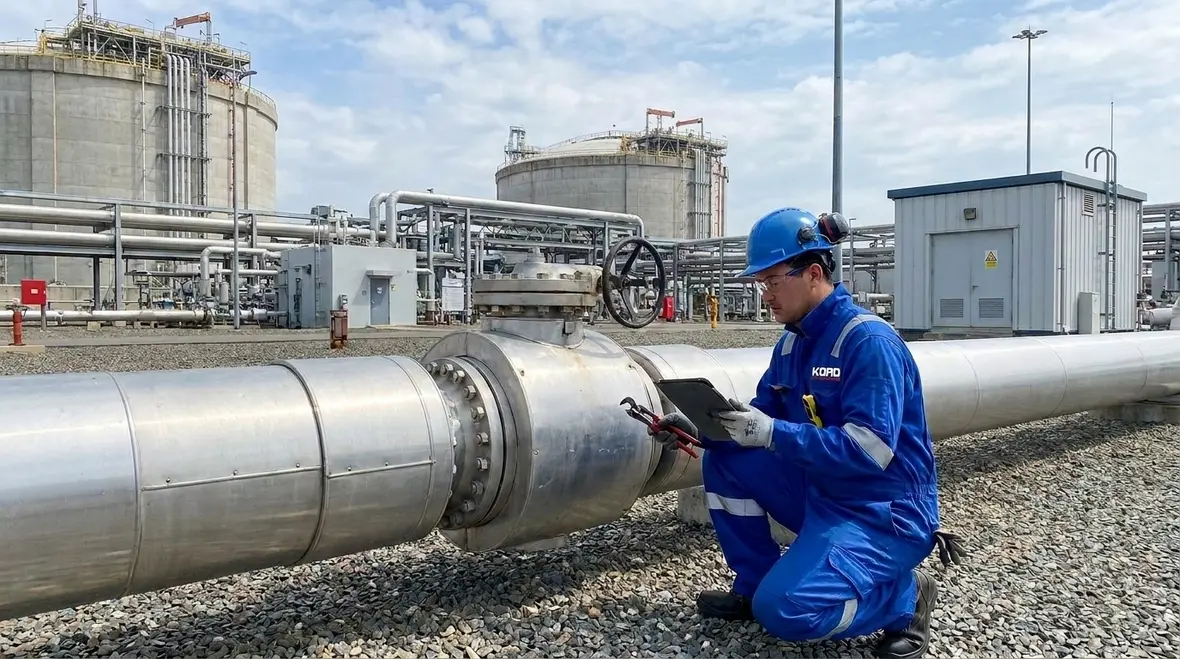
NFPA 52 Section 15.4: LNG Facility Maintenance Requirements
Quick Answer
NFPA 52 Section 15.4 sets maintenance responsibilities for LNG facilities to preserve life safety, containment performance, detection capability, and emergency readiness. Facilities must define inspection intervals, document corrective actions, and verify critical systems remain functional through commissioning, operation, and periodic testing.
For a practical look at how disciplined service programs support long term readiness, see Kord Fire Protection’s guide to the full lifecycle of fire protection servicing.
What does NFPA 52 Section 15.4 require for LNG maintenance?
NFPA 52 LNG facility maintenance requirements focus on ensuring that equipment used for safe LNG storage, transfer, vapor control, and emergency response stays in reliable condition over time. Section 15.4 generally shifts the facility from “install and trust” to “inspect, test, and document,” with an emphasis on preventing degradation that can undermine safety functions.
In practice, the maintenance program must address the full chain of performance. That means not only verifying that equipment exists, but also confirming it works as intended under real operating conditions, including expected environmental effects, wear mechanisms, corrosion risks, and emergency use scenarios.
Maintenance program fundamentals: scope, responsibility, and documentation
A compliant maintenance approach typically includes clear assignment of responsibility, defined inspection frequencies, and controlled procedures for correction and re verification. For commercial, industrial, and retail LNG related occupancies, the biggest compliance failures usually come from incomplete scope and weak traceability rather than from missing equipment.
Define the maintenance scope by safety function, not by asset count
Facilities should classify systems by the safety functions they support, such as:
- LNG containment and secondary containment performance
- Leak detection and alarm notification pathways
- Emergency shutdown and protective isolation
- Vapor mitigation, handling, and control
- Fire protection and exposure control systems
- Ventilation and purge sequences where applicable
This method reduces the common gap where routine checklists cover “major equipment,” but ignore supporting components like sensors, valves, actuators, power supplies, wiring paths, and control logic that determine real-world outcomes.
Set inspection intervals based on risk and operating conditions
NFPA 52 Section 15.4 expectations align with a structured maintenance cadence. Intervals should account for duty cycle, ambient temperatures, cryogenic stress, mechanical cycling, and exposure to moisture or contaminants. For example, leak detection performance can drift due to sensor aging, calibration drift, or installation configuration changes.
Document everything that proves the system stayed safe
Strong documentation links:
- Inspection and test results to the specific system and component
- Measured values against acceptance criteria
- Corrective actions taken, including parts replaced and settings verified
- Follow-up verification that the safety function works after maintenance
Operational procedures that usually determine pass or fail
Many facilities meet the “letter” of maintenance by performing tasks, but still fail during audits because procedures do not reflect how LNG systems actually behave. The highest value improvements come from tightening operational execution for critical steps.
Control of work and system status management
LNG maintenance can temporarily impair safety functions. Facilities need strict work permits, hazard review, and clear system status management. Maintenance planning should define what is taken out of service, what compensating measures apply, and when systems return to normal operating condition.
Calibration and verification of detection systems
Leak detection and related alarms are common audit flashpoints. Typical failure points include:
- Calibration drift of gas detectors
- Improper bump test procedures or missed baseline verifications
- Alarm setpoint changes without controlled documentation
- Hidden issues such as degraded wiring, loose terminations, or sensor mounting problems
For LNG facilities, verification must include not only sensor response, but also alarm signaling pathways and any tied control actions.
Valve and actuation reliability for protective isolation
Protective isolation depends on valves, actuators, and controls functioning within design parameters. Common degradation mechanisms include seal wear, actuator failures, and sticking during cryogenic cycling. Maintenance programs should confirm actuation times, fault states, and mechanical movement integrity where feasible.
Emergency readiness through scenario based confirmation
NFPA 52 maintenance expectations align with emergency preparedness. Systems that “technically work” during routine checks can still fail during emergency sequencing. Facilities should verify that emergency shutdown logic, notification, and protective actions operate correctly as designed.
Common equipment maintenance gaps at LNG facilities
When teams struggle with NFPA 52 LNG facility maintenance requirements, the root cause often sits in maintenance program design, not in isolated equipment defects.
- Missing component level coverage: Checklists skip sensors, junction boxes, relays, actuators, and control cards.
- Incorrect calibration assumptions: Detectors receive maintenance without proving alarm thresholds and control outputs still meet criteria.
- Weak linkage to corrective action: Repair work lacks follow-up testing that re validates safety performance.
- Inadequate change control: Setpoint, software, wiring, and component swaps occur without documented review and re verification.
- Deferred maintenance driven by downtime pressure: Small issues accumulate into functional failures that become visible only during testing or incidents.
These gaps become more likely in multi-vendor environments, where responsibilities for parts, controls, and inspections are split across contractors.
How Kord Fire Protection supports ongoing compliance
Commercial LNG related sites benefit from a fire and safety partner that brings repeatable inspection discipline, clear documentation, and field focused verification. Kord Fire Protection supports facilities with practical maintenance planning and testing approaches that align with recognized expectations for life safety and fire protection performance.
When fire protection and life safety systems tie into emergency operations, maintenance must confirm both detection and response functions. Kord Fire Protection helps commercial operators reduce compliance risk by strengthening inspection routines, improving corrective action traceability, and supporting ongoing verification that systems remain ready for service.
For additional reference on inspection and maintenance fundamentals, facilities can review resources such as Kord Fire Protection and How Routine Maintenance Extends Fire Detection Life.
Frequently Asked Questions
Next step: build a defensible maintenance cycle
Review your maintenance program against the safety functions tied to LNG operations, then confirm each critical pathway receives documented inspection and re verification after corrective work. If your team needs field ready support for inspection discipline and compliance documentation, contact Kord Fire Protection to strengthen your NFPA 52 LNG facility maintenance requirements program and reduce audit and operational risk.

Join Our Newsletter!
Get the latest fire safety tips delivered straight to your inbox From our Newsletter.


