
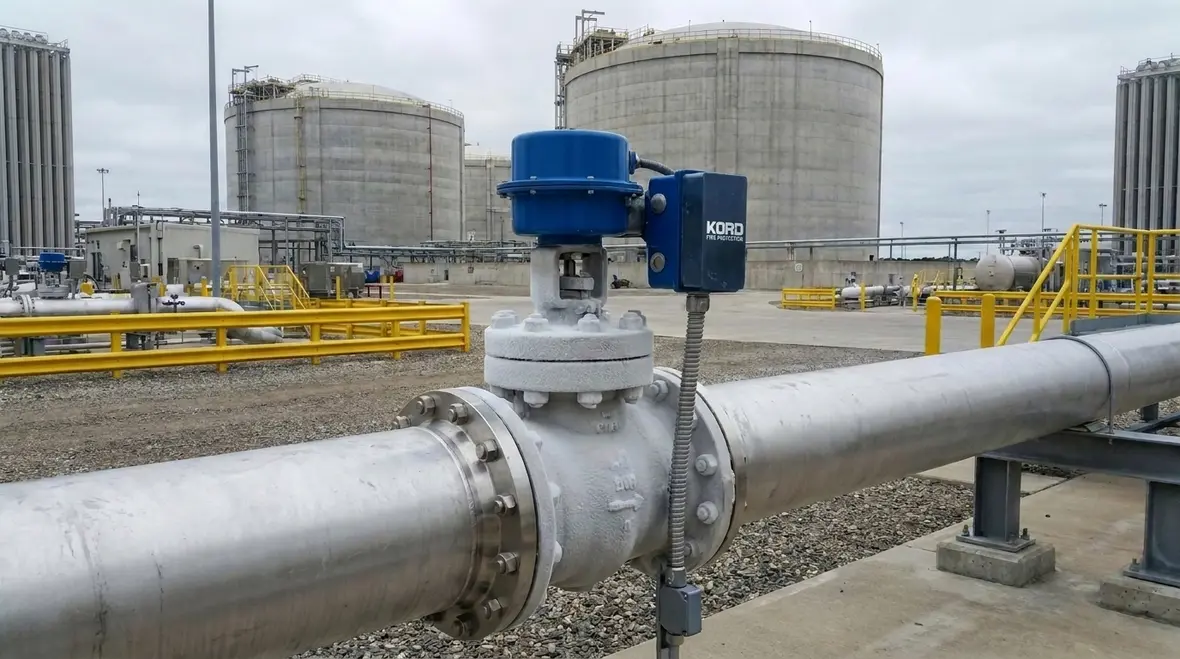
NFPA 52 Section 21.6: Automatic Product Retention Valves on LNG Containers
Quick Answer
NFPA 52 Section 21.6 requires LNG container systems to use automatic product retention valves designed to rapidly limit product release when flow pathways fail or abnormal conditions occur. Compliance focuses on correct valve selection, verified operation, controlled testing, and ongoing maintenance to prevent leakage risk.
If you’re reviewing LNG safety requirements more broadly, a related Kord Fire Protection resource on NFPA 52 LNG facility siting requirements helps connect valve performance expectations to the bigger facility risk picture.
What NFPA 52 Section 21.6 is trying to prevent
NFPA 52 Section 21.6 addresses a specific hazard pattern in LNG container installations: an upset that allows LNG to continue discharging through a connected pathway. Automatic product retention valves act as a fail-safe barrier, limiting the amount of LNG that can escape before operators, control systems, or downstream isolation measures take effect. This design intent matters in commercial facility environments where occupancy, process interfaces, and daily operational cycles can increase the likelihood of maintenance-induced or human-factor pathway exposure.
For facilities planning or maintaining LNG service, understanding the NFPA 52 LNG automatic product retention valve requirements early helps reduce late-cycle engineering changes, failed acceptance tests, and repeat corrective maintenance.
Where automatic product retention valves are used on LNG containers
Section 21.6 applies to LNG container-related piping and flow interfaces where product retention is needed to protect against uncontrolled release. In practical terms, these systems may connect to:
- Container discharge and transfer piping
- Vapor or liquid cross connection interfaces where unintended flow continuation can occur
- Downstream assemblies that require time to shut down or isolate
- Equipment bays and enclosures that demand predictable isolation behavior during abnormal events
Facilities should treat these valves as part of an integrated safety function with upstream shutoff devices, control logic, emergency response procedures, and relief system strategy. If the valve function is not coordinated with overall system shutdown, the facility can experience nuisance operations, slow isolation, or leakage during transient conditions.
How the valves work: mechanisms that drive compliance
Automatic product retention valves typically rely on an actuator and a sensing or flow condition logic that triggers closure. While specific designs vary by manufacturer and application, compliance expectations generally include:
1) Rapid closure performance under abnormal flow
The valve must close to limit discharge. Operational delays can increase LNG escape quantity, affect area hazard conditions, and complicate emergency response. Testing must verify closure behavior within the expected functional tolerance used by the design basis for the installation.
2) Reliable closure with cryogenic exposure
LNG environments impose extreme temperature cycling and thermal contraction. Valve components, seals, and moving parts must remain operable after cryogenic service, including in repeated cycles during normal operation or maintenance activities.
3) Controlled reset and re-opening behavior
After closure, the system must return to service only under defined conditions. Poor reset design can lead to unintended reopening, repeated triggering, or operator bypass practices that increase risk.
4) Correct materials and pressure boundary integrity
Closure capability is not enough if the valve cannot maintain a tight shutoff. Facilities must confirm the valve selection aligns with LNG service conditions, including pressure rating, corrosion resistance, and acceptable leak tightness for the intended isolation timeframe.
Meeting NFPA 52 LNG automatic product retention valve requirements in real facilities
Compliance is not only about having the correct valve installed. Commercial facility standards require documented verification that the valve can and does perform the intended safety action. Common practical challenges include:
- Integration complexity: valves that are technically “installed” but not properly interfaced with shutdown logic, monitoring devices, or downstream isolation can fail acceptance criteria.
- Maintenance access constraints: cramped pipe racks, insulated lines, and enclosure limitations can slow inspection and compromise inspection quality if procedures do not account for isolation and safe access.
- Cryogenic maintenance practices: improper warm-up or purge sequences can damage seals, impair actuator function, or create false indications during functional testing.
- Test method variability: facilities that use inconsistent test pressures, timing, or verification steps may produce results that do not reflect the design intent behind the NFPA 52 LNG automatic product retention valve requirements.
- Documentation gaps: missing manufacturer instructions, incomplete test records, or unclear calibration status can cause compliance failures during audits.
Kord Fire Protection supports LNG and fire protection stakeholders by providing structured compliance support that aligns equipment inspection, testing records, and ongoing maintenance practices to the expectations of code-driven safety functions. For facilities that need continuity across inspections and corrective action tracking, partnering with a service provider that understands both fire safety systems and industrial maintenance workflows reduces operational disruption.
For related guidance on maintaining inspection readiness and avoiding test-related surprises, facilities can also review this valve inspection and maintenance guide or visit Kord Fire Protection for service coordination and compliance planning.
Inspection, testing, and maintenance: what auditors will look for
NFPA-driven valve compliance programs typically require evidence that the automatic retention function remains reliable over time. A strong program includes routine inspection, periodic functional testing, and maintenance practices that preserve cryogenic integrity.
Operational inspection and condition checks
- Verify valve accessibility, labeling, and protective measures in place for the operating environment.
- Check for physical damage, corrosion exposure where insulation breaches occur, and evidence of leakage at flanges or connections.
- Confirm that the associated control components and actuation interfaces remain within service condition requirements.
Functional testing approach
Functional testing should verify that closure occurs as intended under the appropriate trigger conditions and that the valve maintains tight shutoff after closure. Facilities should ensure test procedures define:
- Preconditions for safe testing and product isolation
- Verification steps for closure timing and response
- Acceptance criteria tied to the valve’s functional design basis
- Post-test inspection steps to confirm no new leakage paths occurred during testing
Maintenance that prevents common failure points
Many retention valve issues originate from preventable maintenance problems. Common failure points include:
- Seal degradation: thermal cycling or improper handling during maintenance can reduce leak tightness.
- Actuator sticking: debris, ice formation, or lubricant incompatibility can impair movement.
- Sensor or control interface faults: incorrect wiring, failed signal paths, or calibration drift can block closure commands.
- Improper reassembly: incorrect torque, gasket mismatch, or insulation reinstatement errors can affect tightness and accessibility.
Kord Fire Protection can help commercial, industrial, and retail facilities maintain a consistent valve lifecycle approach by supporting inspection planning, coordinated testing schedules, and corrective action management that protects the integrity of NFPA 52 LNG automatic product retention valve requirements over time.
Compliance documentation and audit readiness
Even when valves perform correctly, facilities can struggle during inspections if documentation is incomplete. A robust compliance file typically includes:
- Valve identification, make, model, and installation location details
- Manufacturer documentation and service instructions for cryogenic operation
- Initial acceptance records, including functional test results
- Periodic inspection and test reports with dates, methods, and measured outcomes
- Maintenance work orders, parts used, and verification steps after service
- Corrective action history, including retest results and closure of findings
Facilities that manage multiple LNG assets or multiple tenant operations often benefit from standardized templates and a single source of truth for valve safety records. This reduces the risk of inconsistent test methods and accelerates resolution when auditors request clarification.
Frequently Asked Questions
Conclusion and next step
NFPA 52 Section 21.6 places performance, verification, and maintenance discipline on automatic product retention valves. Facilities should confirm valve integration, establish repeatable functional test procedures, and maintain an audit-ready documentation trail for the NFPA 52 LNG automatic product retention valve requirements. Engage Kord Fire Protection to streamline inspection planning, testing coordination, and lifecycle maintenance management so your LNG container safety function stays dependable year-round.

Join Our Newsletter!
Get the latest fire safety tips delivered straight to your inbox From our Newsletter.


