
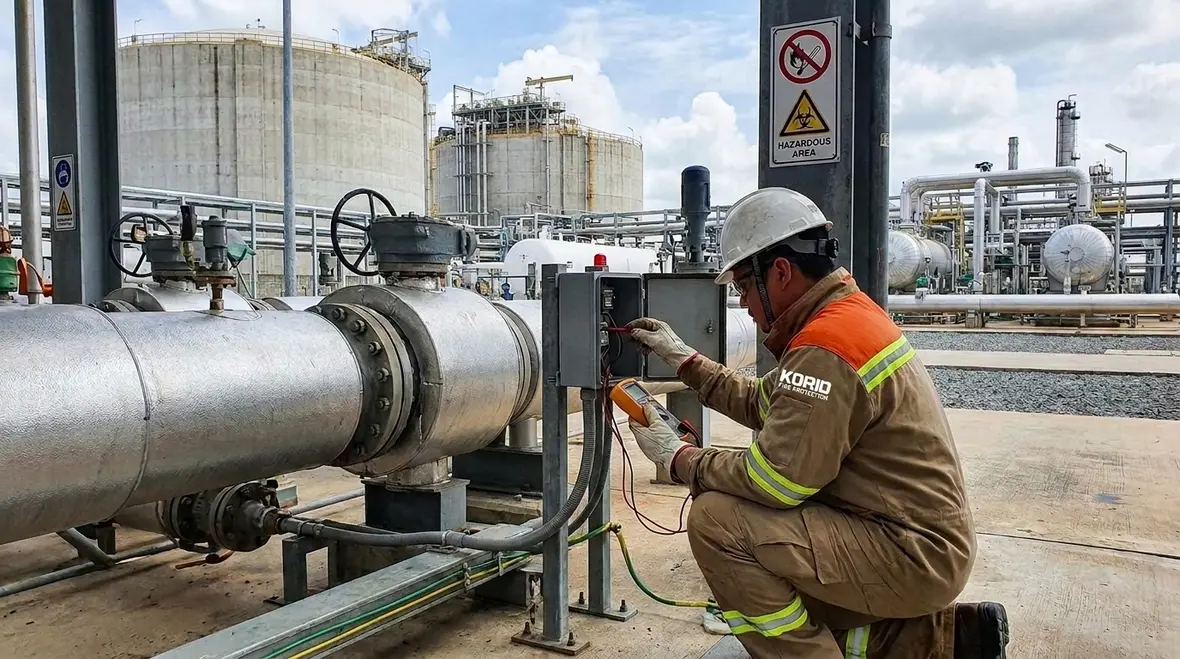
NFPA 52 Section 16.4: Ignition Source Control at LNG Sites
Quick Answer
NFPA 52 Section 16.4 requires LNG facilities to prevent ignition sources from entering hazardous areas and to control credible ignition mechanisms. Compliance focuses on ignition source zoning, equipment selection, maintenance, inspection, and documented procedures that sustain safety over time.
What NFPA 52 Section 16.4 requires in practical terms
NFPA 52 LNG site ignition source control requirements are not a one time equipment checklist. Section 16.4 drives an ongoing program that identifies where flammable atmospheres can occur, then prevents ignition sources from being present or becoming effective. In operational LNG environments, the biggest compliance risks often come from small deviations: degraded seals, improvised repairs, missing inspection evidence, or controls that function only during startup.
For commercial, industrial, and retail facilities supporting LNG operations, the ignition source control approach typically aligns with these core expectations: hazard awareness, equipment suitability, controlled work practices, and maintenance that verifies the system remains capable under real operating conditions.
If your team is tightening documentation and audit readiness, a strong companion resource is this fire protection compliance auditing guide, which fits naturally with ignition source control planning and verification.
For broader inspection coordination and code-aligned support, Kord Fire Protection’s fire protection services can help facilities stay inspection-ready without turning every audit into an improv comedy about missing paperwork.
How facilities identify and control credible ignition sources
Step one: define the hazardous locations and boundaries
Ignition source control starts with a facility’s hazardous area classification and the boundaries used to prevent ignition sources from entering those zones. Operators should ensure hazardous area limits remain valid as site conditions change, such as modifications to vapor handling systems, changes in operating envelope, or layout changes around LNG tanks, pumps, vaporizers, and transfer points.
In practical audits, facilities often discover that drawings or site as built conditions drift over time. When ignition source control is based on outdated zoning, even properly rated equipment can become noncompliant because it ends up installed outside its intended risk context.
Step two: select equipment and protection methods that match the ignition potential
NFPA 52 Section 16.4 centers on preventing credible ignition sources from being effective. That includes controlling ignition sources from electrical, mechanical, static electricity, hot surfaces, and operational activities. The selection and installation of equipment should align with the hazardous environment classification and the facility’s documented engineering basis.
Common equipment categories under ignition source control include electrical enclosures and wiring methods, lighting, motors and drives, instrumentation circuits, heating devices, and portable tools used in or near hazardous areas. A robust program verifies that the equipment is both suitable for the environment and installed to maintain that protection method throughout its service life.
Step three: implement work controls that prevent temporary ignition hazards
Many incidents and near misses occur during maintenance and contractor work rather than normal operations. Ignition source control therefore depends on hot work controls, electrical isolation procedures, and permitting practices that manage tools, temporary power, and access into hazardous areas.
Facilities should document how contractors meet the same ignition controls as in house staff. This includes verifying tool suitability, controlling ignition producing activities, and ensuring bypasses or short term changes do not become permanent.
Electrical and mechanical ignition control: where compliance often breaks
Electrical ignition sources: damaged, mismatched, or undocumented
Electrical systems can create ignition when components fail, protections degrade, or modifications occur without maintaining the original ignition protection concept. Typical failure points include damaged cable jackets, compromised seals, incorrect termination practices, corrosion that increases resistance, and missing or invalid inspection records for flameproof, intrinsically safe, or nonincendive concepts.
To sustain compliance, facilities need an inspection rhythm that goes beyond visual checks. Verification should include condition monitoring and confirmation of protection integrity where applicable. For many sites, the highest value gap is not the initial installation. It is the assurance that inspections remain consistent after multiple maintenance cycles and changing contractors.
Mechanical and thermal ignition sources: friction, impact, and hot surfaces
Mechanical ignition sources include friction sparks, impact sparks, and overheated surfaces caused by misalignment, wear, lubrication problems, or blocked cooling flow. Hot surfaces can also result from insulation degradation, blocked vents, or unintended energization.
Commercial LNG support sites often focus on uptime. That can unintentionally reduce attention to early warning signs such as abnormal vibration, recurring nuisance alarms indicating cooling or vent issues, or frequent replacements of seals and gaskets. Ignition control programs should treat these as leading indicators requiring inspection and corrective action, not as routine consumption of parts.
Static electricity and grounding: small gaps, high consequences
Static electricity control depends on grounding and bonding integrity, correct procedures for loading and transfer, and verification that conductive paths remain intact. Corrosion, loose connections, damaged grounding straps, and nonconductive hose assemblies can undermine bonding effectiveness.
Where failures commonly occur, operators lack standardized verification tests or have not clearly assigned responsibility for grounding inspection frequency. A strong ignition source control program sets expectations for who checks, what is checked, and how results get recorded.
Inspection, maintenance, and recordkeeping that keep ignition controls effective
NFPA 52 Section 16.4 requires more than initial compliance. The site must maintain ignition controls so that equipment and procedures continue to perform as intended. This typically means scheduled inspections, documented maintenance, and verifiable corrective actions when conditions deviate.
What to audit during compliance checks
- As built alignment: confirmed equipment location and hazardous area boundary match the current site layout.
- Protection integrity: integrity of enclosures, seals, barriers, and related installation practices.
- Evidence of inspection: records that show what was checked, when it was checked, and what was found.
- Corrective action closure: timely remediation of deficiencies, including follow up verification.
- Contractor controls: permits, tool verification, and method statements that match the site ignition control plan.
Maintenance program design for LNG conditions
Maintenance schedules should consider environmental stressors common to LNG facilities, including cryogenic effects, thermal cycling, vibration, corrosion risk, and condensation impacts. A practical approach includes controlling spares and repair standards so that replacements do not erode protection concepts.
When repairs occur, facilities should require documentation that demonstrates the replacement parts and methods preserve ignition control function. Without that discipline, sites can slowly drift out of compliance while still appearing “operational.”
Staying aligned with NFPA 52 through managed fire protection services
Ignition source control programs succeed when compliance activities are consistent, evidence based, and tied to operational reality. Kord Fire Protection supports commercial operators with the documentation discipline and field verification that keep ignition controls effective. That includes inspection coordination, maintenance support, and practical compliance planning that reduces the risk of gaps during audits and recurring contractor work.
For operators seeking broader NFPA alignment strategies, Kord Fire Protection also provides resources related to code driven readiness and inspection management. A useful starting point is Kord Fire Protection.
Frequently Asked Questions
Next step: close ignition control gaps before the next audit
Review your hazardous area assumptions, verify equipment protection integrity, and confirm contractor work controls before small deficiencies become repeat findings. Engage Kord Fire Protection to support inspection planning, maintenance verification, and documentation readiness so NFPA 52 ignition source controls stay effective across real operating conditions. Start by scheduling a compliance gap assessment and prioritizing corrective actions based on risk.

Join Our Newsletter!
Get the latest fire safety tips delivered straight to your inbox From our Newsletter.


