
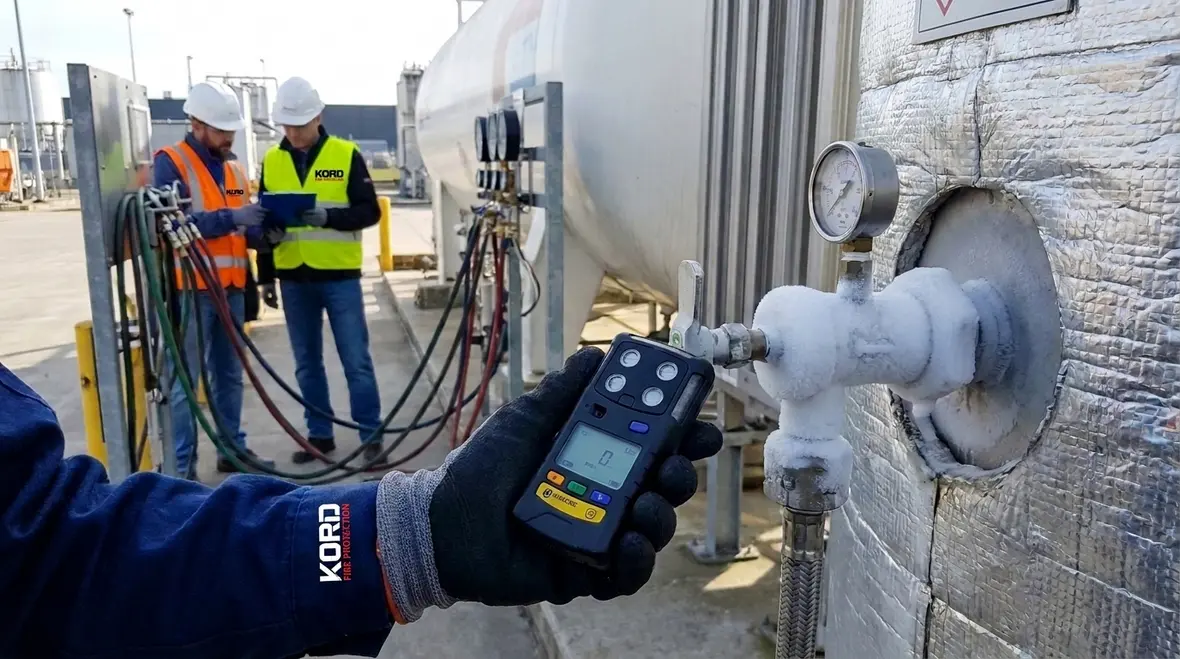
NFPA 52 Section 21.8: Testing and Purging LNG Containers
Quick Answer
NFPA 52 Section 21.8 requires LNG container testing and purging to ensure safe vapor control, system integrity, and reliable operation before and after maintenance. Facilities must follow validated procedures, verify conditions, and document outcomes to reduce leak and ignition risk.
Facilities building stronger compliance programs often pair these procedures with broader fire protection services so inspection readiness, maintenance coordination, and documentation controls stay aligned across the site.
What NFPA 52 Section 21.8 is trying to prevent
NFPA 52 Section 21.8, “Testing and Purging LNG Containers,” targets a common set of hazards that can develop during commissioning, inspection, repair, and certain operational transitions. The central risk is the accidental release of LNG or flammable vapor during pressure changes, component isolation, disconnection, or introducing purge gas. A secondary risk is inadequate purging that leaves residual methane or oxygen-deficient pockets, which can compromise safe restart and increase ignition potential.
For commercial, industrial, and retail facilities with LNG supply, storage, or cryogenic container assets, compliance usually fails at the operational edge: procedural drift, incomplete isolation, incorrect purge medium or flow, inadequate hold times, poor verification, or incomplete documentation. The practical objective of NFPA 52 LNG container testing purging requirements is to ensure those failure points do not occur.
When Section 21.8 testing and purging applies (and when it does not)
Section 21.8 applies when a facility must test and purge an LNG container as part of regulated work that can change internal conditions or system boundaries. Typical triggers include:
- Container commissioning and initial cold service readiness activities.
- After maintenance that opens or isolates container components or sections of piping connected to the container.
- After repairs that can affect tightness, pressure integrity, valves, relief arrangements, instrumentation, or interfacing systems.
- Routine or periodic activities that require controlled verification of safe internal atmosphere prior to returning the container to service.
Facilities often confuse “inspection” with “testing and purging.” An inspection may not require a purge. Once the work introduces a scenario where flammable vapor concentration, oxygen presence, or internal pressure state could be altered, the compliance burden shifts to testing and purging controls consistent with Section 21.8.
Testing the container before you purge: integrity verification essentials
NFPA 52 Section 21.8 expects facilities to confirm the container system can hold required conditions and operates as designed. While the exact test method must align with the applicable requirements and the facility’s procedures, strong programs treat testing as an engineering and documentation discipline, not a single field task.
Key operational controls
- Isolation and boundary control: Lockout and verify the correct valves are closed, tagged, and proven before any pressure or atmosphere change.
- Conditioning and temperature awareness: Cryogenic systems behave differently at different temperatures. Field teams must coordinate test timing and acceptable thermal stabilization periods.
- Correct test pressure handling: Procedures should specify pressure limits, monitoring points, rate controls, and abort criteria.
- Instrument accuracy: Gas detection calibration status and pressure gauge traceability should be part of the work package readiness review.
- Leak verification: Testing must demonstrate containment. Failures often trace to valve packing condition, gasket deformation, or unverified isolation positions.
Common failure points in commercial environments
- Skipped pre task verification: Field teams sometimes proceed with purge planning before verifying test boundaries, which leads to rework and increased outage time.
- Inadequate monitoring coverage: Teams may only sample one location when the system architecture requires multiple sampling points or attention to stratification.
- Documentation gaps: Lack of “as found” and “as left” conditions can cause audit issues even when the physical work is correct.
Purge procedures: how facilities manage flammable vapor and oxygen risk
Purging controls internal atmosphere so that when service conditions change, the container and connected systems do not create a hazardous mixture. In practice, purge success depends on purge gas selection, flow path control, mixing behavior, monitoring strategy, and hold time verification.
Core purge program elements
- Validated purge gas and flow strategy: Procedures should specify the purge medium, flow range, and the method used to ensure the purge path covers critical volumes.
- Atmospheric verification: Continuous or staged monitoring should verify target conditions at required locations. This is where compliance outcomes are often won or lost.
- Defined hold time and stabilization: Teams must avoid declaring completion before conditions stabilize, especially in larger container geometries.
- Vent management: Purge discharge must be routed to safe locations with controls for ignition sources and atmospheric dispersion.
- Return to service criteria: The container should not return to normal operation until monitoring and documentation confirm acceptable conditions.
What “good” looks like in the field
Commercial facilities that consistently meet inspection standards typically use structured work packages that include pre job risk review, calibrated instruments, a stepwise purge checklist, and clear stop work criteria. They also treat purge venting as a safety system component, not a housekeeping task.
Worksite compliance challenges: coordination, outages, and audit readiness
Even when the written procedure is sound, execution problems can occur under real commercial constraints: limited outage windows, contractor handoffs, and shared utilities. Section 21.8 implementation often requires coordination across operations, mechanical maintenance, instrumentation, safety, and sometimes third party integrators.
Operational challenges to plan for
- Contractor coordination: Teams should align valve lineups, testing boundaries, and monitoring responsibility before work starts.
- Permit and monitoring integration: Purging activities require synchronized gas detection, ventilation controls, and hot work management if any adjacent tasks occur.
- Equipment staging: Purge carts, regulators, hoses, and sampling devices need compatibility verification for cryogenic service and appropriate pressure ratings.
- Continuity of documentation: Audit readiness depends on complete records, including calibration status, test logs, purge logs, and deviation documentation.
To strengthen compliance programs, facilities often rely on ongoing commercial fire protection engineering support. Kord Fire Protection supports LNG facilities with practical readiness planning, testing oversight, and maintenance coordination to help organizations keep procedures current and verifiable throughout the container asset lifecycle.
For additional LNG and cryogenic safety considerations that often intersect with testing and purging planning, see NFPA 52 Section 15.4: LNG Facility Maintenance Requirements and request a program review for your facility’s specific operating and maintenance profile.
Inspection, records, and maintenance: the compliance trail that matters
NFPA 52 programs are not judged solely by whether a purge happened. They are judged by whether the facility can show that purge and test activities were controlled, monitored, and verified in line with required criteria.
Records that typically withstand audit
- Approved work plan or procedure references, including revision control.
- Pre task safety checklist, isolation verification, and equipment readiness status.
- Test parameters, monitoring set points, pressure and time data, and pass or fail outcomes.
- Purge medium, flow parameters, sampling locations, measured results, and stabilization verification.
- Deviations, anomalies, corrective actions, and re start criteria evidence.
Maintenance links to Section 21.8 success
Many “purge failures” trace back to upstream maintenance deficiencies. For example, sticky valves, sensor drift, regulator performance degradation, or damaged sampling lines can all produce misleading readings or poor control. A strong maintenance strategy includes scheduled inspection of valves and interfaces, instrument calibration, and verification that purge system components remain compatible with cryogenic operating conditions.
Frequently Asked Questions
Call to action
Facilities preparing for NFPA 52 Section 21.8 testing and purging should review their work packages now: instrument calibration, isolation boundaries, purge monitoring coverage, vent safety, and record completeness. Kord Fire Protection can support readiness planning and maintenance coordination so your NFPA 52 LNG container testing purging requirements are executed consistently and withstand audit scrutiny. Schedule a compliance program review with Kord Fire Protection today.

Join Our Newsletter!
Get the latest fire safety tips delivered straight to your inbox From our Newsletter.


