NFPA 52 Section 20.1 Application: LNG Fueling Coverage
Quick Answer: NFPA 52 Section 20.1 defines how LNG fueling systems are assessed for compliance, including what the standard covers, where it applies, and how fueling equipment is treated. This section is central for scope decisions that drive design, permitting, inspections, and ongoing maintenance.
For facilities refining their overall inspection strategy, full lifecycle fire protection servicing fits naturally into the bigger picture because scope decisions only matter if the testing, maintenance, and documentation behind them stay consistent over time.
What NFPA 52 Section 20.1 actually covers (scope first)
For operators planning, permitting, or maintaining a liquefied natural gas fueling station, NFPA 52 LNG fueling application coverage begins with scope. NFPA 52 Section 20.1 sets the framework for determining when the standard applies to an LNG fueling installation and which fueling-related elements fall under its requirements.
In practical terms, compliance teams treat Section 20.1 as a scope gate. If the facility or fueling arrangement is outside the scope definition, the compliance plan changes. If it is inside the scope definition, then the facility must align fueling equipment, protective systems, and operating controls with the applicable sections of NFPA 52 and any referenced requirements.
Why scope drives real-world compliance at commercial sites
Commercial facilities frequently encounter scope ambiguity during design reviews, contractor handoffs, and authority having jurisdiction (AHJ) plan checks. Section 20.1 impacts three areas that matter operationally:
- Equipment inclusion decisions: Determining whether specific components and subsystems are part of the LNG fueling application or treated as separate systems.
- Operational control expectations: Defining which fueling procedures must be supported by installed safety features and ongoing program requirements.
- Maintenance inspection boundaries: Clarifying what must be inspected, tested, or maintained under the station’s compliance regime.
These decisions directly affect inspection readiness, downtime planning, and the cost profile of sustaining compliance for a retail fueling site, fleet depot, industrial campus, or mixed-use location.
How fueling system components are evaluated under Section 20.1
NFPA 52 Section 20.1 application coverage is not limited to the tank alone. Most compliance failures occur when scope review focuses on one major item while overlooking the interface between fueling hardware, safety controls, and operating conditions.
Fueling hardware interfaces that commonly trigger scope questions
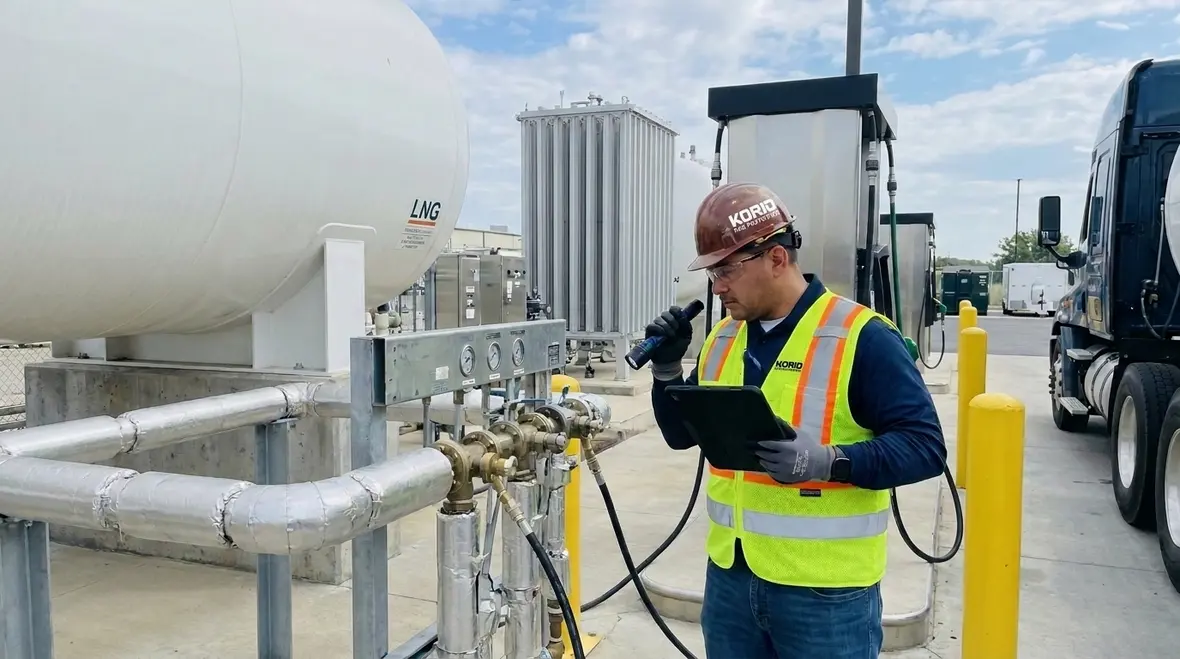
- Transfer and dispensing pathways: Piping, transfer lines, hoses, and their connections. Even when vessels are compliant, failures often arise at coupling points, gaskets, and flexible sections.
- Pressure regulation and control elements: Regulators, relief devices, valves, and their control logic. Scope drives whether these elements require specific protective treatment.
- Isolation and shutoff capability: Automatic and manual isolation provisions that support safe interruption of fueling operations when abnormal conditions occur.
- Vent and release handling: Systems that manage normal venting and abnormal releases. Improper scope interpretation can lead to an incomplete protective strategy.
Common failure points that show up during inspections
Even when design intent is correct, inspection teams typically verify whether installed conditions and maintenance records match the stated arrangement. Common failure points include:
- Damage or deterioration in cryogenic exposure zones: Cracking, loss of insulation performance, or degraded flexible connections.
- Instrumentation drift: Sensors used for safe operation can drift if calibration and functional testing are not managed on schedule.
- Valves not returning to expected states: Actuation and fail-safe behavior can change after maintenance, incorrect parts replacement, or wiring modifications.
- Blocked or altered discharge paths: Field changes, landscaping work, or debris accumulation can interfere with venting and release pathways.
Related reading on NFPA 52 ignition source control at LNG sites is worth reviewing here, because scope questions rarely stay isolated from the protective controls that must function around active fueling operations.
Operational procedures and maintenance programs tied to Section 20.1 scope
After scope is established, Section 20.1 application coverage influences how a facility builds and sustains its operational and inspection program. For commercial, industrial, and retail environments, this means the station’s compliance posture must stay aligned with how fueling actually occurs day to day.
Procedure controls that support safe fueling
Effective fueling operations rely on written procedures that align with the installed safety envelope, including:
- Pre-fueling checks and system status confirmations
- Start-up sequence steps that verify safe conditions before dispensing
- Abnormal condition response actions, including isolation and safe shutdown
- Post-fueling checks and housekeeping controls to keep release pathways unobstructed
Inspection and testing expectations that prevent drift from compliance
In sustaining compliance, the most significant risk is not the absence of equipment. It is performance drift over time due to wear, environmental effects, and deferred maintenance. A strong maintenance program uses documented inspection and testing to confirm that safety functions remain effective.
Commercial operators typically benefit from a structured cycle that includes functional checks, verification of setpoints where applicable, and trend tracking for critical components. Kord Fire Protection supports this process through service planning designed to help facilities maintain readiness for regulatory and insurance-related inspections.
Commercial compliance challenges and how Kord Fire Protection supports ongoing readiness
LNG fueling stations often operate with tight schedules, limited outage windows, and contractors working across multiple disciplines. These realities create common compliance challenges:
- Maintenance coordination across vendors: Multiple contractors may touch control components, alarms, and valves. Without centralized oversight, records and verification gaps occur.
- Document control: As-built modifications and temporary repairs can erode compliance if procedures and labeling do not update.
- Readiness for AHJ review: Plan checks and periodic inspections demand consistency between the written program and the physical system condition.
Kord Fire Protection acts as a commercial service partner by supporting testing, maintenance planning, and compliance documentation pathways that align with how LNG fueling systems must be sustained. For facilities seeking a structured approach to fire protection and life safety readiness alongside LNG fueling operations, a coordinated service strategy reduces inspection friction and operational disruption.
If your site is also working through construction and layout questions, this companion post on NFPA 52 LNG supplemental siting and construction requirements helps connect scope decisions with the physical realities of the site.
Key takeaways for NFPA 52 Section 20.1 LNG fueling application coverage
- Section 20.1 functions as a scope gate, determining whether and how NFPA 52 applies to the fueling arrangement.
- Scope decisions affect equipment inclusion, operating controls, and the boundaries of inspection and maintenance.
- Most real inspection gaps occur at component interfaces, instrumentation, isolation functions, and release pathway integrity.
- Commercial facilities sustain compliance best with controlled maintenance cycles, strong documentation, and coordinated verification activities.
Frequently Asked Questions
Next step: confirm scope and build a sustainment plan
To keep your LNG fueling operation aligned with NFPA 52, facility teams should confirm Section 20.1 scope early, then translate it into a documented operating and maintenance sustainment plan. Kord Fire Protection can help commercial operators structure testing, maintenance oversight, and compliance readiness so your station stays inspection ready with less operational disruption. Contact Kord Fire Protection to review your current application approach and develop a practical sustainment strategy.

Join Our Newsletter!
Get the latest fire safety tips delivered straight to your inbox From our Newsletter.