NFPA 52 Section 24.1 Scope: Automotive Equipment Coverage
Quick Answer
NFPA 52 Section 24.1 defines how the standard applies to onboard automotive equipment in vehicles. It focuses on specific fire safety considerations tied to the equipment types and their installation and use. Owners must match the vehicle and system design to the scope, then maintain it to inspection readiness.
What NFPA 52 Section 24.1 covers for vehicle onboard systems
Facilities that service, store, or operate vehicles need clarity on what “covered” means before they select inspection intervals, maintenance tasks, or engineering controls. The NFPA 52 onboard automotive equipment scope in Section 24.1 matters because it governs which onboard fire protection and fire risk features must meet the standard’s requirements based on the type of vehicle equipment installed and how it functions in operational service.
In practice, compliance starts with confirming the vehicle category, the onboard equipment configuration, and the intended operating conditions. Then the facility aligns documentation and inspection procedures to the protection objectives NFPA 52 requires.
If your team is also tightening service procedures across mobile assets, review Kord Fire Protection’s vehicle fire suppression inspection checklist and process for practical inspection structure that fits naturally with onboard equipment oversight.
Scope triggers: when Section 24.1 applies to onboard equipment
Section 24.1 scope triggers are not purely cosmetic. They relate to the onboard equipment’s purpose, its fire behavior, and how it is expected to protect life safety and property in real operation. Commercial sites often misinterpret scope when they focus only on “having fire protection present” instead of matching equipment to what the standard addresses.
Common scope decision points used during compliance reviews
- Vehicle and equipment classification: The facility verifies that the vehicle and its onboard systems fit the categories intended by the standard.
- Onboard arrangement: Equipment location, separation distances, and accessibility can affect whether the installation supports safe operation and maintenance.
- Purpose of the onboard equipment: The facility confirms that the system is designed for the fire hazards it is meant to address.
- Operational use: The vehicle’s duty cycle and where it operates influence practical inspection and maintenance expectations.
For many commercial organizations, the biggest risk appears during vehicle turnover. New fleets, refurbished systems, or modified compartments can inadvertently place onboard equipment into or out of the intended coverage, requiring updated documentation and inspection criteria.
Installation and design expectations that impact ongoing compliance
Section 24.1 coverage does not end at selecting a compliant component. The onboard equipment must work as installed. Inspections typically fail when installation details are missing from records or are not verifiable in the field.
Operational procedures facilities should standardize
- Commissioning documentation control: The facility maintains manufacturer data, installation references, and any required field evaluations tied to the onboard setup.
- Vehicle readiness checks: Operators complete pre use checks that confirm system status indicators, accessibility, and no obvious physical damage.
- Change management: Any modification that changes fuel related components, enclosure layouts, hose routes, wiring paths, or discharge characteristics triggers a re review.
Maintenance mechanics that commonly create failure points
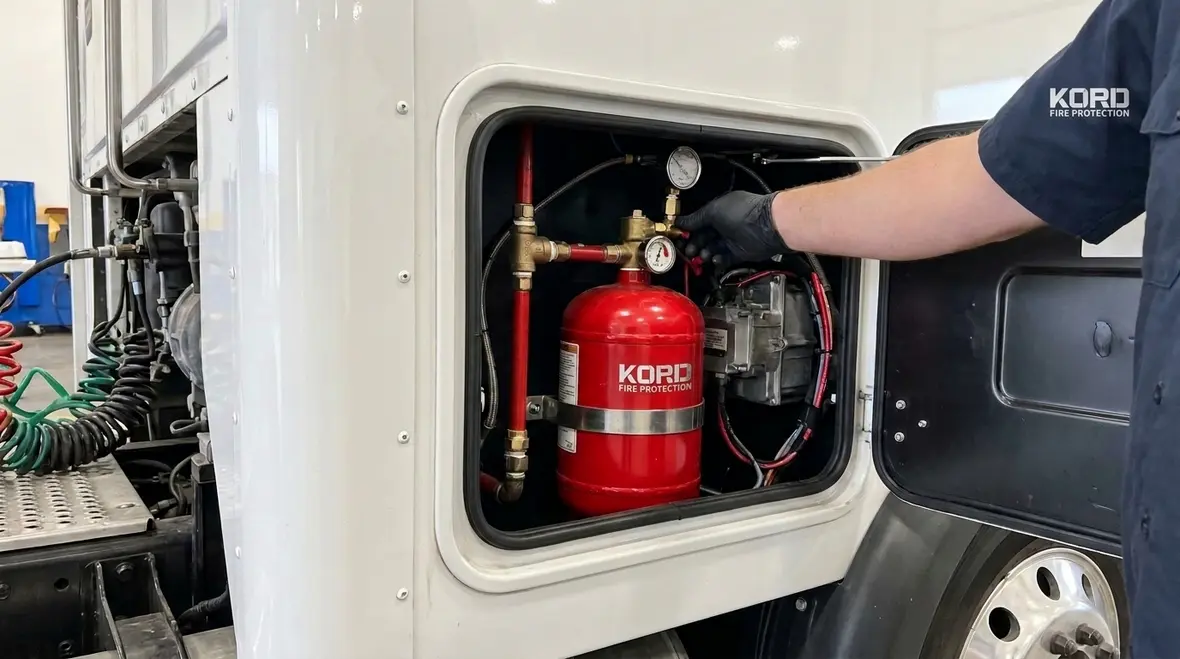
Onboard equipment experiences unique wear conditions, including vibration, temperature swings, contamination, and mechanical impact. Common failure points include:
- Blockage or restricted flow: Dirt, improper assembly, or degraded components can reduce performance when the system is needed.
- Corrosion and vibration induced loosening: Fasteners, mounts, and connectors can loosen over time if not protected and routinely checked.
- Seal degradation and enclosure compromise: Poor sealing can allow moisture or debris intrusion that affects function.
- Inaccessible components: Maintenance procedures fail when crews cannot reach key items safely or quickly, leading to incomplete service.
Commercial facility standards often require that these maintenance realities translate into clear work instructions and measurable inspection outcomes, not just calendar scheduling.
For teams building broader fleet programs, Kord Fire Protection’s fleet vehicle fire suppression systems for fleet managers article is a useful companion read near this stage.
Inspection, recordkeeping, and verification for commercial fleets
Compliance success relies on verification. Section 24.1 scope coverage requires evidence that onboard equipment continues to meet performance expectations under actual operating constraints. Facilities typically need a practical system for inspection frequency, acceptance criteria, and corrective action tracking.
What to document so the audit is defensible
- Inspection and maintenance reports: Include what was checked, what condition was found, and what corrective actions were taken.
- Training records: Identify who performed the work and that the team understands vehicle specific access and hazard controls.
- Component replacement traceability: Maintain part and service records so a repeat failure can be investigated.
- Testing evidence when applicable: Where testing is required, keep the method, results, and any calibration references.
For many industrial and retail operators, the most difficult part is coordination. Fleet schedules compete with inspection windows, and vehicle availability affects turnaround time. A strong program addresses this with planned intervals, documented downtime planning, and repeatable procedures.
How Kord Fire Protection supports NFPA 52 scope compliance
Commercial sites benefit from a service partner that understands how inspection and maintenance translate into safe operation across mixed fleets and facilities. Kord Fire Protection helps organizations reduce compliance risk by aligning documentation, inspection practices, and maintenance verification with the intent behind the NFPA 52 onboard automotive equipment scope in Section 24.1.
To connect this topic with broader service coordination, explore fire protection services in Southern California for support with inspections, maintenance planning, and code-compliant fire protection work across commercial operations.
Frequently Asked Questions
Next step: confirm your onboard coverage and inspection readiness
Facilities should review each vehicle category and onboard system against NFPA 52 Section 24.1 scope requirements, then align inspection records and maintenance procedures to match actual operating conditions. If your documentation is incomplete or your fleet has changed recently, contact Kord Fire Protection for a targeted program review, inspection planning support, and ongoing maintenance verification designed to keep commercial operations audit ready.

Join Our Newsletter!
Get the latest fire safety tips delivered straight to your inbox From our Newsletter.