NFPA 291 Section 4.16 Private Hydrant Inspection Testing
Quick Answer
NFPA 291 Section 4.16 gives a clear path for private hydrant inspection testing and maintenance. It helps commercial and industrial sites keep hydrants ready, water flow strong, and fire risk low. For facilities across Australia, Kord Fire Protection can act as a steady partner, handling checks, tests, repairs, and records with calm precision.
Near the top of any sensible hydrant strategy, it also helps to connect this work to broader fire protection services, especially when hydrants, sprinklers, alarms, and pumps all need to stay on speaking terms across the same facility. ([kordfire.com](https://kordfire.com/full-fire-protection-services/?utm_source=openai))
Why private hydrant inspection testing matters
Private hydrant inspection testing is not busywork. It is the difference between a system that performs under pressure and one that folds like a cheap lawn chair at the worst possible moment. NFPA 291 Section 4.16 supports a routine approach that helps property teams confirm hydrants work as intended, without guesswork.
For industrial plants, retail centres, warehouses, logistics sites, and commercial buildings, hydrants form part of the first line of fire defence. When a fire starts, response time matters. Therefore, regular inspection and testing help confirm that valves open, caps are in place, water reaches the outlet, and flow remains within expected range. In short, the system must behave like a reliable co star, not a surprise cameo.
What NFPA 291 Section 4.16 expects from site teams
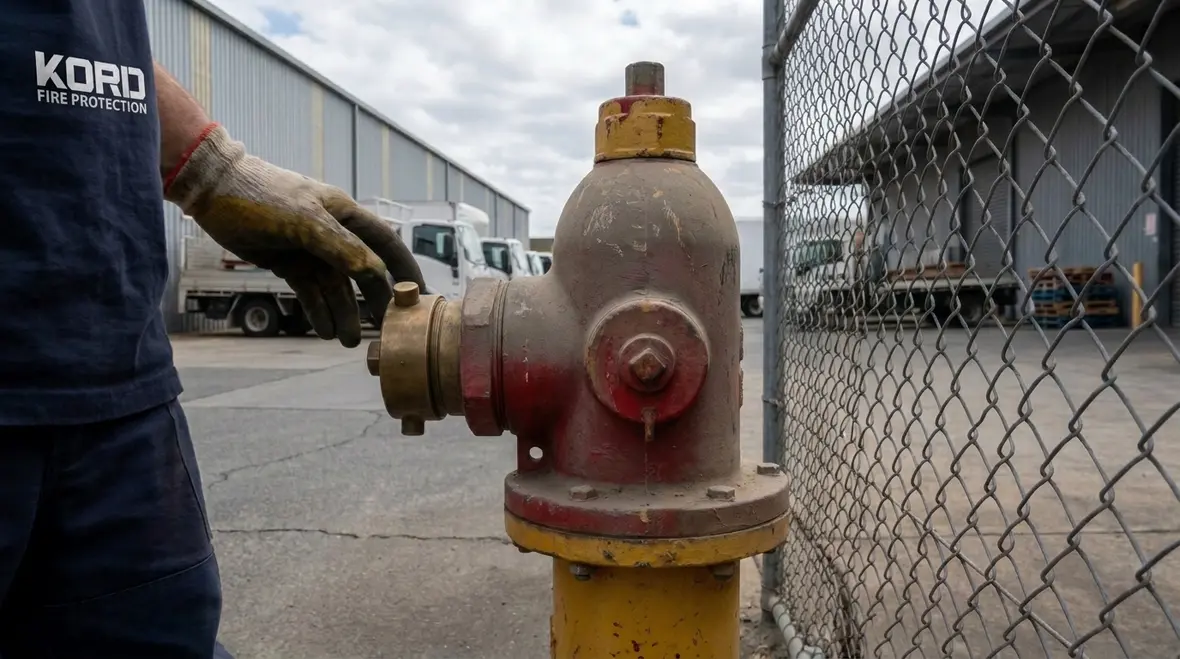
NFPA 291 Section 4.16 focuses on inspection, testing, and maintenance of private hydrants so they remain ready for use. Although local Australian rules and site needs may differ, the core idea stays the same: hydrants need scheduled attention, clear records, and prompt repair when faults appear.
Site teams should look for physical damage, corrosion, leaks, blocked outlets, missing caps, and stiff operation. They should also confirm the area around each hydrant stays clear. If access is blocked by pallets, storage cages, or that one mystery skip that seems to appear by magic, the hydrant loses value fast.
Testing goes beyond a quick glance. It should verify water delivery and pressure performance. Maintenance should then fix problems before they grow into bigger risks. This process supports compliance, but more importantly, it supports real world readiness.
What teams should pay attention to during routine checks
- Visible damage to the hydrant body or operating nut
- Corrosion, leaks, blocked outlets, or worn threads
- Missing caps, chains, guards, or identification markings
- Obstructions around the hydrant that slow emergency access
- Signs that operation is stiff, incomplete, or unreliable
That practical rhythm lines up neatly with Kord Fire Protection’s hydrant maintenance guidance, which reinforces structured inspections, consistent recordkeeping, and attention to issues before they become expensive little gremlins. For readers who want a related reference point, Kord also publishes a fire hydrant maintenance checklist guide. ([kordfire.com](https://kordfire.com/fire-hydrant-maintenance-checklist-guide/?utm_source=openai))
How private hydrant inspection testing works in practice
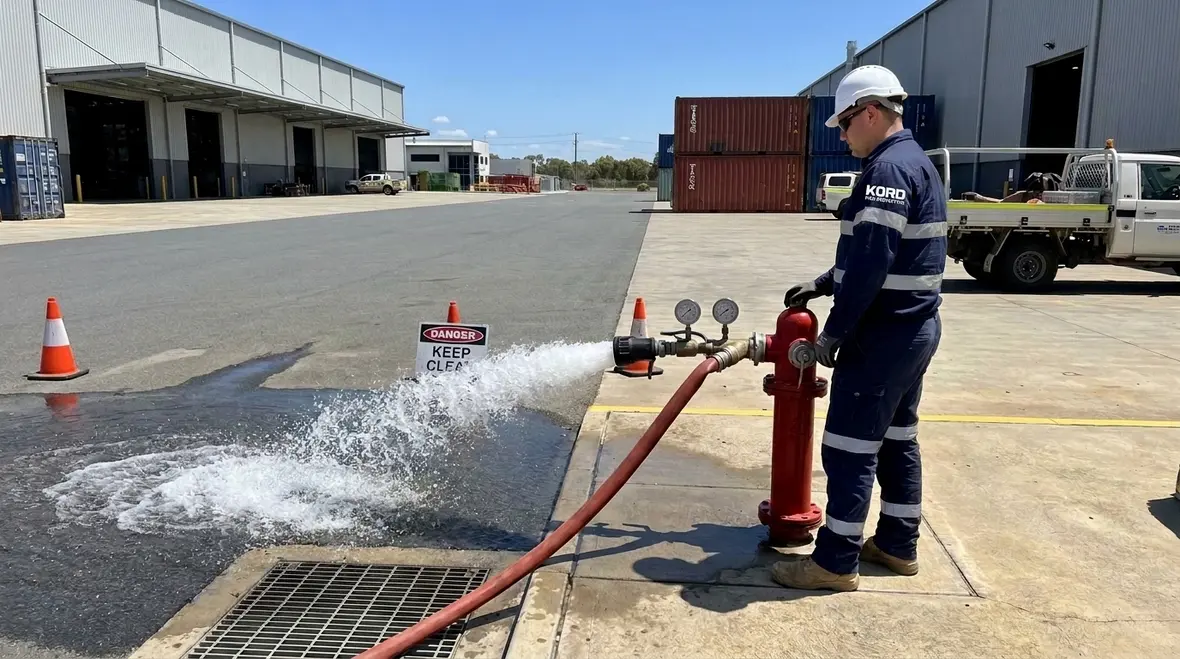
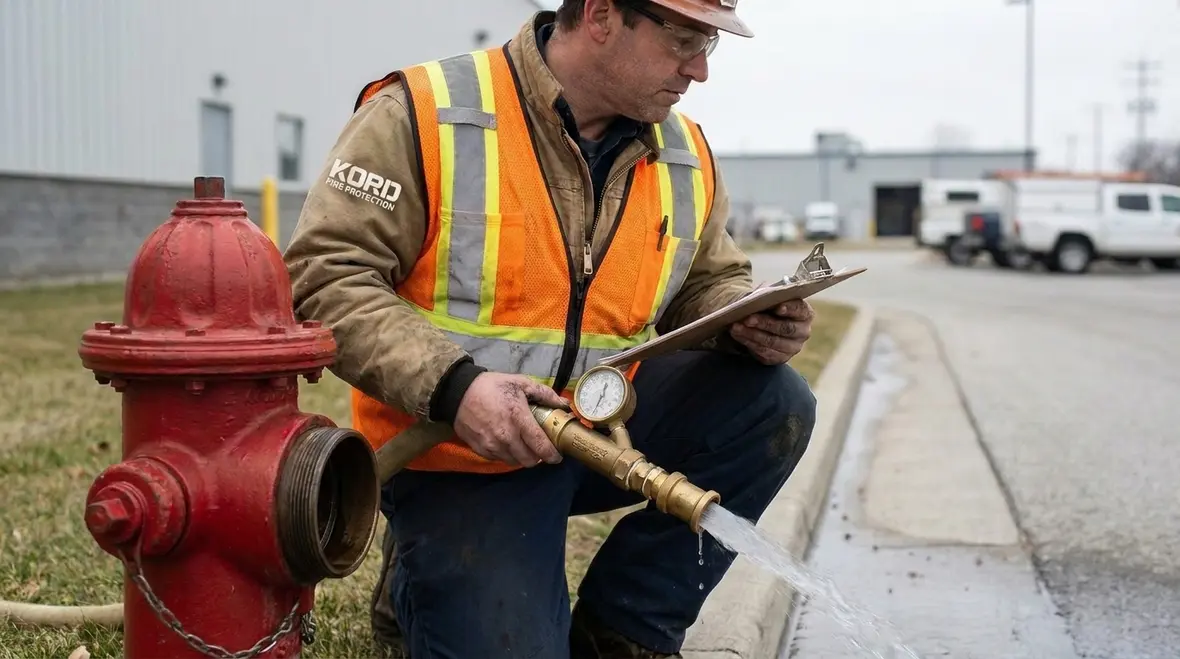
A proper private hydrant inspection testing program usually starts with a site review. Next, a technician checks the hydrant body, operating parts, drainage, markings, and access. After that, they test water flow and note any pressure loss or unusual behaviour.
Typical inspection and testing steps
- Visual check for damage, leaks, rust, or tampering
- Check that caps, chains, and outlets are intact
- Confirm the hydrant operates smoothly
- Test water flow and observe pressure performance
- Record faults, repairs, and follow up actions
These steps matter because hydrants live outdoors and face heat, dust, traffic, and wear. In Australia, that can mean harsh sun, salty air near coastlines, and general site abuse from forklifts that behave as if painted lines are mere suggestions.
Kord Fire Protection’s related material on exterior fire hydrant flow testing and hydrant water pressure adds useful context here. Those resources describe practical reporting, performance validation, and how technicians turn test numbers into next steps, which is exactly what busy sites need when they cannot afford vague answers. See also exterior fire hydrant flow testing for commercial sites and what determines fire hydrant water pressure. ([kordfire.com](https://kordfire.com/exterior-fire-hydrant-flow-testing-for-commercial-sites/?utm_source=openai))
What good testing reveals
- Whether flow is strong enough for expected fire demand
- Whether static and residual pressure stay within a sensible range
- Whether operation is smooth or points to wear inside the assembly
- Whether drainage and surrounding access create hidden problems
What poor testing habits miss
- Pressure drop that only appears when water is actually flowing
- Minor leaks that become major reliability issues later
- Recurring faults that signal supply or age related system decline
- Documentation gaps that become awkward during audits or insurer reviews
What a strong maintenance program should include
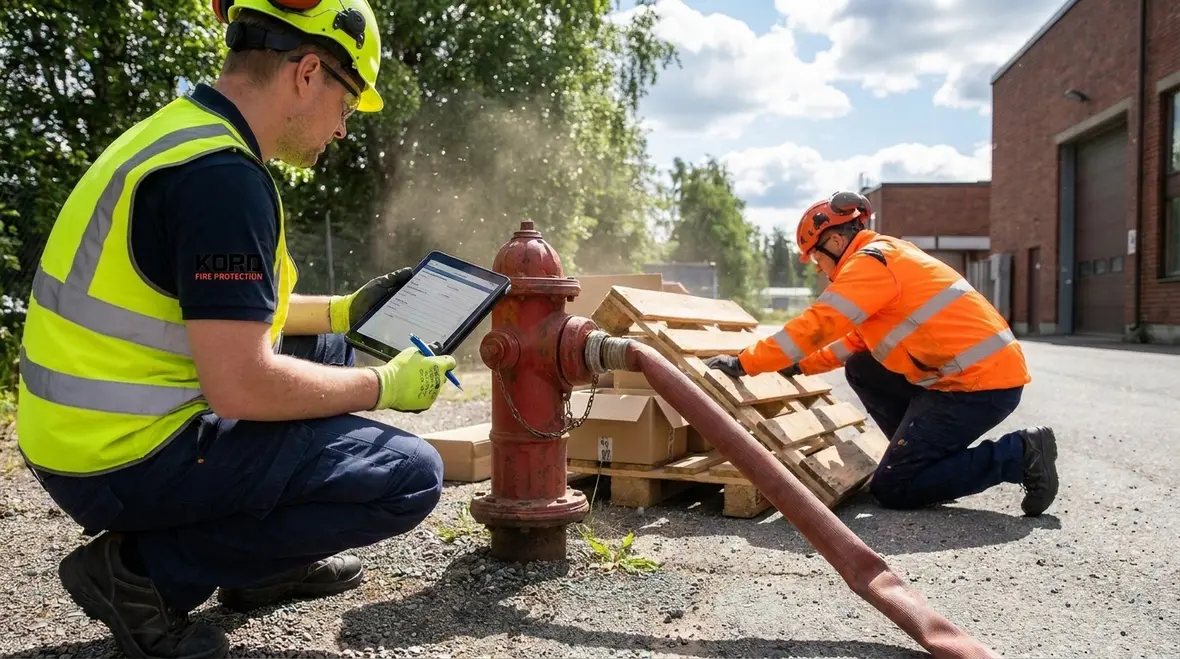
A strong program does not stop at inspection day. Instead, it builds a full cycle of care. That includes planned testing, corrective repairs, and record keeping that stands up to audits and internal review.
Here is a practical view of the service flow:
Site responsibility
- Keep hydrants easy to reach
- Report damage quickly
- Allow access for testing teams
- Keep records current
Service support
- Inspect hydrants on schedule
- Carry out flow testing
- Repair worn or failed parts
- Document results and actions
This shared approach reduces downtime and helps the site stay ready. It also supports better planning, because repeated faults often point to bigger issues in age, pressure supply, or exposure.
Why Kord Fire Protection can become a vital partner
Kord Fire Protection can play a vital role in this service because private hydrant inspection testing demands more than a tick and flick. It needs people who understand fire systems, site risk, and the pressure to keep operations moving. Kord Fire Protection can help industrial and commercial sites manage hydrant inspections with less stress and more confidence.
As a partner, Kord Fire Protection can support scheduled inspections, testing, repairs, and compliance records. That matters for large facilities where many assets compete for attention and safety tasks can slip down the list. With a capable provider in place, the site team gains time, fewer surprises, and a clearer view of asset condition. Kord’s service pages describe preventive maintenance, code-compliant inspections, hydrant services, and broader life safety support that fit naturally around this kind of work. ([kordfire.com](https://kordfire.com/full-fire-protection-services/?utm_source=openai))
In practical terms, that means fewer awkward moments when someone asks, “Has the hydrant been tested?” and the answer lands somewhere between a shrug and a prayer. Kord Fire Protection helps replace that uncertainty with evidence.
How compliance and risk control work together
Compliance is not just a paper trail. It is a risk control tool. When hydrants are inspected and tested on schedule, the site can spot problems early. As a result, repairs happen before faults affect emergency response.
For Australian businesses, this matters across many settings. Warehouses need strong hydrant access near loading zones. Retail sites need tidy, visible systems that staff and responders can reach fast. Industrial sites need robust checks because heavy use and high heat can wear equipment quickly. Therefore, the program should fit the site, not the other way around.
Good records also help during audits, insurer reviews, and internal safety checks. They show that the business takes fire safety seriously and acts before problems grow teeth. This broader water supply mindset also echoes Kord Fire Protection’s recent guidance on NFPA 25 water supply inspection and testing requirements, which frames hydrants as one part of a larger readiness picture. ([kordfire.com](https://kordfire.com/nfpa-25-water-supply-inspection-and-testing-requirements/?utm_source=openai))
FAQ
Final thoughts and next step
Private hydrant inspection testing keeps fire systems ready when it counts. NFPA 291 Section 4.16 gives the framework, and a skilled partner gives it life. For industrial, retail, and commercial sites across Australia, Kord Fire Protection can help turn a compliance task into a reliable safety program. When the pressure rises, that is the kind of partnership that earns its keep.
If you want one more layer of context, Kord Fire Protection also has a related guide that fits naturally here: NFPA 291 fire hydrant testing and marking guide 2026. It pairs well with this article by expanding on flow testing and marking logic that help teams understand what a hydrant can really deliver. ([kordfire.com](https://kordfire.com/exterior-fire-hydrant-flow-testing-for-commercial-sites/?utm_source=openai))

Join Our Newsletter!
Get the latest fire safety tips delivered straight to your inbox From our Newsletter.