
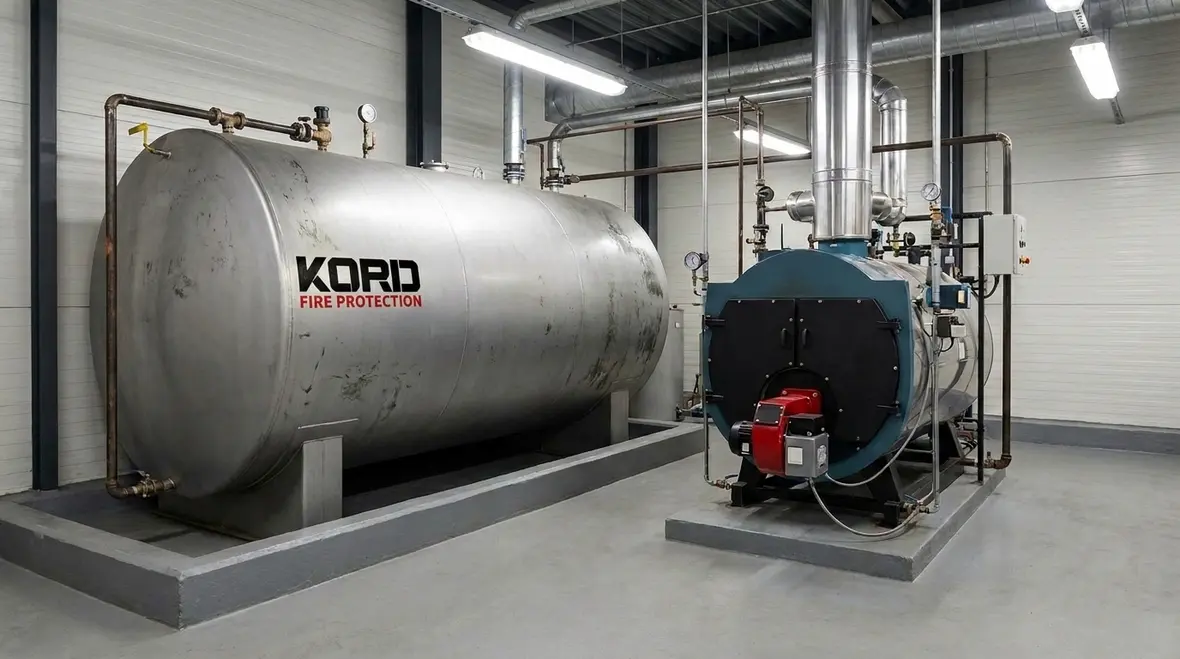
NFPA 31 Section 12.9: Used Oil Supply Tank Requirements
Quick Answer: NFPA 31 Section 12.9 sets the fire and safety expectations for tanks that store used oil at oil burning equipment installations. The requirements address tank construction, placement, protection features, venting, leak control, and inspection and maintenance practices to reduce fire risk.
If your facility is reviewing broader oil burning installation issues too, see NFPA 31: A Practical Guide to Oil Burning Equipment Installation for related requirements on tanks, piping, combustion air, and venting.
What NFPA 31 Section 12.9 requires for used oil supply tanks
NFPA 31 used oil supply tank requirements focus on keeping used oil safely contained and reliably supplied while preventing conditions that can escalate into flash fire, overflow fires, or uncontrolled oil release. For commercial and industrial facilities, compliance often depends less on “having a tank” and more on how the tank integrates with piping, controls, spill containment, venting, and inspection routines.
These requirements matter for retail and commercial boiler rooms, service centers, small manufacturing plants, and any site that collects and reuses used oil as a fuel source. Kord Fire Protection supports ongoing compliance planning, inspections, and maintenance documentation to help facilities address common failure points before they become audit findings or incident drivers.
Tank construction and installation details that drive compliance
Section 12.9 used oil tank expectations generally center on preventing ignition sources, limiting spill and leak exposure, and ensuring the tank can withstand the hazards associated with used oil handling. In practice, inspectors look for several recurring installation shortcomings that can create fire severity even when the burner equipment itself is properly designed.
Key construction considerations
- Suitable tank design for used oil service: Tanks should be appropriate for the chemical and thermal characteristics of used oil and compatible with the system’s operating temperatures.
- Fire-safe arrangement: The tank installation should avoid creating hidden spill pathways near ignition prone components such as burners, electrical controls, hot surfaces, and valves.
- Mechanical integrity: Corrosion, seam degradation, and compromised fittings frequently lead to slow leaks that go unnoticed until they saturate nearby surfaces.
Placement and segregation from hazards
Facility layout plays a decisive role. Tanks should not be positioned so that a release can run directly toward burner assemblies or into electrical enclosures. In commercial boiler rooms, the most common problem areas include transitions between housekeeping zones and mechanical rooms, sump edges, and areas beneath piping where drips accumulate over time.
How spill control and leak management protect the installation
Used oil systems can fail gradually. A pinhole leak or a slow fit connection failure may not trigger immediate shutdown, but it can still create a combustible fuel pool on floors, ramps, trench covers, or containment surfaces. NFPA 31 used oil supply tank requirements address containment and leak control concepts to limit the chance that a small loss becomes a sustained fire.
Containment practices facilities should verify
- Reliable containment around tanks and fittings: Where a release could occur, containment should capture and hold oil safely instead of directing it into drainage routes.
- Controls on transfer and withdrawal: Shutoffs and isolation should reduce the amount of oil that can spill during maintenance or failure conditions.
- Housekeeping compatibility: Containment designs must still allow practical cleaning and oil removal without bypassing the system’s intended safety function.
Common failure points in real audits
Many compliance gaps originate from maintenance realities rather than design intent. Typical issues include oil pooling near unions and flexible connectors, missing or degraded gaskets, improperly supported pipe loads, and containment systems that cannot be inspected because they are boxed in or inaccessible.
Venting, transfer operation, and controls that reduce fire risk
Used oil tank systems depend on pressure and flow stability. NFPA 31 used oil supply tank requirements reflect this by emphasizing venting and system behavior that prevents abnormal conditions such as overpressure, vacuum effects, or uncontrolled release during filling and transfer.
Operational reliability checks
- Vent routing and termination: Venting must allow safe pressure relief and avoid routing that discharges oil or fumes near ignition sources.
- Transfer system control: Filling and supply controls should limit overflow and prevent siphoning or uncontrolled gravity transfer.
- Shutdown and isolation behavior: Controls should isolate the tank or system appropriately during abnormal conditions and maintenance.
Integration with oil burning equipment
Used oil supply systems tie into burner reliability and safety performance. For facilities upgrading or commissioning oil burning equipment, the integration details often dictate whether the tank arrangement will meet field realities. Kord Fire Protection routinely supports compliance reviews and documentation alignment for oil burning installations, including how the tank system interacts with fuel piping, controls, and installation practices.
For related installation considerations, see NFPA 31: A Practical Guide to Oil Burning Equipment Installation.
Inspection and maintenance routines that keep Section 12.9 compliant
Compliance in used oil supply tank systems does not stop at installation. NFPA 31 used oil supply tank requirements rely on effective inspection and maintenance to sustain mechanical integrity, containment function, and safe operating behavior.
What inspectors and engineers commonly verify
- Tank and fitting condition: Visual condition of seams, surfaces, welds, and flanges for corrosion or deformation.
- Leak evidence: Evidence of oil residue at connections, valves, and access points.
- Containment readiness: Confirmation that containment systems remain intact, cleanable, and not obstructed.
- Vent function and safety routing: Verification that vents remain unobstructed and positioned away from ignition hazards.
- Documentation trail: Maintenance records and inspection notes that show recurring checks and corrective actions.
Operational maintenance that prevents hidden deterioration
Facilities should treat used oil tanks as active safety-critical assets. Slow leaks and corrosion often progress between scheduled service intervals. A consistent maintenance cadence supports early discovery, reduces downtime, and improves the facility’s ability to demonstrate due diligence to auditors and insurers.
How commercial facilities can implement a defensible compliance program
Most compliance failures come from inconsistent ownership between operations, mechanical maintenance, and fire safety responsibilities. A defensible approach assigns clear duties for inspections, corrective actions, and recordkeeping for NFPA 31 used oil supply tank requirements.
A practical compliance workflow
- System mapping: Identify tank locations, piping routes, valves, vents, electrical boundaries, and containment features.
- Inspection planning: Establish inspection intervals aligned with usage intensity, oil quality variability, and past leak history.
- Spot checks during service: Verify the condition of unions, fittings, gaskets, and any recently disturbed joints.
- Corrective action verification: Confirm that repairs restore containment function and safe vent routing, not just leak stoppage.
- Documentation and readiness: Maintain inspection records and maintenance logs accessible for internal reviews and external audits.
Kord Fire Protection helps facilities reduce compliance uncertainty by supporting structured inspection and maintenance planning, fire safety documentation, and ongoing service coordination for oil burning equipment installations. This support is especially valuable when a site faces operational pressure to keep equipment running while still meeting safety and inspection expectations.
Frequently Asked Questions
Need help verifying your Section 12.9 compliance?
Facilities that run used oil supply systems need more than a one time approval. Kord Fire Protection can support inspections, maintenance planning, and compliance documentation so NFPA 31 used oil supply tank requirements stay met year after year. Contact Kord Fire Protection to schedule a practical compliance review and identify site specific vulnerabilities before they become operational disruptions or audit findings.

Join Our Newsletter!
Get the latest fire safety tips delivered straight to your inbox From our Newsletter.



