
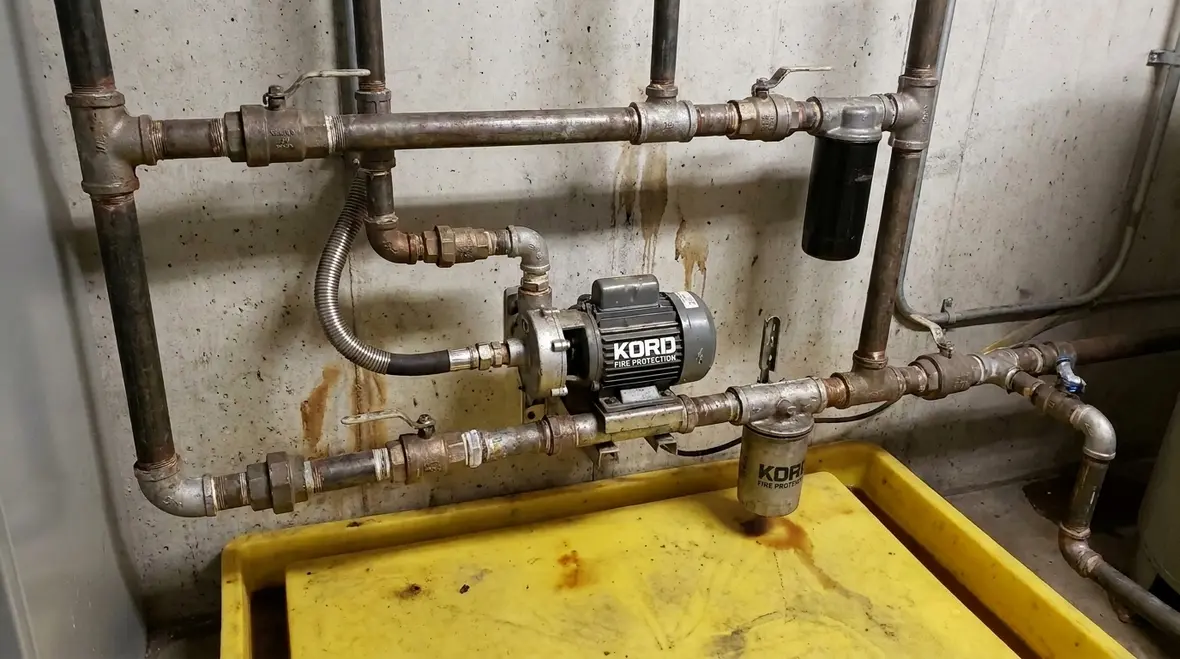
NFPA 31 Section 12.10: Piping, Pumps, and Valves for Used Oil Systems
Quick Answer
NFPA 31 Section 12.10 governs how used oil piping, pumps, and valves get selected, installed, protected, and maintained. It focuses on leak prevention, fire-safe construction, correct valve arrangements, and inspection readiness to keep used oil systems reliable and compliant in commercial facilities.
What does NFPA 31 Section 12.10 require for used oil equipment piping, pumps, and valves?
NFPA 31 used oil system piping pumps valves are not treated as generic plumbing components. Section 12.10 addresses the fire and operational risks created by combustible used oil, including contamination, degraded seals, vibration, overpressure conditions, and leakage at joints and isolation points. In practice, compliance teams must confirm that every pipe run, pump connection, and valve function supports safe storage and transfer from receipt to burner or treatment equipment.
For commercial property owners and facility managers, the challenge is consistency. Many systems get installed to meet original requirements, but later changes during maintenance or equipment upgrades introduce non compliant fittings, mismatched materials, or informal bypassing. A documented compliance approach helps prevent these issues before they become inspection failures.
If your team also manages pump performance and inspection workflows elsewhere in the facility, fire pump testing requirements are worth reviewing early, because consistent testing habits tend to expose the same documentation and maintenance gaps that show up in used oil system work. ([kordfire.com](https://kordfire.com/fire-pump-testing-requirements-things-to-know/?utm_source=openai))
Where Section 12.10 issues show up during commercial inspections
Facility walkthroughs and impairment reports usually reveal predictable problem areas. Used oil piping, pumps, and valves get stressed by cycle frequency, variable oil viscosity, and sediment in older oils. The highest risk failures occur where the system transitions between components, such as pump suction and discharge connections, valve bodies, union faces, and threaded joint locations.
1) Leaks at threaded joints, unions, and flexible transitions
Common field findings include seepage around threaded connections, gasket degradation at unions, and cracking near flexible hose couplings where vibration transfers. Even small leaks can become a chronic ignition source if drips collect on adjacent surfaces, supports, or electrical enclosures.
2) Valve misapplication or incomplete isolation
Valves can appear installed “by the book” but still fail functionally. Mislabeling, wrong handle orientation, or blocked travel limits can prevent full shutoff when staff attempts emergency isolation. Some facilities also add secondary valves for operational convenience without verifying compatibility with the NFPA 31 intent for used oil systems.
3) Pump seal wear and loss of containment
Pump mechanical seals experience accelerated wear when used oil contains particulates or when operating conditions push the seal beyond design limits. Once a seal leaks, the system may rely on imperfect drip management, creating unsafe accumulation and difficult cleanout. Inspection readiness depends on whether the pump area supports detection and containment.
4) Unsupported piping and vibration induced fatigue
Improper hangers, undersized supports, or missing restraints can allow movement that opens joints, loosens fittings, or fatigues pipe walls. This is especially common near pumps and valve manifolds where vibration and flow turbulence increase.
Design and installation controls for used oil piping (the “plumbing” that must behave)
Section 12.10 treats piping as a safety system component. The objective is a piping arrangement that can handle used oil service, resist leaks, and support reliable operation during normal demand and abnormal conditions.
Material compatibility and joint integrity
Used oil contains mixed contaminants that can affect seal materials and internal surface condition. Installers must select piping and fittings that remain serviceable under used oil exposure and maintain joint integrity over the system life. The practical compliance review focuses on both the external and internal risks: corrosion at joints and compromised seals inside fittings.
Segregation of components and clear access for inspection
Commercial maintenance teams require access to valves, unions, and pump connections without partial disassembly. Section 12.10 compliance improves when the design supports routine visual checks, confirms labeling, and avoids hidden leakage points behind panels that cannot be opened safely.
Containment of leaks and control of drainage paths
Where drips can occur, facility standards typically require engineered containment practices rather than “let it run” arrangements. Even if the system includes spill protection, inspection outcomes depend on whether drainage paths remain controlled and prevent accumulation near hot surfaces or ignition sources.
How pumps in used oil service get evaluated under Section 12.10
Used oil pumps move variable viscosity fluid that can carry sediment. That operational reality drives inspection priorities for pump connections, seal integrity, and functional performance.
Pump suction and discharge interfaces
Inspection focus typically centers on how the pump ties into the system piping. Loose connections, incorrect gaskets, and misaligned flange or union faces contribute to leaks and air ingestion. Air ingestion can create unstable flow, which increases seal stress and encourages cavitation type damage patterns.
Seal arrangement, leak detection, and maintenance accessibility
Where the pump seal system relies on containment, the facility must demonstrate that the arrangement can be inspected and cleaned safely. Maintenance readiness becomes a compliance factor because a clean inspection pathway helps staff detect early seepage rather than respond after dripping becomes continuous.
Operational controls that protect valves and piping
Proper pump control prevents deadheaded operation and protects against overpressure events. If controls fail, valves can become overloaded and seats can wear faster, which drives leakage at the very components Section 12.10 targets. Commercial operators should verify that operating sequences align with the intended valve positions and discharge conditions.
Valves: what compliance teams must verify beyond “installed” status
Valves for used oil service often sit at the center of both fire risk and day to day reliability. Section 12.10 expectations commonly become visible during functional testing and maintenance reviews.
Correct function, correct location, and reliable shutoff
Compliance verification should confirm that each valve performs its required role in the sequence. This includes checking whether isolation valves can reach full shutoff travel, whether actuators operate as intended, and whether staff can identify the correct valve under time pressure.
Seat condition and leakage management
Valve seats degrade under contaminated oil conditions. Minor leakage past seats can be hard to spot but becomes clear when maintenance staff observes wetness around valve bodies or collects drips in containment areas. A disciplined maintenance interval supports earlier detection and replacement before leaks become persistent.
Valve supports, piping alignment, and vibration stress
Piping alignment affects valve loading. If piping strains the valve body through poor alignment, valve stems and seats can wear faster and develop leakage paths. Commercial facilities benefit from documented alignment checks during installation and after pump maintenance jobs that change flange positions.
Common failure points after maintenance or equipment upgrades
Many compliance findings occur not at initial installation but after repairs. Used oil systems in retail and industrial environments often experience frequent access, component swaps, and valve labeling updates. A safe upgrade requires controlled procedures and verification of like for like components.
Non approved fittings or substitute components
Substituting fittings that “fit physically” can undermine service compatibility. Seal types, gasket materials, and thread forms matter in used oil service. Compliance failures can follow when maintenance teams use generic parts without confirming oil service rating or pressure rating alignment with the system design.
Bypass creation during troubleshooting
Temporary bypasses sometimes remain in place after troubleshooting ends. Even if operations continue normally, bypassing can invalidate isolation logic and complicate future testing. Kord Fire Protection typically recommends a controlled closeout process where bypass installations get removed and valve sequences get verified before return to service.
Improper reassembly of unions and flanges
Reassembly errors include incorrect gasket seating, uneven bolt torque, and missing alignment checks. These mistakes can produce micro leaks that look minor but accumulate enough to violate cleanliness requirements and create escalation risk.
For additional guidance on safe used oil and oil burning equipment installation fundamentals, refer to: NFPA 31: a practical guide to oil burning equipment installation.
Frequently asked questions
Get qualified help for ongoing compliance and testing
Used oil systems require more than a one time installation review. Kord Fire Protection supports commercial, industrial, and retail facilities with practical inspection readiness, maintenance guidance, and verification activities focused on NFPA 31 used oil system piping pumps valves. Contact Kord Fire Protection to schedule a compliance and condition assessment, review maintenance history, and build a corrective action plan that closes repeat failure points before they trigger inspection issues.
For teams building a broader inspection program, Kord’s NFPA 25 inspection, testing, and maintenance definitions guide is another useful next step for tightening documentation and keeping compliance work from turning into organized chaos. ([kordfire.com](https://kordfire.com/nfpa-25-inspection-testing-maintenance-definitions-guide/?utm_source=openai))

Join Our Newsletter!
Get the latest fire safety tips delivered straight to your inbox From our Newsletter.



