
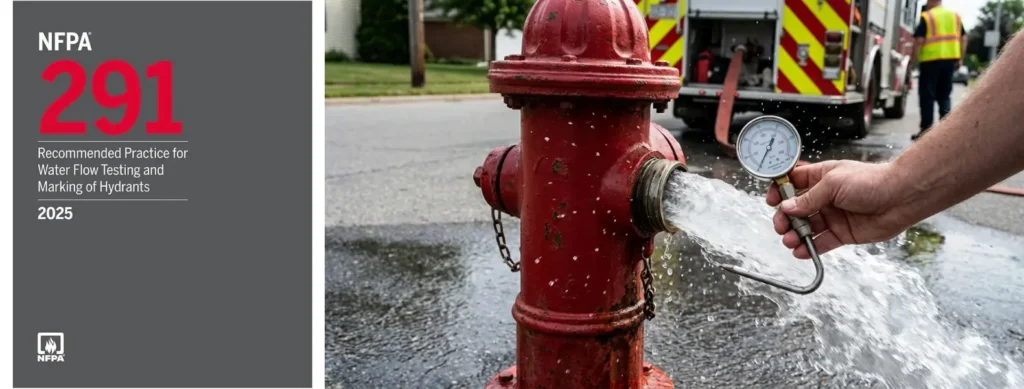
NFPA 291 Overview: Fire Hydrant Testing and Marking Standards 2026 Guide
Within the first few minutes of a fire, water pressure decides whether heroes win or headlines mourn. That is why NFPA 291 matters. NFPA 291 sets the national standard for fire hydrant flow testing and color marking so firefighters know exactly what they are working with before the hose ever snaps tight. In this 2026 guide, the focus stays practical, calm, and clear. Kord Fire Protection technicians often explain it this way. A hydrant is like a promise from the water system. This code makes sure that promise is honest. While the rules can feel technical, the purpose is simple. Deliver reliable fire flow without surprises, drama, or awkward silence when the pump kicks on.
So take a breath. Settle in. This guide breaks it all down in plain language, with a little humor, a few cultural nods, and the steady confidence of someone who has seen hydrants behave badly and lived to tell the tale.
Why NFPA 291 exists and why cities still rely on it
At its core, NFPA 291 exists to remove guesswork. Firefighters do not have time to debate water supply theory while smoke fills the sky. Therefore, communities test hydrants ahead of time, rate their flow, and mark them clearly. The standard creates uniform methods so a hydrant in one city speaks the same language as a hydrant across the country.
According to Kord Fire Protection technicians, this consistency saves lives more often than people realize. When crews roll up, the hydrant color already hints at available flow. Meanwhile, engineers use test data to spot weak mains before they fail. As a result, NFPA 291 supports both emergency response and long term system health.
Also, the standard respects reality. It accepts that water systems vary. Some are strong and modern. Others carry decades of history underground. NFPA 291 does not shame older systems. Instead, it measures them honestly. Think of it less like a final exam and more like a routine physical. No judgment. Just facts.
Understanding rating pressure without the headache
Rating pressure sounds intimidating, yet it follows clear logic. NFPA 291 bases hydrant ratings on residual pressure because that number reflects real world performance under flow. Static pressure alone looks impressive but tells only half the story.
Here is the guiding principle. For hydrants with static pressure above 40 psi, ratings assume a residual pressure of 20 psi. If static pressure falls below 40 psi, the rating drops to half the static value. Simple math. Big consequences.
Kord Fire Protection technicians often explain it with a movie reference. Static pressure is the calm hero before the battle. Residual pressure is how that hero performs once the fight starts. Anyone can look brave standing still.

NFPA 291 also recommends maintaining at least 20 psi residual pressure during fire flow. While pumpers can operate below that level, it becomes difficult. More importantly, dropping too low risks negative pressure in mains. That can collapse pipes or pull contaminated water into the system. Many state health departments flat out forbid residual pressures below 20 psi. In other words, this is not just a suggestion. It is a line drawn for safety.
Rating pressure reference explained side by side
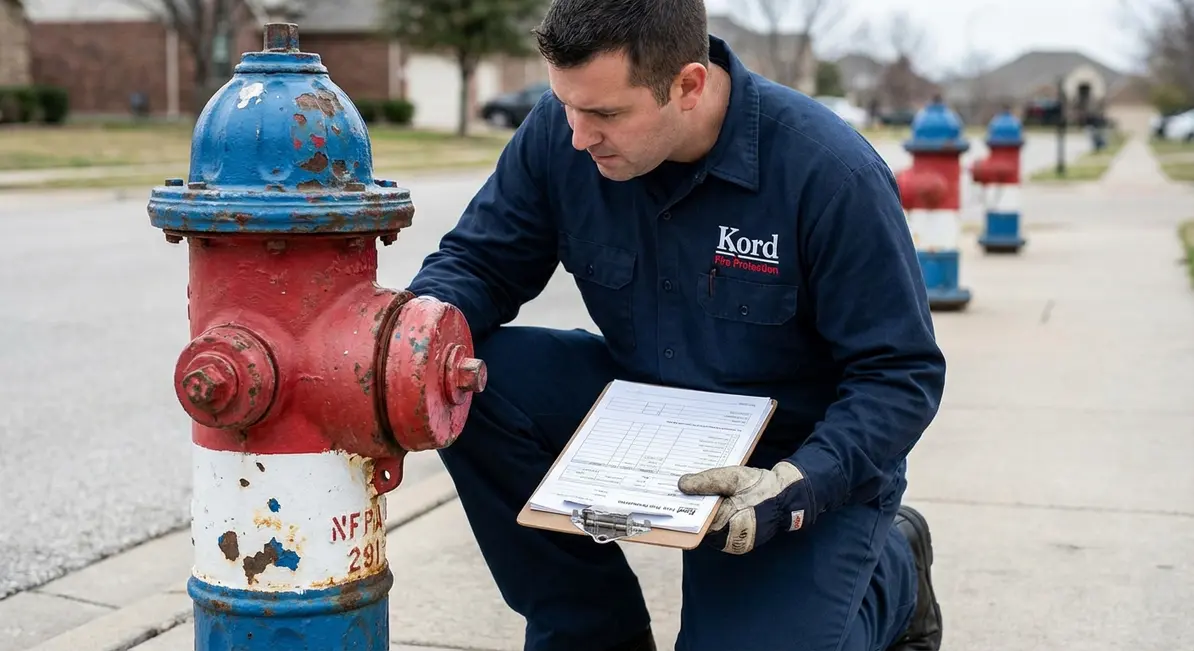
This table sums up hours of field discussion in a few lines. As technicians from Kord Fire Protection like to say, clarity beats complexity every time.
How fire hydrant flow testing works in the real world
Flow testing under NFPA 291 happens during normal water demand. Not during a parade. Not during a water main break. Just an average day when the system behaves like itself.
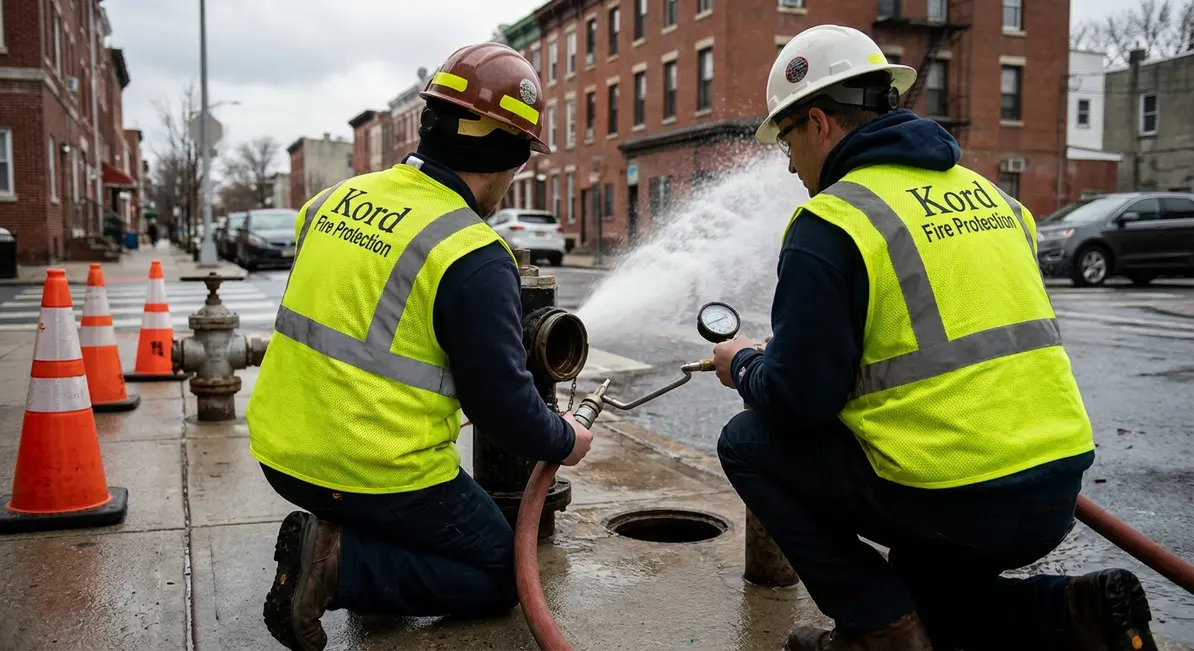
The process measures how much water flows and how much pressure drops. One hydrant becomes the residual hydrant. Others become flow hydrants. The residual hydrant sits between the flowing hydrants and the main water supply. This layout allows technicians to see how the system responds under stress.
Traffic, pedestrians, and property matter too. Before opening a single valve, crews consider roadways, sidewalks, landscaping, and flood risk. Because nobody wants to explain to a city council why a minivan floated away during a test.
Technicians open hydrants one at a time. They let water run long enough to clear debris. Then they take pitot readings and pressure readings at the same moment. Timing matters. Accuracy matters more.
Equipment that makes the data trustworthy
NFPA 291 does not rely on guesswork or vibes. It specifies tools. A 200 psi pressure gauge with fine graduations anchors the test. Pitot tubes measure velocity head. Hydrant wrenches handle the muscle work.
Each flowing hydrant uses its own gauge, pitot tube, wrench, and scale. Gauges receive calibration at least every 12 months. More often if used heavily. Communication tools like portable radios keep teams in sync when multiple hydrants flow.
Stream straighteners earn special praise. With a known discharge coefficient, they smooth the flow and sharpen accuracy. Kord Fire Protection technicians prefer them because cleaner data means fewer arguments later.
Pitot readings and discharge calculations made human
Pitot readings measure velocity pressure from the water stream. NFPA 291 prefers 2 and one half inch outlets because they fill evenly. Larger outlets often hide air pockets that skew readings.
The pitot tube sits halfway into the stream, centered, and held at a right angle. Readings below 10 psi or above 30 psi should be avoided when possible. Opening more outlets helps keep readings in range.
Once pitot pressure is known, technicians calculate discharge. The formula uses outlet diameter, pitot pressure, and a discharge coefficient. Smooth rounded outlets perform better than sharp square ones. That difference matters when totals add up.
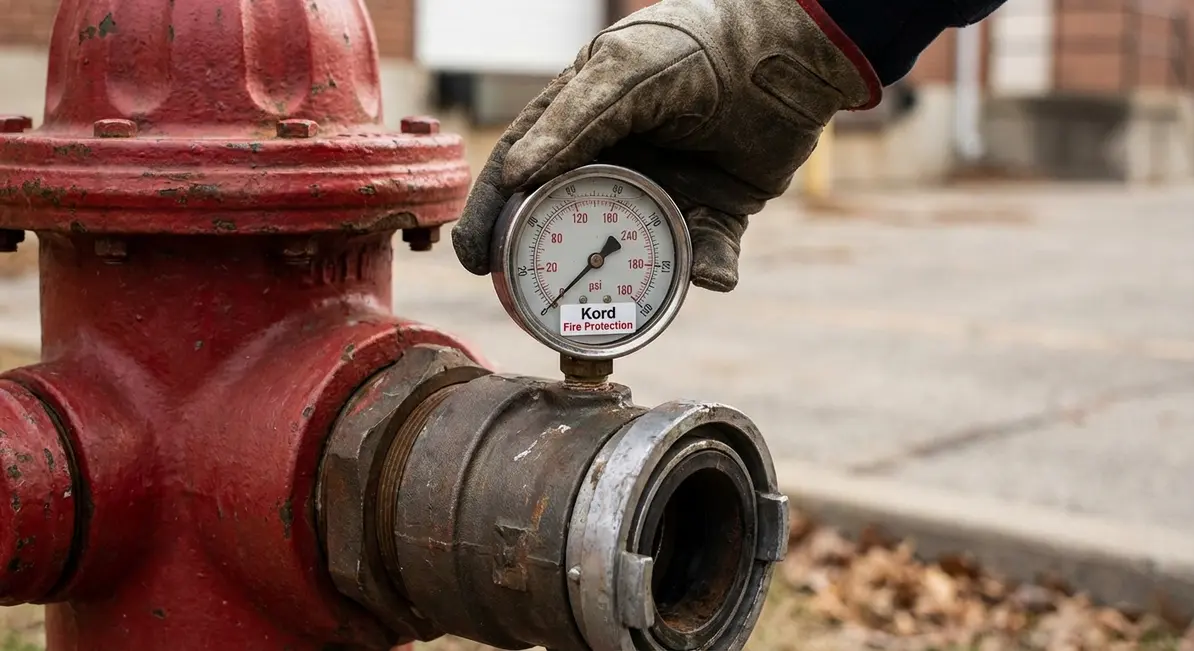
When pitot tubes are unavailable, a gauge tapped into a hydrant cap offers a workable substitute. The readings closely match pitot values. NFPA 291 accepts this method when conditions demand flexibility.
What happens after the math is done
After calculating total discharge, technicians predict flow at the desired residual pressure. They use a standard equation that relates measured flow and pressure drop to target conditions. Results round to the nearest practical value because field accuracy has limits.
Data does not vanish into a filing cabinet abyss. NFPA 291 encourages detailed data sheets with sketches and hydraulic graphs. These records support planning, insurance reviews, and future testing.
However, results reflect distribution strength, not overall system capacity. A pump supplied system without storage may show pressure drops at the pump station. That signals a distribution network capable of more flow than the pumps can supply. Context matters.
What NFPA 291 means for inspectors and property owners
For inspectors, NFPA 291 provides defensible methodology. Tests follow a recognized standard. Results carry weight. That credibility protects both public safety and professional reputation.
Property owners benefit too. Clear hydrant ratings support insurance evaluations and emergency planning. Nobody wants to learn during a fire that the nearest hydrant underperforms. As Kord Fire Protection technicians often say, surprises belong in birthday parties, not emergency response.

Regular testing also reveals trends. Declining flows may indicate corrosion, valve issues, or main restrictions. Early detection saves money and avoids service disruptions.
Frequently Asked Questions about NFPA 291
What is NFPA 291 used for
It sets standards for fire hydrant flow testing and color marking.
How often should hydrants be flow tested
Most authorities recommend testing every five years or as required locally.
Why is 20 psi residual pressure important
It helps ensure usable fire flow while protecting the water system.
Who performs hydrant testing
Trained professionals such as Kord Fire Protection technicians.
Can hydrants operate below 20 psi
They can, but many health departments do not allow it.
What does hydrant color indicate
It shows expected fire flow capacity.
Are pitot tubes always required
No, gauges on hydrant caps can substitute when needed.
Does NFPA 291 apply nationwide
Yes, it is a nationally recognized standard.
Conclusion and next steps
NFPA 291 turns water supply from a mystery into a measured promise. With proper testing, clear marking, and disciplined data, communities stand ready when seconds matter. Kord Fire Protection technicians bring this standard to life with calm expertise and practical judgment.
If your hydrants have not been tested or your records feel dusty, now is the moment. Schedule a professional evaluation, confirm your ratings, and let confidence flow as steadily as the water itself.
Join Our Newsletter!
Get the latest fire safety tips delivered straight to your inbox From our Newsletter.



