NFPA 291 Section 4.15 Public Hydrant Testing and Flushing
Quick Answer
NFPA 291 Section 4.15 sets the basic direction for public hydrant testing and flushing so water systems stay ready for fire response. It helps confirm flow, spot weak points, and clear out sediment. For sites that need dependable water-based fire protection support, Kord Fire Protection’s hydrant services can help guide the process, reduce risk, and keep records in order.
NFPA 291 Section 4.15 gives a practical roadmap for public hydrant testing and flushing. In plain terms, it helps verify that hydrants can deliver water when a fire starts, not when everyone is already having a bad day. For industrial plants, shopping centres, warehouses, office towers, and public facilities, this work supports fire readiness, system reliability, and safer operations.
Done well, hydrant testing also helps reveal pressure loss, blocked lines, rust buildup, and other issues that love to hide until the worst possible moment. That is where a skilled partner matters. Kord Fire Protection can support public hydrant testing and flushing with planning, coordination, reporting, and follow up work that keeps systems compliant and useful.
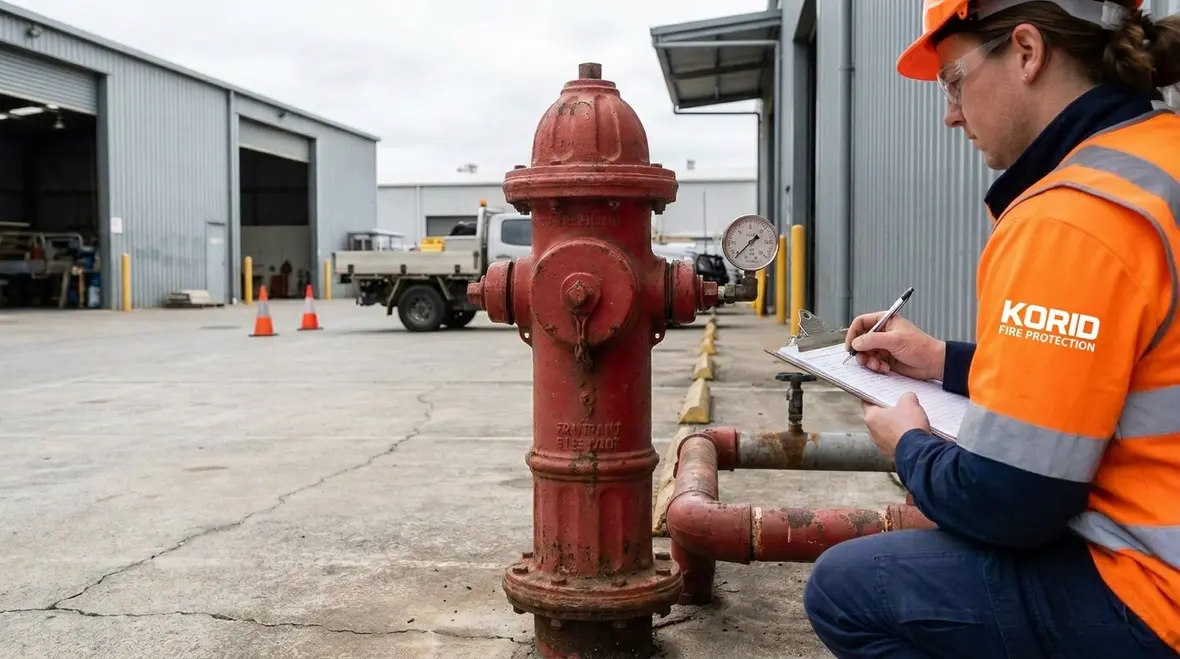
What NFPA 291 Section 4.15 means for site teams
NFPA 291 Section 4.15 focuses on public hydrant testing and flushing as part of fire water supply checks. It gives a method to test hydrant performance, observe flow, and clear the mains of debris. As a result, site managers can better understand whether the water supply can support fire protection needs.
For large commercial and industrial sites, this matters because the fire system is only as strong as the water behind it. A hydrant may look fine on the outside. However, inside the line may sit sediment, scale, or low pressure that cuts performance. The standard helps reduce that uncertainty. For a deeper look at how testing data supports hydrant ratings and markings, see Kord Fire Protection’s NFPA 291 Fire Hydrant Testing and Marking Guide 2026.
Why this matters beyond the checklist
A hydrant test is not just paperwork with a wet ending. It gives site teams real evidence about whether available water supply matches emergency expectations. That matters for maintenance planning, capital works, insurance discussions, and plain old peace of mind. If the water network is weak, the time to find out is during a controlled test, not while smoke is rolling across the car park.
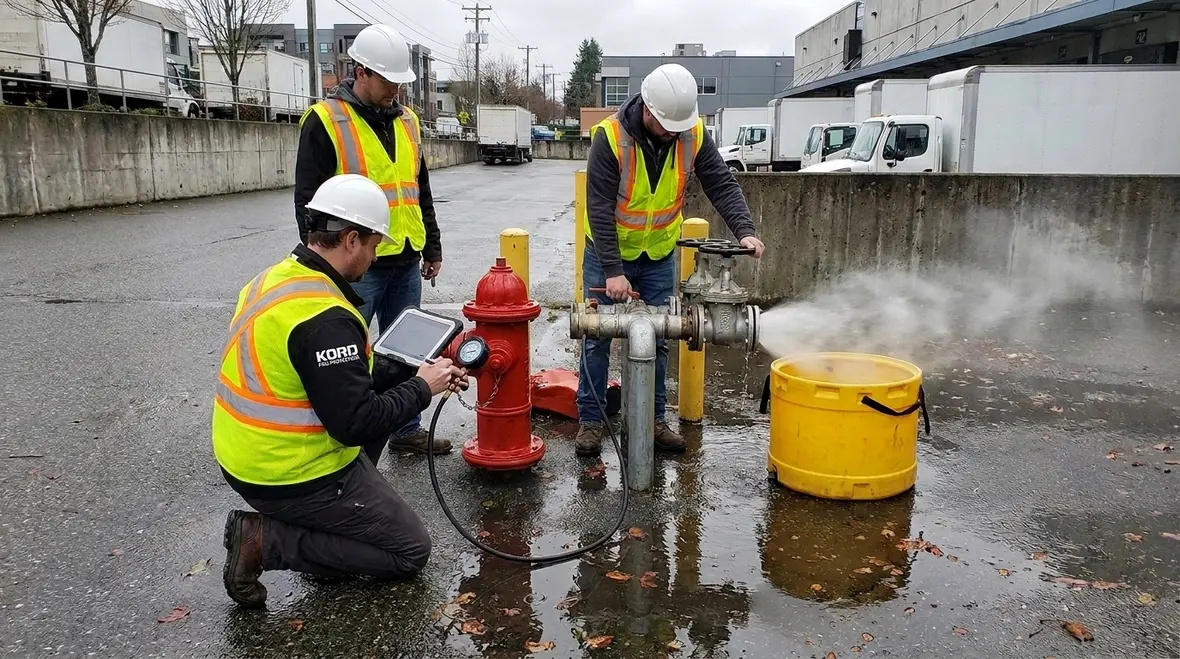
Why public hydrant testing and flushing matters for busy facilities
Fire water systems do not get better with neglect. They need routine checks, and public hydrant testing and flushing gives teams a way to see real world results. In addition, flushing removes settled material that can block valves, nozzles, and mains.
For operations that cannot afford downtime, this process protects more than compliance. It supports continuity. A blocked hydrant on a warehouse site can slow emergency response. Likewise, poor water flow at a retail complex can complicate evacuation and fire brigade action. Nobody wants the fire system to act like a dramatic movie prop that fails at the critical scene.
Benefits site owners can actually use
- Confirms available flow and pressure under realistic demand
- Removes sediment that can interfere with hydrant performance
- Supports safer response planning for staff and emergency crews
- Helps identify repair priorities before they become costly surprises
- Creates a record trail for maintenance reviews and future testing cycles
How the process works on site
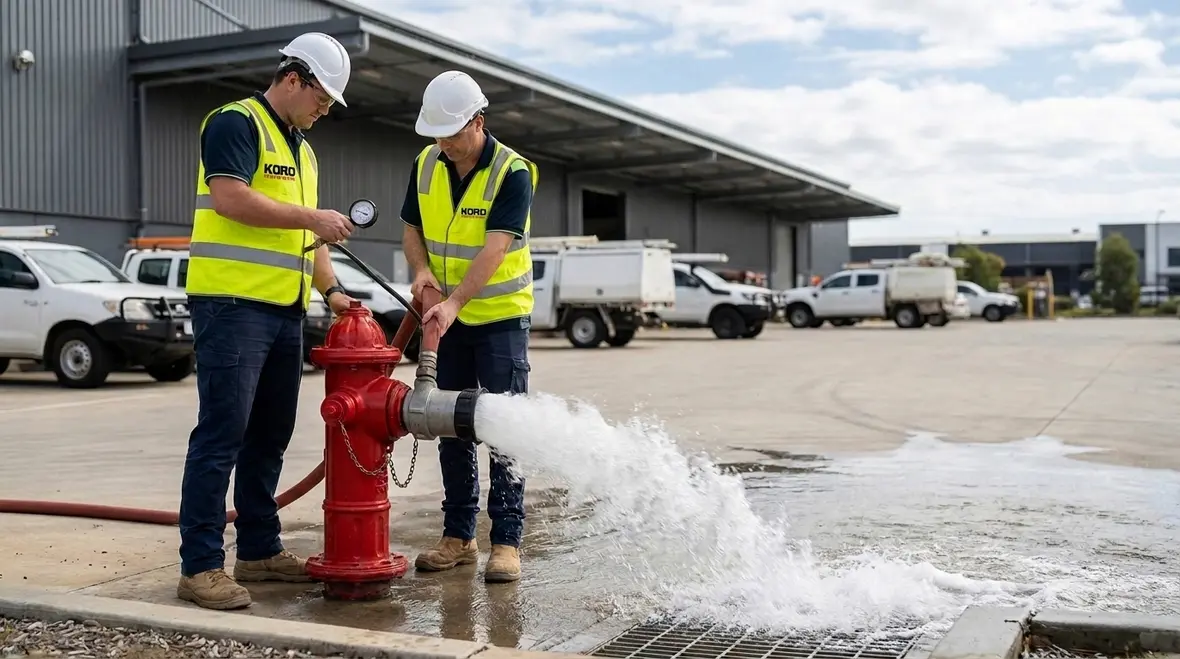
Public hydrant testing and flushing usually follows a planned sequence. First, the team identifies the hydrants to be tested and checks access, traffic, and safety controls. Then, they open the hydrants in a controlled way to measure flow and pressure. After that, they flush the system long enough to clear sediment and check water quality signs such as discoloration.
During the job, the team records the results and compares them against expected performance. If flow drops, pressure falls too low, or water appears heavily contaminated, the site may need further investigation. That is not a failure in the story. It is useful information, and it gives the owner a clear next step.
A practical sequence from start to finish
- Identify the hydrants and confirm the test plan.
- Review site access, nearby traffic, drainage, and safety controls.
- Measure pressure and flow under controlled conditions.
- Flush long enough to remove visible sediment and discolored water.
- Document findings and compare results against expected performance.
- Plan any follow up repairs, cleaning, or network review that the data suggests.
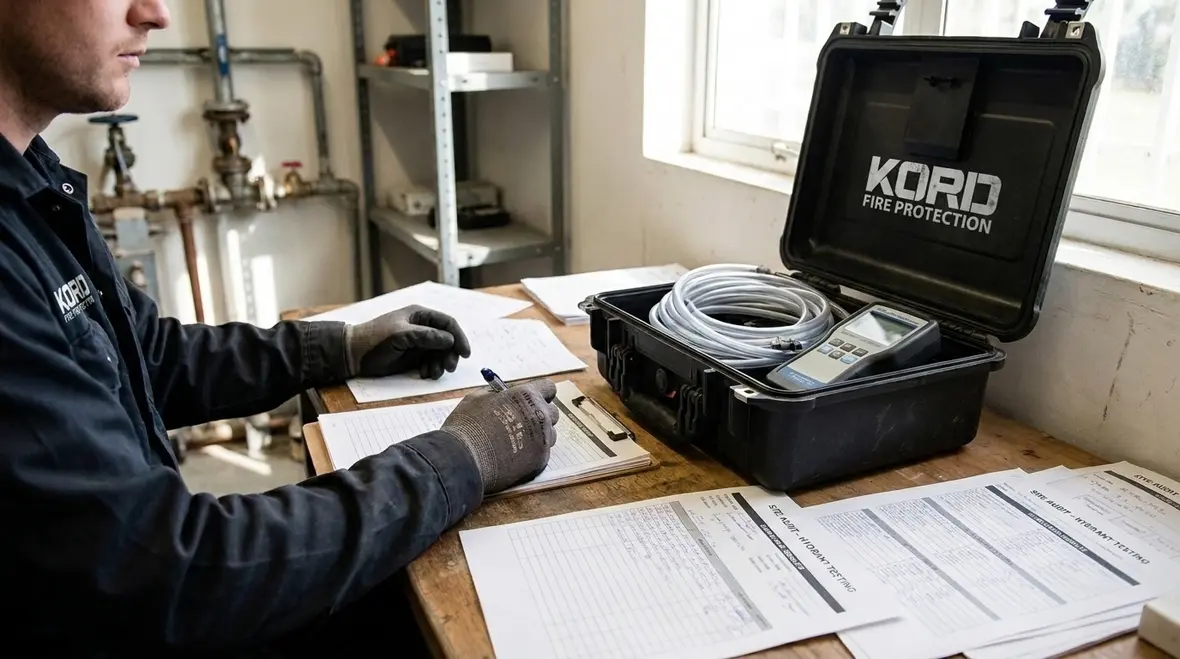
Dual columns: what the job checks and what it can reveal
What testing checks
- Available flow rate
- Water pressure under load
- Hydrant access and operation
- System cleanliness after flushing
What it can reveal
- Sediment buildup
- Undersized supply issues
- Stuck or damaged hydrants
- Hidden pressure loss across the network
Common issues found during hydrant flushing
Many sites discover the same few problems. Sediment often settles in low points and old pipework. Corrosion can also reduce internal diameter and cut flow. In addition, valves may not open fully, and nearby construction work can affect the network over time.
These findings are useful because they help facilities plan repairs before an incident. A system that passes a visual check may still perform poorly under demand. Therefore, testing and flushing should never be treated as a box ticking exercise. It is more like a health check, except the patient is a water supply that protects a building full of people and equipment.
Problems that like to stay hidden
Hydrants are good at looking innocent. A cap comes off, the paint still looks respectable, and everything seems perfectly fine. Then the test starts and the truth arrives in a muddy burst. Internal scale, partially shut valves, old mains, or poor distribution pressure can all sit quietly in the background until someone finally asks the system to perform. That is exactly why structured testing matters. It turns suspicion into evidence and evidence into action.
How Kord Fire Protection supports compliance and performance
Kord Fire Protection can become a vital partner for public hydrant testing and flushing because the work does not end with opening a hydrant. The process also needs planning, safe execution, accurate records, and practical follow up. Kord Fire Protection can help coordinate access, manage the testing sequence, document results, and identify any issues that need attention.
For multi site operators, this support is valuable because it keeps the process consistent across locations. Moreover, it reduces the burden on internal teams who already juggle maintenance, safety, and operations. Kord Fire Protection can also help turn test results into useful action, which is always better than letting paperwork sit in a folder like a forgotten sequel nobody asked for.
Why consistency matters across multiple properties
One site with good records is helpful. Ten sites with the same testing approach, reporting format, and follow up logic is much better. Consistency makes trend tracking easier, helps operators compare results across locations, and reduces the odds that one neglected hydrant becomes the weak link in an otherwise well-managed portfolio. It also means fewer last minute scrambles before audits, inspections, or major maintenance planning.
Best practice for industrial, retail, and commercial sites
Site managers should schedule testing with clear notice to occupants, security, and operations teams. They should also plan around traffic, drainage, and temporary water discharge. Furthermore, they should protect nearby assets from splash, debris, and slippery surfaces.
Records matter too. Test results should stay available for audits, maintenance reviews, and future planning. If a site sees repeated low readings, then the issue deserves deeper review rather than a shrug and a hope for the best. In many cases, that leads to pipe cleaning, valve repair, or supply upgrades.
A simple planning mindset that pays off
The best programs treat hydrant testing as part of a bigger reliability strategy. That means coordinating it with inspections, maintenance schedules, site changes, and any known water supply concerns. It also means making sure everyone who needs the information can actually find it later. A test result buried in someone’s inbox is technically a record, but not a very helpful one.
FAQ
Conclusion
Public hydrant testing and flushing keeps fire water systems honest, clean, and ready. For facilities that cannot afford weak supply or slow response, Kord Fire Protection offers the kind of support that turns compliance into real protection.
To improve reliability and reduce risk, partner with a team that knows the standard and knows the job. When hydrants are tested properly and records are kept in order, the whole site is in a better position when pressure is on in every sense of the word.

Join Our Newsletter!
Get the latest fire safety tips delivered straight to your inbox From our Newsletter.