
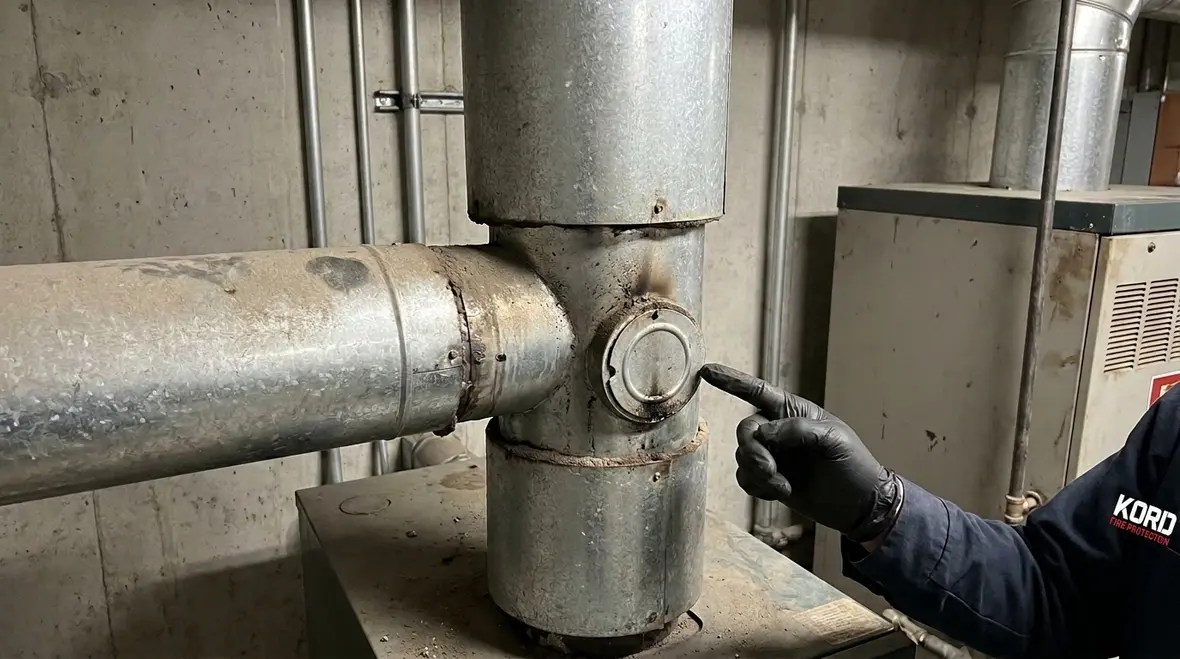
NFPA 31 Section 12.8: Flue Venting for Used Oil Appliances
Quick Answer: NFPA 31 Section 12.8 governs flue venting for used oil appliances by requiring properly sized, correctly routed, and safely supported vent systems that maintain combustion air and avoid unsafe flue gas leakage. Compliance also depends on correct installation, sealing, and ongoing inspection and maintenance to prevent failures.
What NFPA 31 Section 12.8 requires, in practical terms
NFPA 31 used oil appliance flue venting focuses on ensuring flue gases exit the facility safely and consistently under the full range of operating conditions. In commercial and industrial settings, venting performance often degrades due to poor routing, incorrect clearances, condensate and soot buildup, mechanical damage, or incomplete sealing at joints. Section 12.8 addresses these risks by tying acceptable venting design and workmanship to reliable draft, safe exhaust discharge, and maintainable components that technicians can verify during inspection.
For facilities seeking a clear installation and maintenance framework, Kord Fire Protection aligns field practices with NFPA expectations in its NFPA 31 practical guide to oil burning equipment installation. For a related service path near the field side of compliance, facilities can also review Kord Fire Protection’s fire pump testing requirements guide, which shows how documentation, inspection discipline, and system verification are handled in practice across critical fire protection equipment.
Key compliance principles behind Section 12.8
1) Vent sizing and system design that supports stable draft
Used oil appliance combustion products contain soot loading and, depending on operating conditions, can create heavier deposits than cleaner fuels. NFPA 31 used oil appliance flue venting expectations require venting systems that support stable draft so appliances do not spill products of combustion into occupied spaces. In practice, this means the vent diameter, length, and configuration must match the appliance manufacturer instructions and the applicable NFPA requirements, with correct elbows and transitions that avoid unnecessary resistance.
Common commercial failure pattern: a vent system that “fits” during installation but does not maintain the designed resistance profile after later modifications such as duct tie ins, added elbows, or obstruction from stored materials. Even small changes can reduce draft and increase the risk of backflow.
2) Correct routing, clearances, and protection from physical damage
Vent systems must be routed to avoid unacceptable heat exposure to combustible materials and to maintain safe clearances where required. In warehouses, retail service bays, and light industrial units, the vent system typically runs through or near general storage areas. Section 12.8 practices emphasize that the vent must also be protected from impact and abrasion, because punctures or dents can create leakage paths.
Operators frequently underestimate the risk of mechanical damage from forklifts, pallet jacks, scaffold handling, or maintenance access. A vent that is “intact” visually can still leak if joints have separated, gaskets have aged, or fasteners have loosened under thermal cycling.
3) Joint integrity, sealing, and cleanout accessibility
Flue venting success depends on tight construction at joints and fittings. NFPA 31 Section 12.8 concepts require vent components to be assembled to prevent flue gas leakage, particularly in concealed spaces like plant rooms or ceilings. For field verification, technicians typically focus on where leaks occur most often: mid run joints, connection collars, and transitions near the appliance and termination area.
Equally important, the system must support cleaning and inspection. Condensate and soot accumulation reduce effective vent cross section and increase resistance. When cleanouts are missing, blocked, or poorly located, cleaning becomes inconsistent, and performance gradually declines. Section 12.8 compliance therefore aligns with maintainability, not just initial installation.
How commercial facilities can inspect and maintain Section 12.8 venting systems
Operational checks that reveal venting problems early
Commercial inspections should go beyond a basic visual pass. When used oil appliances experience venting issues, the symptoms often appear as combustion instability, persistent odors, unusual soot patterns, or nuisance lockouts. Kord Fire Protection typically uses a workflow that pairs vent system checks with appliance combustion verification to confirm that draft and venting conditions remain within acceptable limits.
- Draft and spill risk indicators: observe appliance behavior during start up and steady operation for signs of improper venting.
- Joint and seam inspection: confirm no gaps, no degraded gaskets, and no signs of soot staining that can indicate leakage.
- Termination condition: inspect the discharge area for obstructions, improper height, or weather related issues that can affect exhaust dilution and removal.
Cleaning and soot management for used oil loads
Used oil fuel characteristics can increase soot deposition. A venting system that appears acceptable on day one often becomes noncompliant over time due to buildup and condensate effects. Maintenance programs should define cleaning intervals based on actual performance, past soot accumulation, and operating hours. Where facilities operate multiple shifts, venting changes can occur quickly, and “annual only” schedules can fail to detect degrading conditions.
Technicians also verify that cleaning restores original internal surfaces and does not damage lining materials, especially where specialty vent components or liners are used. Damaged internal surfaces can increase turbulence and accelerate buildup.
Documentation and evidence for audits
In commercial and retail environments, compliance often includes demonstrating that venting systems received periodic inspection and cleaning. Kord Fire Protection supports facilities with service records that align field observations to NFPA expectations, helping property managers and operators demonstrate due diligence during insurer reviews, tenancy handovers, and safety audits.
Where Section 12.8 compliance commonly breaks down
1) Incorrect adapters or mismatched vent components
Used oil appliances often connect to vent systems through adapters or connection collars. Failures occur when components are substituted, improperly seated, or not compatible with the vent material system. Improper connections can leak flue gas or create resistance that reduces draft. Replacement parts must match manufacturer specifications and the design intent that supports NFPA compliant performance.
2) Poor termination and wind effects
Termination location and discharge configuration affect dilution of exhaust and removal of combustion products. In commercial facilities with rooftop plant rooms, parapets, or nearby ventilation intakes, wind patterns can drive exhaust back toward openings. Terminations also get obstructed by construction debris, rooftop materials, or temporary storage. Section 12.8 compliance therefore requires termination checks as a routine part of inspections.
3) Condensate and corrosion risk
Condensate can form depending on operating temperature and installation characteristics. Condensate promotes corrosion and can loosen seals or contribute to deterioration around joints. Facilities should watch for early signs such as localized staining, unexpected residue at seams, and reduced vent performance. Maintenance teams then adjust cleaning frequency and verify component condition.
4) Alterations after commissioning
Many venting problems emerge after the initial installation. Examples include ceiling renovations, HVAC ductwork changes, installation of signage supports, or added insulation. These changes can reduce clearances, hide leaks, or interfere with vent airflow. A controlled change management process, combined with post change verification, helps maintain compliance.
Installation alignment: manufacturer instructions plus NFPA intent
Section 12.8 should be treated as an operational safety framework rather than a checklist item. NFPA requirements work in conjunction with appliance manufacturer instructions, vent component listings, and system design constraints. If either the appliance spec or the vent system configuration changes, facilities should treat the venting arrangement as needing verification rather than assuming “it will still work.”
To strengthen installation decisions from the start, Kord Fire Protection recommends building a compliance package that includes vent route drawings, component cut sheets, connection details, and commissioning records. The NFPA 31 practical guide to oil burning equipment installation provides additional context on typical installation considerations that affect long term venting performance.
Frequently Asked Questions
Keep your used oil appliance venting compliant
NFPA 31 used oil appliance flue venting compliance depends on correct installation, tight joint integrity, stable draft, and dependable maintenance. Kord Fire Protection helps commercial and industrial facilities verify venting condition, document inspections, and manage cleaning and testing so appliances operate safely over time. Contact Kord Fire Protection to schedule an assessment of your flue venting system and align ongoing maintenance with NFPA expectations.

Join Our Newsletter!
Get the latest fire safety tips delivered straight to your inbox From our Newsletter.



