NFPA 25 Water Supply Inspection and Testing Requirements
Quick Answer
NFPA 25 §§ 4.4-4.6 outline how facilities should verify water supplies, then inspect and test them on a schedule. In practice, this means documenting the status of hydrants, tanks, meters, pumps, and related components, so fire protection systems work when they must. Kord Fire Protection can support these jobs through its full fire protection services.
In Australia’s industrial and commercial world, fire protection cannot rely on wishful thinking, and the NFPA 25 water supply inspection and testing requirements leave little room for guesswork. Within the first few sections, NFPA 25 §§ 4.4-4.6 focuses on water supply status, then moves into inspection and testing basics so a site can confirm the supply performs as intended. From here, the article goes deeper into what “status” really means on a live facility, how inspections should be structured, and how testing ties back to real-world performance. And yes, it is detailed, because fire protection is not the area where people improvise like it is a TV drama.
Water supply status on a real site
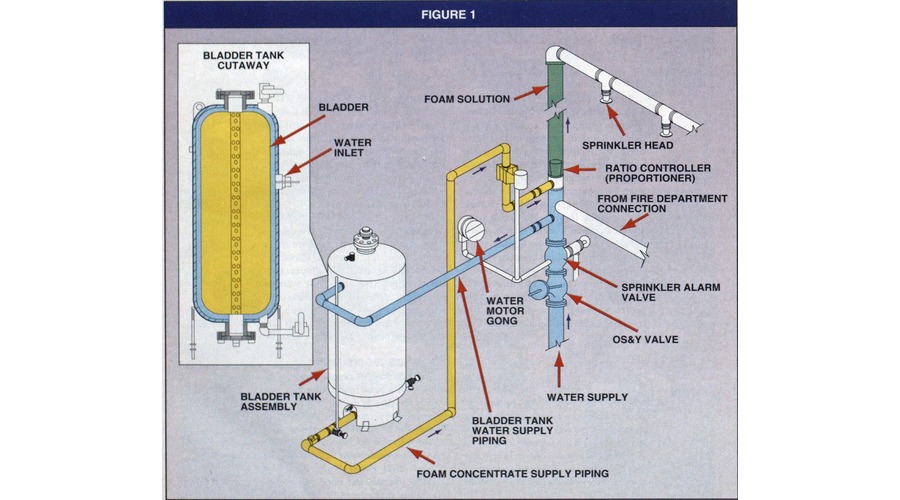
NFPA 25 water supply inspection and testing requirements start with a simple idea: the facility must know what the water supply can deliver, at the right pressure and flow, at the time it matters. However, “known” does not mean a person once looked at a gauge and said, “Seems fine.” Instead, a facility should confirm operational readiness across the chain. That chain often includes:
- Public water supply performance, if municipal water is part of the system
- Fire pumps and pump controllers, including start and stop behavior
- Water tanks or other stored water sources, where used
- Valves, check valves, strainers, and relief devices that affect flow
- Fire department connections and any associated fittings
To keep this calm and controlled, teams should treat water supply status like a living file. As equipment gets repaired, bypassed, or replaced, the documented status must stay current. Otherwise, the organization ends up with the classic problem: paperwork that looks great in a binder but does not match the actual plant floor. That is like bringing a flip phone to a modern network troubleshooting session. It technically exists, but it does not help much.
Why status matters before anyone touches a test valve
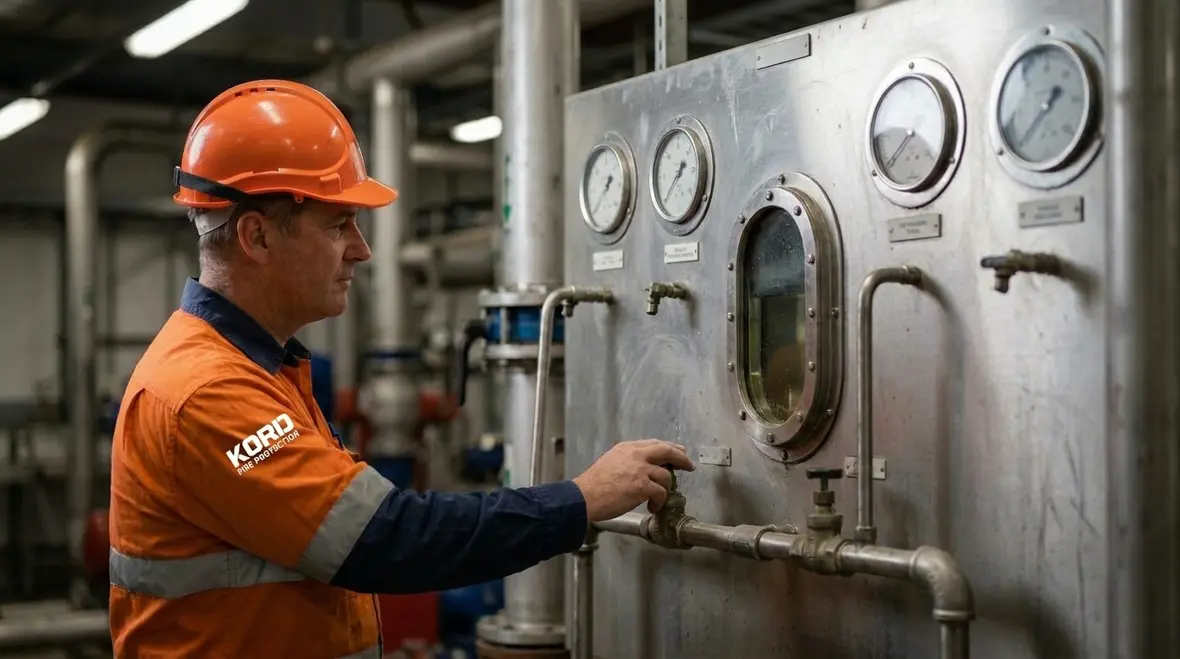
A water supply can look healthy on paper and still disappoint when demand actually arrives. That is why status is more than a nameplate review. Teams should verify current configuration, recent impairments, isolation points, and any conditions that might reduce performance. If a hydrant is blocked, a valve is shut, or a tank level has drifted below expectation, the system may be quietly preparing an unpleasant surprise.
This also connects nicely with Kord’s broader NFPA 25 overview for water-based fire protection systems, which helps frame where water supply responsibilities sit in the larger maintenance picture. In other words, water supply status is not some isolated side quest. It is one of the main plot lines.
Inspection basics that prevent surprises
When a facility performs NFPA 25 inspections, it should aim for consistency, traceability, and early correction. First, the team should follow a defined schedule so inspections happen at the right frequency for each water supply component. Next, they should use checklists that reflect what the system needs to do, not just what someone expects it to do.
Inspections typically focus on condition and readiness. That means verifying that components are accessible, secured, and not obstructed. It also means checking that key devices are set correctly and that abnormal conditions trigger follow-up action. For example, a valve left in the wrong position can create a hidden failure path. Similarly, a fire pump that runs intermittently or with unusual behavior can still pass a cursory look and fail under real demand.
Good inspection programs also include information flow. When technicians find issues, they should document what they observed, what they measured, and what they recommended. Then, leadership should decide whether to repair immediately or schedule corrective work based on risk. In short, inspections should not become “tick the box” exercises. They should become the facility’s way of staying ahead of failure modes.
A checklist is helpful, but only if people actually think while using it
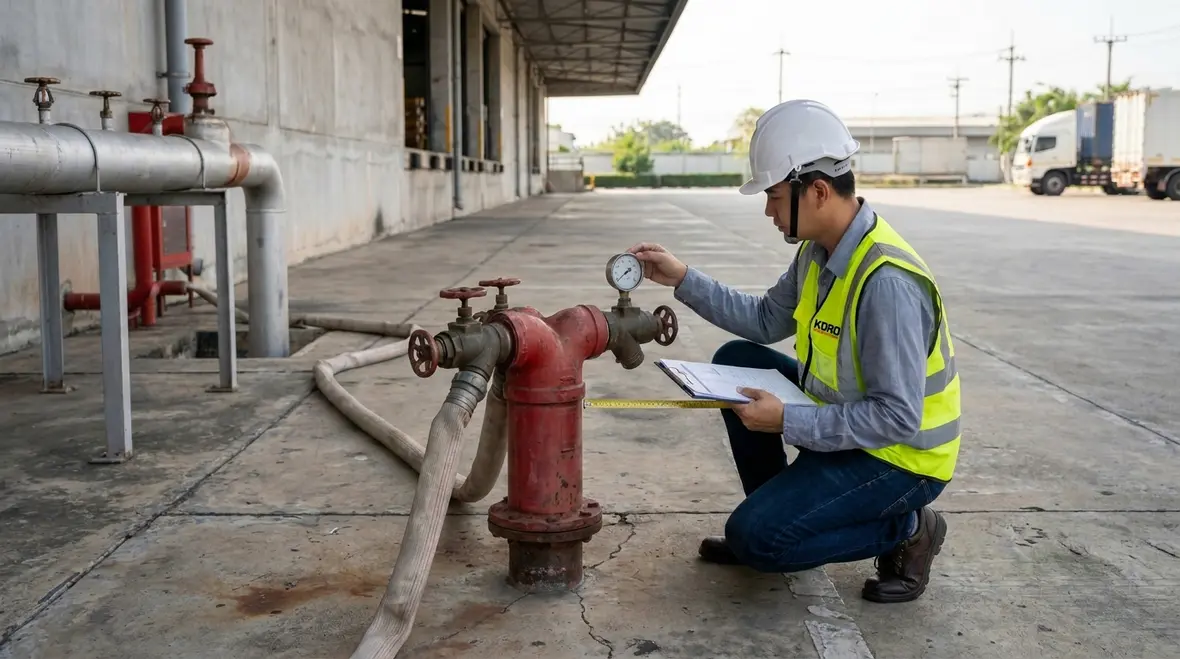
The best inspection sheets guide attention rather than replace it. A technician should not only note that a controller exists, but whether indicators, accessibility, settings, and surrounding conditions support reliable use. A nice checklist without observation discipline is just a more organized version of guessing, and guessing is not exactly a premium fire protection strategy.
Facilities with complex assets often benefit from aligning findings with related issues seen elsewhere in the system. If repeated deficiencies keep showing up, a broader review may be needed. That is one reason Kord’s inspection-focused resources, including related discussions around suppression deficiencies and checklist discipline, are useful for connecting isolated findings to a bigger system story.
Testing that proves performance under demand
Testing moves from “looks okay” to “performs okay.” Therefore, fire protection water supply testing should reflect system function, not just component function. For example, it is not enough to confirm that a pump exists. The facility needs confidence that it can deliver the required flow and pressure when conditions change, such as when multiple sprinklers or outlets operate at once.
In practical terms, testing often involves staged checks and measurements, using calibrated instruments and established procedures. Teams should plan for safe conditions, confirm system status before tests, and ensure test results get recorded. Moreover, any test that falls outside expected parameters should trigger a corrective action plan, not a shrug.
For industrial sites, testing also needs to consider operational realities. A manufacturing plant may run processes that affect water pressure, air pressure, or control panel behavior. Retail facilities may have different service rhythms and contractor access. Across all these settings, testing needs clear coordination so the facility does not interrupt operations unnecessarily. After all, nobody wants a fire pump test that turns the warehouse into a chaotic science fair.
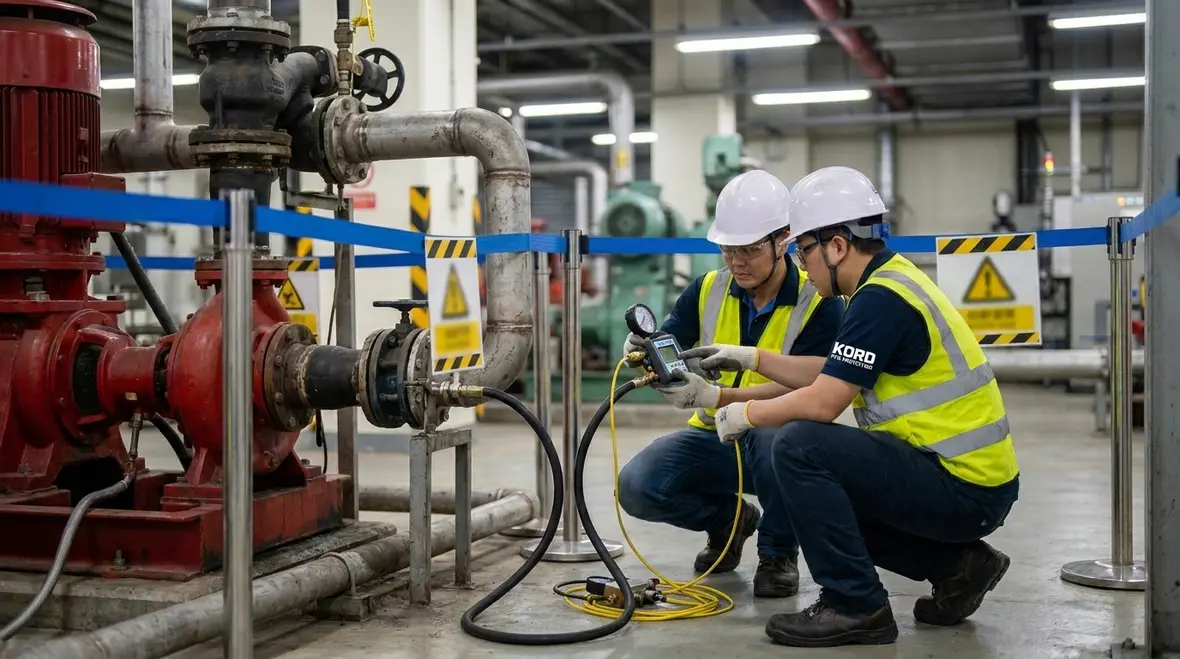
Performance testing should answer real questions
Can the source deliver the needed flow. Can the pressure remain within expected range. Does the pump start correctly. Do controllers behave normally. Are readings stable enough to trust. These are the questions that matter. A pass or fail stamp is useful, but measured data tells the real story and helps teams see patterns before those patterns become expensive emergencies.
That is also why many teams review pump-specific material alongside supply requirements. When pump behavior affects the entire water path, testing should connect equipment performance with the system’s actual duty. It is the difference between checking whether the actor showed up and confirming whether they know their lines.
How facilities track results and stay compliant
Compliance is not just about doing the work. It is also about proving the work happened. Facilities should maintain inspection and testing records that show what was checked, when it was done, who performed it, and what the results were. In addition, records should show any deficiencies, repairs, and follow-up verification.
To keep the program manageable across multiple asset types, teams can align water supply records with the facility’s broader maintenance management approach. That does not mean copying everything into one system with zero context. Instead, it means ensuring the most important data is available fast during audits, incident reviews, and handovers.
Transitioning from “reactive fixes” to “controlled verification” reduces risk. Also, it helps leadership budget correctly. When test results show a pattern, the organization can plan repairs before the pattern turns into downtime or system failure.
Records should help people act, not just satisfy a filing cabinet
A useful record lets the next technician understand what changed, what was measured, and what still needs follow-up. It should be clear enough for audits and practical enough for operations. If the documentation only makes sense to the one person who wrote it three coffee cups ago, the site does not really have usable control over its program.
Where Kord Fire Protection fits as a partner
Many facilities try to manage water supply inspections and testing with scattered resources: one contractor for pumps, another for valves, and someone else for documentation. That approach works until it does not. At that point, issues can slip through the cracks because ownership becomes fuzzy.
This is where Kord Fire Protection becomes a vital partner. Kord can help facilities structure the program so inspections and testing align across components and across departments. That partnership matters because the water supply chain is connected. A valve service without verification of system performance is like changing the engine oil but never checking if the car starts. You might still end up stranded.
To make collaboration easier for industrial, retail, and commercial sites across Australia, Kord can support the workflow around planning, access coordination, measurement discipline, and documentation readiness. As a result, facility managers gain a calmer path to readiness, and maintenance teams get clear, practical guidance rather than confusing assumptions.
Example workflow for a dependable program
Below is a simple workflow that teams can adapt to their site. It supports consistent compliance and improves response when conditions change.
- Confirm current water supply configuration and update the status file
- Schedule inspections based on component role and risk
- Perform inspections using defined check points and record findings
- Plan testing around operational windows and safe access
- Measure, record, and compare results to expected performance
- Address deficiencies with clear corrective actions and retest where needed
How this workflow helps on busy sites
The real benefit of a structured workflow is that it reduces friction. Teams know what comes next, contractors know what information they need, and leadership gets cleaner visibility into risk. It also makes repeat work less dramatic, which is ideal because nobody wants their compliance program to feel like an action movie with worse dialogue.
Quick reference details
To provide a clear snapshot, facilities can use a structured view of responsibilities and outputs. This table-style guidance helps teams coordinate internal stakeholders and external contractors.
| Area | What the team verifies | What records should show |
| Water supply status | Operational readiness, configuration, and any known constraints | System notes, configuration updates, and any limitations |
| Inspection | Condition, accessibility, valve positions, and readiness of devices | Inspection results, measured observations where required, and deficiencies |
| Testing | Performance under demand conditions that reflect system operation | Test parameters, readings, pass fail outcomes, and corrective actions |
FAQ: NFPA 25 water supply inspection and testing requirements
Conclusion
NFPA 25 §§ 4.4-4.6 pushes facilities to confirm water supply status, then inspect and test so systems perform when demanded. That means disciplined scheduling, clear documentation, and performance-focused testing.
Kord Fire Protection can help turn these requirements into a smooth, low stress program across industrial, retail, and commercial sites in Australia. Reach out to Kord today to review your current approach and strengthen readiness before the next audit, or the next real emergency.

Join Our Newsletter!
Get the latest fire safety tips delivered straight to your inbox From our Newsletter.