
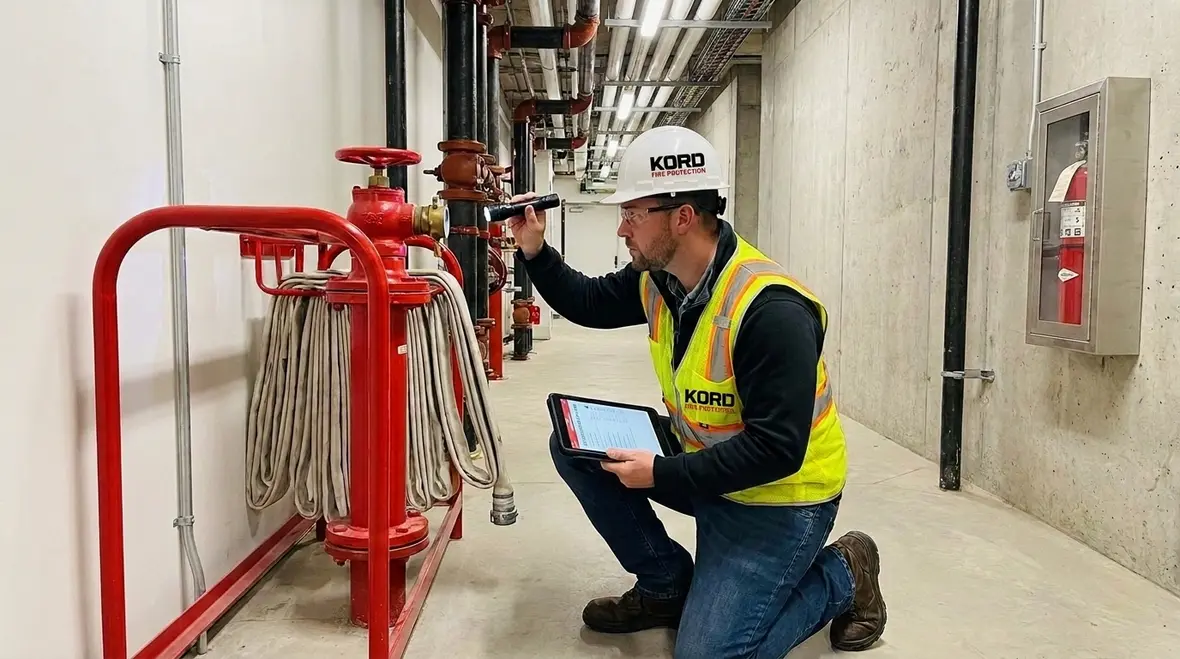
NFPA 25C Section 6.2: Standpipe System Inspection Requirements and Procedures
Quick Answer: NFPA 25C Section 6.2 requires systematic inspection of standpipe systems to confirm readiness, correct physical condition, and proper operation of components. Procedures cover visual checks, in service condition verification, hose and valve inspection, and functional testing steps based on system design and risk.
Why NFPA 25C Section 6.2 inspections matter in real commercial facilities
Standpipe systems support firefighter operations and often sit in high traffic, variable maintenance environments such as retail back hallways, industrial corridors, and mixed occupancy buildings. In practice, standpipe problems rarely show up as dramatic failures. They show up as missing caps, seized valves, degraded hose, blocked inlets, incorrect signage, impaired fire department connections, or components that look present but cannot operate when needed.
That is why NFPA 25C Section 6.2 standpipe system inspection requirements procedures focus on repeatable, documented checks that confirm the system stays operable between major maintenance cycles.
For facilities that need hands on support with standpipe readiness, repairs, and scheduled compliance work, standpipe inspection services from Kord Fire Protection fit naturally into this conversation and give teams a practical next step beyond the checklist.
What Section 6.2 expects before anyone touches a standpipe valve
Before inspection begins, commercial maintainers typically align on three items: system identification, inspection scope, and inspection frequency. A standpipe inspection should start with confirming the correct configuration (manual standpipe, automatic standpipe, or combined system) and verifying each component location is accessible and clearly labeled.
1) Confirm scope and system configuration
- Verify standpipe types and whether valves are normally open or normally closed, based on the system design.
- Identify each floor outlet, hose connection point, and check associated accessories such as caps, threads, hangers, and hose storage hardware.
- Confirm the fire department connection arrangement and any auxiliary devices tied to standpipe operation.
2) Establish safety controls for inspection teams
Standpipe inspection can involve pressurized components and moving valves. Facilities typically implement the same pre task controls used for water based fire protection work: isolation where required, clear work area management, and confirmation that no construction activity will mask deficiencies or damage equipment.
3) Use the same documentation standard every cycle
NFPA 25 style maintenance relies on repeatability. Teams document what they inspected, what they observed, and what actions they took. A practical compliance approach requires a consistent inspection form, an inspection route plan, and a method to track corrections to closure.
Inspection requirements and procedures under Section 6.2: step by step
While facility practices vary by AHJ expectations and internal maintenance programs, Section 6.2 inspections follow a predictable workflow: visual confirmation, component condition checks, and operational verification where required by the system design. The following procedure approach reflects how competent teams implement NFPA 25C Section 6.2 standpipe system inspection requirements procedures in the field.
Step 1: Perform a walk down and visual condition assessment
Teams begin with a walk down of the standpipe system and associated outlets. Visual inspection focuses on readiness and physical integrity.
- Confirm hose valves, outlet caps, and any protective covers are present and in good condition.
- Verify outlets are unobstructed. Look for stored materials, blocked cabinets, damaged outlet threads, or loose mounting.
- Check signage, labeling, and identification for each standpipe outlet and for the location of standpipe and fire department connections.
Step 2: Inspect standpipe outlets, hose connections, and hose condition
Hose and connection components commonly fail inspection due to everyday handling. Even in well run facilities, hose abrasion, coupling thread wear, and storage location damage can accumulate.
- Inspect hose couplings for damage, missing caps, and thread condition.
- Check hose storage condition, including proper seating, secure mounting, and absence of kinks that permanently deform hose.
- Verify quick connect or threaded interfaces match the outlet design and that nothing prevents a fire department connection.
Commercial compliance teams typically treat hose readiness as an operational requirement, not a housekeeping item. If the hose cannot be connected or deployed quickly, the standpipe system does not perform as intended.
Step 3: Inspect and verify standpipe valve accessibility and physical condition
Valve problems often originate from obstruction, tampering, or long term lack of operation. During inspection, teams check each valve for condition and accessibility.
- Verify valves and valve handles are present, secured, and not damaged.
- Confirm valve locations allow safe access without removing building components or stepping through hazards.
- Inspect for signs of corrosion, leaking, paint buildup over valve hardware, or missing identification for valve position.
Step 4: Confirm correct control of water flow and pressure behavior where required
Depending on system design and local enforcement, functional verification may include operational checks of valves and confirmation of water delivery behavior at outlets or at other designated points. The intent remains consistent: the system should respond as intended when firefighters or responders need it.
Operational checks should be performed by trained technicians following site procedures to prevent unintended water discharge, avoid interference with other building operations, and maintain water supply integrity.
Step 5: Inspect fire department connection and related hardware coordination
Fire department connections often sit at exterior or semi exterior locations and face corrosion, vandalism risk, and impact damage from maintenance operations. Inspection typically includes:
- Verification of protective caps, inlets, and check assemblies if applicable.
- Confirmation that the FDC is accessible, unobstructed, and properly identified.
- Assessment of signs of leakage, damaged threads, or missing components.
Step 6: Record findings, categorize deficiencies, and verify closure
A compliant maintenance program closes the loop. Teams document observations with enough specificity to guide repairs, then track corrective actions to completion.
- Use a deficiency classification approach based on impact to operability.
- Verify corrections were installed properly and that the system returns to an operable condition.
- Confirm affected components remain accessible for future inspections.
Common standpipe inspection failures that create compliance risk
Standpipe systems can pass the first glance and still fail the operational intent of the inspection. The most frequent issues seen during commercial maintenance include:
- Obstructed outlets and cabinets: Stored materials, locked cages without access, or construction debris block hose deployment.
- Damaged or missing hose and caps: Outlet hardware missing or hose coupling thread degradation prevents connection.
- Valve corrosion or seized operation: Long periods without controlled verification lead to unreliable valve response.
- FDC hardware degradation: Corrosion, impact damage, and missing protective covers reduce reliability.
- Incorrect labeling or signage: Responders lose time locating correct points, especially in large retail and industrial complexes.
These issues typically become compliance findings because they directly affect readiness and operability. Kord Fire Protection teams routinely address these failure points during ongoing testing, inspection routing, and corrective maintenance cycles.
How commercial facilities should integrate standpipe maintenance with other water based protection work
Standpipes rarely operate in isolation. Many buildings pair standpipe systems with automatic sprinklers, water flow supervision, fire department connections, and shared water supply arrangements. The most effective compliance program coordinates inspection schedules, technician access, and corrective actions across systems.
Coordinate with automatic sprinkler system inspection cycles
Facilities often streamline compliance by aligning standpipe checks with sprinkler maintenance windows and water supply verification. For context on how installation standards and maintenance planning influence readiness, see:
NFPA 13 overview for automatic fire sprinkler system installation
Maintain a unified approach for complete water based fire protection systems
Standpipe inspections work best as part of a broader maintenance breakdown that accounts for interfaces between components. For a systems level view, use:
NFPA 25 overview for complete water based fire protection systems maintenance breakdown
Account for local code enforcement realities, including California
In some jurisdictions, commercial owners face added administrative steps and verification preferences. If the facility operates in California, this resource helps teams anticipate practical interpretation considerations:
Fire sprinkler code California explained
For broader industry context and fire pump and water supply ecosystem knowledge, see:
Why Kord Fire Protection is a strong partner for Section 6.2 compliance
Commercial and industrial maintenance teams face operational constraints such as tenant turnover, occupied floor access, limited shutdown windows, and frequent facility renovations. Kord Fire Protection supports compliance with a workflow designed for real buildings: repeatable inspection routing, clear deficiency documentation, and corrective maintenance execution that restores operability and accessibility for the next cycle.
For facilities seeking ongoing support, Kord Fire Protection resources are available through kordelectric.com and kordfire.com.au.
Frequently Asked Questions
Next step: schedule a readiness focused standpipe inspection
To maintain defensible compliance with NFPA 25C Section 6.2 standpipe system inspection requirements procedures, schedule an on site inspection and receive a documented deficiency report with correction tracking. Kord Fire Protection can coordinate inspections around building operations and restore operability quickly. Contact Kord Fire Protection to confirm scope, inspection windows, and corrective maintenance options for your standpipe and water based fire protection systems.

Join Our Newsletter!
Get the latest fire safety tips delivered straight to your inbox From our Newsletter.


