
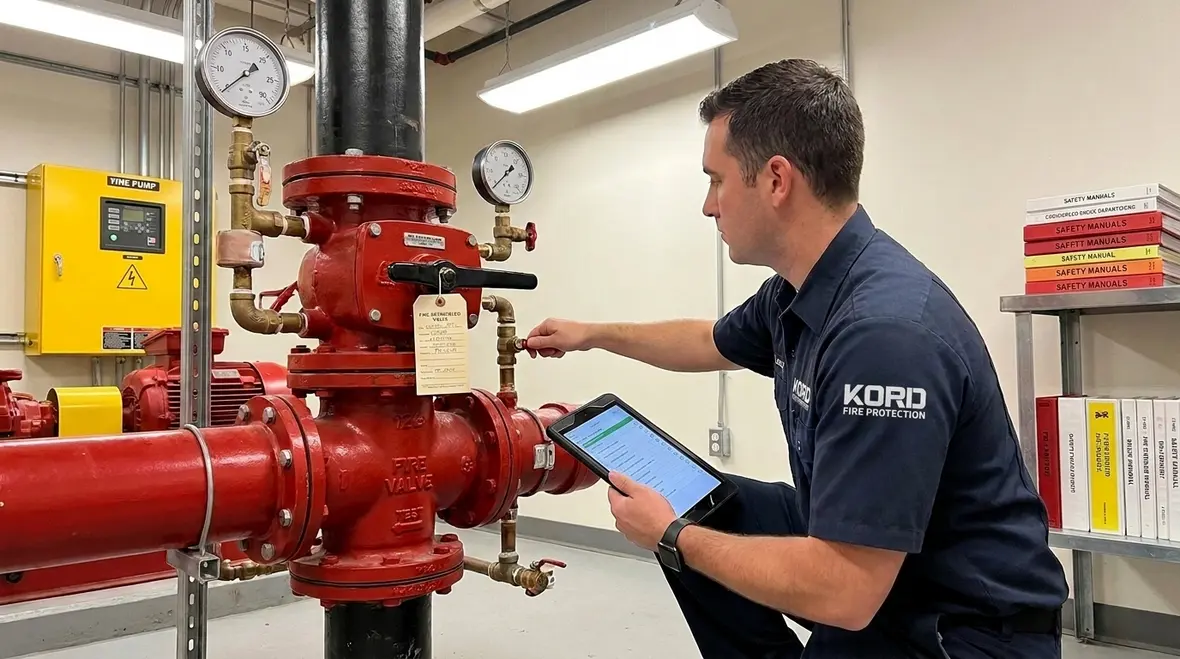
NFPA 25C Section 15.7: Restoring Fire Protection Systems to Service
Quick Answer
NFPA 25C Section 15.7 restoring fire protection systems to service requires documented verification that repairs and tests restore normal operating condition. It focuses on readiness, correct configuration, and functional performance so systems do not return to service with unresolved impairments or incomplete testing.
Why “Restoring to Service” Is a compliance milestone
Commercial facilities treat fire protection impairments as operational risk. When sprinkler, standpipe, water mist, foam systems, or related components are taken out of service for maintenance, testing, repairs, or replacement, facilities must return them to readiness in a controlled manner. NFPA 25C Section 15.7 restoring fire protection systems to service establishes the expectations for that return process, including what must be checked before normal operations resume.
In practice, the compliance challenge often comes down to discipline. Repairs can be completed, but system configuration, controller status, isolation valves, pressure readings, alarm device states, and test results may not be fully verified. The result can be a system that appears “operational” yet fails to perform as required when it matters.
What Section 15.7 expects before systems are back online
NFPA 25C Section 15.7 restoring fire protection systems to service centers on confirming that impairment conditions have been cleared and that the system is functioning as intended. The key is verification, not assumption. Facilities should use a repeatable workflow that ties work completion to test evidence and configuration checks.
1) Confirm the system returned to its correct operating configuration
- All supervisory conditions are cleared, including controller trouble indications and supervisory switch states.
- Valves left in off normal positions are returned to their required positions.
- Devices removed for testing or maintenance are reinstalled and secured with correct settings.
- Any temporary water supply, test connections, or bypasses are removed, then verified to return to the system design path.
2) Validate functional performance through required testing and verification
The standard intent is that restored systems demonstrate performance consistent with applicable inspection, testing, and maintenance requirements. For water based systems, this commonly includes verification of pressure, flow capabilities, alarms, and correct operation of initiating and supervisory functions. For facilities managing multiple systems across buildings, the return to service step should include confirmation that the specific system that was impaired is the one fully verified.
3) Document the restoration and attach test evidence to the work record
Inspection and maintenance compliance in commercial environments depends on traceability. Section 15.7 expectations are satisfied more reliably when restoration is documented with the repair scope, test dates, measured results, device identification, and confirmation that the system is back in service.
This documentation supports internal audits, property insurance reviews, and authority having jurisdiction discussions. It also reduces repeat downtime because the next impairment event starts with clear historical context.
Operational procedure: a practical restoration workflow
Facilities typically reduce risk by using a controlled procedure for restoration. The following workflow aligns with the compliance mindset behind NFPA 25C Section 15.7 restoring fire protection systems to service. Teams that want broader repair and readiness support often tie this process into full fire protection services so inspections, repairs, testing, and closeout documentation stay connected.
Step 1: Manage the impairment status before work begins
Before any maintenance or repair starts, the facility should define the affected system boundaries, impairments, and expected duration. The impairment status should guide monitoring, occupancy protection steps, and notification procedures. The restoration phase should not “guess” which impairments remain active.
Step 2: Perform repairs using component level acceptance criteria
Common restoration failures occur when repairs complete but components are not set correctly. Examples include incorrect pressure set points, improperly seated sensors, incorrect valve actuator settings, or missed replacement of damaged fittings. The best practice includes verifying that repaired components meet manufacturer instructions and system design requirements.
Step 3: Clear supervisory signals only after verification
Supervisory alarm conditions should be cleared after confirming the physical and operational state supports normal service. Clearing signals prematurely can mask unresolved valve position issues or an incomplete restoration sequence.
Step 4: Conduct the required post repair checks
Post repair checks should address both alarm and operational performance. For water based systems, this often includes monitoring pressures and verifying correct operation of relevant alarms and initiating devices per the applicable maintenance plan. For systems tied into fire alarm control units, cross checks ensure that signal processing and annunciation match normal operating states.
Step 5: Verify the system is ready for demand
“Ready for demand” means the system can perform as intended within design parameters. Facilities should confirm that the system can achieve required pressures or flows and that no temporary configuration remains. A final restoration confirmation should occur immediately before normal occupancy activities return to standard, not days later.
Step 6: Close out work orders with restoration evidence
Work order closeout should link the restoration confirmation to test results, valve status checks, controller status review, and any required documentation. When multiple trades touch the same systems, standardized closeout fields reduce missed steps.
Common commercial failure points that keep systems from “restoring” correctly
Audits and site reviews regularly find similar issues. These are not always installation mistakes. They often result from maintenance turnover, split responsibilities across contractors, and incomplete restoration discipline after testing.
Valve position drift after maintenance
Supervisory water based systems rely on correct valve positions. After repairs, valves can remain closed or partially set, or they can be left in bypass configurations used during testing. Restoration requires a physical verification before returning to service.
Controller status cleared without verifying device states
Fire alarm or system control panels may show the system as normal after manual reset, but the underlying condition could remain incorrect. Clearing trouble indications should never substitute for verification of the system’s physical operational readiness.
Temporary test connections not removed
Temporary test piping, jumpers, or modified flow paths can remain in place, altering system behavior. Restoration should include confirmation that the final configuration matches the design intent and maintenance documentation.
Inconsistent maintenance records across buildings or tenants
Multi tenant retail and industrial campuses often have separate maintenance logs for each building. When restoration documentation is inconsistent, compliance reviews become time consuming and operational risk increases. Standardized record keeping supports consistent adherence to NFPA 25C Section 15.7 restoring fire protection systems to service.
How to align restoration with water based system maintenance standards
Restoration to service rarely happens in isolation. It typically follows inspections and maintenance cycles for water based systems. Facilities benefit from linking the restoration process to broader maintenance planning, including inspection intervals, test scope, and system design considerations.
To strengthen the overall maintenance baseline, organizations often start with system installation and design context and then connect that to maintenance expectations:
- For automatic sprinkler installation fundamentals that influence how systems should behave under test and demand, review: NFPA 13 Overview Automatic Fire Sprinkler System Installation.
- For a structured approach to maintenance breakdown across water based systems, use: NFPA 25 Overview Complete Water Based Fire Protection Systems Maintenance Breakdown.
- For jurisdiction specific considerations affecting expectations and enforcement, see: Fire Sprinkler Code California Explained.
Where applicable, facility teams also reference supporting industry resources such as Fire Pumps information resources when restoration includes pump performance verification, jockey pump status checks, or controller behavior reviews.
Why Kord Fire Protection helps facilities close the restoration gap
Restoration to service succeeds when field work, test execution, and documentation operate as one system. Kord Fire Protection supports commercial facilities with structured impairment and restoration workflows designed to reduce the most common compliance gaps: unresolved impairments, incomplete verification, and insufficient evidence at closeout.
For ongoing compliance across retail, industrial, and commercial buildings, Kord Fire Protection and related resources from kordelectric.com and kordfire.com.au provide continuity across life safety disciplines, which is especially valuable after repairs that affect system alarms, controls, and water supply performance.
In short, NFPA 25C Section 15.7 restoring fire protection systems to service is not satisfied by turning the system back on. It is satisfied by verification, correct configuration, and well controlled documentation that withstands both operational scrutiny and inspection review.
Frequently Asked Questions
Next step: schedule restoration verification
If a system was impaired for repairs, testing, or replacement, schedule a restoration verification process that includes configuration checks, required post repair verification, and documented evidence. Kord Fire Protection can help commercial facilities standardize restoration workflow so NFPA 25C Section 15.7 restoring fire protection systems to service is addressed consistently across buildings. Contact Kord Fire Protection to plan the next impairment and restoration with the right test scope and closeout documentation.

Join Our Newsletter!
Get the latest fire safety tips delivered straight to your inbox From our Newsletter.


