NFPA 25C Annex H: California Health and Safety Code Fire System Regulations
Quick Answer
NFPA 25C Annex H connects water based fire protection maintenance concepts to California requirements tied to Health and Safety Code sections, including Section 13195. Facilities use it to align inspection, testing, and maintenance workflows with regulatory expectations and day to day operational realities for commercial systems.
Why Annex H matters for California water based fire protection maintenance
Commercial, industrial, and retail facilities often treat maintenance as a checkbox. NFPA 25C Annex H California Health Safety Code 13195 fire regulations helps shift that mindset toward a structured approach where the inspection and testing program is traceable, equipment specific, and operationally feasible. The real compliance challenge is not only performing tests, but performing the right tests, at the right interval, with the right documentation and acceptance criteria to withstand authority having jurisdiction (AHJ) scrutiny.
Within the first 100 words, this matters because the keyword and the compliance context are intertwined: NFPA 25C Annex H California Health Safety Code 13195 fire regulations frames how facilities plan maintenance for systems that must remain reliable through changing occupancy loads, tenant turnover, and seasonal operating conditions.
For teams tightening their inspection workflow, a practical next step is reviewing commercial fire sprinkler service and maintenance support from Kord Fire Protection, since that service focus naturally connects installation history, testing intervals, repair readiness, and inspection documentation.
What Annex H is doing in practice: a regulatory intent crosswalk
Annex H in NFPA 25C functions as guidance that translates the standard maintenance philosophy into a compliance oriented program. For California facilities, that program must connect to Health and Safety Code requirements governing fire protection systems, including requirements associated with Section 13195. The outcome should be a maintained system that performs as designed when called upon, not merely a system that passes occasional checks.
In day to day operations, this crosswalk shows up in three areas:
- Planned testing schedules: Maintenance calendars should match the system type and component behavior, not generic monthly inspection habits.
- Acceptance criteria: Test results must be evaluated against required performance parameters, not just recorded.
- Traceable documentation: Records should clearly connect work performed, observed conditions, corrective actions, and retesting status.
For facility teams, the crosswalk prevents a common failure pattern: conducting superficial inspections while skipping functional testing that reveals latent defects.
How inspection and testing should be executed for systems covered by the guidance
Most compliance issues do not occur during the visible “sprinkler heads and piping” portion of the system. They occur in the operating environment and in the control and water supply interfaces that determine whether the system performs when it is needed most. Annex H style maintenance planning should therefore emphasize operational checks and functional verification.
1) Water supply reliability and flow verification
Even when the sprinkler system piping is intact, system performance depends on available water supply and correct pressure and flow characteristics. Maintenance planning should include:
- Verification of water supply conditions and any changes that could affect available pressure.
- Ensuring valves and water control devices remain in their proper operating position.
- Confirming that system flow related components are not restricted by debris, corrosion products, or construction modifications.
Commercial owners often discover mid project that a tenant remodel introduced hydronic or ceiling obstructions that inadvertently affect access panels, valve locations, or inspection clearances. A compliant program anticipates these access and verification risks.
2) Control valves, supervisory signals, and trouble response readiness
Annex H driven programs treat supervisory circuits and valve status monitoring as part of the life safety chain. Maintenance should confirm that supervisory signals are enabled, audible or visible at the proper locations, and that trouble conditions are managed quickly. Common failure points include:
- Supervisory switches out of adjustment or blocked by painted surfaces after renovations.
- Incorrect labeling or missing identification that delays corrective action.
- Supervisory panels that report faults but are not linked to an effective response procedure.
If trouble response procedures exist only on paper, the facility remains exposed to delayed restoration during real events.
3) Test water discharge management and operational safety
Functional testing can introduce significant water discharge and safety hazards if discharge routing, containment, and cleaning plans are not controlled. A compliant program includes:
- Pre test coordination for occupied areas, electrical hazards, and slip risk.
- Verification that discharge does not impact egress routes or critical equipment.
- Post test cleanup and inspection to confirm no secondary damage occurred.
This is where many facilities fail inspections indirectly. The system can operate, but unplanned discharge creates property impacts that lead to degraded conditions or repeat maintenance calls.
Where facilities get pushed back by AHJs: common failure patterns
For commercial environments, AHJs typically focus on system operability evidence, not just logbooks. Facilities often run into rejection or corrective action because of the following:
- Inadequate frequency planning: The schedule does not match the system component criticality. High risk components receive low attention.
- Partial testing: Visual inspections replace functional tests. Water flow and control verification are missed.
- Weak documentation: Records lack enough detail to prove what was tested, what results were observed, and what corrective actions were taken.
- No evidence of configuration control: Remodels and tenant changes alter system layout, valve access, or obstruction clearances without updating the maintenance program.
A practical way to reduce friction is to treat maintenance as a controlled asset management process. The facility should know exactly what system components exist, where they are, what they do, and when they must be tested.
What a compliance ready maintenance program looks like with Kord Fire Protection
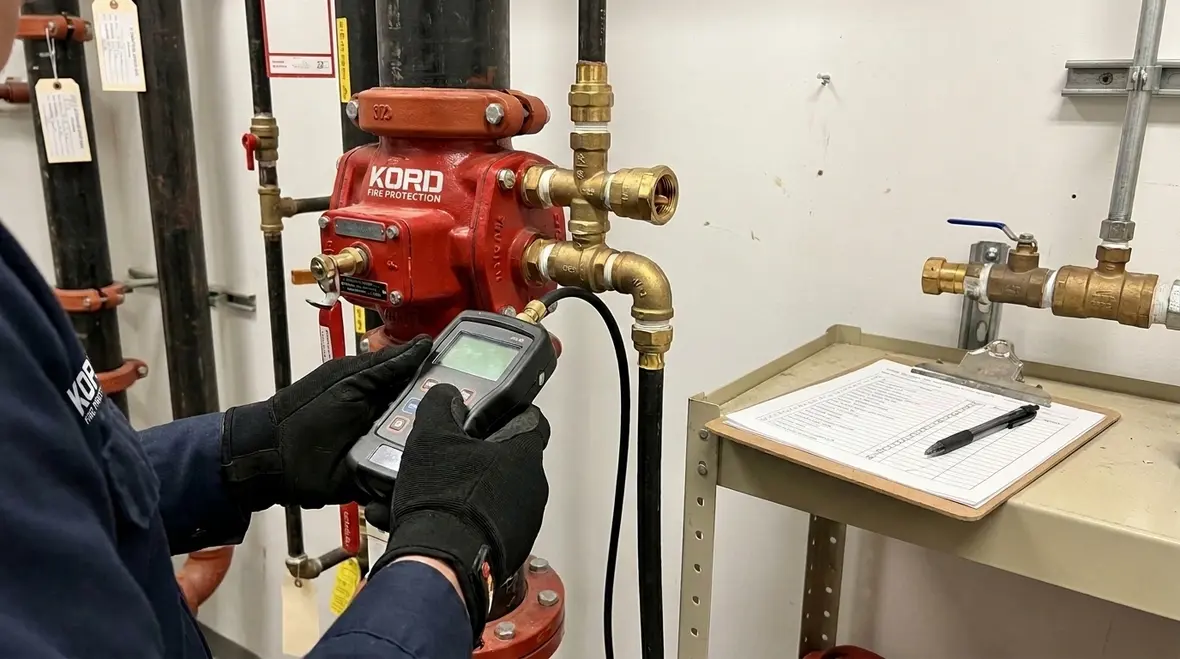
Kord Fire Protection supports commercial facilities with ongoing testing, maintenance, and documentation workflows designed to align with NFPA philosophies and California compliance expectations, including the concepts reflected by NFPA 25C Annex H California Health Safety Code 13195 fire regulations. The service value is not only completing tasks, but ensuring the program is defendable during AHJ reviews.
Installation background that improves maintenance outcomes
Maintenance quality begins at installation. When systems are engineered and installed with clear valve access, appropriate labeling, and functional test points, later inspections become faster and more reliable. For background on installation design considerations, reference NFPA 13 overview for automatic fire sprinkler system installation.
System level maintenance planning and component breakdown
Facilities also benefit from maintenance planning that covers the full water based protection chain. For a maintenance oriented breakdown, see NFPA 25 overview of complete water based fire protection systems maintenance breakdown.
California specific understanding to avoid procedural gaps
Because California requirements can be misunderstood during maintenance handoffs, Kord Fire Protection provides practical guidance for code alignment. For context on how California sprinkler code expectations are commonly interpreted, review fire sprinkler code California explained.
When facility teams pair clear procedures with competent testing and clean documentation, the compliance process becomes predictable. That predictability reduces disruption to operations and improves readiness for emergencies.
Related standards and how they reinforce maintenance discipline
NFPA 25C maintenance guidance works best when it is integrated with overall water based system understanding and broader life safety maintenance discipline. Industry resources can help facilities benchmark their approach, including information from firepumps.org for water supply and pump related reliability concepts that frequently affect system performance during tests.
Additionally, coordinated service teams may span electrical and life safety integration requirements, which is relevant to supervisory and alarm interface reliability. For broader electrical related insights from a service partner perspective, explore kordelectric.com. For supplemental commercial fire protection insights, see kordfire.com.au.
This integration matters because water based systems rarely fail due to a single component. They fail due to the combined effect of condition drift across valves, controls, water supply, and system interfaces.
Frequently Asked Questions
Get maintenance and documentation aligned before the next inspection
To reduce AHJ friction and improve real readiness, facility teams should validate that inspections, functional tests, valve supervision checks, and documentation workflows align with NFPA 25C maintenance intent and California expectations tied to Health and Safety Code Section 13195. Contact Kord Fire Protection to review current procedures, confirm testing coverage, and build a compliance ready maintenance plan with clear evidence trails for commercial systems.

Join Our Newsletter!
Get the latest fire safety tips delivered straight to your inbox From our Newsletter.