
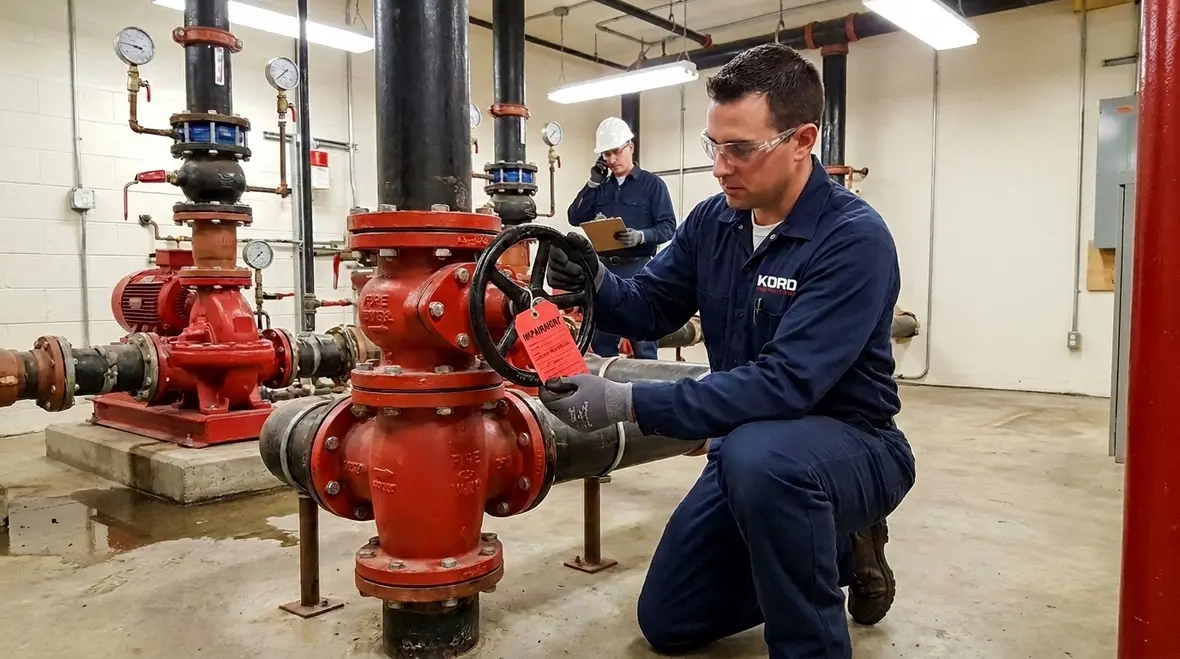
NFPA 25C Section 15.6: Emergency Impairment Procedures and Response
Quick Answer: NFPA 25C Section 15.6 emergency impairment procedures require facilities to promptly identify impairments, notify the proper parties, implement temporary safeguards, and document actions. The goal is to maintain life safety and fire protection effectiveness until systems return to service.
Facilities dealing with emergency impairment planning can also benefit from reviewing Kord Fire Protection’s fire protection impairment management guide, which fits naturally with the response workflow discussed below.
What NFPA 25C Section 15.6 emergency impairment procedures response requires during an emergency
NFPA 25C Section 15.6 emergency impairment procedures response addresses what happens when water-based fire protection system impairments must occur immediately and cannot wait for normal scheduling windows. This includes conditions created by urgent repairs, equipment failures, damage from incidents, or control valves taken out of service. The procedure centers on operational risk management and rapid mitigation to protect occupants and property.
For commercial, industrial, and retail facilities, the practical challenge is speed without chaos. Operations teams must know exactly who to contact, what temporary measures to implement, how to coordinate with fire watch or compensatory safeguards, and how to document the impairment so it can be reviewed, trended, and resolved quickly.
When an “emergency impairment” occurs, how facilities trigger the response
Emergency impairments typically involve conditions where the system cannot meet its intended design performance. Common triggers include:
- A major sprinkler or standpipe leak forcing immediate shutdown to stop water damage.
- A fire pump out of service, including loss of automatic starting capability or unacceptable performance during checks.
- Damaged alarm check valves, control valves, or water supply components that prevent system readiness.
- Unplanned impairment of water-based detection or supervisory control components that affects monitoring or supervisory signal integrity.
- Construction damage or impact to piping that leaves the system partially or fully incapable of responding.
Facilities should define emergency triggers in their impairment plan so the response begins immediately, not after internal disagreements. The impairment plan should align with the facility’s emergency action procedures, building life safety strategy, and local authority requirements.
Step-by-step: the NFPA 25C emergency impairment procedures response workflow
1) Confirm impairment status and affected systems
The response starts with identifying which system or portion of the system is impaired. Field verification matters. Technicians and AHJ ready personnel should confirm the impairment scope, such as whether it is a full system outage, a zone or floor impairment, or a partial pressure or flow impairment.
This includes checking:
- Valve positions and lockout status for control valves.
- Fire pump control mode and operational status.
- Pressure readings and tank levels where applicable.
- Supervisory alarm status and monitoring pathway integrity.
2) Notify required parties without delay
Emergency conditions require immediate communication. Typically, the facility coordinator, security or monitoring center, fire watch leadership if used, and the responsible maintenance contractor must receive timely notification. If the facility has external monitoring, coordination must ensure alarm and supervisory signals remain accurate to prevent confusion during emergency calls.
Commercial buildings often fail here due to unclear escalation paths. NFPA 25C emergency impairment procedures response is only effective if the notification path is pre established and practiced.
3) Implement immediate safeguards and maintain the intent of protection
Temporary safeguards may include fire watch staffing, operational restrictions, increased patrol frequency, or other compensatory measures approved by the responsible parties and consistent with the facility impairment plan. The intent is to protect life safety until the system returns to service.
Safeguards should match the impairment severity and the occupancy risk. A localized impairment in a low-hazard area typically requires different controls than a full building outage in a high-occupancy retail or warehouse environment.
4) Document the impairment, actions taken, and time stamps
Documentation supports accountability and rapid resolution. A robust record should capture:
- Date and time impairment begins
- System type and extent of impairment
- Valve and device positions relevant to the impairment
- Notifications made and to whom
- Temporary safeguard actions and start times
- Corrective steps underway and estimated return-to-service
Good records also help during inspections and future troubleshooting. Facilities that cannot explain when and why a system was impaired typically lose time during compliance reviews.
5) Restore service and verify system effectiveness
Returning the system to service must not be treated as a simple valve reversal. The restoration process should include verification that the system is operational according to the installation intent and current code requirements, including pressure restoration, pump readiness, and supervisory function where applicable.
For water-based systems, the restoration verification should reflect ongoing maintenance practices, not one-time checks. Proper maintenance procedures reduce repeat failures and help keep the system dependable.
Common commercial failure points that drive emergency impairments
Emergency impairments often do not happen suddenly without precursors. Commercial facilities can reduce emergency events through targeted maintenance and inspection discipline. High-frequency contributors include:
- Control valve mispositioning or incomplete return to normal after prior work.
- Corroded piping, fittings, or strain points that weaken after years of service.
- Fire pump reliability gaps, including ineffective starting sequences, control panel faults, or missed functional checks.
- Supervisory signal problems that mask system readiness issues until an impairment is needed.
- Water supply issues such as inadequate pressure, trapped air, or tank condition deterioration.
These failures can be reduced using a complete, scheduled water-based inspection and maintenance program. For a broader view of system scope and maintenance expectations, facilities can review Kord Fire Protection’s overview of NFPA 25 overview for water-based fire protection systems maintenance breakdown.
How maintenance, testing, and installation choices reduce emergency impairment risk
Emergency impairment outcomes improve when systems are correctly installed, adequately commissioned, and maintained with consistent quality. When installation details are sound, repairs are faster, valves operate as expected, and system restoration verification becomes straightforward.
Facilities should ensure their sprinkler system installation fundamentals align with accepted practices. For installation context related to automatic sprinkler system installation expectations, see NFPA 13 overview: automatic fire sprinkler system installation.
In jurisdictions like California, local interpretation and facility practices can affect maintenance workflows, documentation expectations, and how corrective actions are sequenced. Kord Fire Protection provides context in fire sprinkler code California explained, which can help teams align internal procedures with local expectations.
Operational readiness: building an impairment response plan your teams can execute
An impairment plan is only useful if it survives real events. Facilities should build a response routine around operator training, device familiarity, and contractor coordination. Practical readiness items include:
- Assign roles and alternates, including who authorizes impairments and who approves temporary safeguards.
- Maintain updated one-line diagrams and valve maps so teams can identify affected components quickly.
- Ensure control valves and critical devices are accessible, labeled, and not obstructed by storage or renovations.
- Include return-to-service verification checklists in the impairment plan, not in personal notebooks.
- Practice tabletop scenarios for common triggers like pump failures, supervisory outages, and localized pipe damage.
Because fire pumps and water supply equipment often drive impairment events, facilities should also coordinate with pump and water supply stakeholders during planning and maintenance. For additional pump system context and reliability resources, see firepumps.org. For hands-on commercial support, Kord Fire Protection helps facilities keep water-based systems reliable through structured inspection, testing, and maintenance programs.
Commercial teams can also align guidance with Kord Fire Protection’s broader service framework across kordelectric.com and kordfire.com.au where applicable for regional coordination.
Frequently Asked Questions
Conclusion and call to action
NFPA 25C Section 15.6 emergency impairment procedures response depends on speed, accurate scope control, and documented compensatory protection until systems return to service. Facilities that pair a clear impairment plan with disciplined inspection and maintenance reduce emergency events, shorten downtime, and improve inspection readiness. Kord Fire Protection can support your commercial compliance with structured maintenance, testing, and documentation. Contact Kord Fire Protection to review your impairment response readiness and water-based system maintenance program.

Join Our Newsletter!
Get the latest fire safety tips delivered straight to your inbox From our Newsletter.


